
Reviewed · HIKING & TREKKING
1-Day Sapa Long Trek – Rice Field Terrace, Ethnic Culture
Sapa’s best day walks are not about checking off viewpoints. They are about following narrow paths through the Muong Hoa Valley, crossing a wooden bridge, sharing lunch in a Hmong home, and hearing local stories from a guide who grew up nearby. This $24 trek gives you that experience in about seven hours.
I especially like the small groups of no more than 10 and the chance to eat a family-style meal in Lao Chai Sang. I also like the route’s variety: Fansipan views, rice terraces, streams, village homes, and a craft demonstration all fit into one day.
The main catch is the trail. It can cover 12 to 15 kilometers, with steep and slippery sections. Rain turns some paths into mud, and local women may walk alongside you while offering handmade goods for sale. Bring shoes with real grip, not city sneakers.
What makes this Sapa trek worth your day
- Fansipan views from a quiet ridge: Start with a mountain outlook toward the Roof of Indochina before descending into the valley.
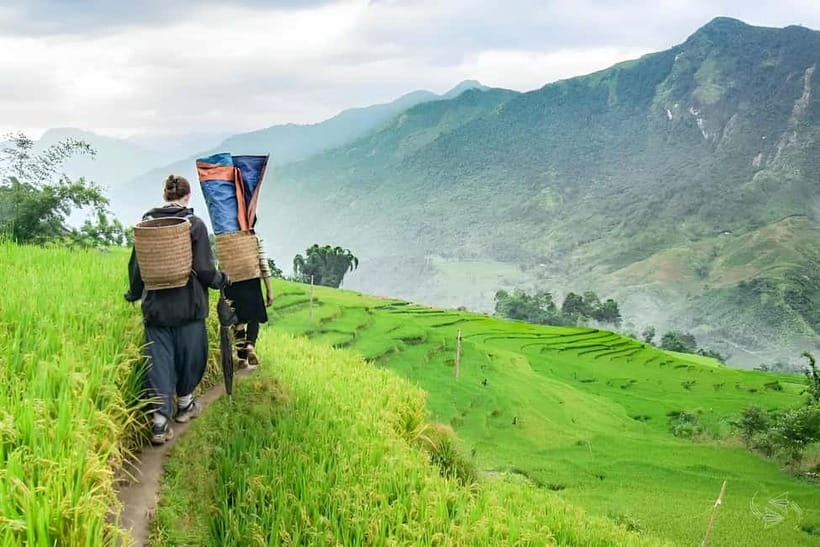
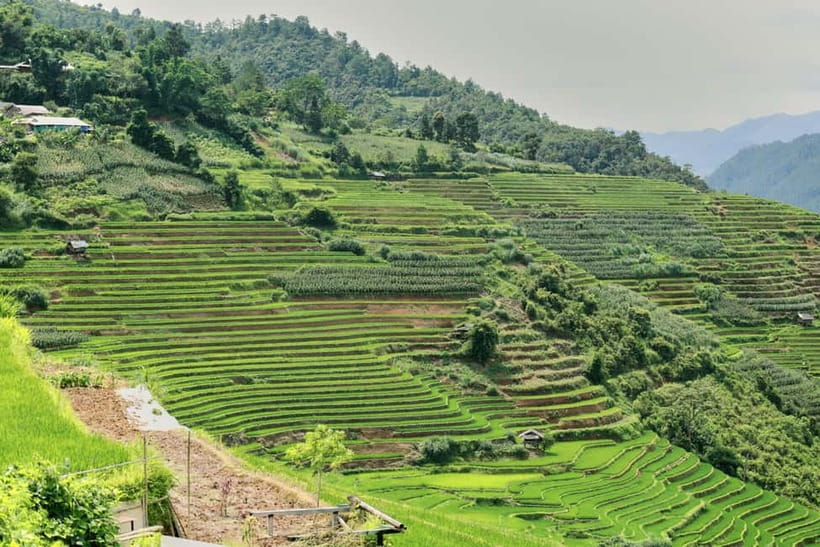
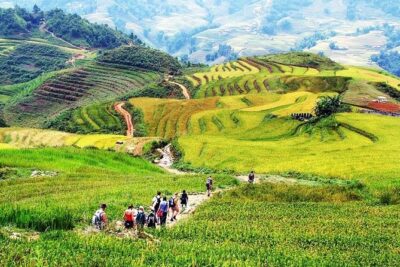
- A long walk through rice terraces: The route passes working fields and village paths rather than relying only on roadside viewpoints.
- Lunch with a Hmong family: Home-cooked food, generous portions, and a simple communal setting make this more than a standard restaurant stop.
- Local guides with personal ties to the area: Guides such as Mao, Sung, Chai, Giang, Thao, and Soso explain culture and daily life in clear English.
- A craft stop near the end of the walk: Learn how traditional Hmong clothing is made with handwoven fabric and natural dyes.
- A practical small-group price: At $24, you get guiding, village entrance fees, lunch, a small bottle of water, rain protection, and transport back to Sapa.
Starting in Sapa with a view toward Fansipan
The day begins at 9:00 AM in Sapa town. Hotel pickup is included if you are staying within the town area. If you are outside Sapa, you can pay for transport to a meeting point, such as Sapa TT Homestay on Dien Bien Phu Street or Sapa View Spring Garden Hotel on Muong Hoa Street.
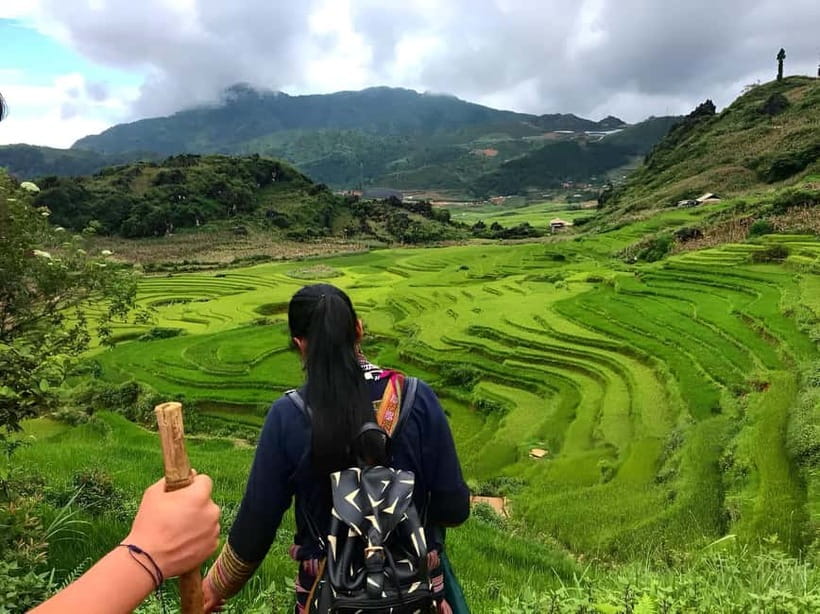
The opening climb takes you toward a quiet ridge with a broad view of Fansipan and the Hoang Lien Son range. On a clear day, this is a fine way to get your bearings. On a cloudy day, you may see only fragments of the peaks, but the mist is part of the mountain setting rather than a sign that the day is ruined.
Your guide may adjust the route to suit the weather. One group was offered a higher climb or a lower route when mist blocked the views, and the lower option proved calmer and more enjoyable. That flexibility matters in Sapa, where clouds can roll in quickly.
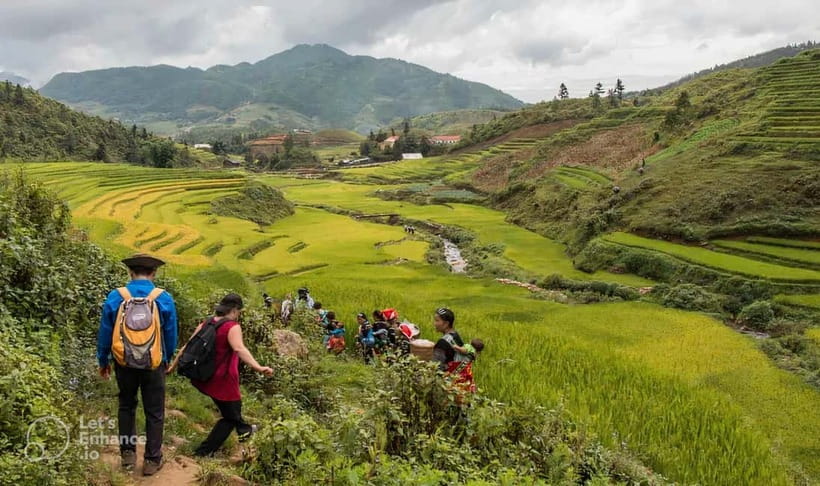
The trail then drops toward Muong Hoa Valley. This is where the day changes from a mountain lookout to a walk through daily village life. You see terraces cut into the hillsides, streams below the paths, and farmers working in the fields. The exact view depends heavily on the season and weather. Rice fields may be bright green, recently harvested, or partly flooded, so do not expect one fixed postcard scene.
More Day Trips in Sapa
- From Sapa: 1-Day Guided Trek to Lao Chai & Ta Van with Lunch
★ 4.9 · 416 reviews - Sapa 1 Day Long Trek: Trek to Hau Thao and Sa Seng Villages
★ 4.6 · 344 reviews - Sapa: Motorbike Tour 1 Day Visit Waterfalls & Local Villages
★ 5.0 · 112 reviews
Y Linh Ho and the first rice-field trails
Around 11:00 AM, the route reaches Y Linh Ho, a quiet Hmong village beside a clear river. You cross a wooden bridge before continuing into the valley. This section gives you a better sense of distance than the short photo stops around Sapa because you are walking between communities, fields, and mountain slopes.
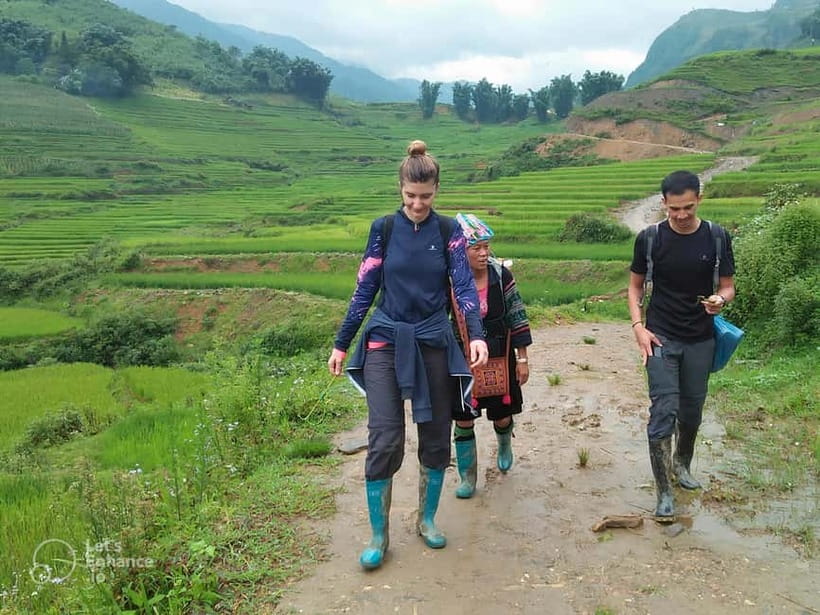
The route is scenic, but it is not a smooth park path. You may walk over uneven ground, narrow trails, stone, and wet earth. Several people found the route manageable, while others described it as demanding after rain. The difference comes down to footwear, fitness, and the day’s conditions.
I would not book this as a casual stroll if you have back, heart, or mobility problems. It is also not suitable for wheelchair users, people with significant visual impairment, or anyone who is afraid of heights. The operator lists pre-existing medical conditions as a concern, and that is sensible advice for a long mountain walk.
A good guide makes this section much easier. Guides including Mao and Soso have been praised for keeping a steady pace, explaining the area, and offering easier or steeper options when available. You should tell your guide early if you need to slow down. This is a small group, but it is still better to speak up before your legs are tired.
Lao Chai Sang and a generous mountain lunch
By about 12:30 PM, you reach Lao Chai Sang for lunch with a Hmong family. This is one of the strongest parts of the day because the meal is tied to a home and a community, not just a dining room built for tour groups.
The food is served family-style, with several dishes placed in the middle of the table. Portions are described as generous, and you can ask for more if needed. The meal is simple, local, and filling, which is exactly what you want halfway through a long walk.
Dietary restrictions can be catered for, but tell the operator in advance about allergies or special requirements. Do not wait until you sit down to mention an important food restriction.
The lunch also gives you a break from the trail. You can sit, talk with the guide, and ask about farming, family life, clothing, and village customs. Some guides, including Giang and Thao, are especially good at turning those questions into a wider conversation about local life and changes affecting women and families in the area.
This is not a formal cultural lecture. That is part of its value. You learn through conversation, food, and the setting itself. The tradeoff is that the home meal is informal, so anyone expecting a polished restaurant service should adjust their expectations.
Meeting Hmong and Giay communities along the route
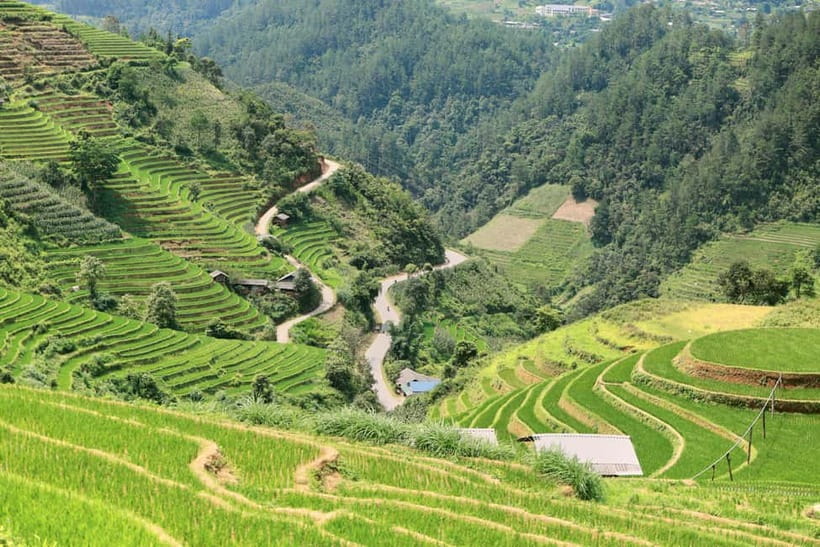
The trek continues toward Ta Van, a Giay village reached around 3:00 PM. Along the way, your guide explains the differences between Hmong and Giay communities, local traditions, and the way people work and live in the valley.
The village visits feel most worthwhile when you ask questions rather than simply take photographs. You might learn about clothing, farming, homes, family roles, or how local people use the paths and fields around their villages. Guides such as Chai, Ly, Vu, and Ma Ma Je have been praised for making these conversations warm and personal.
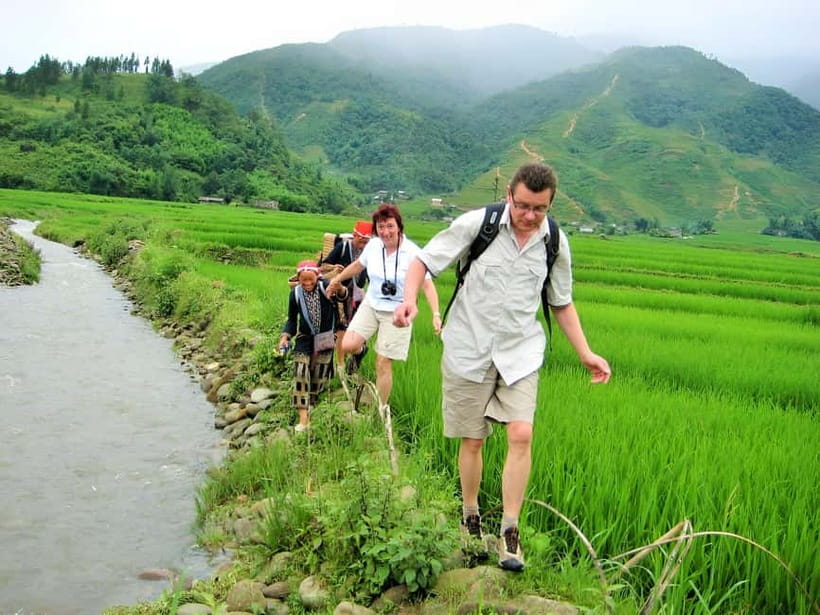
There is also a less comfortable side to tourism here. Hmong women may join parts of the walk to help you over slippery ground or talk with you, but some will also try to sell scarves, bags, or other handmade goods. It can feel persistent when you want to enjoy the scenery in peace.
You can be polite and clear if you do not want to buy. If you do purchase something, bring cash and treat it as a direct contribution to a local seller rather than assuming every sale is part of the tour price. The presence of sellers does not cancel the cultural value of the walk, but it is worth knowing about before you go.
More Rice Terrace Tours in Sapa
- Explore Sapa by TrekkingAdventures, Mountain,Rice fields
★ 4.9 · 229 reviews - Sapa: Love Silver Waterfall, LonelyTree in Heaven-Rice Field
★ 4.9 · 28 reviews - Motorbike 1 Day Off The Beaten Track, Hidden Villages, rice field
★ 5.0 · 203 reviews - Trekking Through Rice Terraced Fields – 1Day
★ 5.0 · 173 reviews
Traditional clothing, natural dyes, and the final walk to Ta Van
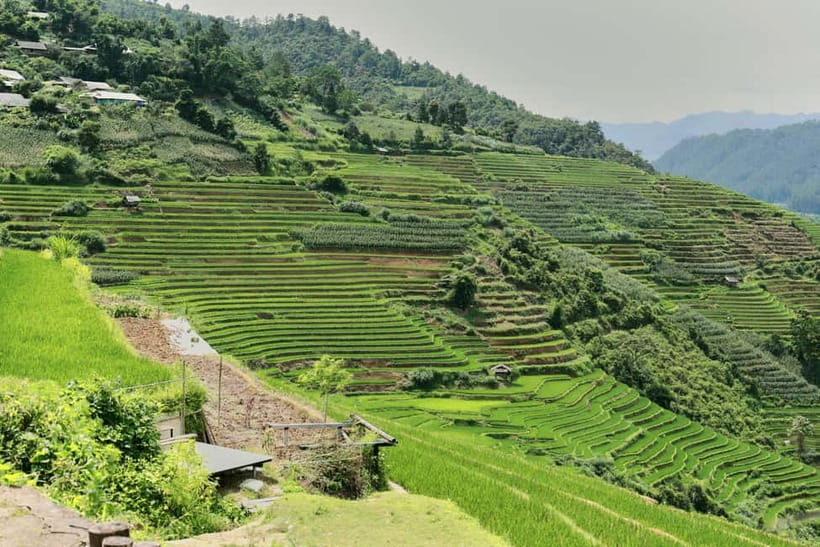
Around 2:00 PM, the route stops at a local craft setting where you learn how Hmong clothing is made. The focus is on handwoven fabric and natural dyes, including the traditional indigo process.
This is a small but useful addition to the day. You have already seen local people and their villages, and now you get some context for the clothing that makes Hmong communities so visually distinctive. The demonstration helps you understand the time and skill behind a finished garment rather than seeing it as just a souvenir.
The final stretch leads into Ta Van, a quieter Giay village. Your driver waits here to return you to Sapa. Transport back is included, although a different drop-off location may cost extra depending on where you want to go.
The timing is helpful if you have only one night in Sapa. You get a full day in the valley without needing to arrange a return hike or find a taxi from a remote village. One practical warning: the activity description calls this seven hours, but the distance can feel like a full day, especially when the path is wet.
How hard is the walk?
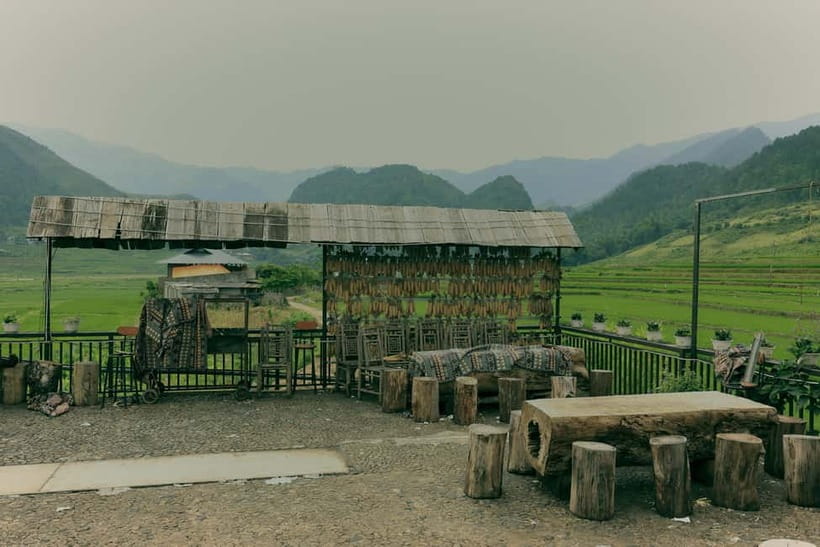
The difficulty is best described as moderate to demanding, depending on weather and your usual activity level. The route includes climbs, descents, uneven ground, and slippery sections. Distances reported by people on the route range from about 12 kilometers to more than 15 kilometers.
In dry weather, many reasonably fit people should find it doable with regular rests. After rain, the same route becomes harder. Mud can cover the trail, and one person found rented rubber boots essential. The operator may provide rain ponchos or raincoats, but that does not replace proper footwear.
Bring:
- Hiking shoes or boots with strong grip
- A sun hat, sunglasses, and sunscreen
- Water, beyond the small bottle provided
- Insect repellent
- A raincoat during the wet season
- Cash if you may buy handmade goods
- Comfortable clothes that can handle mud
Do not wear open sandals or smooth-soled shoes. Sneakers may work in dry conditions, but hiking shoes are a safer choice. Rubber boots may be available to rent locally when the ground is very wet.
Why the guide matters more than the route name
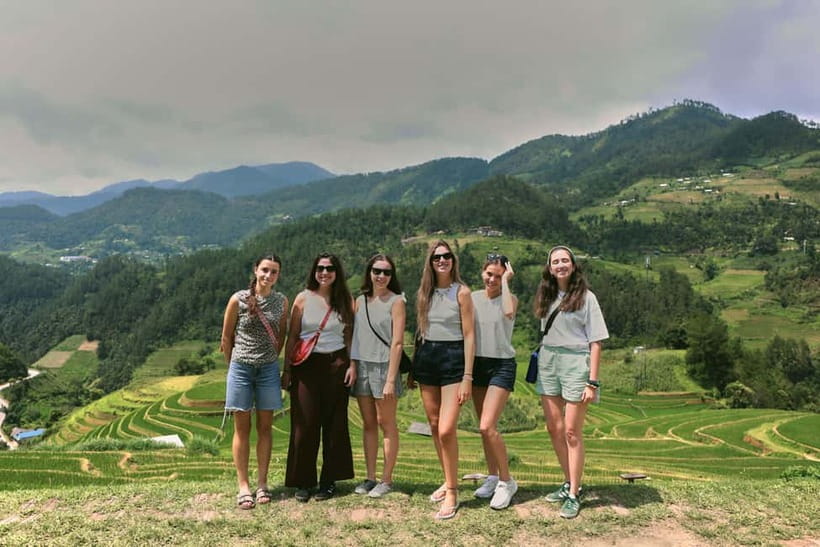
The route is attractive, but the guide shapes the day. A local Hmong guide can explain what you are seeing in a way a map cannot. The strongest guide experiences here include clear English, a relaxed pace, local stories, and an ability to change the route when mist or rain affects the views.
Guides named in the feedback include Mao, Sung, Chai, Giang, Thao, Soso, Ly, Vu, Ma Ma Je, Dinh, and Chili. You may not receive a particular guide, so do not book solely for one person. Still, the repeated pattern is clear: the company uses local guides, and many are comfortable discussing culture, geography, farming, family life, and village traditions.
English ability can vary by guide, though many people found communication smooth. The smaller the group, the easier it is to ask questions and keep the same pace. The maximum is 10, but some departures have had only four people, which makes a big difference on narrow paths.
Is $24 good value?
Yes, provided you want an active day rather than a quick scenic drive. For $24 per person, the package includes Sapa town pickup, a local guide, village entrance fees, lunch, a small bottle of water, rain protection, and transport back from Ta Van.
That is strong value for a seven-hour outing. You are also paying for route planning and local access, not simply for a walk. The family meal and village conversations give the day more substance than a viewpoint transfer.
There are extra costs to keep in mind. Pickup outside Sapa town may carry a fee, and a different drop-off point may also cost extra. Handmade goods, rented boots, and personal drinks are not included. The activity does not include anything not specifically listed, so ask before booking if you need a particular transfer or service.
Free cancellation is available up to 24 hours before the start, and you can reserve now and pay later. That helps if your Sapa plans depend on weather or train connections.
Who should book this Sapa trek?
I would choose this for someone who wants mountain scenery with real contact with local communities. It suits a reasonably fit person who is happy to walk for most of the day, eat a simple home meal, and accept that mud and changing weather are part of the deal.
It is especially useful if you have only one night in Sapa. The route covers several types of scenery and ends with transport back to town, so you see a lot without organizing separate village visits.
I would skip it if you want a gentle stroll, dislike uneven ground, or need a fully accessible route. I would also think twice if your only goal is a clear Fansipan view, since clouds can block the peaks. The cultural side of the day remains worthwhile in poor weather, but the mountain scenery may not cooperate.
Should you book it?
Book this trek if you want a long, active day through Sapa’s valley villages, with a local guide, home-cooked lunch, and a fair price. It offers more than photographs: you walk through working rice terraces, learn about Hmong and Giay life, and see how traditional clothing is made.
Skip it if you are not prepared for 12 to 15 kilometers, mud, steep ground, or occasional sales pressure from local vendors. Wear proper boots, carry water, and tell the operator about food restrictions before the day begins. For the right walker, this is one of the better-value ways to meet Sapa beyond its town center.
FAQ
How long does the Sapa trek last?
The activity lasts about seven hours, beginning at 9:00 AM and ending with transport back to Sapa after reaching Ta Van around 3:00 PM.
Where does the trek start and finish?
It starts in Sapa town and finishes in Ta Van, where a driver takes you back to Sapa. Pickup is included for locations within Sapa town.
Is lunch included?
Yes. A traditional home-cooked lunch with a local family is included. Dietary restrictions and allergies should be shared with the operator in advance.
How many people are in the group?
The group is limited to 10 participants. Some departures may be smaller.
What languages do the guides speak?
The tour is available with English and Vietnamese-speaking guides. The guides are local Hmong people from villages in the Sapa area.
Is the trek suitable for everyone?
No. It is not suitable for people with back, heart, mobility, or pre-existing medical problems, wheelchair users, people with visual impairments, or people afraid of heights. The route can be steep, uneven, muddy, and slippery.
More Rice Terrace Tours in Sa Pa
- Rice Terraced Fields & Homestay Experience– 2D 1N
★ 5.0 · 118 reviews - Ninh Binh: Rice planting and fishing by basket tour
★ 4.7 · 37 reviews
More Trekking Tours in Sapa
- Sa Pa: Muong Hoa Valley Trek and Local Ethnic Villages
★ 4.6 · 864 reviews - Sapa: Eco Adventure Terrace Fields and Local Villages Trek
★ 4.9 · 636 reviews - Explore Sapa: 2D1N Trekking & Hmong Culture With Dinh
★ 4.9 · 191 reviews - Sa Pa: 6-Hours Muong Hoa Valley Trek with Local Ethnic guide
★ 4.5 · 178 reviews
Just added around Sa Pa
- Sapa3D2N TrekkingAdventures,Valleys,Bambooforest,Waterfall★ 4.8 · 24 reviews
- Sapa: Y Linh Ho – Lao Chai, and Ta Van Trekking Day Tour★ 5.0 · 25 reviews
- Sapa: Ta Phin Village Trek & Red Dao Herbal Bath★ 5.0 · 22 reviews
- Sapa Trekking Bargains With Local Guide★ 4.9 · 91 reviews
- Sapa: Private Highlights Day Tour with Lunch★ 4.8 · 61 reviews
- From Sapa: Guided Full-Day Trekking with Lunch and Drop-Off★ 4.2 · 86 reviews
- Sapa: Muong Hoa Mountain Views and Villages Trek with Lunch★ 4.3 · 28 reviews
- Sapa: Love Silver Waterfall, LonelyTree in Heaven-Rice Field★ 4.9 · 28 reviews
Hiking & Trekking, compared.

Halong Bay Full Day with Kayaking, Hiking viewpoint, Cave – Deluxe To Luxury
Read our review →
Sa Pa: Muong Hoa Valley Trek and Local Ethnic Villages
Read our review →
Sapa 3 Days 2 Nights Trekking Tour (1 Night In Ta Van Village, 1 Night In Hotel)
Read our review →
2-Day Sa Pa Ethnic Homestay Tour & Trek with Limousine Bus
Read our review →
1-Day Guided Trek to Lao Chai & Ta Van with Lunch
Read our review →
Browse the lists this tour appears in