
Reviewed · HIKING & TREKKING
Trekking Through Rice Terraced Fields – 1Day
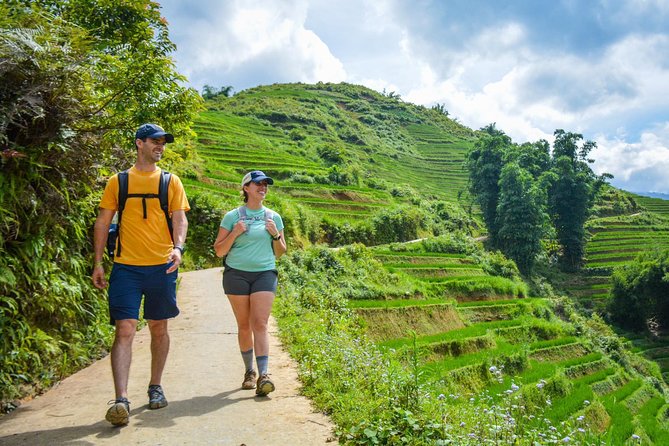
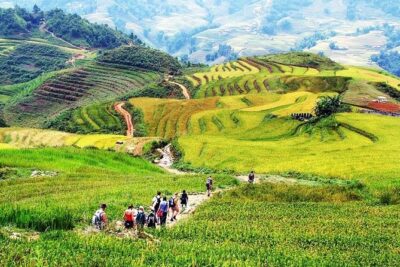
The best part of this Sapa day trek is the steady change from mountain views to village life. You walk through Y Linh Ho, Lao Chai, and Ta Van, passing rice terraces, farm animals, and homes of Hmong and Giay communities while a local guide explains how people work, build, marry, and live here. The route is about 5 to 6 hours and can reach roughly 12 kilometers.
I like the local guides, many of whom come from the communities you visit. Guides such as Chu, Sang, Mai, Vang, and Mau have been praised for their English, patience, and ability to explain daily life. I also like the simple value: for $45, you get lunch, bottled water, village entry fees, and transport back to Sapa.
The catch is the terrain. This is not a gentle stroll, and wet paths can be muddy and slippery. One person found the route long and difficult, while others called it moderate but tiring, so good fitness and grippy shoes matter.
Key points to know before you book
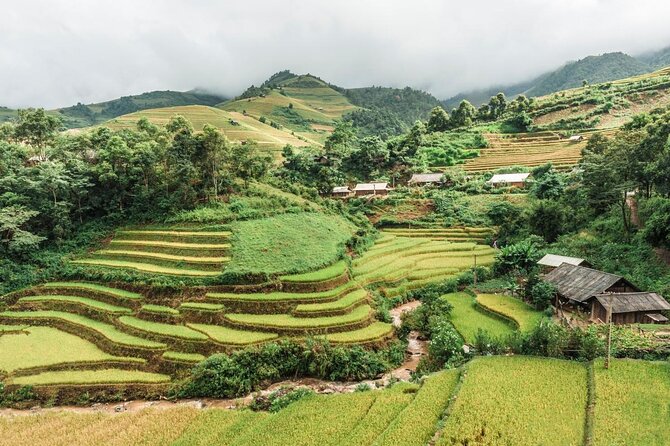
- Three village areas in one day: Walk through Y Linh Ho, Lao Chai, and Ta Van, with Hmong and Giay culture at the center of the route.
- A real mountain walk: Expect uneven paths, rice paddy climbs, and a total distance that may reach about 12 kilometers.
- Strong local guide element: Guides including Chu, Sang, Mai, Vang, and Mau are noted for cultural explanations and friendly support.
- Lunch and return transport included: Local food, one small bottle of water, entry fees, and transport back to Sapa are covered.
- Small-group format: The maximum group size is 15, though some departures may be much smaller.
- Best for active visitors: You should be comfortable walking for several hours and handling muddy or slippery ground.
Why this Sapa trek feels different from a viewpoint stop
Sapa is famous for sweeping mountain views, but a viewpoint only gives you part of the story. This walk puts you on the paths between villages, where the terraces are working farmland and the valleys are part of daily life.
The scenery changes as you go. You may look down over steep rice fields, follow a village road, pass grazing animals, and then enter a settlement where homes and farming spaces sit close together. The point is not simply to take a few photographs. Your guide helps connect the views with the work behind them.
The tour focuses on Hmong, Giay, and Red Dao communities in the wider Sapa area. The named stops on this route are Y Linh Ho, Lao Chai, and Ta Van. Lao Chai is identified with the Black Hmong, while Ta Van is associated with the Giay. The guide also explains Hmong marriage traditions, rice cultivation, house-building methods, and village customs.
That human detail is what gives the walk its value. You are not just looking at a rice terrace as scenery. You learn why it is there, how it is used, and how it fits into local life.
More Rice Terrace Tours in Sapa
- Explore Sapa by TrekkingAdventures, Mountain,Rice fields
★ 4.9 · 229 reviews - Motorbike 1 Day Off The Beaten Track, Hidden Villages, rice field
★ 5.0 · 203 reviews - Rice Terraced Fields & Homestay Experience– 2D 1N
★ 5.0 · 118 reviews
Starting from Sapa at 9 or 9:30
The meeting point is at Trekking Tour Sapa, at 09 Thác Bạc in Sapa Town, with pickup offered from a hotel in town or a meeting point near the main church. The supplied details give both a 9 a.m. start in the route description and a 9:30 a.m. meeting time, so confirm the exact time when you book.
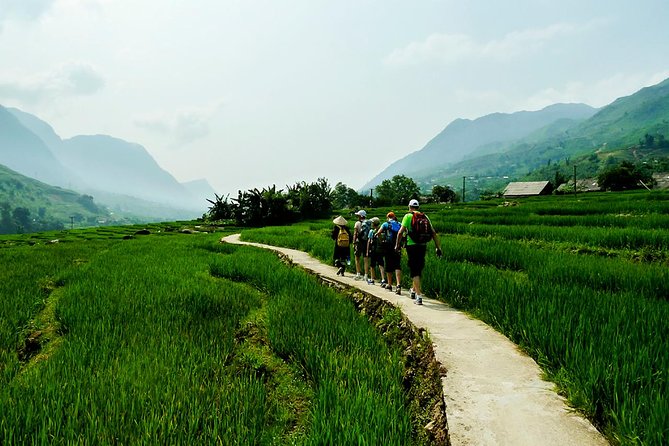
After a short introduction, transport takes you about 2 kilometers down the road toward Cat Cat. From there, the walking portion begins. This small transfer matters because it gets you out of central Sapa quickly and onto a route with more open mountain scenery.
The group can contain up to 15 people, though the experience may be much smaller. Some bookings have had only two people, while another group included five participants. A small group makes it easier to ask questions and keep a comfortable pace, but you should not assume every departure will be private.
The tour ends back at the meeting point after transport from Ta Van. The walking distance can vary with the guide, conditions, and your return choice. One participant chose to keep walking instead of taking the car and turned the route into an 11-kilometer day, while other accounts put the trek at about 12 kilometers.
Y Linh Ho: the first two hours among terraces
Y Linh Ho is the first named stop and takes about two hours. This is where the walk opens into the mountain countryside, with rice terraces and valley views forming the main backdrop.
The route is not flat. You will climb and descend on paths that can be rough underfoot. A rice paddy climb is part of the challenge, and it can feel harder than the distance suggests because of the slope and the condition of the ground.
On a dry, sunny day, the scenery can be superb. On a wet day, the same route becomes more demanding. Mud and slippery sections are not minor details here. Shoes with a firm grip are a practical necessity, and trekking boots are a sensible choice if rain is possible.
This first section also gives you time to settle into the walking rhythm. Your guide may explain rice planting, local work, plants, and the surrounding communities as you go. The quality of that explanation can depend on the individual guide and on how actively you ask questions.
That last point is worth noting. Guides such as Chu, Sang, and Mai have been singled out for sharing plenty of information and answering questions well. One person felt the guide offered little information unless asked. If you want more than directions and scenery, ask directly about farming, houses, family life, and customs.
Lao Chai: a Black Hmong village and a well-earned break
After the first section, you continue to Lao Chai, identified as a Black Hmong village. This stop takes about two hours and is the heart of the walk for anyone interested in Hmong culture.
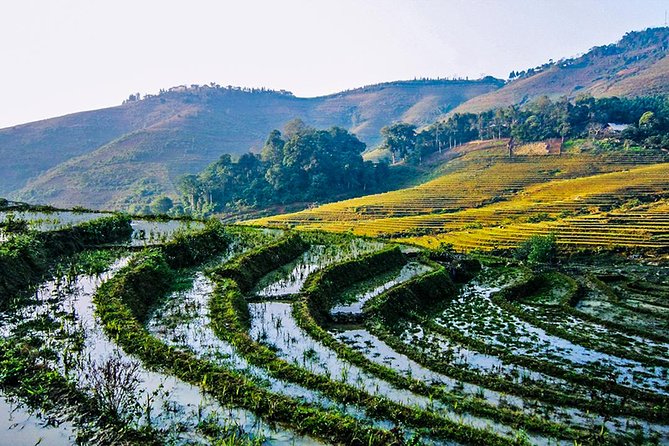
The guide introduces the way rice fields are used and explains aspects of Hmong work, homes, and traditions. The experience is strongest when the guide connects what you see in front of you with the wider culture. A terrace is not just a green shape on a hillside. It reflects careful farming in steep terrain, seasonal work, and the effort needed to maintain food production.
You may also see ordinary village activity along the route. Farm animals such as oxen, ducks, and chickens have been spotted during the walk, adding a useful sense of place. These details make the route feel less like a staged cultural display and more like a path through a living community.
Lunch is included and consists of local food with vegetables and meat, with a vegetarian option available. Extra drinks, including bottled water or beer at the restaurant, cost extra. The tour includes one small bottle of water per person, so I would carry more if you usually drink a lot while walking.
Lunch quality may vary. Some accounts describe it as delicious, while another found it mediocre. I would treat the meal as a convenient local stop rather than the main reason to book. The rice terraces, village setting, and guide are the real value.
You may also encounter local children selling handmade goods such as bags and key rings. Be polite, and buy only if you actually want something. The encounter can be part of the day, but you should not feel pressured to spend more.
More Trekking Tours in Sapa
- Sa Pa: Muong Hoa Valley Trek and Local Ethnic Villages
★ 4.6 · 864 reviews - From Hanoi: 2-Day Sapa Trekking Trip with Homestay & Meals
★ 4.8 · 704 reviews - Sapa 3 Days 2 Nights Trekking Tour (1 Night In Ta Van Village, 1 Night In Hotel)
★ 5.0 · 699 reviews - Sapa: Eco Adventure Terrace Fields and Local Villages Trek
★ 4.9 · 636 reviews
Ta Van: a shorter final section with Giay culture
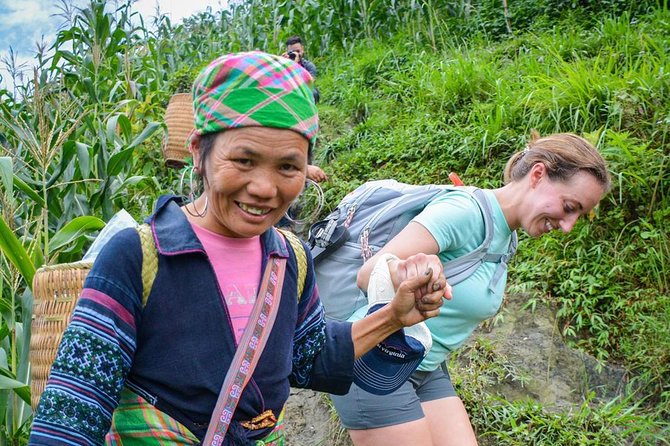
The last walking section leads to Ta Van Village and takes about one hour. Ta Van is associated with the Giay minority, giving the day a useful contrast with the Hmong communities earlier on.
Your guide explains differences between the ethnic groups, including customs and ways of life. This comparison is one of the tour’s strongest ideas. Instead of treating Sapa’s minority communities as one broad category, the walk gives you a chance to see that each group has its own traditions and identity.
The final section may feel easier because it is shorter, but you will already have several hours of walking behind you. If the ground is wet, tired legs and muddy paths can make the last stretch less comfortable.
At Ta Van, the vehicle collects you and returns you to Sapa. This is an important part of the tour’s value. You get a full mountain walk without needing to arrange your own return from a rural village.
What the guides add to the day
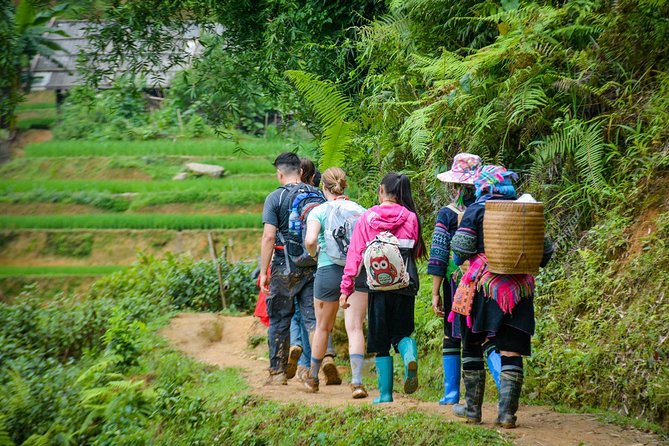
The guide is the main difference between this tour and following a route with a map. A good guide explains what you are seeing, helps with tricky sections, and gives local context that you would likely miss alone.
Several guides have received especially strong praise. Chu has been described as friendly, patient, and able to adapt the walk for a family with a 3-year-old. Sang has been noted for clear English, humor, and detailed explanations of culture and daily life. Mai has been praised for being personable and easy to understand, while Vang has been valued for answering questions and making a small group feel well supported.
Mau has also guided families with children aged 12, 11, 8, and 6, walking about 6 miles at a patient pace. That suggests the route can work for children who are used to walking, but it does not make the terrain easy. Family needs should be discussed when booking.
The guide’s local connection matters. Guides from the Hmong community can offer first-hand insight into village life rather than giving only general facts. Still, do not wait quietly if culture is your main interest. Ask questions. You are more likely to get a detailed and useful conversation that way.
The physical effort: moderate on paper, serious in places
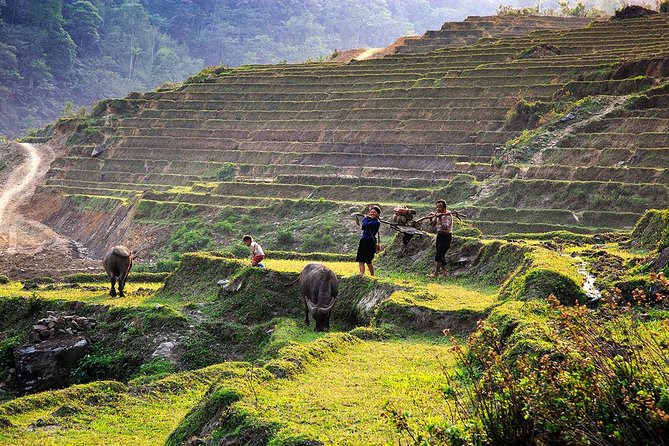
The tour describes itself as suitable for people with moderate physical fitness. That is fair, but the phrase needs context. The route is long enough to tire you, includes hills and rice paddy climbs, and can become slippery after rain.
Several accounts describe the walk as about 6 miles or 12 kilometers. The listed stop times add up to about five hours, but the full experience lasts roughly 5 to 6 hours, depending on breaks, walking speed, and transport.
I would not choose this tour if you have mobility issues or strongly dislike uneven ground. One person found the route too long and difficult for adults who were not in very good shape. Other people of average fitness completed it, though sore legs the next day were possible.
Good footwear is the most important preparation. Wear shoes with solid grip, especially in wet weather. Loose sandals and smooth-soled trainers are poor choices. Carry enough water beyond the included bottle, and expect your clothing and shoes to get dirty if the trail is wet.
The tour can suit families, but the youngest child in your group should be comfortable walking for hours. The guide may help with pacing, yet the route itself does not become flat or short.
Is $45 good value for Sapa?
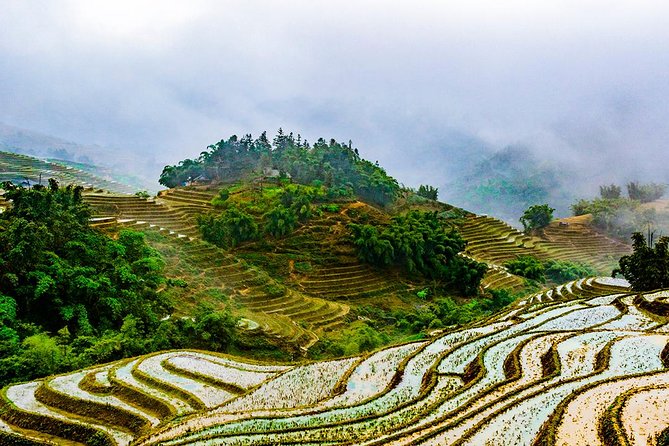
At $45 per person, this is a fair price for a full half-day or near-full-day walk. The cost includes a local guide, lunch, one small bottle of water, village entry fees, and transport back to Sapa.
Those inclusions matter. Arranging the same day independently would mean finding the route, hiring local help, paying village fees, organizing lunch, and solving the return journey from Ta Van. The guide also gives you cultural context that a map cannot provide.
The value is strongest if you want a structured walk and a local perspective. If you only want to see rice terraces and are happy navigating alone, you may feel the price is high, especially if your guide gives little explanation unless prompted.
The maximum group size is 15, so the experience is not guaranteed to feel private. On the other hand, small departures are possible, and a group of two or five can make the day feel much more personal.
Free cancellation is available if you cancel at least 24 hours before the start time. Cancellations within 24 hours are not refunded, and late changes are not accepted.
Who should book this rice terrace walk?
I would choose this tour if you have one day in Sapa and want to combine scenery with contact with village life. It gives you more substance than a quick photo stop and more structure than setting off alone.
It suits you best if you:
- Can walk for 5 to 6 hours
- Are comfortable with hills and uneven paths
- Want to learn about Hmong and Giay culture
- Prefer a local guide to independent route-finding
- Like rural scenery, farm animals, and village paths
- Want lunch and return transport included
I would think twice if you have mobility problems, dislike mud, or need a very predictable walking surface. I would also ask for more detail about the exact distance and start time before booking, since the supplied schedule gives both 9 a.m. and 9:30 a.m., and the walking distance can vary.
Should you book it?
Yes, if your priority is a close look at Sapa’s rice terraces and ethnic villages rather than a quick scenic outing. The strongest parts are the mountain scenery, the chance to walk between three village areas, and the local guides who can explain Hmong and Giay life from personal experience.
Book with realistic expectations. This is a proper trek, not a level village stroll. Wear grippy shoes, ask questions, bring extra water, and be ready for a long day on uneven ground. If you can handle that, $45 buys a well-organized way to see a side of Sapa that is difficult to reach by car.
FAQ
How long does the trekking tour last?
The tour lasts approximately 5 to 6 hours, including the walking sections, stops, lunch, and transport back to Sapa.
What villages does the tour visit?
The route includes Y Linh Ho, Lao Chai, and Ta Van Village.
Which ethnic groups are connected with the route?
The experience introduces Hmong, Giay, and Red Dao communities in the Sapa area. Lao Chai is identified with the Black Hmong, and Ta Van with the Giay minority.
What time does the tour start?
The meeting information lists a 9:30 a.m. start, while the route description says the tour starts at 9 a.m. Confirm the exact meeting time when booking.
Where does the tour meet?
The stated meeting point is Trekking Tour Sapa at 09 Thác Bạc, Sapa Town. Pickup can also be offered from a hotel in Sapa Town or near the main church.
Is lunch included?
Yes. Local food with vegetables and meat is included, and a vegetarian option is available.
Is transportation included?
Yes. Transport back to Sapa from the end of the trek is included. The activity ends back at the meeting point.
How fit do I need to be?
You should have a moderate level of physical fitness. The route may cover about 6 miles or 12 kilometers and includes hills, rice paddy climbs, uneven paths, and possible mud.
What is included in the $45 price?
The price includes the local guide, lunch, one small bottle of water per person, village entry fees, and transport back to Sapa. Extra drinks, travel insurance, and tips are not included.
Just added around Sapa
- Hanoi to Sapa Bus – Private Cabin Bus★ 5.0 · 53 reviews
- Hanoi – Sapa 2 Days 1 Night Overnight At Local Homestay★ 5.0 · 233 reviews
- 2-Night Sapa Tour with Fansipan Peak by Bus from Hanoi★ 4.5 · 23 reviews
- Hanoi – Sapa 3 Days – 2 Nights Trekking with With the locals★ 5.0 · 95 reviews
- Sapa – Ha Giang Loop Tour 5 days 4 nights★ 5.0 · 24 reviews
- 3-Night Sapa Trek and Homestay with Round Trip Transfer from Hanoi★ 4.5 · 37 reviews
- 3-Days in Sapa with Overnight at 4 Star Hotel & Bungalow★ 5.0 · 27 reviews
- 2 days Amazing trekking Sapa from Hanoi with various options★ 4.5 · 53 reviews
Hiking & Trekking, compared.

Halong Bay Full Day with Kayaking, Hiking viewpoint, Cave – Deluxe To Luxury
Read our review →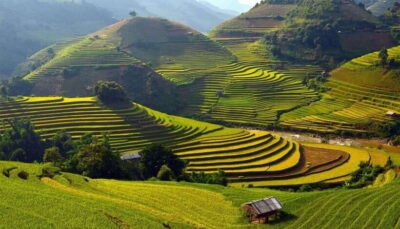
Sa Pa: Muong Hoa Valley Trek and Local Ethnic Villages
Read our review →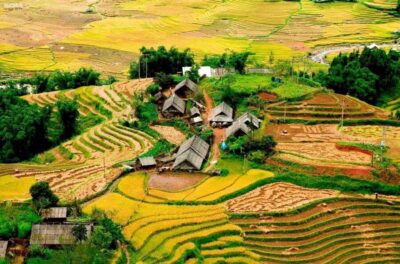
Sapa 3 Days 2 Nights Trekking Tour (1 Night In Ta Van Village, 1 Night In Hotel)
Read our review →
2-Day Sa Pa Ethnic Homestay Tour & Trek with Limousine Bus
Read our review →
1-Day Guided Trek to Lao Chai & Ta Van with Lunch
Read our review →
Browse the lists this tour appears in