
Reviewed · WATERFALL TOURS
Sapa3D2N TrekkingAdventures,Valleys,Bambooforest,Waterfall
Sapa’s best moments often come away from town, and this three-day trek takes you into the rice terraces, village paths, bamboo forest, and waterfalls around Muong Hoa Valley. Local guide Dinh, a Hmong woman, or one of her sisters, leads the walks and brings you into her family’s homestay in Hau Thao and Ta Van.
I like the early Dragon Mountain viewpoint, where you can see Sapa, Fansipan, and the huge terraces below. I also like the family-run side of the trip: two nights, home cooking, local stories, and the chance to meet people beyond a quick village stop. The main consideration is the walking. At up to 15 kilometers on day one, with steep mountain trails and changing weather, this is not a gentle sightseeing tour.
Key points at a glance

- Dragon Mountain viewpoint: Start with a climb of about 1 kilometer for views toward Fansipan, Sapa, and Muong Hoa Valley.
- Three full trekking days: Walk roughly 28 to 39 kilometers in total, with daily routes lasting about five and a half to six hours.
- Two nights with a Hmong family: Stay at Dinh’s family homestay, with breakfast, lunch, and dinner included as specified.
- Black Hmong and Red Dao villages: Meet local communities and see traditional homes, fields, animals, and daily work.
- Giang Ta Chai Waterfall: Reach the waterfall by mountain trails and cross a second hanging bridge on the return route.
- Good value at $80: The price covers guiding, village fees, meals, lodging, daily water, and transport back to Sapa.
Why this Sapa trek feels personal
Many Sapa outings follow a short, well-used route and return to town before dinner. This one gives you time to walk between villages and sleep in the countryside. That extra time matters. You are not simply stopping for a photograph, then moving on. You have evenings with a local family and mornings that begin on foot.
Dinh is the named guide and the host behind the homestay. Depending on the arrangement, Dinh or one of her sisters may meet you at your hotel or at Sapa’s main church. The experience also includes family members such as Dinh’s cousin, who has guided some departures. That means your exact guide may vary, so it is sensible to confirm who will lead your group before setting out.
The personal touch is a major reason to choose this trip. Dinh’s family welcomes you into their home, and the evenings may include singing, dancing, and happy water, the local rice liquor often shared during meals. That can be warm and memorable, but you do not need to drink alcohol to take part. Pace yourself, especially before another long walking day.
The tour has a 4.8 out of 5 rating from 24 ratings, with especially strong praise for the food, organization, family welcome, and the guides’ cheerful attitude. Those are useful strengths to note because the lodging and meals are a large part of what you are paying for.
More Waterfall Tours in Sapa
- Sapa: Motorbike Tour 1 Day Visit Waterfalls & Local Villages
★ 5.0 · 112 reviews - From Sapa: Waterfalls, Trekking and Tribal Villages Tour
★ 4.6 · 91 reviews - Sapa: Love Silver Waterfall, LonelyTree in Heaven-Rice Field
★ 4.9 · 28 reviews
Day one: Dragon Mountain, Hang Da, and Hau Thao
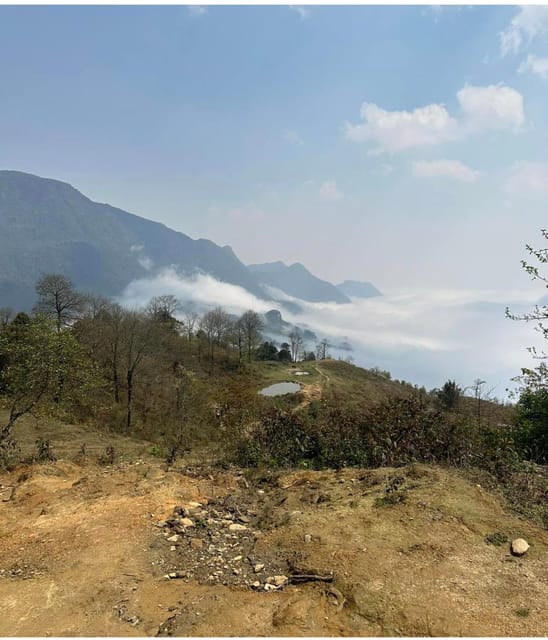
You meet your guide at 9 a.m. at your Sapa hotel or in front of the town’s main church. The first section climbs about 1 kilometer on a narrow trail toward Dragon Mountain, listed at about 1,900 meters. This is a strong opening because you get your first wide view before the longer walk begins.
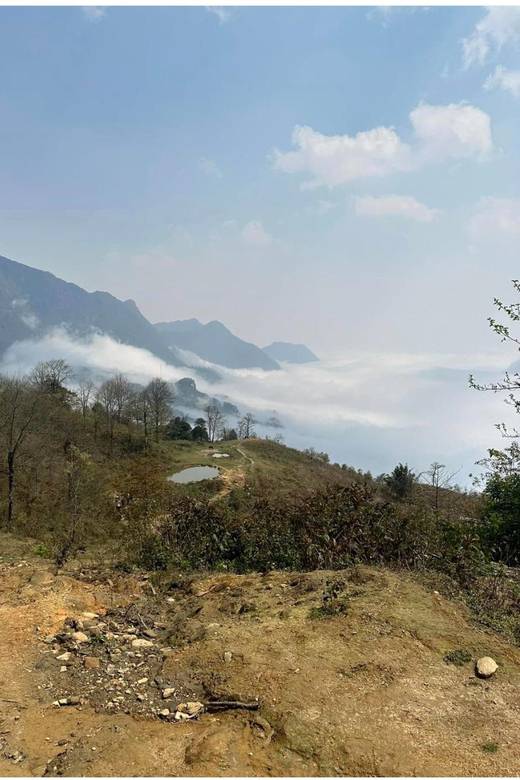
From the viewpoint, you may see Fansipan, at 3,143 meters, the highest mountain in Indochina, along with Sapa town and the long folds of Muong Hoa Valley. The rice terraces are the star here. Their appearance changes with the season, so the color and amount of standing water will depend on when you visit. The view is broad, but the trail itself is mountainous, not a paved promenade.
The route continues downhill toward Hang Da, a Black Hmong village. This section gives you a look at ordinary rural life, including buffalo, cows, and pigs. The animals are not a formal attraction. They are part of the working village, which makes the walk feel more grounded than a viewpoint-only tour.
Lunch is served at a small family-run restaurant. After the break, you follow a small road toward Hau Thao, another Black Hmong village. If the timing is right, you may see people planting or harvesting rice. Since farm work follows the season, it cannot be guaranteed, but the guide can explain what is happening in the fields.
You spend the night with Dinh’s family, where you have time for a hot shower and a rest before dinner. This is a useful rhythm after six hours on foot. You are not rushed from the trail straight into another activity.
The first day covers about 10 to 15 kilometers and lasts roughly six hours. That range is wide, so ask about the planned route and conditions at the start. The longer version will feel demanding if you are not used to hills, especially after the initial climb and the descent into the villages.
Day two: Su Pan, Red Dao country, and Giang Ta Chai Waterfall
After breakfast, you walk from the homestay toward Hau Thao and Su Pan. This section brings more views across rice fields and small traditional houses. The appeal is the slower pace and the changing scenery. Instead of seeing one famous terrace from a lookout, you follow paths through the area where people live and farm.
The route then climbs toward Giang Ta Chai Waterfall. The walk includes mountain trails, bamboo forest, and a hanging bridge. The waterfall gives the day a clear goal, but the walk there is just as important. You are moving through several village areas rather than taking a direct road to a single stop.
Giang Ta Chai is associated with the Red Dao community. A visit to a Red Dao family gives you a chance to learn about local customs and daily life with your guide explaining the details. This is one place where the local guide makes a real difference. Without someone who knows the communities, a short visit can become little more than a photo stop.
After visiting the waterfall area, you return by an alternative trail and cross a second hanging bridge. Bridges and wet paths can make this section feel more adventurous, though the supplied information does not give a technical difficulty rating. Wear shoes with a firm grip, and expect mud or slippery ground if the weather has been wet.
Lunch is served at a small restaurant run by a Hmong family in Giang Ta Chai village. After lunch, you continue to Ta Van and stay again with Dinh’s family. The day covers about 9 to 11 kilometers and takes around five and a half hours.
The second day is probably the best fit for you if you want a mix of nature and community visits. It also offers the most varied route: fields, forest, waterfall, bridges, and both Hmong and Red Dao cultural contact.
Day three: Lao Chai, Y Linh Ho, and the return to Sapa
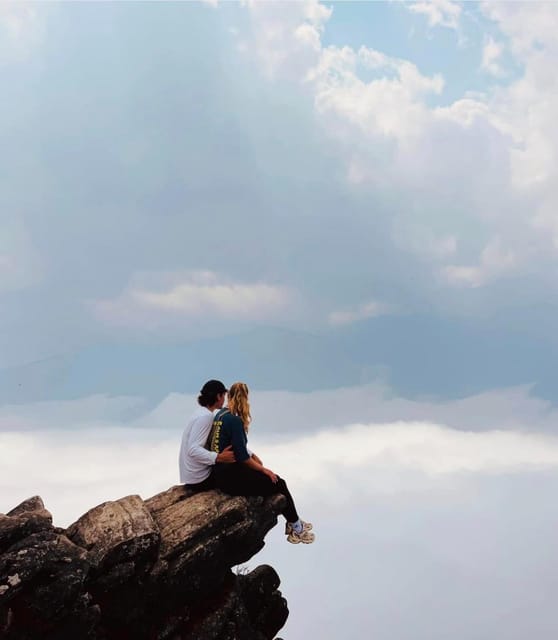
The final day heads toward Lao Chai and Y Linh Ho. You first reach the hanging bridge over the Muong Hoa River, then continue uphill into the mountains. This route provides more large views over the rice terraces and the Hoang Lien Son range.
The scenery is impressive, but do not assume the final day is easy simply because you are returning to Sapa. The route is listed at about 9 to 13 kilometers and roughly five and a half hours. An uphill section after the bridge can test tired legs.
Your larger bags are taken to the homestay, where they remain while you walk with a smaller pack. This is a practical advantage. You still need to carry personal essentials, water, sun protection, and a change of clothes, but you should not have to hike with all your luggage.
The transport back to Sapa is included after the trek ends in the village. The exact timing is not stated, so keep your onward plans flexible. If you have a train, bus, or other fixed departure, confirm the expected return time before booking.
More Waterfall Tours in Sa Pa:
- Da Lat Countryside Minivan Shared Tour (Three Waterfalls)
★ 5.0 · 1,894 reviews - Da Lat: 3 Waterfalls Tour (Datanla – Elephant – Pongour)
★ 5.0 · 1,840 reviews - Dalat: Three Waterfalls Small Group Tour – Alpine Coaster
★ 4.9 · 1,256 reviews - Dalat: 3 Waterfalls Day Tour — Datanla, Pongour & Elephant
★ 4.9 · 931 reviews
What the $80 price covers

At $80 per person, the cost is strong for a three-day, two-night experience. The package includes a local English-speaking guide for all three days, entry fees for eight villages, two nights of homestay accommodation, three lunches, two dinners, two breakfasts, one bottle of water per person per day, and transport back to Sapa.
The meals matter here. You are not paying only for a route and a guide. You are also staying with a local family and eating meals connected to the homestay. The food is described as Vietnamese home cooking, and it was one of the most praised parts of the experience.
The value is less clear if you want private hotel comfort, a short walk, or a tightly timed sightseeing schedule. Homestay rooms are part of the local experience, but the available information does not specify room arrangements, bathroom details, or whether rooms are private. Ask before booking if those details affect your decision.
Extra drinks are not included. Bring enough cash for additional bottled water, beer, or other drinks during the walk. One bottle per day is included, which may not be enough for everyone on a six-hour hike, particularly in warm weather.
The homestay is more than a bed
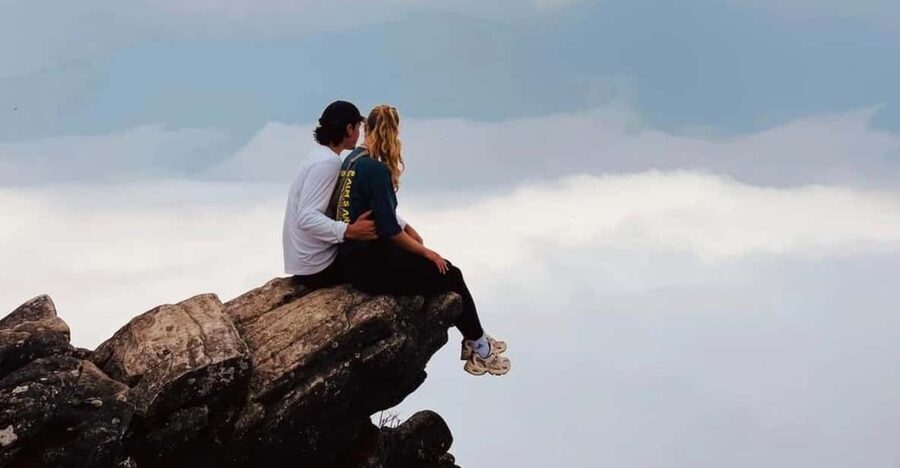
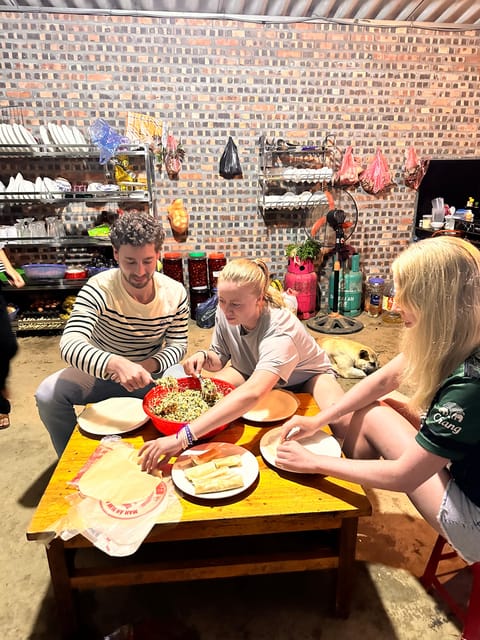
The two nights with Dinh’s family are central to the trip. You have a hot shower after the first day, meals at home, and time to talk rather than simply arriving late and leaving early. The family setting also gives you a better sense of how the tour connects to local life.
Evenings can be lively. Singing, dancing, and happy water may be part of the welcome, and other international visitors may be staying at the homestay at the same time. That can make the experience social and fun, but it also means this may not suit you if you want a quiet, private retreat.
Dinh’s story of building the homestay is part of the appeal. The experience supports a local family directly, and the money also helps maintain a small tourism business rooted in the village. You should still ask about sleeping arrangements if you need privacy, and tell the family about dietary needs before the trek.
How hard is the walking?

The tour involves three consecutive days on mountain routes. The stated distances range from 9 to 15 kilometers per day, with walking times of about five and a half to six hours. That does not count every stop, meal, photo break, or time spent visiting families.
The first day is the longest possible day, while the second includes forest trails, bridges, and a climb to the waterfall. The third includes an uphill stretch after the Muong Hoa River. You should be comfortable walking for several hours and handling uneven ground.
Bring comfortable clothes, sunglasses, a sun hat, and sunscreen. A change of clothes is wise because mountain weather and trail conditions can change. Swimwear is also listed among the suggested items, though the program does not specify a swimming stop, so treat it as optional rather than essential.
The guide can help with pace, but the information does not promise a choice of easy and hard routes. If you have knee problems, balance concerns, or limited hiking experience, ask for a clear description of the current trail before booking. The activity is not suitable for people over 95 according to the stated conditions, but age alone is a poor measure of hiking ability.
A note about the route description
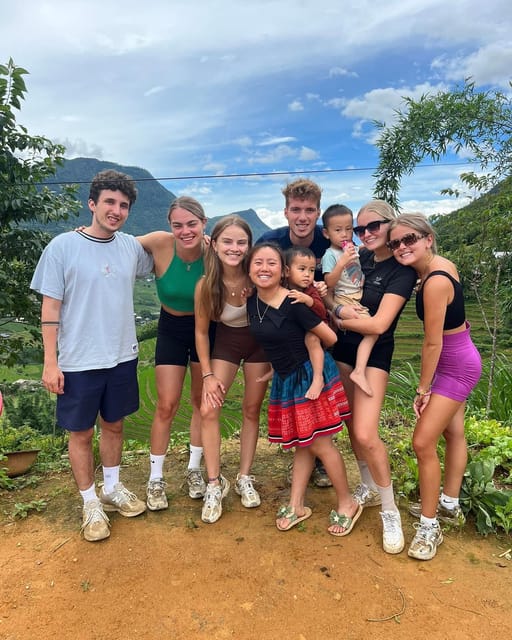
The main day-by-day plan covers Dragon Mountain, Hang Da, Hau Thao, Su Pan, Giang Ta Chai, Ta Van, Lao Chai, and Y Linh Ho. The highlights also mention Ban Ho, Tày stilt houses, and Nam Cang Valley, while the title refers to a bamboo forest and waterfall.
The bamboo forest and waterfall fit the day two route. Ban Ho and Nam Cang, however, are not included in the three-day schedule as described. If seeing Tày stilt houses or Nam Cang Valley is important to you, confirm that point before paying. You should book this as the listed Sapa, Muong Hoa Valley route unless the provider gives you a revised itinerary in writing.
That small clarification can prevent disappointment. Sapa has many routes, and similar names do not always mean the same villages or valleys.
Who should book this experience?

I would choose this trek if you want a local family homestay, long walks through rice terraces, and direct contact with Hmong and Red Dao communities. It suits people who enjoy simple lodging, shared meals, changing scenery, and a bit of uncertainty in the daily rhythm.
It is also a good choice if you want a guide who can explain village life rather than simply point out views. Dinh and her family are the heart of the experience, and the strong praise for the food, welcome, and cheerful guiding makes that clear.
I would look elsewhere if you want polished accommodation, guaranteed private rooms, short walks, or a fixed timetable. I would also avoid booking without clarification if your main goal is Ban Ho or Nam Cang, since those places are named among the highlights but not in the detailed route.
Free cancellation is available up to 24 hours before the activity for a full refund, and you can reserve now and pay later. Those terms are useful if your Sapa plans are still moving, but they do not replace checking the route, guide, luggage plan, and sleeping arrangements.
Should you book it?
Book this Sapa trekking experience if the best part of your trip sounds like walking from village to village, sleeping with a Hmong family, eating local meals, and spending time outdoors instead of returning to town each evening. At $80, the included guide, meals, village fees, homestays, daily water, and return transport make it good value.
Before booking, confirm two things: who will guide your departure, Dinh, her sister, or another family member, and whether Ban Ho or Nam Cang is actually included. If you are happy with the stated route and can handle three days of mountain walking, this is a friendly, personal way to see the Sapa region.
FAQ
Where does the trek start?
Your guide meets you at 9 a.m. at your hotel in Sapa or in front of Sapa’s main church.
How long is each day of walking?
Day one takes about six hours and covers approximately 10 to 15 kilometers. Day two takes about five and a half hours and covers 9 to 11 kilometers. Day three also takes about five and a half hours and covers 9 to 13 kilometers.
Where do you sleep?
You spend two nights at Dinh’s family homestay, with the itinerary placing the stays in Hau Thao and Ta Van.
What meals are included?
The price includes three lunches, two dinners, and two breakfasts.
Is water included?
One bottle of water per person per day is included. Extra drinks, including additional bottled water or beer, cost extra.
What languages does the guide speak?
The activity offers guides who speak English and Vietnamese.
Can you cancel for a refund?
You can cancel up to 24 hours before the activity for a full refund. You can also reserve now and pay later.
Just added around Sa Pa
- Sapa: Y Linh Ho – Lao Chai, and Ta Van Trekking Day Tour★ 5.0 · 25 reviews
- Sapa: Ta Phin Village Trek & Red Dao Herbal Bath★ 5.0 · 22 reviews
- Sapa Trekking Bargains With Local Guide★ 4.9 · 91 reviews
- Sapa: Private Highlights Day Tour with Lunch★ 4.8 · 61 reviews
- From Sapa: Guided Full-Day Trekking with Lunch and Drop-Off★ 4.2 · 86 reviews
- Sapa: Love Silver Waterfall, LonelyTree in Heaven-Rice Field★ 4.9 · 28 reviews
- Sapa: Muong Hoa Mountain Views and Villages Trek with Lunch★ 4.3 · 28 reviews
- Sapa: Cat Cat Village, Moana, Alpine Coaster, Fansipan Cable★ 4.7 · 22 reviews
Waterfall Tours, compared.

Da Lat Countryside Minivan Shared Tour (Three Waterfalls)
Read our review →
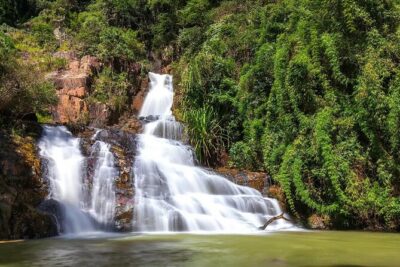
Dalat Top Tourists Sights – Waterfall & Go kart-Mario Kart
Read our review →
Sapa Motorbike Tour With Local Guide 1 Day – Waterfalls, Villages
Read our review →
Hidden Hon Ba Nature Reserve Motorcycle Tour BBQ,Beer,Waterfall
Read our review →
Trekking Tour to Hidden Waterfall & Sturgeon Farm for dog-lovers
Read our review →
Full-Day Canyoning Tour with Datanla Falls Rappelling
Read our review →Browse the lists this tour appears in