
Reviewed · COFFEE EXPERIENCES
Hanoi Coffee Workshop: Taste Salt, Coconut and Egg Coffee
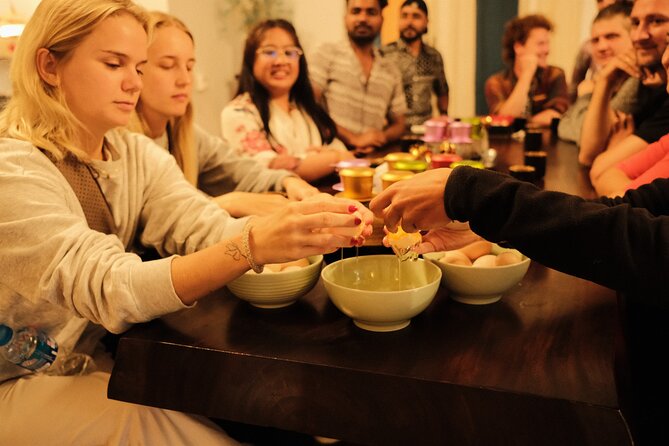
The fun here is not just drinking Hanoi coffee. You make six versions yourself, including salt, egg, coconut, and brown coffee, then finish with a coffee cocktail made with local jam and wine. I like that the class connects each drink to Vietnamese daily life instead of treating coffee as a simple caffeine stop.
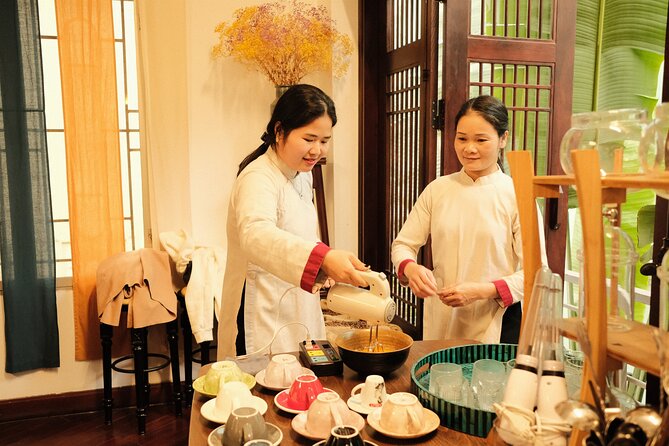
I also like the practical setup. Filters, grinders, and other equipment are supplied, and the recipe book plus digital coffee books give you a way to repeat the drinks at home. Guides including Val, Lin, Luka, and Giang are praised for keeping the class friendly and easy to follow.
The main consideration is the coffee itself. Vietnam’s robusta-led style is strong and commercial by design, not a gentle specialty-coffee tasting. The three-and-a-half-hour session also includes many drinks, so people sensitive to caffeine should plan accordingly.
Key points at a glance
- Six Vietnamese coffee styles: Make and taste phin, brown, salt, egg, coconut, and coffee cocktail versions.
- Coffee from farm to cup: Learn how Vietnam’s coffee trade became part of everyday culture and how roast levels change flavor.
- Friendly named instructors: Val, Lin, Luka, and Giang are among the baristas leading sessions.
- Useful take-home material: Receive recipes, digital coffee books, and a professional certificate if requested.
- Easy Old Quarter transport: Pickup and drop-off are available within Hanoi’s Old Quarter.
- Good value at $16: The price covers a long workshop, tastings, equipment, snacks, tea, and instruction.
Six cups that show Hanoi’s coffee character

This workshop works best if you think of it as a tasting class with hands-on brewing, not a short demonstration. Over about three and a half hours, you move through several famous Vietnamese coffee styles and learn how they differ.
The classic starting point is phin coffee, made with Vietnam’s small metal filter. The phin sits directly over your cup and lets the coffee drip slowly. It is a simple tool, but the grind, roast, water, and waiting time all affect the result.
You then work through brown coffee, salt coffee, egg coffee, coconut coffee, and the creative coffee cocktail. Brown coffee is generally built around coffee and sweetened condensed milk, while the salt version uses a small amount of salt to change the balance between bitterness and sweetness.
Egg coffee is the drink most closely linked with Hanoi’s café culture. Its creamy topping softens the strong coffee beneath it, creating something closer to a dessert than a standard breakfast cup. Coconut coffee takes the drink in a cooler, sweeter direction, and the coffee cocktail adds local jam and wine to the workshop’s final tasting.
I like this sequence because you are not simply handed a row of cups. You make them, taste them, and compare them while the differences are still fresh. A drink that sounds odd on paper can make more sense once you understand what it does to the coffee’s bitterness, body, and sweetness.
More Coffee Tours in Hanoi
- Hanoi Coffee Experience: 6 Brews, 9 Recipes & 3 Liquor Tastings
★ 5.0 · 2,945 reviews - Hanoi: Salt Coffee Workshop Awake Your Senses With 6 Brews
★ 5.0 · 792 reviews - Hanoi: Vietnamese Street Food Tour with Egg Coffee
★ 4.9 · 315 reviews
The story behind Vietnam’s coffee culture
A good coffee class needs context, and this one begins with how coffee became part of Vietnam’s cultural identity. The host explains the journey from coffee farm to cup, including the role of roast levels in shaping aroma and taste.
The point is not to turn you into a professional taster in one morning. It is to give you enough understanding to notice why one cup tastes smoky, another creamy, and another sharply sweet. You learn to separate a well-made drink from a weak or unbalanced one.
The session also addresses robusta, the bean that plays a major role in Vietnam’s coffee culture. If you prefer delicate arabica coffee, Vietnam’s dark, forceful style may surprise you. I appreciate that the workshop treats robusta as an important part of the country’s coffee story, while you should still understand that commercial robusta is not automatically the same thing as high-end specialty coffee.
That distinction matters. The workshop is about Vietnamese coffee as people commonly drink it, including condensed milk, egg foam, salt, coconut, and strong dark roasts. It is not designed as a technical evaluation of rare beans or a quiet tasting of subtle flavors.
What the three-and-a-half-hour class feels like
The length is one of the experience’s strengths. You have enough time to hear the explanations, handle the equipment, make the drinks, and taste them without racing through every station.
The class opens with welcome herbal ginger root and peach tea, along with snacks. That small touch matters because the coffee tasting is substantial. You are not facing six full café-sized drinks in one burst, but you are still consuming a lot of different preparations.
Your instructor demonstrates the equipment and walks you through each recipe. The supplied filters and grinders remove the need to bring anything. You can focus on technique rather than wondering if you have the correct gear.
The teaching style appears relaxed and inclusive. Lin is specifically praised for involving each person in the process and encouraging questions. That is useful if you are attending alone, since the class is designed to make participation easy rather than leaving you to watch from the edge.
Val is described as funny and well organized, with a particular ability to explain coffee growing and the background of Hanoi’s signature drinks. Luka is noted for clear instruction and a well-structured class, while Giang and Valerie have helped make the process comfortable and memorable. In practice, the instructor may vary by departure, so do not book around one particular person unless the provider confirms it.
You finish with a bonus taste of homemade rice wine made by the hosts. It is a pleasant local touch, but it also means this is not only a coffee lesson. If you do not drink alcohol, you can simply treat it as an optional tasting rather than a central part of the class.
Why making the drinks yourself matters
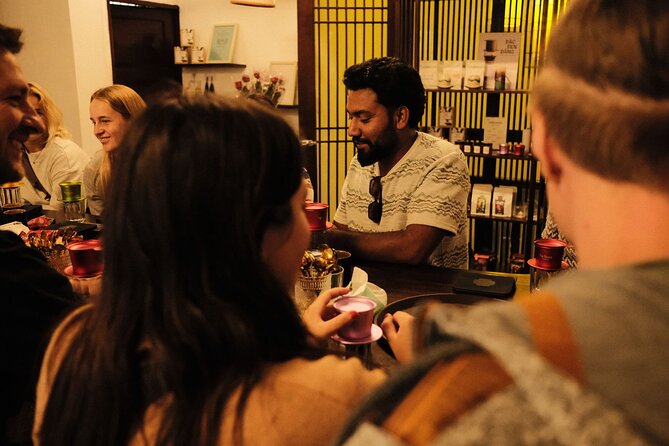
You can find egg coffee and coconut coffee all over Hanoi. The value of this workshop is learning what goes into them and gaining enough confidence to repeat the recipes later.
A café visit gives you the finished product. Here, you see the brewing stages and taste the results while the method is still in your mind. That makes the experience useful for home cooks, coffee fans, and anyone who likes bringing back a skill instead of another souvenir.
The recipe book is supplied for this reason. You also receive digital copies of coffee books connected to the workshop, and a professional certificate is available if you request one. The certificate is mostly a keepsake, but the recipes have real practical value.
The equipment is another plus. You do not need to pack a grinder or filter from home, and the class introduces the tools in a setting where you can ask how to use them. If you later buy a phin in Vietnam, you will already understand the basic idea.
I would pay close attention to the ratios and preparation times. The class gives you a starting point, but home results can vary with the beans, grind, condensed milk, and the size of your filter. That is part of the fun. The workshop gives you a method, not a guarantee that every cup will taste identical.
Same trip, a completely different kind of day:
- Hanoi Jeep Tour: Food, Culture and Fun by Vietnam Army Jeep
★ 5.0 · 15,222 reviews - Hanoi: Water Puppet Show Tickets
★ 4.6 · 7,029 reviews - Hanoi Motorbike Tour: Food, Culture and Fun by Vintage Motorbike
★ 5.0 · 6,699 reviews - Hanoi: Guided Food Tour with Train Street Visit
★ 4.9 · 6,239 reviews
The Old Quarter pickup and roastery location
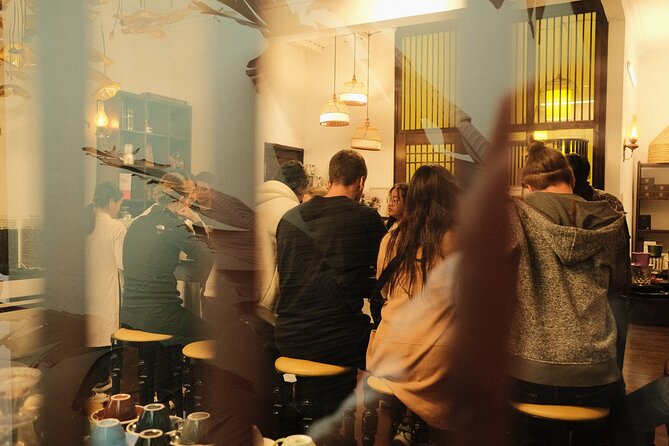
The workshop takes place at Local Beans Roastery, at No. 75/173 Hoang Hoa Tham Street, Ngoc Ha Ward, Ba Dinh, Hanoi. The activity ends back at the same meeting point.
Pickup and drop-off are available within the Old Quarter area. That is helpful because Hanoi addresses can be confusing, and arranging a ride across the city can eat into your morning. If you are staying outside the Old Quarter, you should confirm your own transport plan before booking.
The location is near public transportation, and service animals are allowed. Confirmation is issued at booking. The maximum group size is listed as 100, which is a large possible capacity, though the individual class feel described by the teaching format depends on the actual departure size.
If you prefer a small, intimate coffee lesson, ask about the expected group size before paying. A bigger class may feel social and lively, but it can give you less direct time with the instructor. The practical advantage is that the workshop supplies the gear and returns you to the starting point, keeping the logistics simple.
Is $16 a fair price?
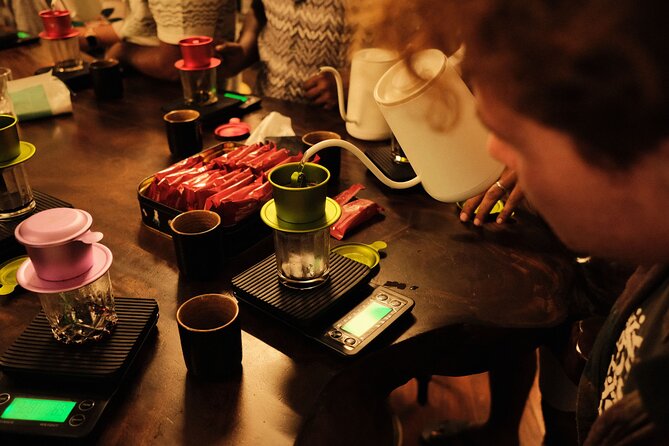
At $16 per person, this is a strong value if you want more than a single cup of Hanoi coffee. The price covers roughly three and a half hours, six coffee preparations, instruction, snacks, welcome tea, brewing equipment, recipes, and digital reading material.
You are also paying for the explanation behind the drinks. A café crawl could cost more once you add several orders, and it would not teach you how to make the coffee. The workshop turns a familiar Hanoi pleasure into a structured activity.
The value is lower if you dislike strong coffee, avoid sweet drinks, or already know how to use a phin and prepare egg coffee. In that case, the cultural discussion and group setting become the main reasons to attend.
There may also be products available for purchase so you can make the drinks at home. The information provided does not specify the product range or prices, so treat that as an optional extra rather than part of the $16 value.
The high rating, listed as 5 from 1,286 reviews with 100 percent recommending the experience, points to very consistent satisfaction. I would still balance that enthusiasm with your own taste. A highly praised coffee class cannot make robusta taste like a light arabica roast, and six samples may be too much for someone who normally drinks little caffeine.
Who will enjoy this coffee workshop most
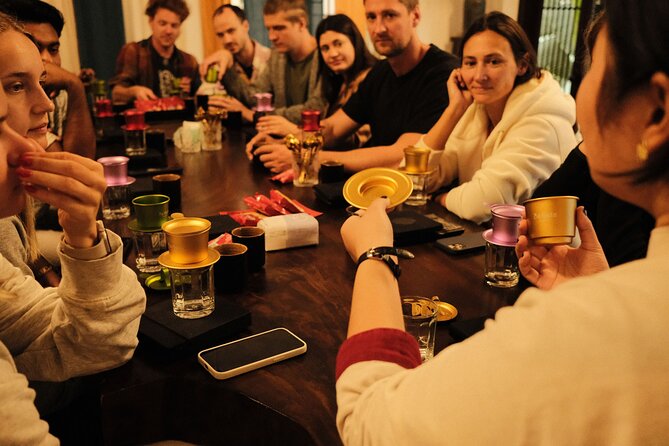
This is a natural fit for coffee drinkers who want to understand Hanoi’s most recognizable styles. It also suits people who enjoy cooking classes, local food experiences, and practical souvenirs.
Solo visitors should feel comfortable joining. The teaching style is participatory, and the class has been described as open and easy to enter alone. Couples and friends will have plenty to compare as you taste the same recipes and decide which style works best.
Non-coffee drinkers should not dismiss it too quickly. One participant who normally does not drink coffee still found the session fun and ended up liking the salt coffee. The different recipes give you more range than a standard black-coffee tasting, though every drink still contains coffee unless the provider arranges an alternative.
Vegan visitors and people with dietary restrictions can be accommodated. Tell the provider when booking, rather than waiting until the class begins. Since egg coffee and dairy-based sweet drinks are central examples, advance notice is especially useful.
This is less suited to anyone seeking a fast activity between museum stops. Three and a half hours is a real block of the day. It works best on a rainy morning, a slower afternoon, or a day when you want to understand Hanoi through food and drink rather than hurry between sights.
Practical details before you book
The listed price is $16 per person, with group discounts available. Mobile tickets are accepted, and hotel pickup and drop-off cover the Old Quarter area.
Free cancellation is available if you cancel at least 24 hours before the start time. Inside that window, the payment is not refunded, and changes are not accepted. Keep Hanoi local time in mind when making changes.
Wear something comfortable for a hands-on class, though no special clothing or equipment is listed as necessary. You should also pace yourself with the tasting. The workshop includes six coffee styles, snacks, tea, and a rice wine sample, so it is sensible not to arrive expecting only one small espresso.
If you want to take the lesson home, leave room in your luggage for coffee or brewing supplies. The recipe book and digital books are included, and products may be available to buy, but the exact items are not specified.
Should you book the Hanoi coffee workshop?
I would book this if you want a useful, low-cost Hanoi activity with a clear local focus. The best parts are the six different preparations, the hands-on phin brewing, the stories behind egg and salt coffee, and the recipes you can use after Vietnam.
I would pause if you are highly sensitive to caffeine, dislike sweet drinks, or want a specialist tasting centered on delicate arabica beans. This workshop presents Vietnamese coffee in its familiar, bold form, with condensed milk, egg, salt, coconut, and dark roast flavors.
For most visitors, $16 buys a generous three-and-a-half-hour introduction to a major part of Hanoi’s food culture. Book it early in your stay if you want time to use the advice at local cafés afterward, or choose it for a rainy day when a warm cup and a little coffee science make a better plan than walking in the wet.
FAQ
How long does the Hanoi coffee workshop last?
The workshop lasts approximately 3 hours and 30 minutes.
What coffees will I make and taste?
You will make and taste six styles: classic phin-brewed coffee, brown coffee, salt coffee, egg coffee, coconut coffee, and a coffee cocktail made with local jam and wine.
Is hotel pickup available?
Yes. Pickup and drop-off are available for hotels within Hanoi’s Old Quarter area. The activity ends back at the meeting point.
Where does the workshop take place?
It takes place at Local Beans Roastery, No. 75/173 Hoang Hoa Tham Street, Ngoc Ha Ward, Ba Dinh, Hanoi, Vietnam.
Can vegan visitors or people with dietary restrictions join?
Yes. Vegan visitors and people with dietary restrictions can be accommodated. You should provide those details when booking.
What happens if I need to cancel?
You can receive a full refund if you cancel at least 24 hours before the experience starts. Cancellations and changes made less than 24 hours before the start time are not accepted for a refund.
More Workshops in Hanoi
- Hanoi: Handcrafted Wood Carving Workshop with Local Artisan
★ 5.0 · 733 reviews - Bat trang Pottery Ceramics Class in Hanoi’s Old Quarter | VN
★ 4.9 · 240 reviews - Ha Noi Egg Coffee Class
★ 5.0 · 227 reviews - Hanoi Coffee Class learning 5 famous coffee in Hanoi
★ 5.0 · 161 reviews
Just added around Hanoi
- Private Crowd Free Hanoi: Morning Highlights of the City Experience★ 4.5 · 124 reviews
- Hoa Lo Prison and Little Paris Tour in Hanoi (French Quarter)★ 5.0 · 20 reviews
- Hanoi’s Old Quarter Street Food Experience and Train Street★ 5.0 · 22 reviews
- Old Quarter Food Tour in Hanoi★ 5.0 · 104 reviews
- Retro Hop-on-hop-off Bonbon City Tour: Classic Package★ 4.0 · 32 reviews
- [Hi-end] Private Hanoi Street Food Tour With Real Foodie★ 5.0 · 154 reviews
- Hanoi Street Food Tour★ 5.0 · 27 reviews
- Hanoi Street Food Tour with egg coffee making★ 5.0 · 22 reviews
Coffee Experiences, compared.

Vietnamese Coffee Culture and Coffee Making Class
Read our review →
Hanoi Coffee Experience: 6 Brews, 9 Recipes & 3 Liquor Tastings
Read our review →
Early Morning My Son Sanctuary Trip w. Champa Food & Coffee
Read our review →
Da Nang Cooking Class with Coffee Tasting and Market Visit
Read our review →
Fun & Easy Vietnamese Coffee Workshop in Hồ Chí Minh City
Read our review →
Hanoi Cooking Class: Pho/Bun Cha/Banh Xeo…+Free Egg/Salt Coffee
Read our review →
Coffee Farm Tour with Roasting & Tasting Workshop – Da Lat
Read our review →
Experience specialty coffee with sustainable coffee farmers
Read our review →Browse the lists this tour appears in