
Reviewed · HIKING & TREKKING
Sapa 1 Day Long Trek: Trek to Hau Thao and Sa Seng Villages
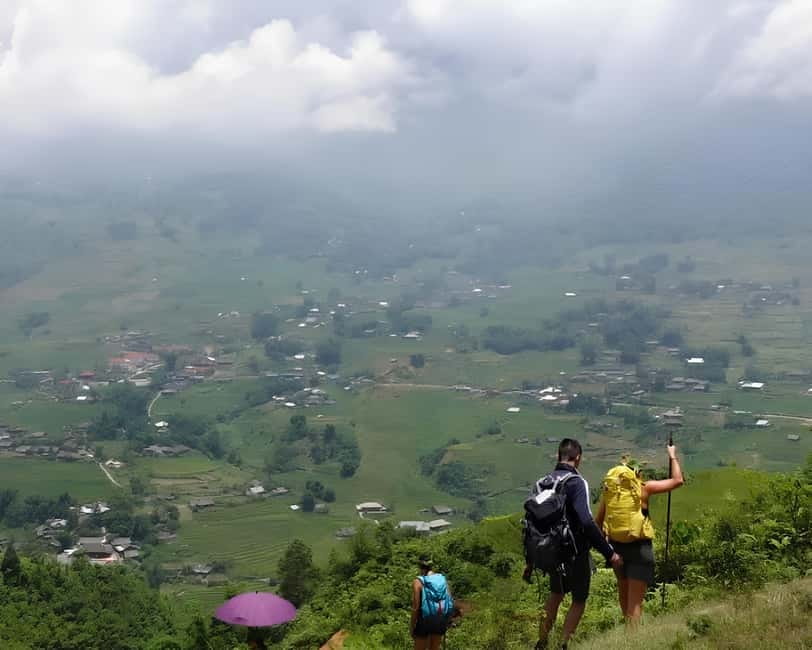
Sa Seng Mountain gives you the day’s big reward early: a high view over Muong Hoa Valley, with rice terraces sweeping toward Sapa and distant Mount Fansipan. From there, the route drops through bamboo, fields, farm paths, and Black Hmong villages before finishing near Giang Ta Chai.
I like the mix of serious mountain walking and local life, rather than a quick viewpoint stop. I also like the guides’ personal touch. Mao, Mama Mao, Su, Zozo, and others are praised for humor, patience, and clear explanations about Hmong customs. The catch is simple: this is not an easy stroll. Steep paths, mud, fog, and slippery concrete roads can make the day tiring.
Key points to know before you go
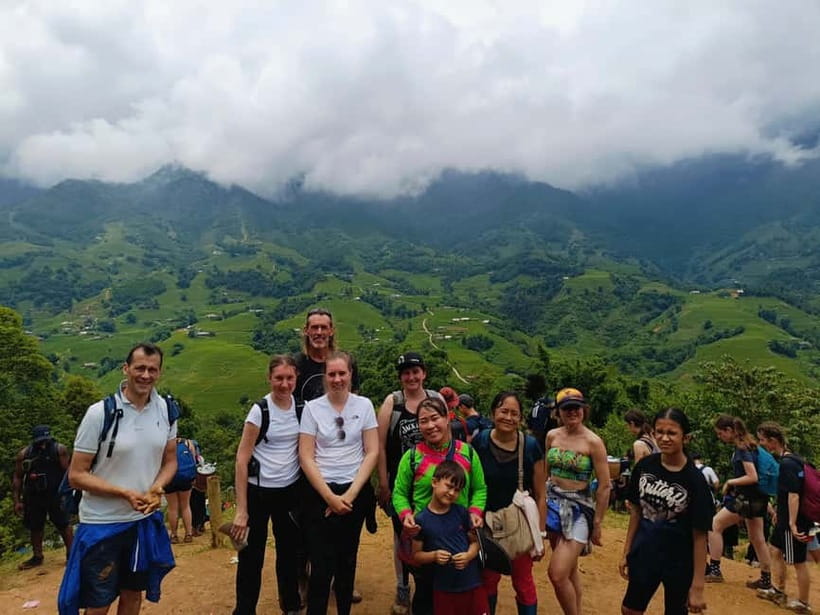
- The first climb is steep: The opening ascent to Sa Seng takes about an hour and sets the tone for the day.
- The scenery changes often: You move from high mountain views to bamboo forest, rice fields, villages, and farm tracks.
- The cultural contact feels personal: Your local guide explains farming, marriage customs, house-building, and daily Hmong life.
- The route can be wet and slippery: Rain turns some sections into a careful footwork exercise, especially near bamboo forest and steep paths.
- Lunch is part of the experience: You eat at a family-run local restaurant, with a generous home-style meal.
- Plan for a full day: The trek commonly runs 7 to 10 hours, and some outings cover about 15 to 15.6 kilometers.
A mountain trek that earns its views
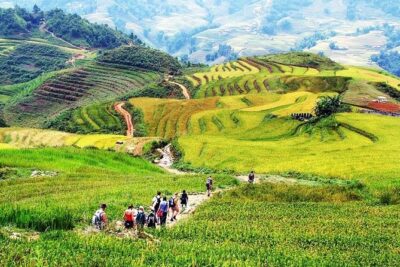
Sapa is famous for rice terraces, but the best views are not always beside the town. This trek gets you above the Muong Hoa Valley, where the valley floor, river, terraces, and mountain slopes spread out below. On a clear day, you can also see Mount Fansipan, Vietnam’s highest peak at 3,143 meters.
The route is appealing because it does not stop at one viewpoint. You keep moving through changing scenery and communities. One hour you may be looking across the valley from Sa Seng; later you are walking past buffaloes, pigs, horses, rice fields, and houses in the hills.
That variety gives the day a useful rhythm. The mountain climb tests your legs, the viewpoints give you a reason to pause, lunch breaks up the effort, and the village sections make the walk feel connected to local life rather than simply scenic.
Still, you should not book this expecting a gentle countryside ramble. Several people found the route tough, particularly the uphill opening and the later descents. One outing was measured at 15.6 kilometers, with about 630 meters of ascent and 1,100 meters of descent. Those figures will vary, but they give you a fair idea of the physical demand.
More Day Trips in Sapa
- From Sapa: 1-Day Guided Trek to Lao Chai & Ta Van with Lunch
★ 4.9 · 416 reviews - Sapa: Motorbike Tour 1 Day Visit Waterfalls & Local Villages
★ 5.0 · 112 reviews - 1-Day Sapa Long Trek – Rice Field Terrace, Ethnic Culture
★ 4.9 · 62 reviews
9:00 AM pickup and the start above Sapa
Pickup is arranged from accommodation within Sapa town at about 9:00 AM. You can also meet the group at Sapa TT Homestay on Dien Bien Phu Street or July Hotel Central Sapa on To Vinh Diem Street. If you stay outside town, a paid transfer to the meeting point may be possible.
The day begins with a short briefing before the first roughly 1-kilometer uphill section. Do not let the distance fool you. It is a climb, and the uneven surface makes it more demanding than a normal city walk.
Your guide sets the pace and usually keeps an eye on the slower walkers. This is one reason a small group helps. You have more room to stop for photos, ask questions, and move at a pace that suits the group. Small groups are available, although the exact size depends on the departure.
Guide quality matters here, and the local guides are a major part of the experience. Mao and Mama Mao are especially warm, funny personalities in the guide rotation. Su is praised for looking after the whole group and explaining the area clearly, while Zozo is known for keeping the mood light. The guide you receive will vary, but the common feature is local knowledge of the trails and villages.
Sa Seng Mountain and the view toward Fansipan
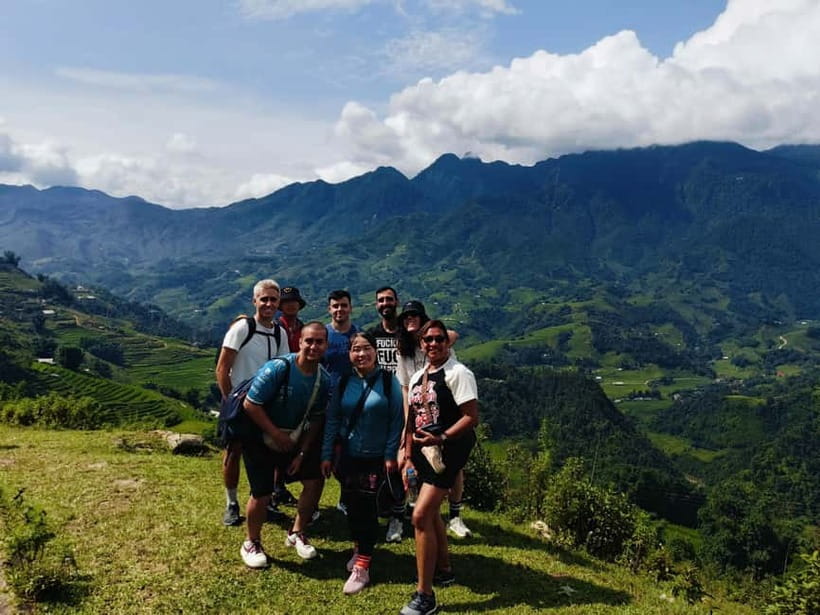
After about an hour of moderate-to-steep walking, you reach the top of Sa Seng Mountain. This is the main high point of the day and the best place to understand the scale of the Muong Hoa Valley.
Look for the long bands of rice terraces cut into the hillsides. Their appearance changes with the season. You might see newly planted fields, bright growing rice, or harvested terraces with more muted colors. Farming here is not decoration for a viewpoint. It is the work that shapes the valley and supports village life.
Fansipan appears in the distance when the air is clear. Fog is common in Sapa, especially in cooler months and during wet weather, so you should not treat the mountain view as guaranteed. Several outings have gone ahead in heavy mist, with only brief openings in the cloud.
That does not make a foggy day worthless. The route still passes through villages, forest, and fields, and a local guide can give the walk its character even when the view disappears. But if your main goal is a wide panorama, check the forecast and keep your plans flexible. The activity allows cancellation up to 24 hours ahead for a full refund, according to the booking conditions.
Downhill through Hang Da and Black Hmong country
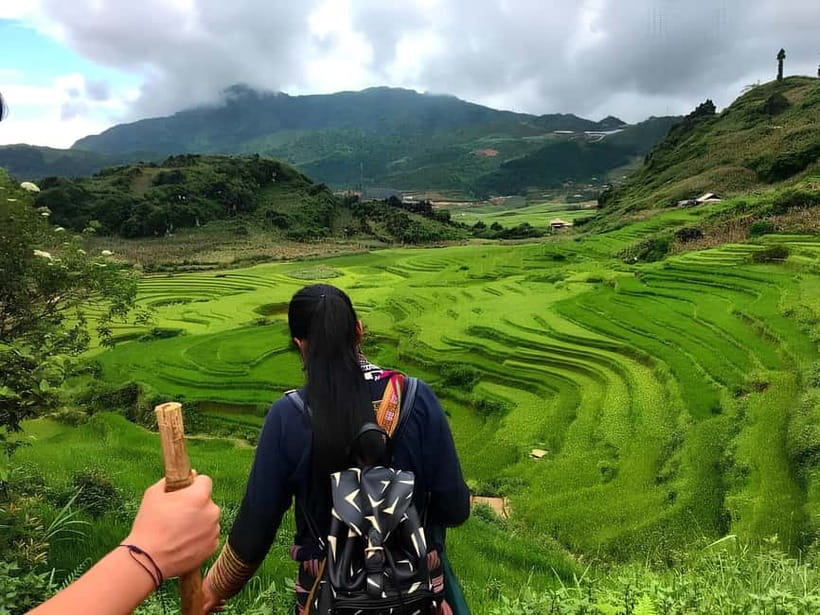
From Sa Seng, the trail continues downhill toward Hang Da Village. The change from open mountain outlook to village paths is one of the day’s strongest features.
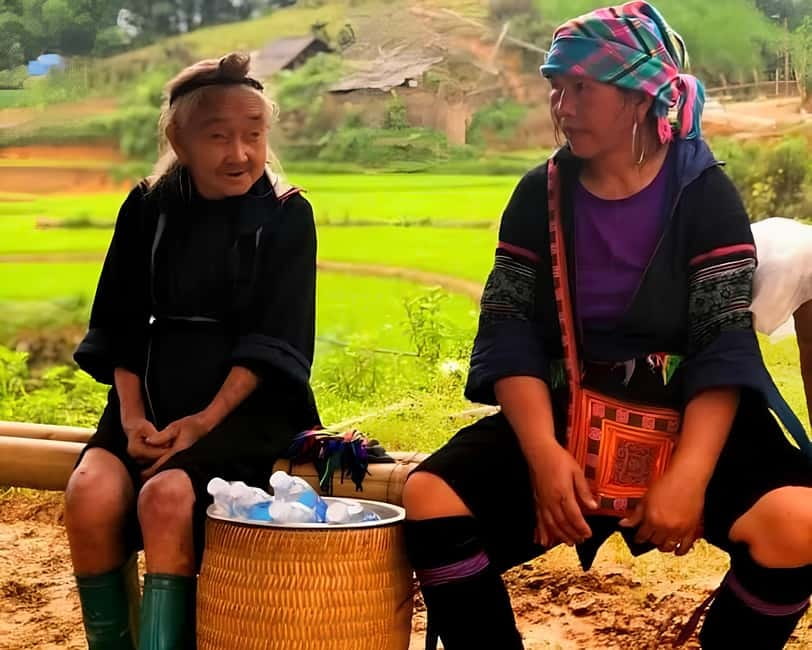
Hang Da is home to Black Hmong residents, and your guide helps you understand the community beyond the photo opportunities. You may hear about farming, house construction, marriage traditions, and the practical work required to live in the mountains.
Farm animals are part of the scene. Buffaloes, pigs, and horses may be wandering near the paths or fields. These animals are not arranged for a tour. They are working parts of village life, used for farming, transport, or household needs. That ordinary detail often says more about the area than a formal cultural display.
You should be respectful here. Follow your guide’s lead about photography and avoid treating homes, people, and working animals as props. The value of this section comes from seeing daily routines in place, not from collecting quick snapshots.
The path itself varies. You can expect uneven ground, rocky stretches, field edges, and sections that become slick after rain. Some people found the route moderate in dry conditions, while others faced a much harder walk after prolonged rain. Proper hiking shoes are the safest choice. In wet weather, local operators may provide rubber boots, but those are more useful for keeping your feet dry than for giving you secure footing on every slope.
More Trekking Tours in Sapa
- Sa Pa: Muong Hoa Valley Trek and Local Ethnic Villages
★ 4.6 · 864 reviews - Sapa: Eco Adventure Terrace Fields and Local Villages Trek
★ 4.9 · 636 reviews - Explore Sapa: 2D1N Trekking & Hmong Culture With Dinh
★ 4.9 · 191 reviews - Sa Pa: 6-Hours Muong Hoa Valley Trek with Local Ethnic guide
★ 4.5 · 178 reviews
Family-style lunch around midday
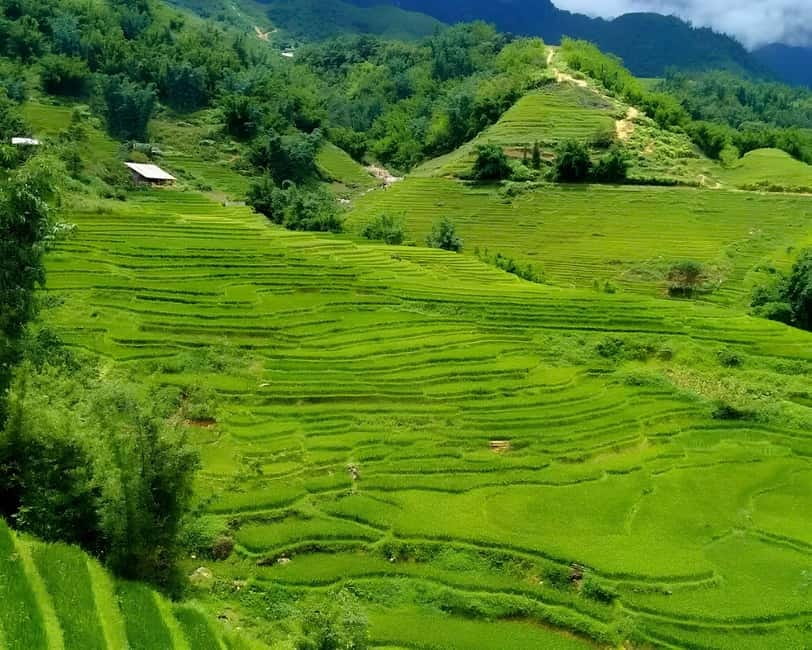
Around noon, you stop at a family-run local restaurant for lunch. This is a welcome pause after the first climb and the descent toward the villages.
The food is described as fresh, home-style, and generous. It is not a formal restaurant meal built around polished service. You are there for a simple local spread and a chance to sit down with the group. Lunch also gives you time to talk with your guide, who can answer questions that might not arise while you are concentrating on the trail.
Bring some cash. Drinks may not be covered, and the general terms include only what is specifically listed in the inclusions. Bottled water is provided during the trek, but extra purchases are best handled with Vietnamese dong.
The lunch stop also helps explain the 7 to 10-hour duration. This is not seven hours of nonstop walking. Time is used for viewpoints, village visits, photos, cultural explanations, lunch, and transport at the end.
Hau Thao and the farming calendar
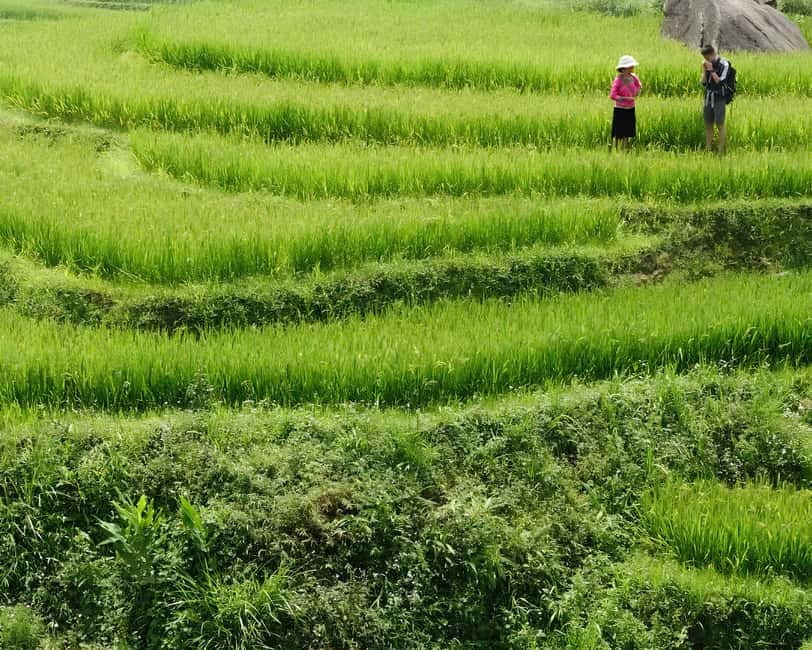
After lunch, the route continues toward Hau Thao, another Black Hmong community in the hills. Here, the experience depends strongly on the season.
You might see farmers planting or harvesting rice, depending on when you visit. The guide can explain how rice cultivation shapes the yearly cycle and why the terraces are built into the slopes. This is a useful part of the trek because it connects the scenery to the labor behind it.
Hau Thao is also where the guide’s personal background can add real value. Local guides have direct experience of village life and can explain customs in plain terms. The quality of the cultural discussion depends partly on how many questions you ask. One guide may offer plenty of information while walking, while another may respond best when you start the conversation.
If your priority is a very detailed study of village customs, this one-day route may feel fairly broad. It covers several communities and a lot of ground, so it cannot spend a long time on every topic. If you want to hear more, ask about family life, home design, farming tools, and seasonal work as you walk.
The bamboo forest and the final descent
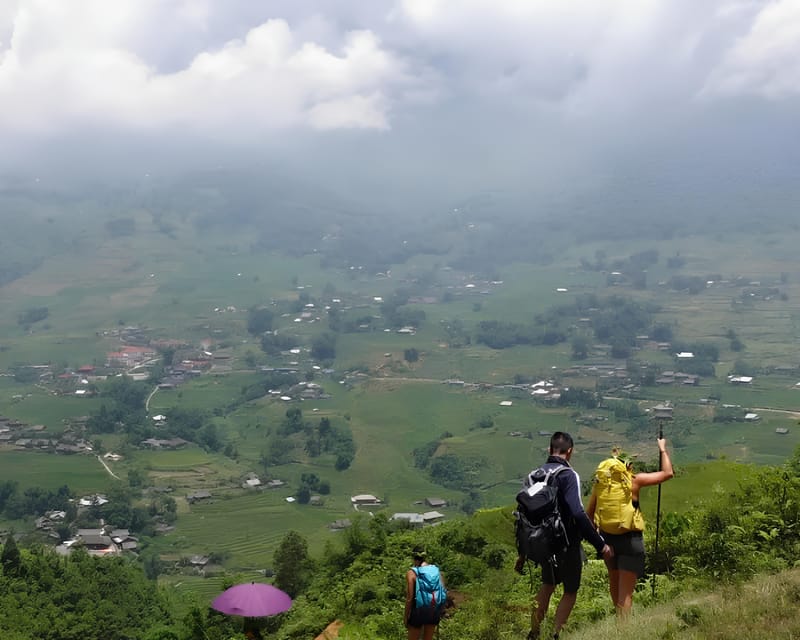
The bamboo forest is a memorable section for many people. Its enclosed trail feels very different from the open terraces and high viewpoints. In dry weather, it adds shade and variety. After rain, it can also be the muddiest and most slippery part of the trek.
This is where your footwear and balance matter most. Take short steps, use available support, and do not rush to keep up with faster walkers. Guides such as Mao, Su, and La have been praised for helping people over difficult sections, but you still need to judge your own footing.
The final stretch leads toward Giang Ta Chai, where transport waits around 3:30 PM. The end of the walk may include steep concrete roads, which sound easier than dirt trails but can be hard on tired knees. The long downhill sections are a real consideration for anyone with weak knees or limited hiking experience.
A private vehicle returns you to Sapa. Drop-off arrangements can be discussed after booking, and a fee may apply depending on the location. If you plan to stay near Hau Thao or Giang Ta Chai instead of returning to town, the operator can help arrange a local homestay, luggage transfer, or transport plan if you ask ahead of time.
Weather, fitness, and what to pack
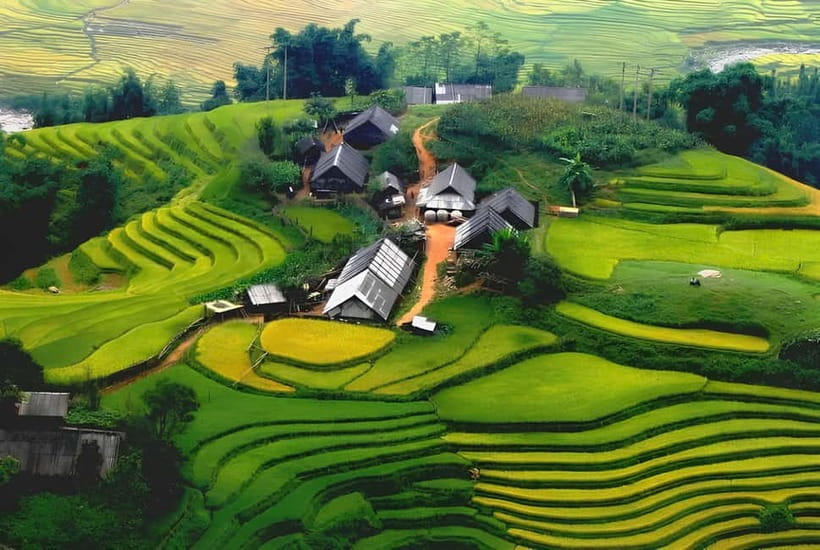
Sapa weather can change the character of this outing completely. On a clear day, Sa Seng offers the panoramic views that make the climb worthwhile. In fog, the valley may vanish. In rain, the route becomes a careful hike rather than a relaxed walk.
The most useful items are:
- Hiking shoes with good grip
- A light rain layer
- Sun protection, including sunglasses and a hat
- Drinking water beyond the supplied bottle if you usually drink a lot
- Cash for drinks or personal purchases
- A phone or camera protected from rain
The route is not suitable for wheelchair users, people with mobility impairments, people with heart or kidney problems, people with altitude sickness, or children below the stated minimum ages. The restrictions also exclude people over 159 kilograms and people over 80 years old. The supplied information lists several overlapping child age limits, so confirm the exact age rule when booking if you are traveling with a young child.
You do not need technical mountaineering gear, but you do need a reasonable level of fitness. If you rarely hike, the combination of steep climbing, uneven paths, and a long descent may feel like too much. If you hike regularly, the route is a demanding but manageable full-day outing in dry conditions.
Is $24 a fair price?
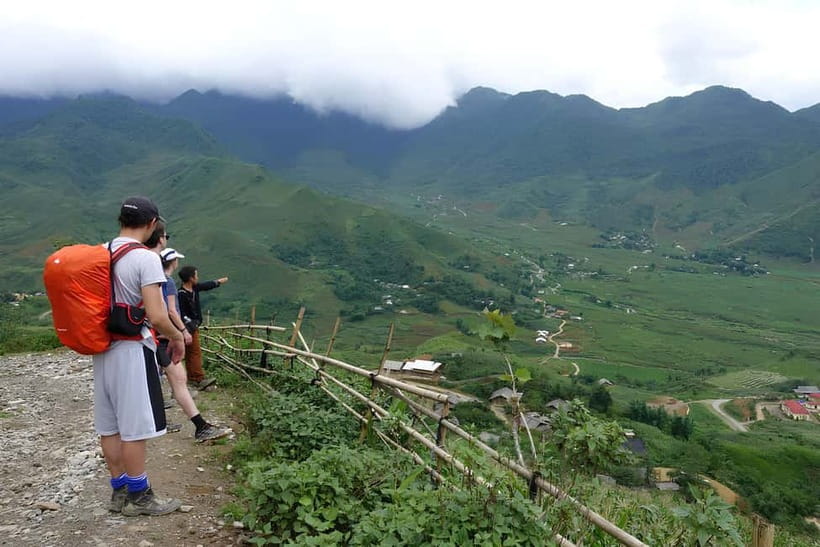
At $24 per person, the value is strong if you want several elements in one day. The price includes pickup in Sapa town, a local English-speaking guide, village entrance fees, bottled water, lunch, transport back to town, and support from the local operator.
The main value is not just transport or a viewpoint. You are paying for a route that links Sa Seng, Hang Da, Hau Thao, and Giang Ta Chai, plus a guide who can explain what you are seeing. A self-guided walk might cost less, but you would need to find the route, arrange transport from the final village, and miss much of the cultural context.
The price does not cover anything outside the stated inclusions. Drinks at lunch, purchases from local sellers, and paid pickup from outside Sapa town may cost extra. Some women from nearby communities may walk with groups and offer scarves or other goods for sale. If you do not want to buy anything, be polite but firm and discuss this with your guide.
Who should book this trek?
I would choose this outing if you have one full day in Sapa and want a broad taste of the mountain area. It works well for people who value village life, changing scenery, and a local guide more than a perfectly predictable schedule.
It also suits you if you enjoy a challenge but do not want a multi-day trek. You get a long day on foot, a family lunch, and a vehicle back to town instead of carrying overnight gear.
I would hesitate if your knees are unreliable, if you dislike mud, or if you need guaranteed views. The route can be foggy, rainy, and slippery. A clear forecast improves the scenery, but no forecast can promise Fansipan will appear.
Should you book the Sa Seng and Hau Thao trek?
Book it if you want a physically active day with real village contact, and you can accept that weather may hide the famous views. The strongest parts are the high Sa Seng viewpoint, the changing trail, the Black Hmong communities, and the guide’s personal stories.
Skip it if you are seeking an easy walk, a tightly controlled sightseeing schedule, or a guaranteed panorama. For most reasonably fit visitors with suitable shoes, $24 buys a lot: a full day outside Sapa, lunch, local guiding, village access, and a ride home with tired legs.
FAQ
How long does the Sapa trek take?
The experience lasts about 7 to 10 hours. Pickup is scheduled around 9:00 AM, and the trek usually finishes near Giang Ta Chai around 3:30 PM before transport returns to Sapa.
Where does the trek start and finish?
Pickup is available from accommodation in Sapa town. The walking route passes Sa Seng, Hang Da, and Hau Thao, then finishes near Giang Ta Chai, where a vehicle transfers you back to Sapa.
Is lunch included?
Yes. A traditional lunch at a family-run local restaurant is included. Drinks may cost extra, so bring cash.
What villages does the route visit?
The route includes Sa Seng, Hang Da, and Hau Thao, with the walking section finishing in Giang Ta Chai. These communities are associated with the Black Hmong ethnic group.
Will I see Mount Fansipan?
You can see distant Mount Fansipan from Sa Seng Mountain when weather conditions are clear. Fog, rain, and low cloud can block the view.
Is the trek suitable for beginners?
It may suit a beginner who is fit and comfortable with a full day of hiking, but it is not an easy walk. The route includes steep uphill and downhill sections, uneven paths, and possible mud. Some people find it too demanding as a first hike.
What languages does the guide speak?
Guides are available in English and Vietnamese. The English-speaking local guide explains Hmong culture, farming, house-building, and daily life along the route.
Can I cancel or pay later?
You can cancel up to 24 hours before the activity for a full refund. Reserve-now, pay-later booking is also available, subject to the booking conditions.
More Day Trips in Sa Pa
- In Sapa: 1 Day Mountain Trek, Visit beautiful villages
★ 5.0 · 50 reviews - Hanoi/Ninh Binh: 1-Day Tam Coc/Trang An, Hoa Lu & Mua Caves
★ 4.6 · 3,706 reviews - Full day trip to Lan Ha-Ha Long Bay from Cat Ba, avoid the crowds
★ 5.0 · 3,317 reviews - Cu Chi Tunnels and Mekong Delta 1 Day Tour With Small Group
★ 5.0 · 2,337 reviews
More Trekking Tours in Sa Pa
- Sa Pa: 2-Day Trekking Trip with Ethnic Minority Homestay
★ 4.7 · 145 reviews - Half Day Sapa Trekking to Visit Lao Chai – Ta Van
★ 4.7 · 126 reviews - Sapa Trekking Bargains With Local Guide
★ 4.9 · 91 reviews - From Sapa: Waterfalls, Trekking and Tribal Villages Tour
★ 4.6 · 91 reviews
Just added around Sa Pa
- Sapa3D2N TrekkingAdventures,Valleys,Bambooforest,Waterfall★ 4.8 · 24 reviews
- Sapa: Y Linh Ho – Lao Chai, and Ta Van Trekking Day Tour★ 5.0 · 25 reviews
- Sapa: Ta Phin Village Trek & Red Dao Herbal Bath★ 5.0 · 22 reviews
- Sapa Trekking Bargains With Local Guide★ 4.9 · 91 reviews
- Sapa: Private Highlights Day Tour with Lunch★ 4.8 · 61 reviews
- From Sapa: Guided Full-Day Trekking with Lunch and Drop-Off★ 4.2 · 86 reviews
- Sapa: Love Silver Waterfall, LonelyTree in Heaven-Rice Field★ 4.9 · 28 reviews
- Sapa: Muong Hoa Mountain Views and Villages Trek with Lunch★ 4.3 · 28 reviews
Hiking & Trekking, compared.

Halong Bay Full Day with Kayaking, Hiking viewpoint, Cave – Deluxe To Luxury
Read our review →
Sa Pa: Muong Hoa Valley Trek and Local Ethnic Villages
Read our review →
Sapa 3 Days 2 Nights Trekking Tour (1 Night In Ta Van Village, 1 Night In Hotel)
Read our review →
2-Day Sa Pa Ethnic Homestay Tour & Trek with Limousine Bus
Read our review →
1-Day Guided Trek to Lao Chai & Ta Van with Lunch
Read our review →
Browse the lists this tour appears in