
Reviewed · COFFEE EXPERIENCES
Coffee, History, and Architecture of the French Quarter
Hanoi’s French Quarter makes most sense when someone connects the handsome buildings to the difficult story behind them. This 2.5-hour walk does that over coffee in an old French villa, then carries the conversation past St. Joseph’s Cathedral, the Opera House, Hoan Kiem Lake, the Metropole, and more than 15 notable sights. Mina and Dung are among the guides named for the experience, and both bring a friendly, personal approach.
I like the way coffee and history share the opening act, rather than treating Vietnamese coffee as a quick photo stop. I also like the easy pace and the chance to ask about French rule, the Vietnam War, architecture, food, and present-day Hanoi. The main consideration is the weather: the tour runs rain or shine, and much of it is outdoors in Hanoi’s heat, humidity, and traffic.
Key points to know before you book
- Coffee begins the history lesson: You start with Vietnamese coffee or tea in a French villa, with egg and coconut coffee available according to the tour experience.
- The route covers 15 or more sights: Expect St. Joseph’s Cathedral, the Opera House, Hoan Kiem Lake, the Metropole, Trang Tien Street, the post office, and other French Quarter landmarks.
- The talk is conversational: Guides explain both the benefits and damage of French colonial rule, then welcome questions about Vietnamese history and life today.
- Trang Tien ice cream is included: The famous local parlor supplies a cool break near the end of the walk.
- English is the tour language: Mina is frequently named as a guide, while Dung is also identified as a warm and enthusiastic guide.
- The $31 price buys context, not just sightseeing: Coffee, ice cream, a local guide, and a focused history walk are included, with free admission for people assisting guests with disabilities.
Why Hanoi’s French Quarter is best seen on foot
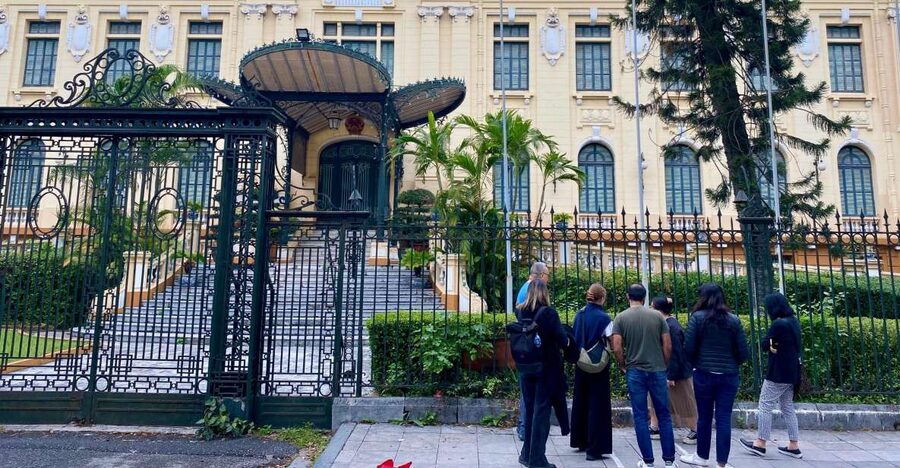
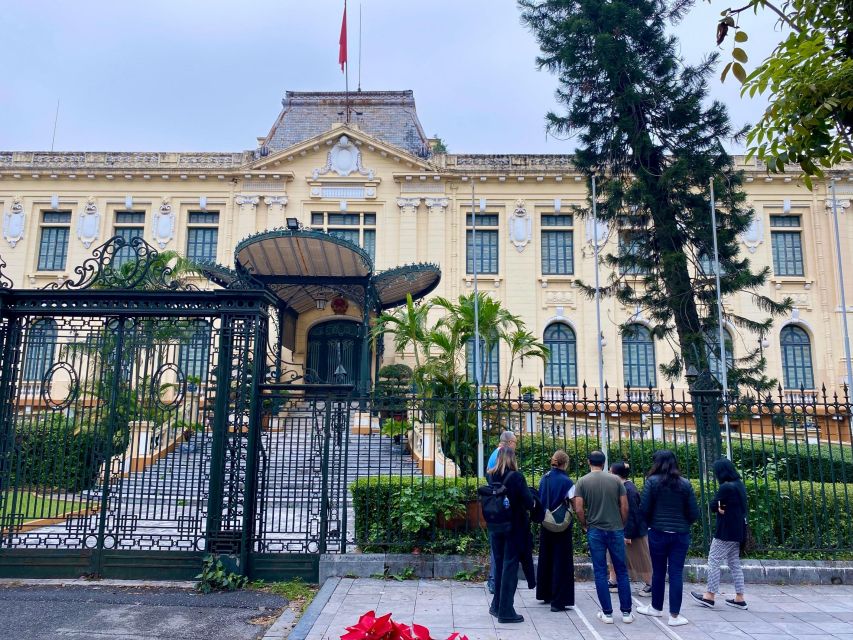
Hanoi’s French Quarter is south of the Old Quarter, but it has a different feel and a different story. Broad streets, grand civic buildings, villas, hotels, churches, and formal gardens reflect the period of French rule. Yet the area is not a preserved European set. Vietnamese life continues around and inside these old structures.
That mixture is the reason I would choose a guided walk here instead of simply photographing the buildings. A façade can show you columns, balconies, shutters, or arched windows. A good guide can explain what those styles meant, who commissioned them, how Vietnamese society changed under colonial rule, and what happened to the district during later conflict and political change.
The experience is designed as a conversation rather than a lecture. That matters in Hanoi, where the history can quickly become complicated. You can ask about language, food, education, architecture, French influence, the Vietnam War, or modern city life. Mina is especially praised for clear English, humor, and the ability to answer a long string of questions without losing the thread.
More Coffee Tours in Hanoi
- Hanoi Coffee Experience: 6 Brews, 9 Recipes & 3 Liquor Tastings
★ 5.0 · 2,945 reviews - Hanoi Coffee Workshop: Taste Salt, Coconut and Egg Coffee
★ 5.0 · 1,286 reviews - Hanoi: Salt Coffee Workshop Awake Your Senses With 6 Brews
★ 5.0 · 792 reviews
Starting beside St. Joseph’s Cathedral
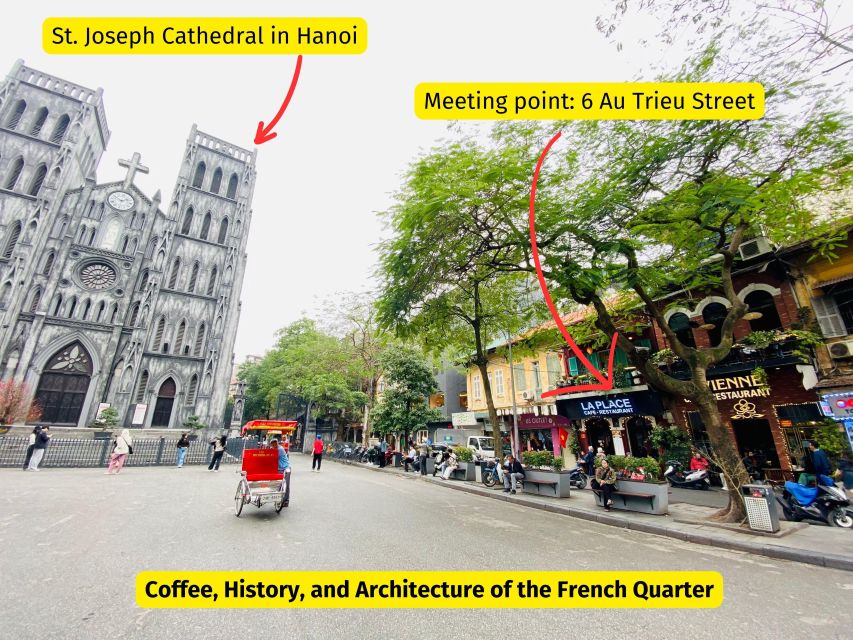
Meet at 6 Au Trieu Street, directly beside St. Joseph’s Cathedral. This is a useful starting point because the church is easy to recognize, and the surrounding streets provide an immediate contrast between old religious architecture and everyday Hanoi.
The cathedral receives about 15 minutes in the stated route, including a guided look and a break. You should have time to take in its Gothic appearance and hear how it fits into the French period. The stop is more useful when the guide explains the setting rather than simply naming the building.
From here, the walk moves into the coffee portion. Bring comfortable shoes, because you will be walking on city streets and pausing at several outdoor landmarks. Sunscreen, a hat, and breathable clothing are sensible in warm weather. An umbrella or raincoat is equally sensible during Hanoi’s wet spells.
Vietnamese coffee in an old French villa
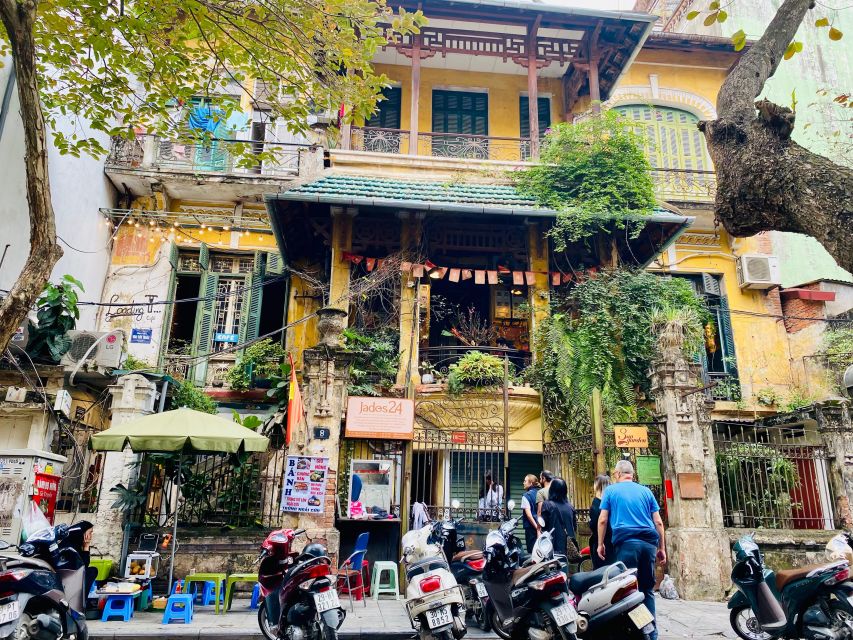
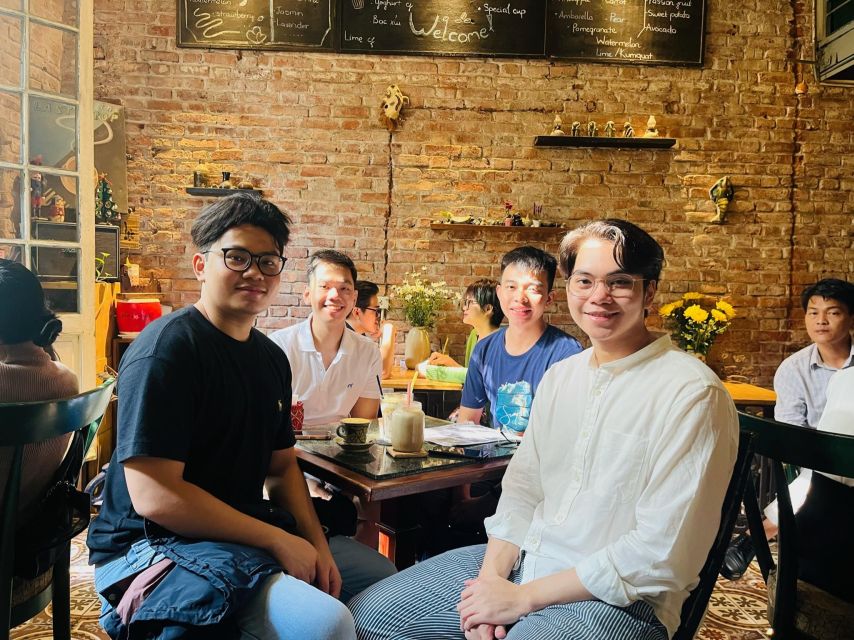
The coffee stop is one of the strongest parts of this experience. You visit a local café in an old French villa and receive a cup of Vietnamese coffee or tea. Egg coffee and coconut coffee are specifically part of the experience described by the tour, giving you a chance to try two local variations rather than settling for a standard café drink.
This is more than a refreshment break. The guide begins with a general account of Vietnamese history and explains the place of coffee in local life. Starting with food and drink helps keep the history grounded. You are not only hearing about foreign influence in the abstract. You are sitting in a building shaped by that period while drinking something that has become part of Vietnam’s own café culture.
The stop lasts about 30 minutes. That gives you time to drink slowly, ask questions, and settle into the walking route. It also makes the tour a little easier for people who prefer a relaxed start rather than an immediate march through monuments.
The exact café may feel tucked away compared with Hanoi’s more visible coffee shops. That is part of the appeal, but it also means the experience is not aimed at someone who wants a polished restaurant setting or a long meal. Coffee and tea are included. The tour does not present itself as a full food tour.
French influence, explained without a one-sided story
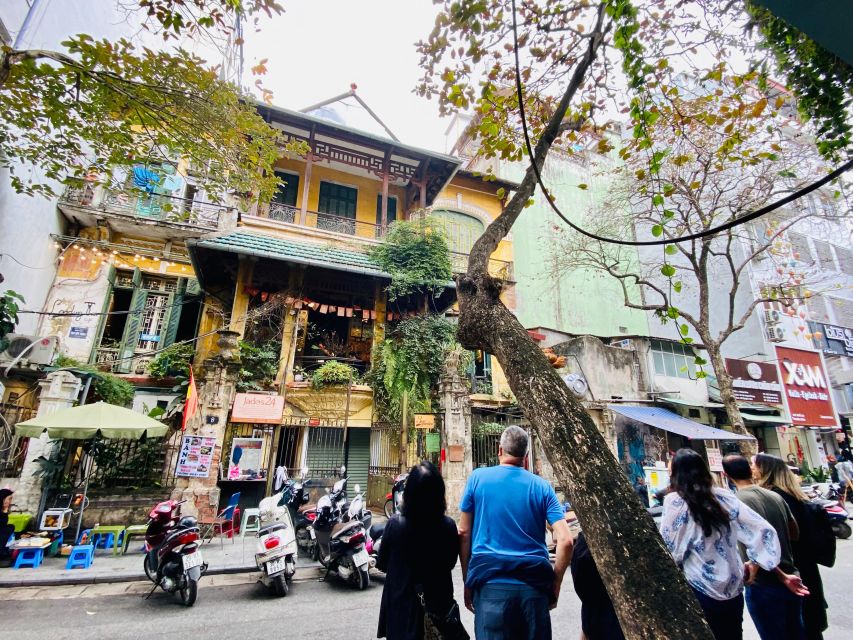
After coffee, the guide gives a broad look at French influence in Hanoi and the colonial period. The strongest feature here is balance. You hear about architecture, education, infrastructure, and cultural changes, but also about the unequal power structure and the harm caused by colonial rule.
That balance is important. Colonial buildings can be beautiful, but beauty does not erase the politics behind them. The walk helps you hold both ideas at once. You can admire the design and still ask who paid the cost of the system that produced it.
The discussion also reaches the Vietnam War and the ways that conflict shaped Hanoi. Historical photos are available during the tour to help explain major events. This visual aid is useful when a spoken account becomes hard to picture, especially for people arriving with only a general idea of Vietnam’s modern history.
Mina’s style is described as direct, funny, and open to questions. That tone should suit you if you want clear explanations without a formal classroom feel. It may be less suitable if you want a specialist architectural lecture with technical detail at every stop.
More Historical Tours in Hanoi
- Hanoi Heritage Premium Daily Tour
★ 5.0 · 914 reviews - Old Quarter Hanoi Street Foods and Heritage Road Tour by Walking
★ 5.0 · 117 reviews - Hanoi Full Day A Private Tour With Mix of History and Activities
★ 5.0 · 51 reviews - Hanoi City Highlights Walking Tour – Landmarks & History
★ 5.0 · 34 reviews
The Opera House and Hanoi’s civic center
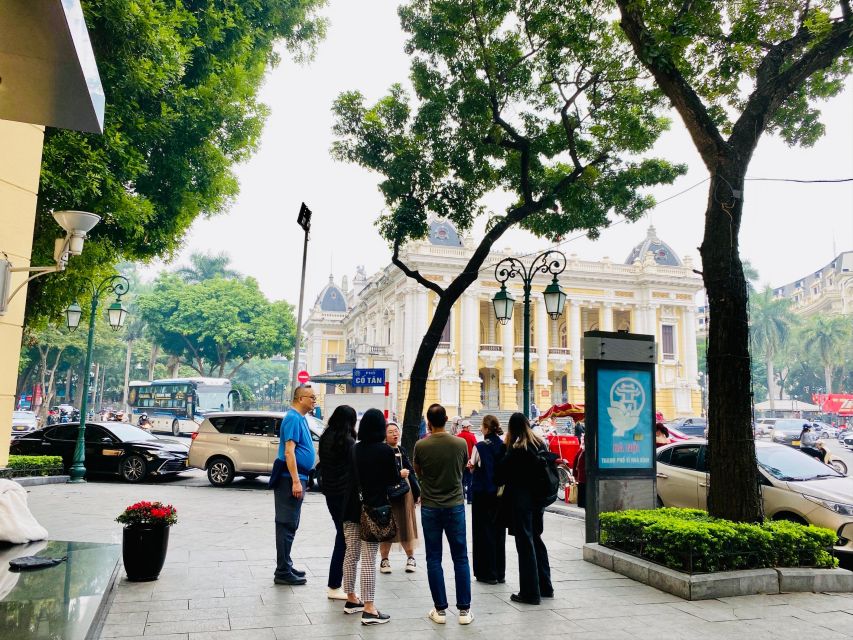
The walk continues to the Hanoi Opera House, with about 15 minutes for a guided visit from the outside and surrounding area. The building is one of the French Quarter’s clearest examples of European-inspired public architecture.
Here, the value lies in seeing how the French reshaped the city’s civic center. Your guide can place the Opera House within the wider district rather than treating it as an isolated landmark. You also get a sense of how the area’s formal spaces differ from the narrow lanes and dense activity of the Old Quarter.
The tour does not list an interior performance or admission to the Opera House. Think of this as an architectural and historical stop on a walking route. If you want an inside visit, you would need to arrange that separately.
Hoan Kiem Lake and the city beyond the buildings
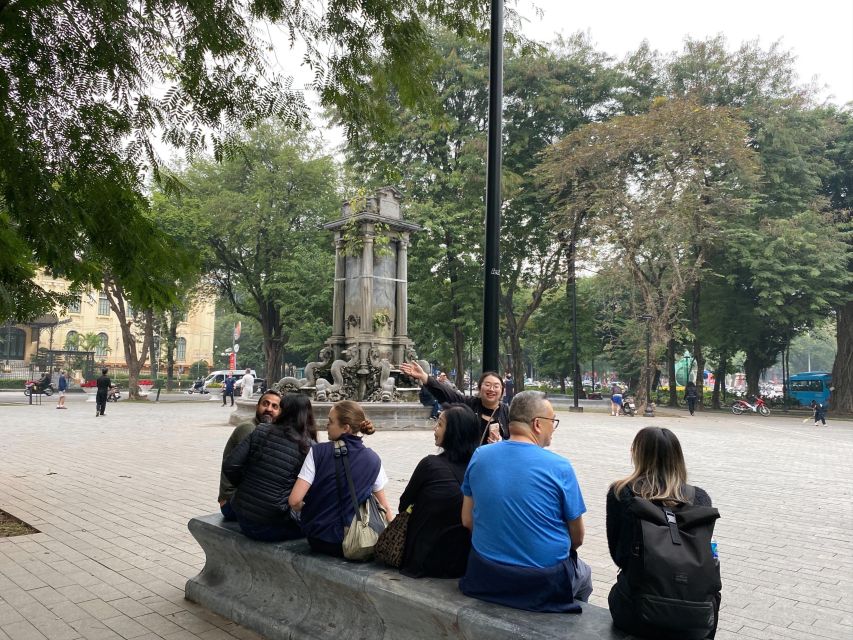
Hoan Kiem Lake is another 15-minute stop. The lake gives the walking route a pause from rows of colonial buildings and provides a place to discuss Hanoi as a living city, not only a collection of historic sites.
This stop helps connect the French Quarter to the rest of central Hanoi. You are still close to the Old Quarter, but the lake offers a different rhythm and a broader view of city life. The guide can also help you understand why this part of Hanoi remains important to residents as well as people visiting for the first time.
Do not expect a long lakeside break. The route treats Hoan Kiem Lake as one chapter in a larger story. If you want extended time for photos, people-watching, or a full circuit of the lake, plan to return on your own.
The Metropole, Trang Tien Street, and the old university
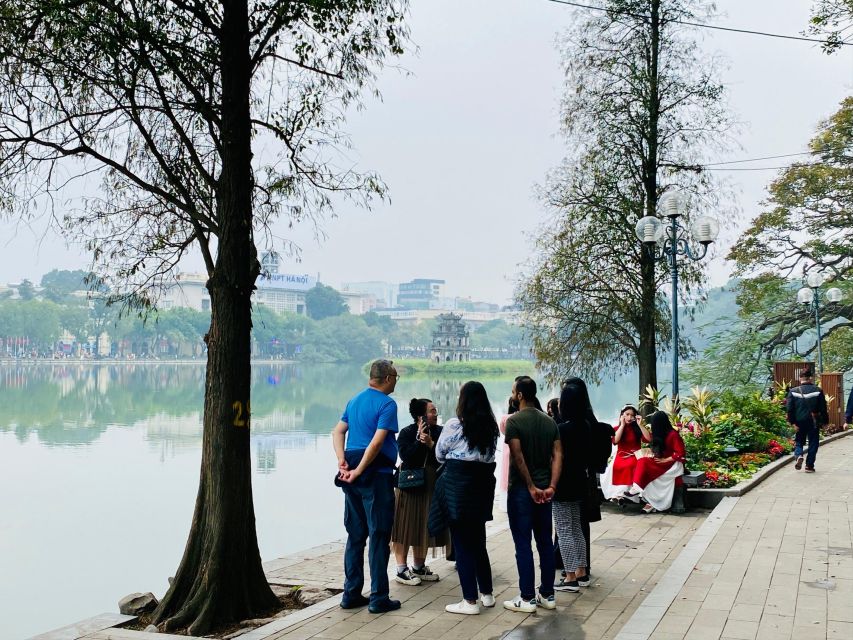
The route then reaches the Sofitel Legend Metropole Hanoi, Trang Tien Street, and the surrounding French Quarter. Each receives about 15 minutes of guided attention, though the pace can vary with the group and street conditions.
The Metropole is a useful stop for discussing Hanoi’s colonial hotel culture and the district’s changing role. It also gives the guide a chance to connect architecture with the lives of people who used these spaces over time. You see how the old French quarter has been adapted rather than frozen in the past.
Trang Tien Street brings the story back to daily life. This is where the famous Trang Tien ice cream stop fits naturally. The ice cream parlor has seating and a restroom, so it is a practical pause as well as a local food experience.
The route also points out the first university in French Indochina, along with the Hanoi Post Office and other landmarks. The supplied route names Hanoi University of Pharmacy as the finishing point. Since the meeting information also describes the activity as ending back at the meeting point, confirm the exact final arrangement when you book.
Why the coffee and ice cream matter
It is easy for a walking tour to become a string of monuments. This one uses two small food stops to keep the experience connected to Hanoi today.
The coffee introduces a local café tradition and gives you time to talk with the guide before the longest part of the walk. The Trang Tien ice cream supplies a distinctly local finish and a break from the heat. Neither stop is presented as a full meal, so you should eat beforehand if you need substantial food.
The food also makes the tour approachable for families and mixed-age groups. A history walk can lose younger participants quickly. Coffee for adults and ice cream for everyone else gives the route a little more range. Dietary needs can be discussed with the guide, and Mina has been described as willing to adjust parts of the tour for personal interests, energy levels, and dietary requirements.
Price, timing, and practical value

At $31 per person, this is a fair price if you want a local guide to organize the history and include two refreshments. You receive an English-language walking tour, Vietnamese coffee or tea, an ice cream at Trang Tien, historical images, and guidance through more than 15 sights.
The value is not in admission tickets to major attractions, because this route is primarily an outdoor walking experience. You are paying for interpretation, local conversation, and a planned path through a district that can otherwise seem like a series of attractive but disconnected buildings.
The stated duration is 2.5 hours. That is long enough for a useful introduction without taking over your entire day. Starting times vary, so check availability and consider placing it early in your Hanoi visit. You will gain names, context, and nearby suggestions that can make later independent exploring more rewarding. One guide also recommends places for banh mi and hot pot, along with pronunciation tips and other Hanoi advice.
The group size is not fixed in the supplied details. One described outing had a couple and a family with two teenage girls, with a small enough group for easy conversation. If keeping the group small matters to you, ask about the expected size before booking.
The walk operates in all weather. Hanoi can be hot, humid, and wet, so wear comfortable shoes and breathable clothes. Free admission is available for people assisting guests with disabilities, which is a helpful policy, though the walking route and street conditions should still be discussed in advance if mobility is a concern.
Cancellation is flexible up to 24 hours before the start for a full refund, and you can reserve now and pay later. Those terms are useful if your Hanoi schedule is still moving around.
Who will enjoy this Hanoi history walk
I would choose this tour for a first visit to Hanoi, especially if you want an introduction to modern Vietnamese history rather than a quick list of landmarks. It also suits repeat visitors who saw the French Quarter before but missed the links between the buildings and the country’s political past.
History fans should appreciate the discussion of French rule and the Vietnam War. Architecture fans will get a guided look at churches, villas, civic buildings, hotels, streets, and institutional landmarks. Food-curious visitors will enjoy egg or coconut coffee and Trang Tien ice cream, though this is not a full culinary tour.
Families may like the short stops and sweet finish. The route can also work for people who prefer a relaxed pace and frequent chances to ask questions. On the other hand, you may want a different experience if you dislike walking outdoors, need extensive indoor sightseeing, or want to spend long periods inside each major building.
Should you book it?
Book this tour if you want Hanoi’s French Quarter to feel like a connected story rather than a photo route. The best reasons are the conversational guides, the useful historical context, the old-villa coffee stop, and the included Trang Tien ice cream.
I would be especially inclined to book with Mina if she is available, based on her clear English, humor, local advice, and ability to handle detailed questions. Dung is also identified as an enthusiastic guide. Check the weather, wear light clothing and good shoes, and confirm the final meeting arrangement because the route description gives both Hanoi University of Pharmacy and the original meeting point as the endpoint.
Skip it if your priority is entering museums or monuments for extended visits. For a friendly, food-assisted introduction to French colonial architecture, Vietnamese coffee, and Hanoi’s difficult modern story, $31 is a sensible use of half a day.
FAQ
How long does the Coffee, History, and Architecture of the French Quarter tour last?
The stated duration is 2.5 hours. Starting times vary, so check availability when selecting a date.
What language is the tour conducted in?
The live tour guide speaks English.
Where does the tour start?
Meet at 6 Au Trieu Street, right beside St. Joseph’s Cathedral of Hanoi.
What food and drinks are included?
You receive a cup of Vietnamese coffee or tea in an old French villa and ice cream at the Trang Tien ice cream parlor. Egg coffee and coconut coffee are included among the coffee experiences described for the tour.
Which Hanoi sights are included?
The route includes St. Joseph’s Cathedral, a local café, the French Quarter, Hanoi Opera House, Hoan Kiem Lake, Sofitel Legend Metropole Hanoi, Trang Tien Street, Hanoi Post Office, and other landmarks. More than 15 sights are covered overall.
Does the tour operate in bad weather?
Yes. The experience operates rain or shine. Bring an umbrella or raincoat if rain is expected, along with sunscreen, a hat, breathable clothing, and comfortable shoes.
Can I cancel or pay later?
You can cancel up to 24 hours in advance for a full refund. Reserve now and pay later is also available.
Just added around Hanoi
- Private Crowd Free Hanoi: Morning Highlights of the City Experience★ 4.5 · 124 reviews
- Hoa Lo Prison and Little Paris Tour in Hanoi (French Quarter)★ 5.0 · 20 reviews
- Hanoi’s Old Quarter Street Food Experience and Train Street★ 5.0 · 22 reviews
- Old Quarter Food Tour in Hanoi★ 5.0 · 104 reviews
- Retro Hop-on-hop-off Bonbon City Tour: Classic Package★ 4.0 · 32 reviews
- [Hi-end] Private Hanoi Street Food Tour With Real Foodie★ 5.0 · 154 reviews
- Hanoi Street Food Tour★ 5.0 · 27 reviews
- Hanoi Street Food Tour with egg coffee making★ 5.0 · 22 reviews
Coffee Experiences, compared.

Vietnamese Coffee Culture and Coffee Making Class
Read our review →
Hanoi Coffee Experience: 6 Brews, 9 Recipes & 3 Liquor Tastings
Read our review →
Early Morning My Son Sanctuary Trip w. Champa Food & Coffee
Read our review →
Da Nang Cooking Class with Coffee Tasting and Market Visit
Read our review →
Fun & Easy Vietnamese Coffee Workshop in Hồ Chí Minh City
Read our review →
Hanoi Cooking Class: Pho/Bun Cha/Banh Xeo…+Free Egg/Salt Coffee
Read our review →
Coffee Farm Tour with Roasting & Tasting Workshop – Da Lat
Read our review →
Experience specialty coffee with sustainable coffee farmers
Read our review →Browse the lists this tour appears in