

Reviewed · WORKSHOPS
Da Nang: Tandoori Naan Bread-Making Class
The best part of this Da Nang class is that you do not simply watch a chef make naan. You knead the dough, shape the bread, season it, and slap it onto the tandoor yourself. That hands-on step turns a familiar restaurant side dish into a small piece of theater.
I like two things here: the class is genuinely beginner-friendly, and the advice works even if your kitchen has no tandoor. I also like that you can make more than plain naan, including garlic, butter, and stuffed versions such as paneer or keema.
The main consideration is that this is a focused bread class, not a full Indian cooking course. The activity is also not suitable for children under seven, and the setting is a working restaurant kitchen, so it may feel more practical than polished or staged.
Key points at a glance
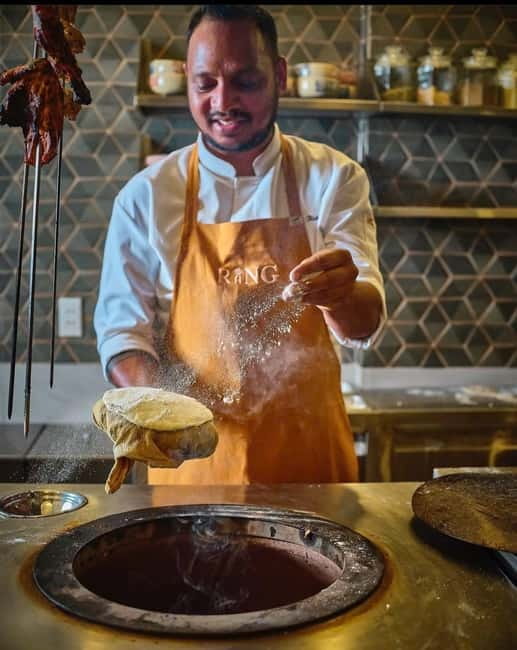
- A real tandoor experience: Shape the dough and try the classic technique of placing naan onto a tandoor, with an oven method explained for home cooking.
- Small groups of up to eight: The limited size gives you a better chance to receive direct help from the kitchen team.
- More than plain naan: Learn about garlic, butter, and stuffed variations such as paneer or keema.
- Useful home-cooking advice: The class includes tips on dough preparation and baking restaurant-style naan without specialist equipment.
- A Michelin-recognized setting: RANG is a Da Nang Indian restaurant with a Michelin Bib Gourmand award in 2024 and 2025.
- A very low price: At $2.60 per person, the class costs less than many simple food activities, while including the lesson and a tasting with dips.
Making naan at RANG in Da Nang

RANG is an Internationally Indian restaurant in central Da Nang. It has received a Michelin Bib Gourmand in both 2024 and 2025, an award given to places offering high-quality food at moderate prices. That detail matters here because the class takes place in a real restaurant environment, not in a detached demonstration room.
You will be close to the working kitchen, where other chefs may be preparing food for diners. That gives the session a useful sense of place. You can see how naan fits into an actual restaurant meal, rather than treating it as an isolated baking exercise.
The class is designed for a small group of no more than eight people. I consider that a good size for this type of activity. Naan dough can be sticky, shaping can be awkward at first, and placing bread on a hot cooking surface takes some guidance. A smaller group gives you a better chance to ask questions and get help before the bread goes into the oven.
The instructors speak English, Vietnamese, and Hindi. Chef Manku and server Amit have been singled out as part of the welcoming team, so you may encounter them during the session. The tone is friendly and informal, with the emphasis on getting involved rather than following a stiff classroom routine.
More Workshops in Da Nang:
- Surf Lessons
★ 5.0 · 42 reviews - Da Nang Coffee Making Workshop
★ 5.0 · 26 reviews - Hoi An: Vietnamese Coffee Culture and Coffee Making Class
★ 4.9 · 4,006 reviews
From dough to the first naan
The class begins with the foundations: what naan is, how it is used with Indian food, and what makes the dough suitable for a hot tandoor. You will learn about naan as a staple served with curries, then move quickly into the practical work.
You should expect to knead the dough yourself. This is where the class earns its keep. The texture of dough can tell you a great deal about the final bread, and a chef can point out problems that are harder to spot from a recipe alone. You will also season and shape the dough, rather than simply receiving a prepared portion.
The process is beginner-friendly. No previous cooking experience is required, and the class is meant to be enjoyable even if your naan comes out a little uneven. That is part of the charm. A perfectly round piece is less important than learning how the dough behaves and how much topping or filling it can handle.
The session also covers the background of naan and its place in Indian meals. You will hear about its connection to different regional food traditions, including hearty meals in Punjab and royal feasts associated with Delhi. This is not a long lecture, but the context helps explain why naan appears in so many forms and why it works so well with curry.
Plain, garlic, butter, and stuffed naan

Plain naan is the basic test. It lets you focus on dough texture, shaping, and cooking without extra ingredients getting in the way. Once you understand that version, you can look at the additions that make the bread more varied.
Garlic naan brings a stronger, savory topping. Butter gives the bread a softer finish and a richer taste. Stuffed naan, including paneer or keema versions, requires more care because the filling must stay inside the dough while you shape it.
This range is useful because it shows you how a single dough can become several different breads. You are not just copying one restaurant item. You are learning a small system that you can adapt at home, depending on what you have in the kitchen.
The class also covers authentic spices and creative toppings. The exact options can depend on the session, so I would treat the listed styles as examples rather than a promise that every variety will appear each time. The important point is that you get to work with flavor choices, not just plain dough.
The tandoor moment
The most memorable part is placing the shaped naan onto the tandoor. This is the step that separates the class from a standard bread demonstration. You get to experience the traditional method and see how quickly naan cooks at intense heat.
You will need to follow the chef’s instructions carefully. A tandoor is not a casual home oven, and the class does not suggest treating it as one. The value is in learning the technique under supervision, then understanding what parts of the method can be adapted safely in your own kitchen.
The bread is served fresh from the cooking equipment, with signature dips. Fresh naan has a different texture from bread that has been sitting on a buffet or under a heat lamp. You can taste the soft center, the browned patches, and the effect of toppings while the bread is still warm.
For some participants, the cooking itself is the main event. For others, the final tasting is the reward. Either way, the tasting gives you a clear reason to pay attention to the dough and cooking steps. You can immediately connect the technique with the result on your plate.
A few more Da Nang trips worth comparing
- Morning Small group to Marble Mountains – Am Phu Cave – Monkey Mountain
★ 5.0 · 1,097 reviews - Marble Mountains – Am Phu Cave – Monkey Mountain Sunset tour
★ 5.0 · 781 reviews - DaNang/HA: Lady Buddha, Marble Mountain & Am Phu Caves Tour
★ 4.9 · 670 reviews - Herbal Aroma Journey (Gentle | Aromatic Flow)
★ 5.0 · 610 reviews
How to recreate naan without a tandoor
The most practical part of the lesson may be the home-baking advice. Many people enjoy naan in restaurants but assume it requires special equipment. Here, you learn alternatives for baking without a tandoor.
The class includes guidance on dough preparation, oven cooking, and ways to approach the heat needed for good results at home. You will not get the exact restaurant setup in a normal kitchen, but you can still learn what to watch for: how the dough is prepared, how it is shaped, how toppings are added, and how the bread should look when cooked.
This is especially useful if you live somewhere without an Indian restaurant nearby. A recipe alone may tell you the ingredients, but a chef can point out the feel of the dough and the signs of undercooking or overcooking. Those small observations often make more difference than buying another specialty ingredient.
You should keep your expectations sensible. Home-cooked naan may not match bread baked in a commercial tandoor. The class gives you a better method and practical tips, not a way to duplicate every part of professional equipment.
The setting: a working Indian restaurant
One appealing feature is that you can combine the class with a meal at RANG. The class itself includes freshly baked naan and signature dips, but a full restaurant meal is not listed as part of the activity.
That means you can stop at the tasting or order lunch separately. Several elements make the combination tempting: you have just made the bread, the restaurant specializes in Indian food, and naan is meant to be eaten alongside curry. You can use your own bread to scoop up a curry if you choose, but there is no pressure to buy an additional meal.
This no-pressure approach matters. A food class can become less enjoyable when it feels like a sales pitch. Here, the restaurant setting gives you an option rather than a requirement. If you have a tight schedule or only want the class, you can finish after the tasting. If you want a fuller meal, RANG gives you that choice.
The restaurant environment can also mean background activity and kitchen noise. If you prefer a quiet, private cooking lesson, this may not be the right format. If you like seeing food prepared in a real dining setting, it adds a useful connection between the lesson and the meal.
Is $2.60 good value?
At $2.60 per person, this is unusually inexpensive for a hands-on cooking activity. The price includes the Tandoori Naan Bread-Making Class, chef guidance, the practical lesson, freshly baked naan, and signature dips.
The value comes from the participation. You are not paying only for a snack. You are getting a short introduction to dough, shaping, seasoning, tandoor cooking, and home-baking alternatives. Even if you never make naan again, you will have tried a traditional cooking method in a professional restaurant kitchen.
The low price also makes this easy to add to a Da Nang itinerary. You do not need to reserve a full day around an expensive culinary program. The activity is listed as valid for one day, with starting times shown when you check availability. Since the exact class length is not specified, confirm the available time before planning another fixed appointment immediately afterward.
At this price, I would not expect a long, multi-course cooking school program. The class is best understood as a compact, practical food experience with a tasting at the end. That is a fair trade for the cost.
Who will enjoy this class most?
This experience suits first-time cooks, Indian food fans, and anyone who likes learning through touch rather than watching a demonstration. You do not need to know how to knead dough or handle a tandoor before arriving.
It is also a good choice for solo visitors and couples who want a social activity that does not take over an entire holiday. The group limit of eight keeps it smaller than a large demonstration, while still giving the class a relaxed shared atmosphere.
Families should note the age rule. Children under seven are not permitted. Older children may enjoy the shaping and tasting, but the hot cooking equipment means they will need to follow the instructor closely.
You may want to skip it if you are looking for a complete Indian menu class involving curry, rice, starters, and dessert. This activity focuses on naan. The food setting is broader than the lesson, but the hands-on work centers on bread.
Booking details that matter
You can cancel up to 24 hours before the activity for a full refund. The reserve-now-and-pay-later option is helpful if your Da Nang plans may change, since you can hold a place without paying at the time of booking.
The class is offered in English, Vietnamese, and Hindi. The small group is limited to eight participants, so availability may be tighter than for a large restaurant demonstration.
Alcohol and drugs are not allowed. You should also remember that this is a cooking activity around hot equipment, so listening to the chef’s instructions is part of having a safe and useful session.
Should you book the naan class?
I would book this if you want a low-cost, hands-on food experience in Da Nang and like the idea of eating bread you helped make. The best reasons are the small group, the chance to use a real tandoor, and the practical advice for baking naan without one at home.
I would think twice only if you want a full Indian cooking course, a private class, or a clearly stated long itinerary. This is a focused activity, and that focus is its strength. At $2.60, with fresh naan, dips, chef instruction, and the option to pair the bread with a separate RANG meal, it offers unusually good value for a short taste of Indian cooking.
FAQ
Where does the Tandoori Naan Bread-Making Class take place?
The class takes place at RANG, an Internationally Indian restaurant in Da Nang, Vietnam.
How much does the class cost?
The listed price is $2.60 per person.
How many people can join the class?
The activity is a small-group experience limited to eight participants.
Do I need previous cooking experience?
No. The class is designed for beginners, and no prior experience is needed.
Which languages are available?
Instruction is available in English, Vietnamese, and Hindi.
Is a meal included with the class?
The class includes freshly baked naan and signature dips. A separate restaurant meal is not listed as included, though you can combine the activity with a meal at RANG.
Can I cancel or pay later?
You can cancel up to 24 hours in advance for a full refund. A reserve-now-and-pay-later option is also available.
Just added around Da Nang
- Your Incredible Scooter Adventure On Hai Van Pass★ 5.0 · 67 reviews
- Private Customize car rental 4 hours – 8 hours- 12 hours Da Nang★ 5.0 · 22 reviews
- Dry Deep Bodywork (Dry | Thai–Shiatsu based)★ 5.0 · 45 reviews
- Surf Lessons★ 5.0 · 42 reviews
- Four-Hands Harmony (Perfect · Synchronized · Flow)★ 5.0 · 78 reviews
- Monkey mountain-Huge Lady Buddha-Marble mountains & Am Phu caves★ 5.0 · 210 reviews
- Da Nang Street Food Private Tour With Local Students★ 5.0 · 24 reviews
- Private Rejuvenating Mask Therapy in Da Nang★ 5.0 · 29 reviews
Workshops, compared.

Vietnamese Coffee Culture and Coffee Making Class
Read our review →
Hoi An Full Lantern Making Class- A special Foldable lantern
Read our review →
Hanoi Coffee Workshop: Taste Salt, Coconut and Egg Coffee
Read our review →
Handcrafted Wood Carving Workshop with Local Artisan
Read our review →
Fun & Easy Vietnamese Coffee Workshop in Hồ Chí Minh City
Read our review →
Bat trang Pottery Ceramics Class in Hanoi’s Old Quarter | VN
Read our review →
Browse the lists this tour appears in