
Reviewed · COOKING CLASSES
5 Dishes Cooking Class with Market Trip in Da Nang
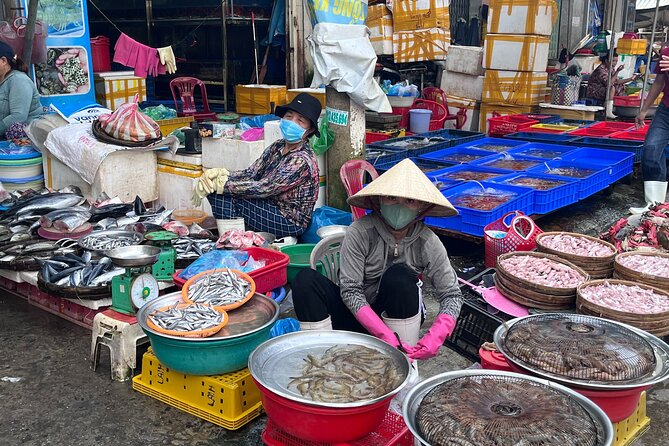
Da Nang’s best food lesson starts before you reach the stove. At Chợ Bắc Mỹ An, you shop for local ingredients, learn what they are used for, and then turn them into five Vietnamese dishes. I like that the market visit gives the class a real sense of place, and I like the unusually broad menu, from savory bánh xèo to avocado ice cream.
The main caution is timing. A four-hour class with up to 30 people can feel crowded, and one past session ran an hour late because the earlier class had not finished. English instruction has also varied, so communication may take patience with some teachers.
Key points to know before booking

- Five dishes in one class: Make bánh xèo, bún bò Huế, Hoi An fresh rolls, young jackfruit salad, and avocado ice cream.
- Chợ Bắc Mỹ An comes first: Shop for ingredients and learn about replacements you can use at home.
- Jenny and Chef Bora are named instructors: Teaching style and English fluency may vary by session.
- The meal is part of the lesson: You eat the food you prepare, with homemade rice vodka included.
- Good value at $39: The price includes the market visit, cooking class, meal, cookbook, and certificate.
- Plan for a possible group setting: The class accepts a maximum of 30 people and returns to the starting point.
Why the market visit at Chợ Bắc Mỹ An matters
Meet at 07 Nguyễn Bá Lân in Bắc Mỹ An, Ngũ Hành Sơn, 15 minutes before the start. The class begins with a visit to nearby Chợ Bắc Mỹ An, not with a quick kitchen demonstration. That choice gives you useful context before anyone asks you to chop, mix, or cook.
A market can be confusing when you do not know the ingredients. Vietnamese herbs, leafy vegetables, fruit, noodles, sauces, and unfamiliar cuts of meat may look obvious to local shoppers but not to you. Here, the market stop helps connect the ingredients to the dishes you will prepare later.
I like this part because it answers the practical questions you will have at home. Which ingredients are essential? What can you replace? What should you look for in a supermarket outside Vietnam? The experience is designed to discuss those points, so you are not simply copying a recipe without understanding it.
The market also helps explain why Vietnamese cooking tastes fresh and layered. The five-dish menu uses different textures and cooking methods, and the shopping stop gives you a chance to see the raw materials before they arrive on your work surface.
You should keep your expectations sensible. The market visit is one stop, not a full food tour of Da Nang. It is there to support the cooking lesson, so the amount of time spent browsing and shopping may depend on the pace of the group and the day’s class schedule.
More Cooking Classes in Da Nang
- Da Nang Authentic Home Cooking Class
★ 5.0 · 354 reviews - 5 traditional dishes Da Nang cooking class with market trip
★ 5.0 · 331 reviews - Da Nang Cooking Class with Coffee Tasting and Market Visit
★ 5.0 · 310 reviews
Five dishes that cover a lot of Vietnamese cooking

The menu is a strong point because it does not repeat the same technique five times. You get a useful sample of Vietnamese cooking, with crisp batter, soup, fresh rolls, salad, and dessert.
Bánh xèo for crisp texture
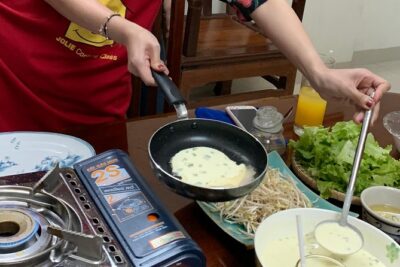
Bánh xèo is the class’s pan-cooked specialty. It is known for its thin, crisp shell and savory filling, making it a good introduction to heat control and batter handling.
This is the kind of dish where small details matter. The texture can change if the batter is too thick, the pan is not hot enough, or too much filling is added. A practical lesson here is more useful than simply eating a finished pancake at a restaurant because you can watch the process and ask why each step matters.
Bún bò Huế for a fuller bowl of flavor
Bún bò Huế brings a different style to the menu. It is a noodle soup associated with central Vietnam and gives you a chance to work with broth, seasoning, noodles, and toppings.
It also adds regional variety. You are not learning only the lighter rolls and salads often associated with Vietnamese food. This dish shows how a meal can be built around a strongly seasoned soup, and it gives the class a more substantial centerpiece.
If you are short on kitchen time at home, this may be the dish you find hardest to reproduce exactly. Broth-based recipes often require more ingredients and preparation than a quick salad or roll. Still, the lesson can help you understand the basic structure and possible substitutions.
More Market Tours in Da Nang
- DaNang Farm-to-Table Cooking Class with Market and Coffee Tasting
★ 5.0 · 131 reviews - Market Tour, Basket Boat Ride & Cooking Class by Hangcoconut
★ 4.8 · 95 reviews - Home Cooking Class: Market, Garden and cooking 4 dishes
★ 5.0 · 61 reviews - Cook 5 Dishes Authentic Vietnam Food and Market Adventure
★ 5.0 · 56 reviews
Hoi An fresh rolls for hands-on assembly
The Hoi An fresh roll is likely to be one of the most accessible dishes for first-time cooks. You work with prepared ingredients and focus on arranging and rolling them neatly.
This is a useful contrast to bánh xèo and bún bò Huế. Instead of concentrating on a hot pan or a long cooking process, you learn how balance and presentation affect a simple dish. Fresh rolls are also easy to share, which makes them a natural part of a group meal.
Do not expect every roll to look perfect on your first try. Rice paper can be delicate, and rolling too tightly or too loosely changes the result. That is part of the fun, and an instructor can show you how to handle it.
Young jackfruit salad for something less familiar
Young jackfruit salad gives you one of the class’s more unusual ingredients. If you have only eaten ripe jackfruit as a sweet fruit, this dish introduces another use for it.
The salad adds a fresh, textured element to the menu. It also makes the market visit more worthwhile because you can see an ingredient in its local cooking context, rather than treating it as an exotic item with no clear purpose.
This is the dish where the ingredient explanation matters most. If young jackfruit is difficult to find at home, ask about replacements during the class. The experience specifically allows questions about substitutions, so use that opportunity.
Avocado ice cream to finish
Avocado ice cream is an unexpected ending. It gives the class a Vietnamese dessert angle and uses a familiar ingredient in a less familiar way.
I like the menu balance here. You begin with savory dishes and end with something cool and sweet, rather than finishing with another heavy course. It also gives you a recipe you may be able to adapt easily outside Vietnam, depending on the ingredients and equipment available to you.
What the four-hour schedule feels like
The planned sequence is simple: arrive at the meeting point, visit the market, return for the cooking lesson, eat together, receive a cookbook and certificate, and finish back at 07 Nguyễn Bá Lân.
Four hours is enough time for a proper lesson, but it is not a quick activity you can squeeze between two tightly scheduled tours. Allow room around the class, especially because one session was delayed by about an hour while the previous class finished.
That delay is not guaranteed, but it is worth considering when planning a flight, train, spa appointment, or evening reservation. The class begins 15 minutes before the stated start time, so arrive early rather than treating the meeting time as a suggestion.
The group limit is 30 people. That is a reasonably large maximum for a cooking class, and the experience may feel more social than intimate when fully booked. A bigger group can make the meal lively, but it may also mean less individual attention at the work surface.
The class ends where it begins. You do not need to arrange a separate return transfer, and the starting point is near public transportation. The meeting address is 07 Nguyễn Bá Lân, Bắc Mỹ An, Ngũ Hành Sơn, Da Nang.
The instructors can shape the experience
Your teacher matters as much as the menu. Jenny has been singled out for careful explanations and strong market guidance, while Chef Bora has led a class described as clear, fun, and engaging.
Those names give you an idea of the teaching style available, but you should not assume you will have a particular instructor unless the provider confirms it. The class uses passionate and experienced instructors, yet teaching style and English fluency can differ. One session had an instructor whose English was limited, although communication remained possible.
This is not necessarily a dealbreaker. Cooking is a visual activity, and demonstration can carry much of the lesson. Still, if you have allergies, dietary restrictions, or specific questions about ingredients, mention them clearly when booking and repeat them at the start.
The best approach is to stay active. Ask what can be replaced, how long a step should take, and which parts of a recipe matter most. You will get more from the class if you treat it as a working lesson rather than simply waiting for a chef to do the difficult parts.
The shared meal and take-home extras
After the cooking, you eat the dishes together. That shared meal is an important part of the experience because you can taste the finished food while the preparation is still fresh in your mind.
Homemade rice vodka is also included. It is a small local touch, but it may not suit everyone. If you do not drink alcohol, make that clear to the instructor and focus on the food itself.
You receive a cookbook and certificate at the end. The cookbook is the more useful of the two for most people because it gives you a reference after you leave Da Nang. The certificate is a pleasant souvenir and may appeal to families, couples, or anyone collecting cooking experiences during a trip.
The meal also helps you judge the recipes realistically. You can see how the five dishes work together, compare textures, and decide which ones you want to try again at home. That is more helpful than taking away a stack of recipes without tasting the final result.
Is $39 a fair price?
At $39 per person, the value is good if you want several activities in one half-day. The fee covers the market trip, instruction for five dishes, the meal, homemade rice vodka, cookbook, and certificate.
You are not paying only for lunch. You are paying for the ingredient lesson, the explanations, the chance to cook, and the convenience of having the class arranged around a complete menu. For someone already planning to eat lunch in Da Nang, the class can replace a restaurant meal while giving you a skill and a memory to take home.
The value is less clear if you want a small private lesson or a quiet chef-led demonstration. With a maximum of 30 people, this is better suited to a social group experience than a highly personal tutorial.
It is also a strong pick for people who want variety. Five dishes in four hours gives you more range than a class focused on one specialty, although the tradeoff is that you may not spend a long time perfecting any single recipe.
Who should book this class?
I would choose this experience if you want food, local shopping, and practical instruction in one outing. It suits first-time visitors who do not know Da Nang’s ingredients, as well as home cooks who want to understand Vietnamese recipes rather than just eat them.
It is also a good fit for couples, families, and small groups of friends. The menu has enough variety to keep different tastes interested, and the shared meal gives the activity a natural finish.
Vegetarians, vegans, and people with allergies can be catered for, but you must mention your needs in the special request when booking. Do not wait until the cooking begins. Early notice gives the class a chance to plan suitable ingredients and replacements.
I would be more cautious if you dislike group activities, need guaranteed one-on-one teaching, or have a firm appointment soon after the class. The possible delay and group size are the two practical concerns to weigh.
Booking, cancellation, and practical details
Confirmation is provided at booking, and the experience uses a mobile ticket. Meet 15 minutes early at 07 Nguyễn Bá Lân, near Chợ Bắc Mỹ An. The class finishes at the same meeting point.
Free cancellation is available up to 24 hours before the start time for a full refund. Changes or cancellations made less than 24 hours before the start are not accepted for a refund. The cut-off follows local time.
The class requires a minimum number of participants. If the provider cancels because that minimum is not reached, you can choose another date or experience, or receive a full refund.
Should you book the Da Nang cooking class?
Book it if you want a practical introduction to central Vietnamese food and like the idea of shopping before cooking. The market visit, five-dish menu, shared meal, and $39 price make this a useful half-day choice, especially for anyone who wants more than a restaurant table.
Go in ready for a group class, a possible schedule delay, and some variation in English instruction. If you can accept those limits, the combination of Chợ Bắc Mỹ An and hands-on cooking gives you a solid taste of Da Nang’s food culture, with recipes you can keep using after your trip.
FAQ
Where does the cooking class start?
The class starts at 07 Nguyễn Bá Lân, Bắc Mỹ An, Ngũ Hành Sơn, Da Nang 550000, Vietnam. You should arrive 15 minutes before the start time.
What market does the class visit?
The class visits Chợ Bắc Mỹ An, a nearby market where you shop for ingredients and learn about possible replacements for cooking at home.
Which dishes will I learn to cook?
You will learn to make bánh xèo, bún bò Huế, Hoi An fresh rolls, young jackfruit salad, and avocado ice cream.
How long does the experience last?
The experience lasts approximately four hours, including the market visit, cooking lesson, and shared meal.
Can vegetarian, vegan, or allergy-friendly requests be accommodated?
Yes. Vegetarian, vegan, and allergy requests can be catered for, but you need to mention them in the special request when booking.
How many people can join the class?
The maximum group size is 30 travelers.
What happens if I need to cancel?
You can cancel at least 24 hours before the start time for a full refund. Cancellations or changes made less than 24 hours before the start time are not accepted for a refund.
Just added around Da Nang
- Your Incredible Scooter Adventure On Hai Van Pass★ 5.0 · 67 reviews
- Private Customize car rental 4 hours – 8 hours- 12 hours Da Nang★ 5.0 · 22 reviews
- Dry Deep Bodywork (Dry | Thai–Shiatsu based)★ 5.0 · 45 reviews
- Surf Lessons★ 5.0 · 42 reviews
- Four-Hands Harmony (Perfect · Synchronized · Flow)★ 5.0 · 78 reviews
- Monkey mountain-Huge Lady Buddha-Marble mountains & Am Phu caves★ 5.0 · 210 reviews
- Da Nang Street Food Private Tour With Local Students★ 5.0 · 24 reviews
- Sport Revival (Sports | Muscle Recovery)★ 5.0 · 46 reviews
Cooking Classes, compared.

Hanoi Cooking Class: Culture, Local Market & Meaning CSR Impact
Read our review →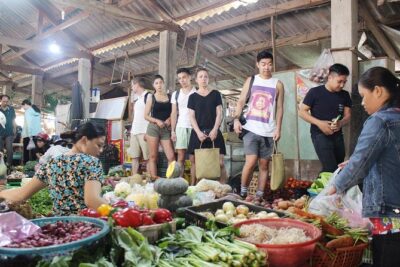
Cooking Class Hoi An:Local Market, Basket Boat, Fishing & Cooking
Read our review →
Mekong Delta Boat,Khotcake cooking Coconut Village,SmallGroup
Read our review →
Mekong Delta 4 Islands, TukTuk, Boat, Try Khot Cake Local Cooking
Read our review →
Chef Vu Cooking Class Plus Market Trip in Saigon Center (Pick up by Cyclo)
Read our review →
Hanoi Cooking Class: Pho/Bun Cha/Banh Xeo…+Free Egg/Salt Coffee
Read our review →Browse the lists this tour appears in