
Reviewed · HIKING & TREKKING
Sa Pa: 6-Hours Muong Hoa Valley Trek with Local Ethnic guide
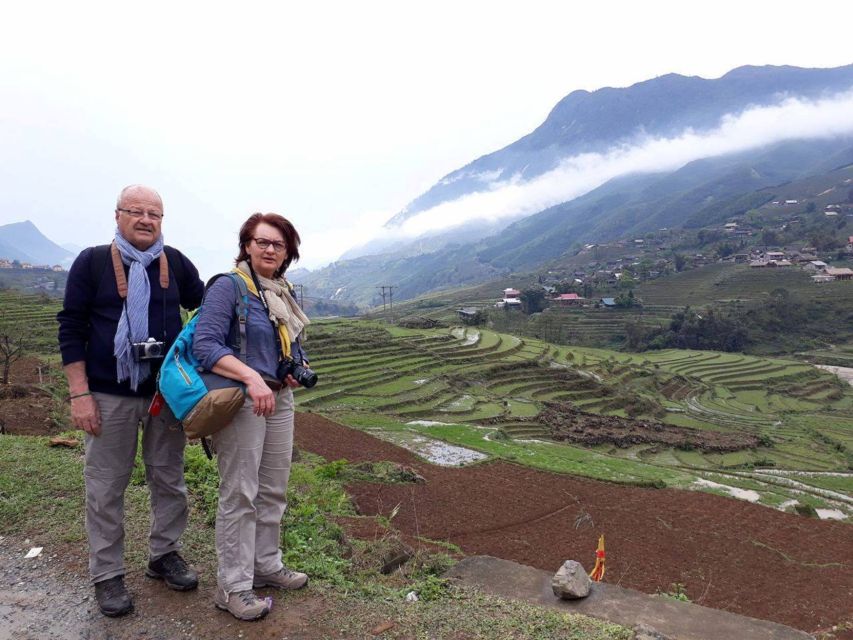
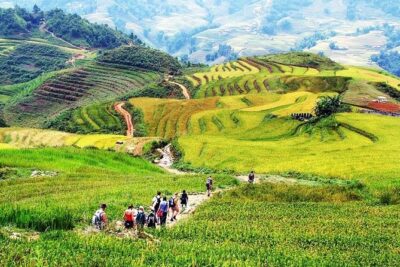
Muong Hoa Valley is best seen on foot, not through a bus window. This six-hour trek leads downhill from Sa Pa through rice terraces, bamboo forest, muddy paths, and the villages of Y Linh Ho, Lao Chai, and Ta Van. Along the way, you meet Black Hmong and Dzay people and see rural life at close range.
I like the local ethnic guides, who explain daily life as well as the scenery. I also like the route’s variety: one hour you are looking across sweeping rice fields, and the next you are walking a narrow path through forest or watching hemp weaving and indigo work.
The main caution is the 10-kilometer trail. It can be steep, hot, muddy, and slippery, especially during rain. Older people, young children, pregnant women, and anyone with limited mobility should choose a gentler outing.
Key points to know before you go
- A real 10-kilometer trek: Much of the route goes downhill on uneven paths, with some steep and slippery sections.
- Three important villages: Visit Y Linh Ho, Lao Chai, and Ta Van, each offering a different look at local life.
- Hmong and Dzay culture: Learn about Black Hmong customs, clothing, crafts, farming, and village homes, then meet members of the Dzay community.
- Small-group setting: The group is limited to 11 people, with an English-speaking guide.
- Lunch costs extra: A local restaurant meal is available, but food and soft drinks are not included in the $18 price.
- Best gear: Wear proper trekking shoes and bring sun cream, sunglasses, insect repellent, and warm clothes from October through March.
Why this Sa Pa trek feels more personal
At $18 per person, this is one of the more affordable ways to reach Muong Hoa Valley without arranging a private guide and transport. The price covers the bus, English-speaking guide, entrance tickets, and one 500-milliliter bottle of water.
That low price does not mean the walk is a token stop at a viewpoint. You spend much of the day on foot, passing through villages and countryside rather than simply taking photos from the road. You also return by bus, so this is a one-way route, not a loop back to Sa Pa.
The group limit of 11 matters. A smaller party makes it easier to hear the guide and keep a steady pace. It also gives you more room to ask about farming, clothing, weaving, and village customs. Guides such as Sang, Sai, Su, Bao, and Dong have been praised for clear English, humor, patience, and practical help, though your guide will depend on the date and group.
More Trekking Tours in Sapa
- Sa Pa: Muong Hoa Valley Trek and Local Ethnic Villages
★ 4.6 · 864 reviews - Sapa: Eco Adventure Terrace Fields and Local Villages Trek
★ 4.9 · 636 reviews - From Sapa: 1-Day Guided Trek to Lao Chai & Ta Van with Lunch
★ 4.9 · 416 reviews
The first walk toward Y Linh Ho

The day begins in Sa Pa, with pickup available from hotels in town if the operator can reach your address. Some accommodations may require you to walk to a meeting point or the local office, so send the hotel name and address ahead of time.
The first section is described as a scenic 20-minute walk toward Y Linh Ho village. This is your first change of pace from Sa Pa. The town can feel busy and built-up, while the valley route quickly opens into mountain views, cultivated slopes, and village paths.
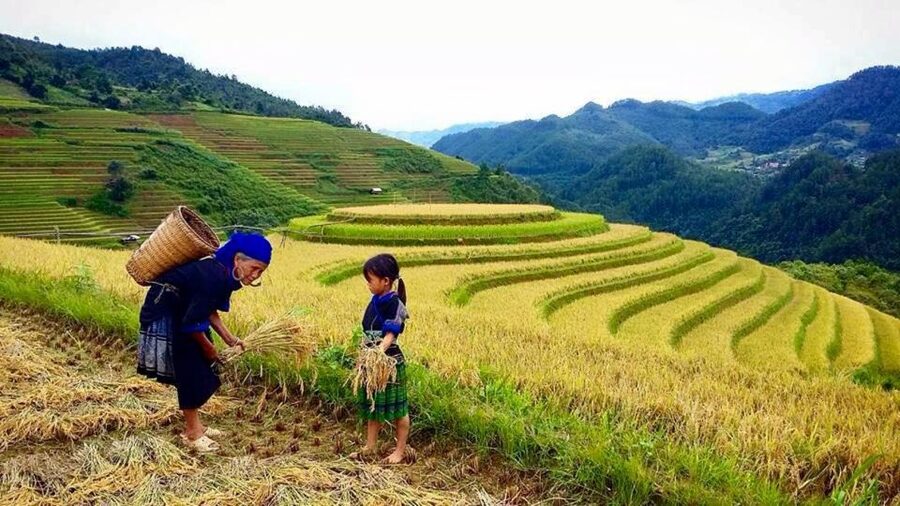
Y Linh Ho is home to the Black Hmong. Your guide gives you a way to understand the community beyond costume photos. You may see local people going about ordinary work around the village center and learn how homes, farming, and handmade goods fit into daily life.
Keep your camera ready, but use it carefully. Ask parents before photographing children, and do not touch children’s heads. These are small gestures, but they matter when a walking route passes directly through someone’s home area.
Lao Chai and the best rice-terrace views
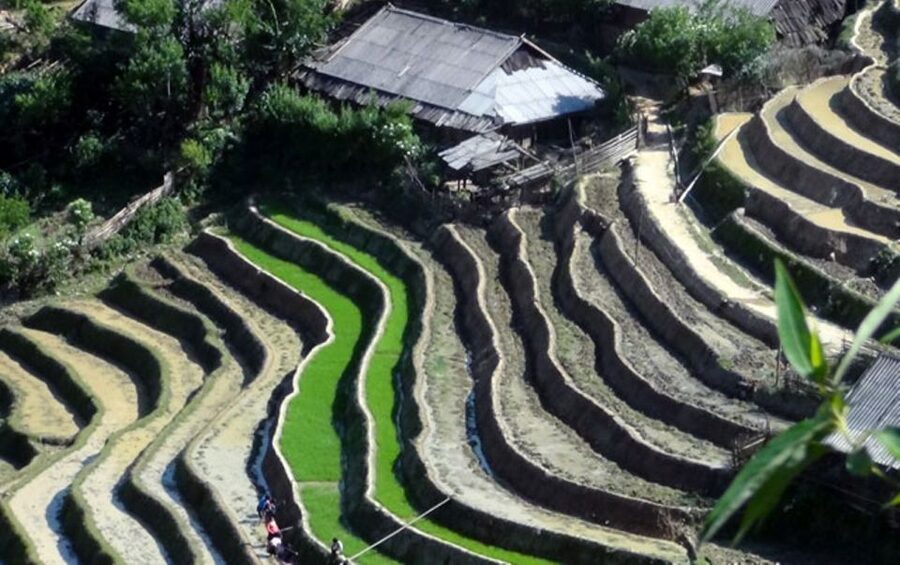
The route continues to Lao Chai, where the rice terraces become the main event. The stepped fields run across the valley slopes and change character with the season. In wet periods, the terraces may reflect the sky. During the growing season, they carry crops. In winter, fog can soften or hide the views.
This is one reason timing matters. March and winter outings can bring cold air and thick morning fog, while summer can be hot and wet. A clear day gives you the broadest views, but cloudy weather can still make the walk atmospheric. Rain, however, changes the footing considerably.
The route includes dirt, uneven roads, concrete or stone sections, bamboo forest, bridges, and slopes. Several people have found the downhill sections harder than expected, particularly in heat or mud. Do not confuse the modest price and six-hour duration with an easy stroll.
At a comfortable pace, the guide may stop for photographs and explanations. The scenery deserves time, but you should still expect a full active day. Good trekking shoes are not optional decoration here. Some hikers have needed help descending slippery paths, and local women familiar with the route may assist you across difficult ground.
Hmong crafts, farming, and village homes

One of the strongest parts of the experience is the attention to work, not just scenery. At Lao Chai and later near Ta Van, you can learn about indigo dyeing, batik making, and hemp weaving. These crafts connect clothing to local plants, time, and skill.
You also hear about rice cultivation, which helps explain the terraces beneath your feet. The fields are not simply pretty steps on a hillside. They require careful farming and shape the rhythm of village life.
The visit to traditional homes in Ta Van adds another layer. Your guide can explain how minority communities differ in customs and clothing, rather than presenting every group as one general idea of mountain culture. That distinction is useful because Black Hmong and Dzay communities have their own traditions and appearance.
There is a commercial side to this route. Local women may walk with the group, help you on muddy sections, and later offer handmade goods for sale. Some people appreciate the chance to buy directly from the makers. Others dislike feeling pressured, especially when assistance on the trail is linked to a purchase.
My advice is simple: decide before you go how you want to handle this. You can thank people warmly without buying, or set aside a small amount for a handmade item you genuinely want. Buying should be your choice, not a fee that you feel forced to pay.
More Hill Tribe Tours in Sa Pa:
- Explore Sapa: 2D1N Trekking & Hmong Culture With Dinh
★ 4.9 · 191 reviews - Sa Pa: 2-Day Trekking Trip with Ethnic Minority Homestay
★ 4.7 · 145 reviews - From Sapa: Waterfalls, Trekking and Tribal Villages Tour
★ 4.6 · 91 reviews - Sa Pa: Half-Day Cat Cat Village Hike to Meet H’mong People
★ 3.7 · 72 reviews
Lunch in the valley, with a practical warning

Lunch takes place at a local restaurant, and you pay for food and soft drinks yourself. The meal is not included in the tour price, so carry some Vietnamese currency or confirm the payment options before leaving Sa Pa.
The meal can be a pleasant pause after the first half of the walk. Some meals have included a good range of local dishes and generous portions. One account found the food bland, so expectations should remain sensible. This is a simple local stop, not a food tour.
The restaurant can also be the most awkward part of the day because sellers may approach while you eat. If you want a quiet lunch, be ready to decline politely. If you enjoy supporting local makers, this is a convenient place to look at textiles and other handmade products, but compare prices and buy only what suits you.
Bring extra water beyond the bottle supplied. The tour includes one 500-milliliter bottle per person, which is not much for a six-hour walk in heat. Food and drinks are otherwise your responsibility.
Ta Van and the Dzay perspective
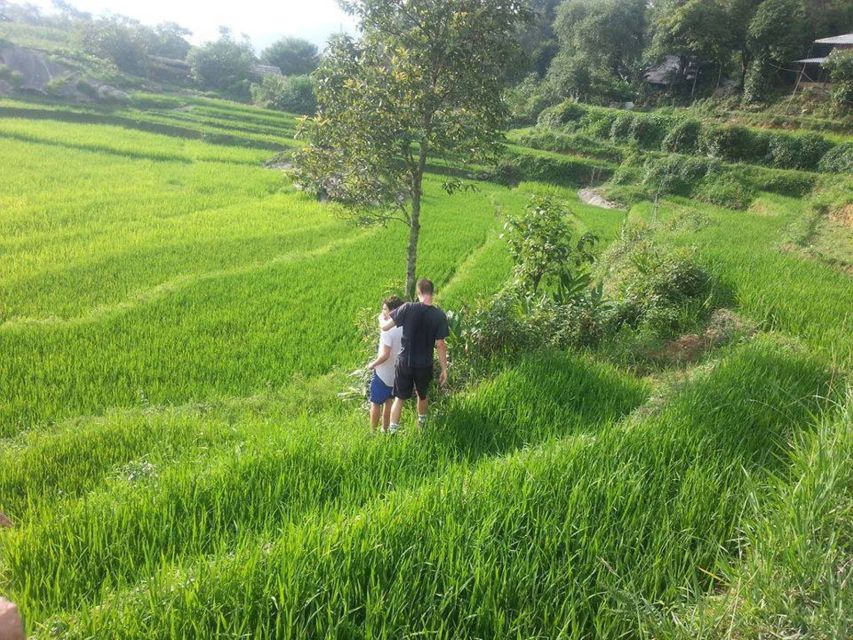
Ta Van gives you a different cultural focus. Here you meet members of the Dzay community and see how customs and clothing contrast with those of the Black Hmong. The point is not to rush through a checklist of ethnic groups. It is to notice that the valley contains several communities with distinct identities.
The village setting also shows how daily life fits around rice farming and home-based crafts. Your guide can help translate the details that are easy to miss, such as the purpose of a textile pattern or how farming work shapes the calendar.
This is where a local guide makes the largest difference. An outside guide can point at a house or field. A local guide can add family, work, and cultural context. Guides named Sang and Sai have been especially praised for strong English and patient explanations, while Su has been noted for keeping a good pace and helping with cultural questions.
The experience is still a tour, not a private anthropological visit. You will see only what the route and local hosts make available that day. Treat homes, people, and religious or family spaces with the same care you would expect near your own home.
The bus back to Sa Pa

After Ta Van, a bus returns you to the operator’s office in central Sa Pa. This final ride is welcome because the trail is not a loop. You do not walk all the way back uphill to town.
Transport problems have occasionally caused frustration, so confirm pickup details before departure. Make sure the operator has your exact hotel address and knows if the property is outside the area they can reach. A missed pickup can mean a late start and, in one case, an uncomfortable motorcycle transfer to catch the group.
Most of the day is spent walking, not riding. That is good news if you want a close look at the valley, but it means you should not book this as a sightseeing trip with a short optional stroll.
Fitness, weather, and what to pack
You do not need to be an athlete, but you do need steady footing and reasonable fitness. People in their 50s have managed the route, and teenagers have enjoyed the cultural side. The difficulty rises sharply when the path is wet.
The most useful items are:
- Trekking shoes with a firm grip
- Sun cream and sunglasses
- Insect repellent
- Warm layers from October through March
- Extra water
- A small amount of cash for lunch and optional purchases
- A waterproof layer during the rainy season
Do not bring a pet. The route is not suitable for wheelchair users, people with mobility impairments, pregnant women, or children under six. Senior citizens are specifically advised against this trek because the 10-kilometer route can be dangerous in wet weather.
The scenery changes with conditions. Fog may cover the valley in winter. Rain can turn dirt paths into mud and make bridges and slopes harder. Clear weather offers wider views, but hot days can make the descent tiring. Check the forecast, then dress for the ground rather than for Sa Pa town.
How this tour compares on value

The $18 price is excellent if you want a guided introduction to Muong Hoa Valley and do not need a private vehicle. You get transport, entry tickets, a guide, and a route that connects several villages. The small group also gives the outing more value than a large coach excursion.
The extras add up. You pay for lunch, drinks, personal purchases, and any insurance separately. There is also a French-speaking guide surcharge of $20 per person, and a Lunar New Year surcharge may apply. Check the current holiday dates and amount before booking, since the supplied information lists different Lunar New Year periods and surcharges.
Free cancellation is available up to 24 hours before departure, and you can reserve now and pay later. Those terms are useful if your Sa Pa schedule depends on weather, but they do not remove the need to check the forecast before you commit to a demanding walk.
Who should book the Muong Hoa Valley trek
I would choose this tour if I had limited time in Sa Pa and wanted scenery plus cultural contact in one day. It works well for active couples, families with older children, and anyone who prefers walking through the countryside to sitting in a vehicle.
It is also a good fit if you want a local guide rather than a purely scenic route. The strongest parts are the explanations of Hmong and Dzay life, the craft traditions, the village homes, and the chance to see rice farming up close.
I would not choose it for a relaxed day, a luxury lunch, or a guaranteed dry walk. If your balance is poor, your knees dislike steep descents, or you are uncomfortable with muddy paths, pick a shorter route. You should also be ready for local sellers and understand that buying crafts is optional.
Should you book it?
Book this Muong Hoa Valley trek if you want a low-cost, active way to see Sa Pa’s rice terraces and meet people from the Black Hmong and Dzay communities. The guides, scenery, and cultural stops give the day real substance.
Skip it if you need easy access, dry paths, or a predictable pace. For everyone else, bring sturdy shoes, extra water, a respectful attitude, and enough time to enjoy the walk without rushing. The $18 price is hard to beat, provided you understand that the true cost is paid in effort, mud, lunch, and the occasional sales pitch.
FAQ
How long is the Muong Hoa Valley trek?
The activity lasts six hours and covers about 10 kilometers. The route runs from Sa Pa through Y Linh Ho, Lao Chai, and Ta Van before a bus returns you to central Sa Pa.
Is lunch included in the $18 price?
No. A local restaurant stop is provided during the route, but food and soft drinks are not included. You pay for your meal yourself.
What languages are available?
The tour includes an English-speaking live guide. A French-speaking guide is available for an additional $20 per person, paid directly on the trip.
Is hotel pickup available in Sa Pa?
Pickup is available from hotels in Sa Pa town, but you must provide the hotel name and address so the operator can confirm access. Some hotels may require you to meet at the local office or another meeting point.
Is the trek suitable for children and older people?
Children under six should not join, and senior citizens are advised not to take the 10-kilometer route because it can be challenging and dangerous in wet weather. The trek is also not suitable for pregnant women, wheelchair users, or people with mobility impairments.
What should I bring?
Bring trekking shoes, sunglasses, sun cream, insect repellent, and extra water. Warm clothes are recommended from October through March, and rain can make the trail muddy and slippery.
More Trekking Tours in Sa Pa
- Sapa 1 Day Long Trek: Trek to Hau Thao and Sa Seng Villages
★ 4.6 · 344 reviews - Half Day Sapa Trekking to Visit Lao Chai – Ta Van
★ 4.7 · 126 reviews - Sapa Trekking Bargains With Local Guide
★ 4.9 · 91 reviews - From Sapa: Guided Full-Day Trekking with Lunch and Drop-Off
★ 4.2 · 86 reviews
Just added around Sa Pa
- Sapa3D2N TrekkingAdventures,Valleys,Bambooforest,Waterfall★ 4.8 · 24 reviews
- Sapa: Y Linh Ho – Lao Chai, and Ta Van Trekking Day Tour★ 5.0 · 25 reviews
- Sapa: Ta Phin Village Trek & Red Dao Herbal Bath★ 5.0 · 22 reviews
- Sapa Trekking Bargains With Local Guide★ 4.9 · 91 reviews
- Sapa: Private Highlights Day Tour with Lunch★ 4.8 · 61 reviews
- From Sapa: Guided Full-Day Trekking with Lunch and Drop-Off★ 4.2 · 86 reviews
- Sapa: Love Silver Waterfall, LonelyTree in Heaven-Rice Field★ 4.9 · 28 reviews
- Sapa: Muong Hoa Mountain Views and Villages Trek with Lunch★ 4.3 · 28 reviews
Hiking & Trekking, compared.

Halong Bay Full Day with Kayaking, Hiking viewpoint, Cave – Deluxe To Luxury
Read our review →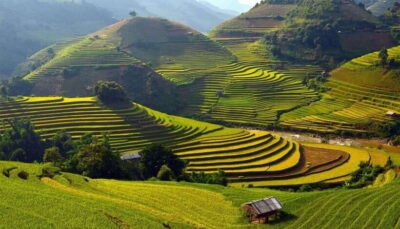
Sa Pa: Muong Hoa Valley Trek and Local Ethnic Villages
Read our review →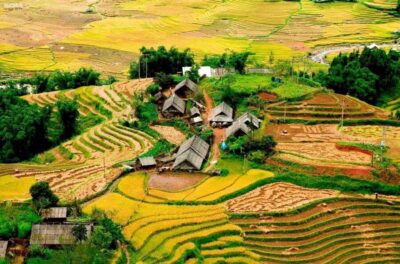
Sapa 3 Days 2 Nights Trekking Tour (1 Night In Ta Van Village, 1 Night In Hotel)
Read our review →
2-Day Sa Pa Ethnic Homestay Tour & Trek with Limousine Bus
Read our review →
1-Day Guided Trek to Lao Chai & Ta Van with Lunch
Read our review →
Browse the lists this tour appears in