

Reviewed · WALKING TOURS
Hue Imperial City Walking Tour: Citadel & Forbidden City
Hue’s Imperial City is far too large and layered to treat as a quick photo stop. This small-group walking tour gives you a clear route through the royal compound and explains what the buildings meant, who used them, and how the Nguyen emperors shaped Vietnam.
I like the maximum of eight people, which makes it easier to hear your guide and ask questions. I also like the human side of the storytelling, especially guides such as Matthew, Ngoc, Linh, Hoa, and Xi, who are praised for connecting palace buildings with royal family life, court ritual, and Vietnam’s wider past. The main catch is simple: the 200,000 VND entrance fee is extra for the group tour, so the $9 price is not your final cost.
- Small groups capped at eight make a large complex easier to follow.
- Matthew, Ngoc, Linh, Hoa, and Xi are among the guides named in especially positive comments.
- Kien Trung Palace is included after its careful restoration and reopening.
- The Forbidden Purple City receives a proper visit, not just a passing glance.
- The tour ends at Hien Nhon Gate, giving you a practical route through the main imperial sights.
- Entry fees are separate, with the operator suggesting a combo ticket if you also plan to visit the royal tombs.
Why a guide helps inside Hue’s Imperial City
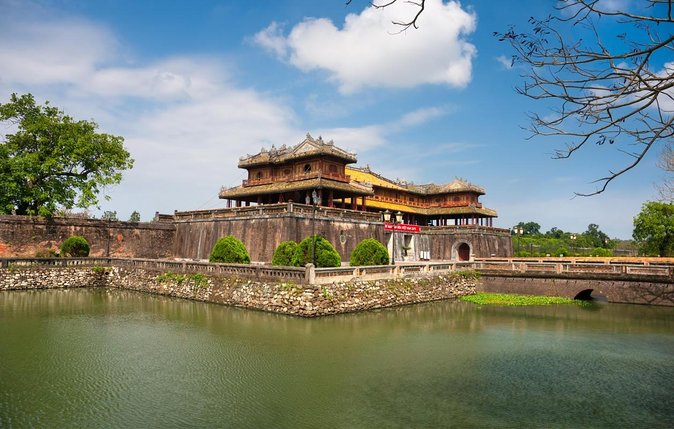
Hue’s Imperial City is not a single palace that you walk through in half an hour. It is a broad walled compound with gates, ceremonial halls, temples, gardens, residences, and damaged or restored structures spread across a substantial site.
You can certainly walk in alone, take photographs, and read the occasional sign. What you may miss is the reason one building faces another, why certain gates were reserved for specific groups, and how the Nguyen court used each space. A guide gives the ruins and rebuilt halls a storyline.
I especially value the tour’s focus on royal life. The most useful explanations are not just lists of construction dates or emperor names. You hear about coronations, court sessions, ancestral worship, palace routines, and the different roles of emperors, wives, children, mandarins, and other court figures.
That human detail comes through in the guide team. Matthew is repeatedly praised for his clear English, patient answers, and ability to place the Nguyen dynasty in the larger story of Vietnam. Hoa has a particular strength in explaining the experience of women in the royal court. Ngoc is noted for turning dynasty history into engaging stories, while Linh is praised for helping visitors find their way through the large grounds.
Guide assignments can change, so you should not book on the assumption that one named person is guaranteed. Still, the pattern is encouraging: this tour depends heavily on the guide, and several guides have developed a strong reputation for clear explanations and lively storytelling.
From Ngo Mon Gate to Thai Hoa Palace
The tour begins near Hai Mươi Ba Tháng Tám in Hue and quickly reaches Ngo Mon Gate, also called the Noon Gate. This is the grand ceremonial entrance to the Imperial City, not merely a convenient opening in the wall.
Your guide explains its symbolic role during the Nguyen dynasty and how it was used for royal ceremonies and major events. Allow about 10 minutes here. That may sound brief, but the gate works best as an introduction to the whole compound. It establishes the formal, controlled world you are about to enter.
From there, the route continues to Thai Hoa Palace, the central ceremonial hall. This is one of the most important stops because it helps you understand how power was displayed at court. Emperors held major court sessions and coronations here, surrounded by architecture designed to signal rank and authority.
The stop lasts about 25 minutes, making it the longest early explanation on the route. You will have time to look at the hall while hearing about royal ritual and the way formal ceremonies worked. If you have little background in Vietnamese history, this is where the tour begins to make the site feel coherent rather than scattered.
More City Tours in Hue
- Hue Customizable Tour with Imperial Citadel & Forbidden City
★ 4.9 · 937 reviews - Hue :Exploring Royal City with Multi Options and Dragon Boat
★ 5.0 · 675 reviews - Hue city Deluxe Group Tour (Daily Tour-12 pax max)
★ 5.0 · 569 reviews
Hien Lam Pavilion, the Nine Dynastic Urns, and The Mieu
The next section shifts from ceremony to memory. At Hien Lam Pavilion, you see a structure more than two centuries old, built to honor the Nguyen emperors. The surviving design gives you a useful sense of how the court commemorated its rulers.
The stop is scheduled for about 10 minutes. That is enough for an explanation and photographs, but not enough for a long pause. If you enjoy architectural details, pay attention here and ask questions while the group is gathered.
Nearby, the Nine Dynastic Urns make the Nguyen succession visible in bronze. Each urn represents one of the dynasty’s nine emperors, and their scale and placement reflect the power the court wanted to project.
This is a good example of why a guide adds value. Without context, the urns can look like impressive metal vessels. With an explanation, they become a statement about dynastic continuity, royal identity, and the way the court presented its own legitimacy.
The route then reaches The Mieu Temple, the ancestral temple for past Nguyen kings. The atmosphere changes again. This is not a coronation hall or public gateway, but a sacred royal space where traditions and remembrance mattered.
I like this sequence because it moves from living authority at Thai Hoa Palace to the memory of rulers at The Mieu. You are not simply checking off buildings. You are following the structure of imperial power: ceremony, representation, and ancestry.
Chuong Duc Gate and the world of the royal women

Chuong Duc Gate is one of the four gates of the Imperial City and is presented as an entrance used exclusively by women. This detail gives the tour a chance to discuss the division of space and access inside the royal compound.
That is also where Hoa’s style of storytelling can be especially useful. The court was not only about emperors and officials. It was also a world shaped by wives, children, servants, duties, and strict expectations. The tour can help you picture palace life from a viewpoint beyond the throne room.
The stop is about 10 minutes, so do not expect a long standalone lecture. Its value comes from how it connects with the later visit to the Forbidden Purple City. If royal family life interests you, this is a point where you should ask your guide to explain more.
The Forbidden Purple City and Kien Trung Palace

The tour calls the Forbidden Purple City the third enclosure within Hue’s Imperial City. This was the private royal zone for the emperor’s family, including wives and children. It is one of the most anticipated parts of the walk, and rightly so, because it takes you closer to the daily world of the royal household.
The scheduled visit lasts about 20 minutes. The structures here have not all survived intact, so you should expect a mix of restored buildings, open areas, and remains rather than one continuous palace interior. That is not a flaw in the tour. It is part of understanding what happened to the site over time.
The route then reaches Kien Trung Palace, one of the most interesting current additions. The palace has recently reopened after years of careful reconstruction, giving you the chance to see a restored imperial residence rather than only older ruins.
This stop is scheduled for about 20 minutes. The restored building offers a strong contrast with damaged sections elsewhere in the compound. It also raises a useful question for your guide: how should a historic site balance surviving material with reconstruction? The tour will not turn into a technical conservation course, but the contrast makes the issue easy to see.
If you are mainly interested in photography, Kien Trung Palace and the Forbidden Purple City should be among your priorities. If you care more about history, listen for how the guide places these buildings within the private side of court life.
More Walking Tours in Hue
- Hue: Imperial City Walk, Motorbike Tour & Private Car Options
★ 5.0 · 732 reviews - Hue Imperial Ancient City Walking Tour
★ 4.8 · 308 reviews - Hue Imperial City Walking Tour: Citadel & Forbidden City
★ 4.8 · 245 reviews - Half-Day Guided Street Food Walking Tour at Hue
★ 5.0 · 116 reviews
Thai Binh Pavilion and Thieu Phuong Garden
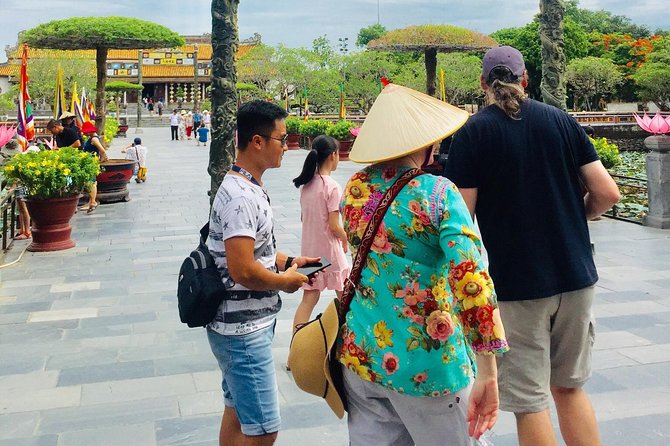
At Thai Binh Pavilion, also known as Thai Binh Lau or Peaceful Palace, the mood becomes quieter. The emperor used this place for reading and enjoying the scenery. It gives you a glimpse of royal life away from official ceremonies.
The stop lasts about 10 minutes. It is a small but useful reminder that the emperor’s world was not made up only of throne rooms and formal audiences. Reading, viewing gardens, and private leisure also had a place within the palace system.
The next stop is Thieu Phuong Garden, known as the Royal Garden. The garden has been restored with eye-catching scenery and was used by the king and his family for strolling and relaxation.
The garden is worth seeing as part of the larger route because it changes the pace. After gates, temples, urns, and formal halls, you reach a setting designed for movement and pleasure. You may find it one of the better places for photographs, though the schedule allows only about 10 minutes.
The itinerary is fairly full, with 11 stops in roughly two and a half hours. That means the guide needs to keep the group moving. You receive a broad introduction to the compound, not a slow architectural study of every building. If you want time to sit in the garden or photograph each detail, plan to explore independently after the tour.
Ending at Hien Nhon Gate

The walk concludes at Hien Nhon Gate, an entrance associated with mandarins. It provides a fitting final stop because it shifts attention from the royal family to the officials who served the imperial system.
The final explanation lasts about 10 minutes. By this point, you have seen the route from major ceremonial access to the private royal enclosure and back toward the administrative world of the court.
The end point is listed near 46 Dinh Cong Trang. Since the walk starts near Hai Mươi Ba Tháng Tám and finishes elsewhere, you should check the exact meeting instructions before setting out. The activity is conducted on foot, and the operator notes that most people can participate, but Hue’s heat and the size of the grounds still matter.
Wear practical walking shoes, bring water, and choose a time that suits your tolerance for sun. Sunrise and sunset upgrades are available, as are family-friendly and private versions. These options may be worth considering if you want cooler conditions or a slower pace.
The $9 price and the extra entrance fee
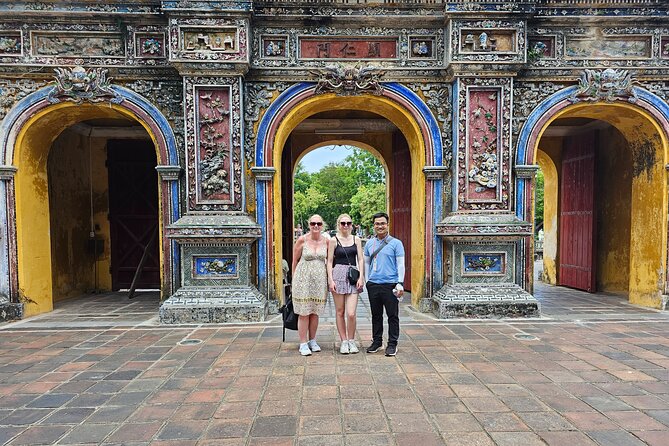
The advertised group price is $9 per person, which is attractive for a 2.5-hour guided walk with a group capped at eight. The important detail is that the Imperial City entrance fee is not included for the group option.
The listed entrance charge is 200,000 VND per person. The operator leaves it out partly because you may prefer to buy a combo ticket covering the Citadel and royal tombs. If you plan to see several tombs during your time in Hue, compare the combo price before buying a single-site ticket.
The private tour option includes the Imperial City entrance ticket, but you should check the exact private-tour price and inclusions before booking. Meals are not included unless your selected option specifically says so, and tips for the guide are optional.
For value, I would judge this tour by the guide rather than by the low headline price alone. A good guide changes the site from a large collection of buildings into a readable story. The cost makes sense if you want historical context, help with navigation, and the chance to ask questions.
What the guide quality means for your experience

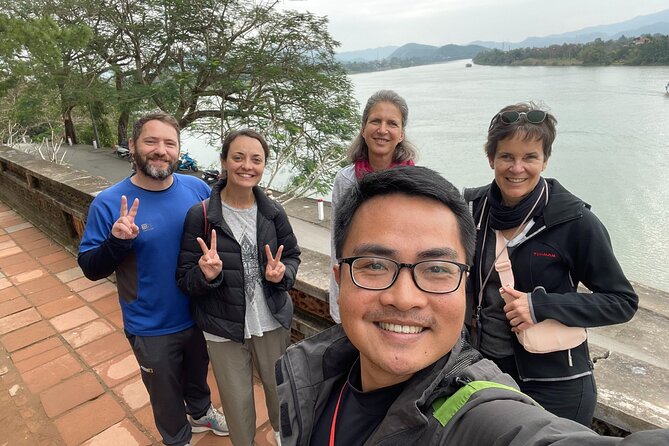
The strongest praise is aimed at clear explanations, strong English, patience, and passion for Hue and the Nguyen dynasty. Several guides are also praised for answering questions in detail and taking photographs for the group.
That last point may sound minor, but it can matter when you are traveling alone or with a small family. Linh, for example, is praised for taking good pictures as well as guiding people through the compound. Still, photography help is a bonus, not a formal promise, so you should not treat it as a guaranteed service.
There is one useful warning in the feedback: one visitor found the guide pleasant but too distracted by a phone and not interested enough in explaining the site. That appears to be an exception within a largely positive pattern, but it shows why the guide is the key variable.
The tour works best when you take part. Ask about the emperors, the royal women, the purpose of each enclosure, and the difference between original and reconstructed buildings. Guides such as Matthew have invited questions and made a point of checking that people were comfortable, especially on hot days.
Who should book this Hue walking tour?
I would choose this tour if you:
- Want to understand the Nguyen dynasty rather than only photograph the buildings.
- Prefer a small group to a large bus tour.
- Have about two and a half hours for a focused introduction.
- Want help finding the main sights inside a large compound.
- Are visiting Hue for the first time.
- Enjoy stories about royal families, court ritual, and daily palace life.
- Plan to continue independently after a guided orientation.
Families can also do well with it. A 12-year-old has been reported to enjoy the balance of stories and walking, and a family-friendly upgrade is available.
You may prefer a private option if you want to control the pace, ask many questions, or spend more time on selected buildings. You might also skip the group tour if you want a slow photographic visit with no fixed route. The group itinerary is useful, but it does move from stop to stop.
Should you book the Imperial City walking tour?
Yes, I would book it if Hue’s royal past is a main reason for your visit. The small group, manageable duration, and route through both famous and less obvious parts of the compound give you much more structure than wandering without context.
Just budget for the 200,000 VND entrance fee, check if a combo ticket suits your wider plans, and remember that the $9 price applies to the group tour rather than the private option. If you want the best experience, arrive ready to walk, listen, and ask questions.
The tour is not a full study of every surviving structure, nor does it leave unlimited time for photographs. It is a well-priced introduction led by guides who, in many cases, bring real warmth and strong subject knowledge to the walk. For most first visits to Hue’s Imperial City, that makes it a sensible choice.
FAQ
How long does the Hue Imperial City walking tour last?
The tour lasts approximately 2 hours and 30 minutes.
How many people can join the group?
The group tour has a maximum of eight participants.
Is the Imperial City entrance fee included?
No. For the group tour, the entrance fee is extra and listed as 200,000 VND per person. The private tour option includes the Imperial City entrance ticket.
Where does the tour start?
The meeting point is on Hai Mươi Ba Tháng Tám in Thuận Hoà, Hue.
Where does the tour finish?
The tour ends near 46 Dinh Cong Tráng, Ward, Hue City.
Which places are included on the route?
The route includes Ngo Mon Gate, Thai Hoa Palace, Hien Lam Pavilion, the Nine Dynastic Urns, The Mieu Temple, Chuong Duc Gate, the Forbidden Purple City, Kien Trung Palace, Thai Binh Pavilion, Thieu Phuong Garden, and Hien Nhon Gate.
Are meals included?
Meals are not included unless the option you book specifically says they are included.
Can I cancel for a full refund?
You can cancel at least 24 hours before the experience start time for a full refund. Cancellations or changes made within 24 hours are not refunded or accepted. If poor weather causes the operator to cancel, you will be offered another date or a full refund.
Just added around Hue
- Hai Van pass private car tour from Hue-Da Nang-Hoi An (1Way|Loop)★ 5.0 · 19 reviews
- Guided Private Hue City Tour from Da Nang or Hoi An★ 5.0 · 29 reviews
- Private Full-Day Tour of Hue from Da Nang or Hoi An City★ 4.5 · 24 reviews
- Hue Imperial City: Full-Day Guided Tour from Da Nang or Hoi An★ 4.0 · 25 reviews
- Hue City Tour From Da Nang- Hue Day Trip From Danang★ 5.0 · 28 reviews
- Hue Imperial City Daily Ingroup Tour via Hai Van Pass★ 5.0 · 151 reviews
- Hue Imperial City Private Tour with Local Experts★ 5.0 · 137 reviews
- Imperial Hue And Hai Van Pass Full-day Tour★ 5.0 · 57 reviews
Walking Tours, compared.

Private Street Food Evening Walking Tour in Ho Chi Minh City
Read our review →
[Hot] Hanoi Old Quarter Walking Street Food – Small Group Tour
Read our review →
Ha Noi Walking Food Tour, Non Vegetarian,Vegan, vegetarian Option
Read our review →
Tasting 8 Different Street Foods + Local Drink at Evening Time by Walking
Read our review →
Imperial City Walk, Motorbike Tour & Private Car Options
Read our review →
Evening Walking Food Tour, folk game and lantern boat
Read our review →

Half-Day Guided Street Food Walking Tour at Hue
Read our review →Browse the lists this tour appears in