
Reviewed · FOOD & DRINK
Hoi An hiden food adventure
Hoi An’s best food is often found away from the obvious restaurant streets. This three-hour walk leads you through family-run kitchens, back lanes, and small local eateries, where dishes such as cao lau, Hoi An dumplings, wontons, banh beo, and black sesame soup are made in familiar surroundings. I like the mix of eating and storytelling, especially the old recipes and the local well linked to cao lau.
I also like that the route gives you useful bearings for the rest of your stay. Guides such as Tham, Vu, Uyen, Phi, and Danny have taken people to places that are easy to miss, then finished near the Japanese Covered Bridge. The main consideration is simple: you need to arrive hungry. Six or seven foods can become eleven small tastings, and the walk includes several stops.
Key points to know before booking
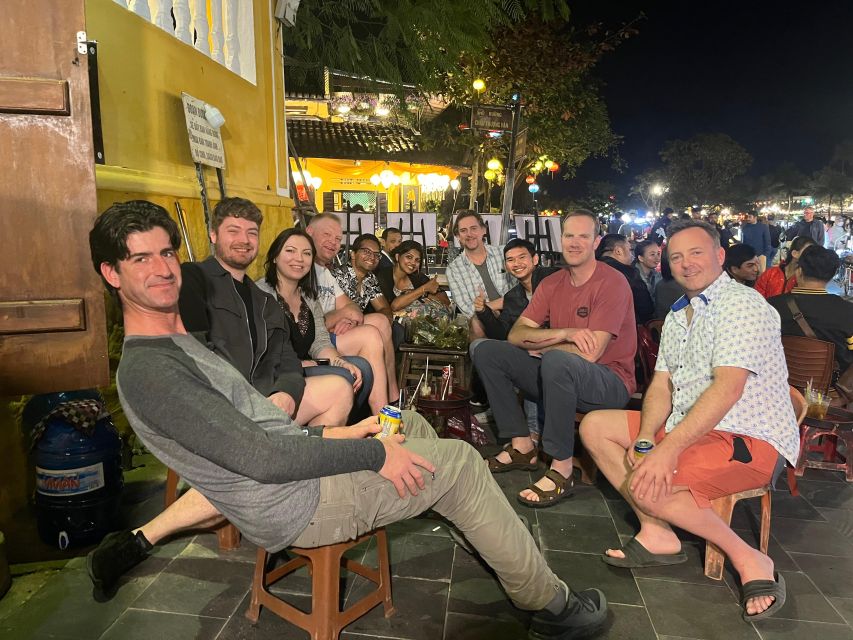
- Seven or more local tastings: Expect dishes such as cao lau, Hoi An dumplings, wontons, banh beo, banh mi, satay, and black sesame soup.
- Family homes and small eateries: Some food is served in ordinary local homes rather than polished tourist restaurants.
- A useful first-night tour: Your guide can explain local food, town history, and places to eat or visit later.
- Back streets and local stories: The walk goes beyond the best-known lanes and includes old buildings, homes, and food-making traditions.
- Vegetarian options available: Dietary needs are discussed and adjusted at the food stops.
- Good value at $23: Food, an English-speaking guide, water, and one drink are included, though the old town ticket and tips cost extra.
Why this food walk works best on your first night
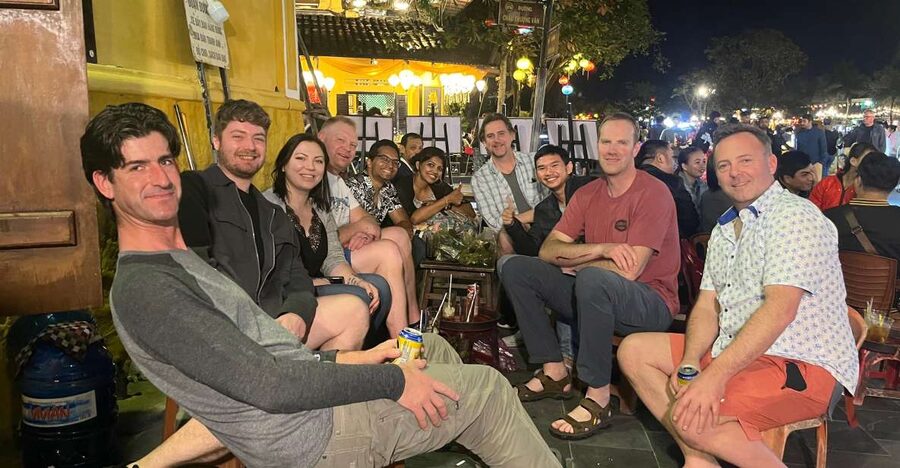
I would put this tour near the start of a Hoi An stay. You get a gentle introduction to the town while eating your way through it, and your guide can point out places you may want to return to later.
The value is not just the food. Hoi An’s specialties are tied to particular families, preparation methods, wells, streets, and local customs. A plate of noodles tastes more interesting when you understand why the dish belongs to Hoi An and how its method has been kept alive.
Several guides, including Tham, Vu, Uyen, and Phi, have been praised for explaining the food and town in a warm, easygoing way. The exact guide depends on the date, but the useful feature is the local connection. You are not simply shown a menu. You are introduced to the people and places behind it.
A first-night booking also helps you avoid a common Hoi An mistake: spending every evening around the same central restaurant area. After this walk, you will have a better sense of the quieter lanes and the dishes worth ordering again.
More Places to Eat and Drink in Hoi An:
- Da Nang & Hoi An: Food, Sightseeing, Culture & Hidden Gems
★ 5.0 · 806 reviews - Evening Walking Food Tour, folk game and lantern boat
★ 5.0 · 665 reviews - Hoi An Countryside Jeep Tour: Food, Culture & Daily Life
★ 5.0 · 414 reviews
Meeting at the church and setting off through Hoi An
The stated meeting point is at the gate of Hoi An Church, at 106 Nguyen Truong To Street. Some booking choices list Starbucks on Tran Hung Dao or the same 106 Nguyen Truong To address, so check the exact option you select before setting out.
The tour lasts about three hours and is conducted in English. It is primarily a walking experience, so comfortable shoes matter. The route begins in the town area and finishes at Chua Cau, the Japanese Covered Bridge, placing you near one of Hoi An’s best-known evening sights.
The walk is part of the meal. You pass through ordinary streets, back lanes, old buildings, and residential areas instead of moving between restaurants by vehicle. That makes the experience more personal, though it also means you should be comfortable walking for several hours with food stops along the way.
The pace appears to be designed around conversation and eating rather than rushing from one address to another. One morning option has also been offered, so check the available starting time if you prefer daylight. The main description focuses on an evening-style food walk, when Hoi An’s old town and the Hoai River take on a more romantic feel.
Market food and the first taste of local life
A market stop gives the tour an early look at ingredients and everyday food habits. This is more useful than simply walking past market stalls because your guide can explain what you are seeing and help you understand how local dishes fit together.
The route may include local kitchens and family homes. These are not staged cultural displays. They are places where people prepare food as part of their daily work and household life. That setting can feel more intimate than dining in a large restaurant, but it also calls for good manners: follow your guide’s lead, ask before taking photographs, and keep an open mind about simple surroundings.
The food is served in small portions across several stops. That format works well in Hoi An because you can sample many specialties without committing to a full plate of each one. It also gives you a better sense of how textures and flavors change from dish to dish.
Dumplings, wontons, and a family recipe kept alive
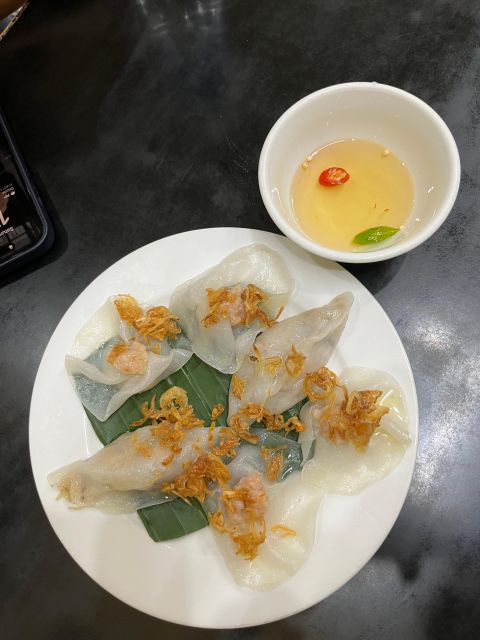
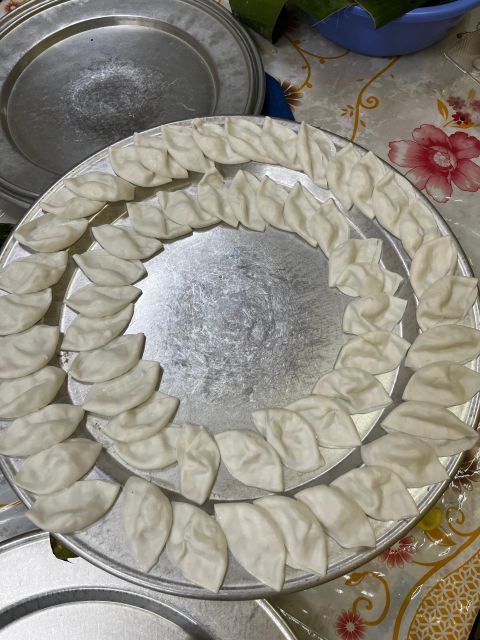
Hoi An dumplings and Hoi An wontons are among the important stops on the food list. The tour may also visit a local factory said to have been making Hoi An dumplings for around 100 years, using a family recipe.
That detail gives the tasting some context. You are not just trying another fried or steamed snack. You are seeing how a regional food can remain linked to one family and one town across generations.
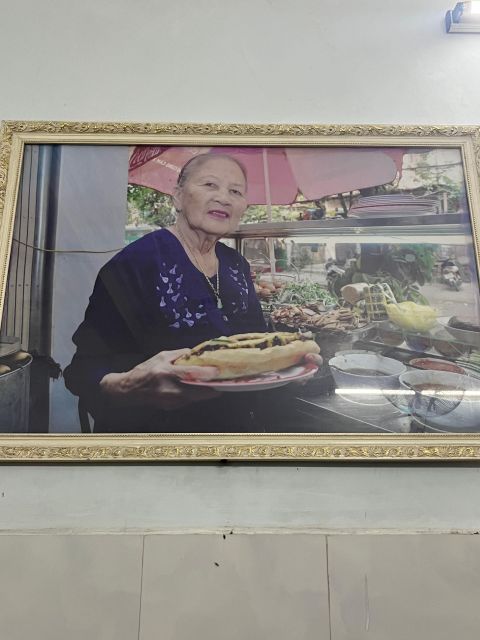
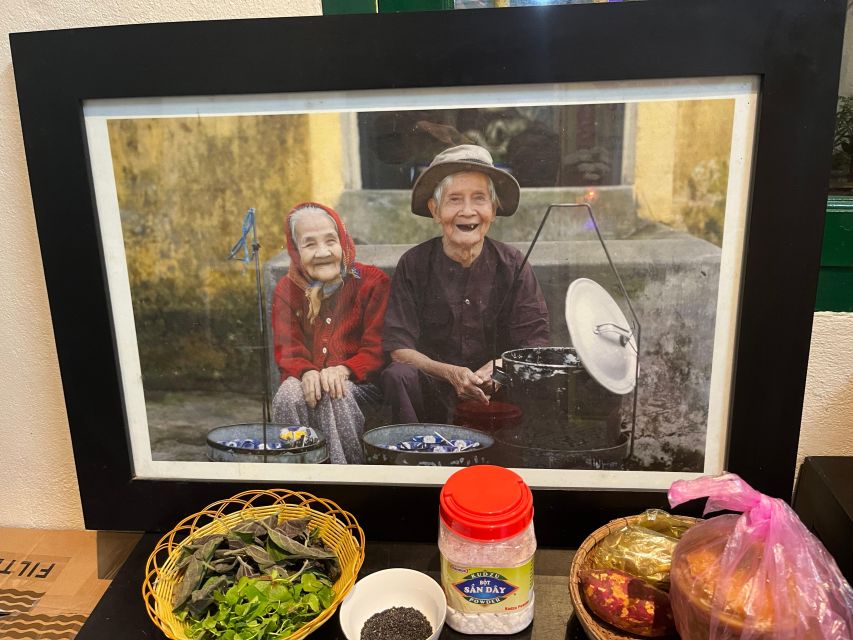
Some stops are described as visits to older people who still keep their own recipes. This is one of the strongest reasons to choose this walk over a general street-food crawl. The focus is not only on eating cheap food. It is on learning why a particular version is made in a particular way.
The setting can vary. You may eat at a small shop, a family home, or a workshop connected to the food itself. If you prefer formal seating and a fixed restaurant menu, this style may feel basic. If you want a closer look at local food habits, it is a major advantage.
A few more Hoi An trips worth comparing
- Hoi An: Basket Boat Ride in the Coconut Forest
★ 4.9 · 4,956 reviews - Hoi An: Vietnamese Coffee Culture and Coffee Making Class
★ 4.9 · 4,006 reviews - Hoi An: Vietnamese Foldable Lantern Making Class
★ 4.9 · 3,742 reviews - Cooking Class Hoi An:Local Market, Basket Boat, Fishing & Cooking
★ 5.0 · 3,660 reviews
Cao lau and the well behind Hoi An’s signature noodle
Cao lau is one of the essential Hoi An dishes, and this tour gives it more attention than a passing taste. The food is linked to a special preparation method and to the local water used in making the noodles. A stop at an ancient well helps explain that connection.
You may hear the dish described as having a recipe that reaches back roughly 300 years. The exact history is presented through local stories, but the practical point is clear: cao lau is not simply a bowl of noodles that happens to be sold in Hoi An. Its identity is tied to the town.
For you, this is the sort of detail that makes a familiar-looking dish worth noticing. Look at the noodles, herbs, meat or other toppings, and the balance of sauce. Ask your guide how the dish differs from other Vietnamese noodle meals.
The tour is not a cooking class, so do not expect to prepare the food yourself. Its strength is the explanation, the tasting, and the chance to connect a local specialty with the people and places that keep making it.
Banh beo, banh mi, satay, and the joy of small portions
The food list includes banh beo, a water-fern cake, along with banh mi and Hoi An satay. These stops broaden the meal beyond noodles and dumplings.
Banh beo is usually a small, soft rice cake served with toppings and sauce. It is a good example of why tasting several small dishes works well. You can notice the contrast between the soft cake, savory topping, and sauce without filling up too early.
Banh mi provides a familiar reference point for many visitors, but a local version can still be useful for comparison. Hoi An is known for its own food traditions, and your guide can explain what makes the local preparation different.
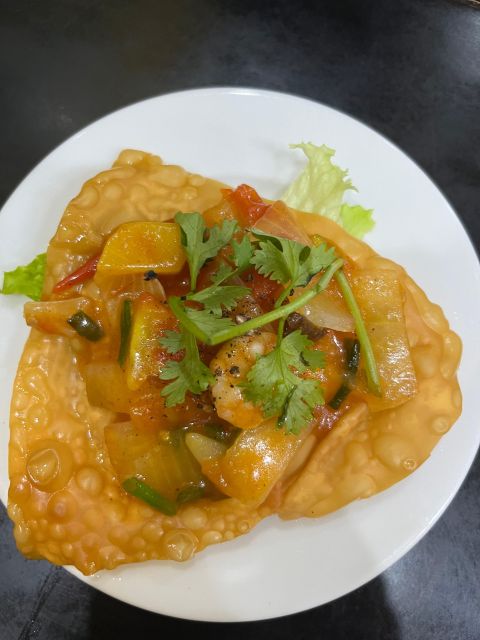
The satay stop adds another flavor profile. Since the exact ingredients and portion sizes can change, I would treat the published food list as a guide rather than a guaranteed plate-by-plate menu. The experience includes six or seven foods and drinks, but individual dishes may depend on the day and the selected option.
Black sesame soup and the final drink
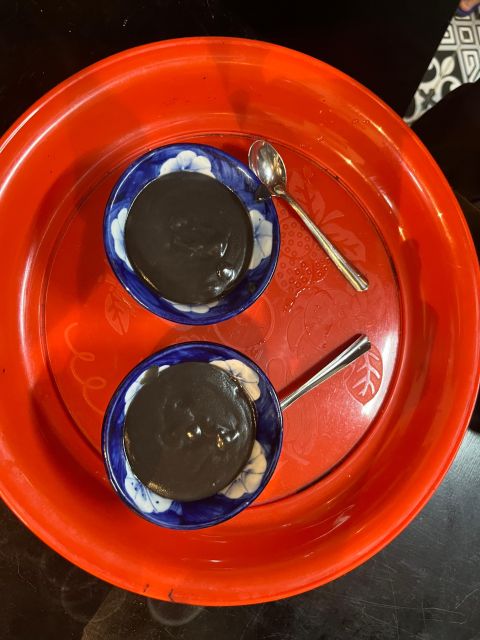
Black sesame soup is repeatedly singled out as a favorite, and it is a fitting late stop. The sweet, smooth dessert gives you a change of pace after savory dumplings, noodles, bread, and snacks.
It is also one of the foods you might not think to order on your own. That is an important benefit of a guided food walk. You are more likely to try something unfamiliar when someone can explain what it is and take you to a reliable local place.
The tour includes water and one drink at the end. Some people have particularly enjoyed the iced tea served as the final drink. Other beverages and alcohol are not included, so budget separately if you want anything beyond the planned tastings.
By this stage, you may be full. Take small bites early and avoid eating a large meal beforehand. The food is served across several locations, but the total amount can still be substantial.
Walking beside the Hoai River to Chua Cau
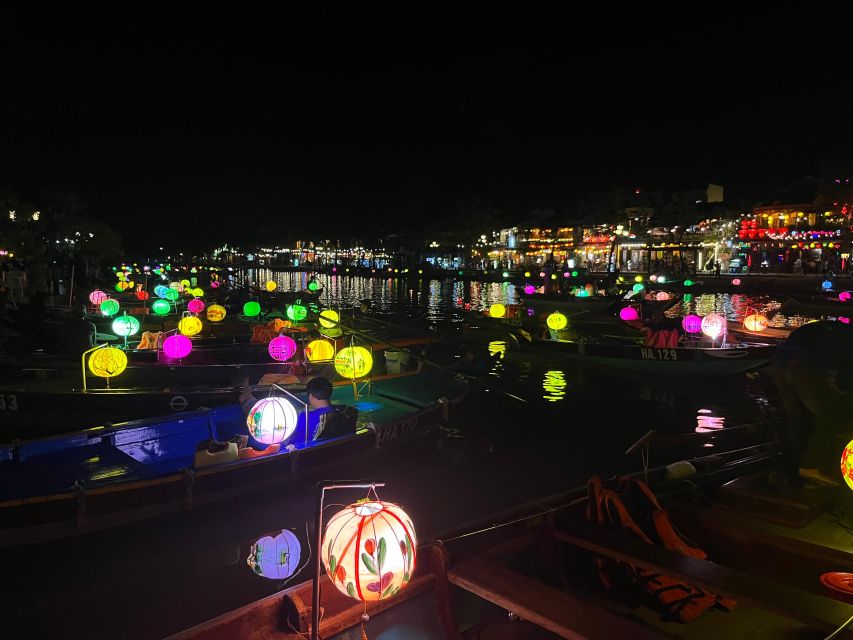
The final stretch leads into the old town and ends at Chua Cau, also known as the Japanese Covered Bridge. The route provides a natural close to the evening, with the Hoai River and Hoi An’s old buildings nearby.
This last section is not only a photo stop. It lets you see how the food neighborhoods connect with the more famous old town. You get both sides of Hoi An: the postcard streets and the quieter places where people prepare and sell food every day.
Keep in mind that the Hoi An old town entrance ticket is not included. The tour itself covers the guide, listed food, water, and one final drink, but any required town entrance fee is separate.
What the $23 price really includes
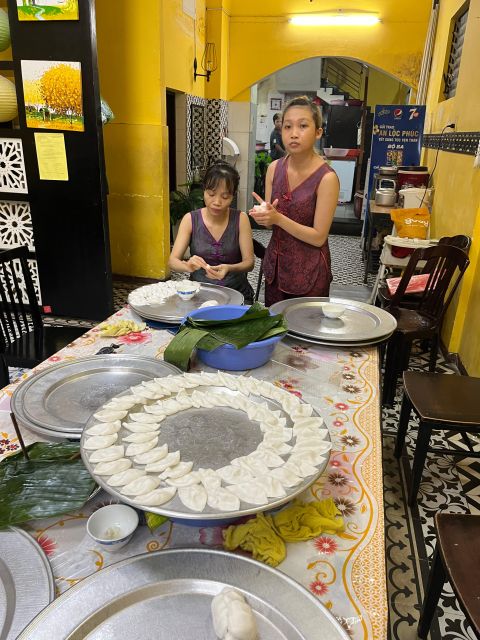
At $23 per person, this is strong value if you are ready to make the tastings your dinner. You are paying for a three-hour guided walk, six or seven foods or more, water, one drink, and access to local places you may not locate easily alone.
A normal restaurant meal may cost less, especially if you choose inexpensive street food. The comparison is not quite like for like. Here, part of the price covers the guide’s time, translation, local introductions, and the route between several food stops.
The price is especially attractive for a first visit because it can save you from ordering blindly for several nights. You learn what cao lau, dumplings, banh beo, and black sesame soup are like, then decide what deserves a return visit.
Watch for the extra $37 surcharge on Vietnamese public holidays. The supplied information says this may vary by option, so check the final price before paying. Tips are not included, and alcohol or extra drinks cost more.
Dietary needs and the practical limits
Vegetarian choices are available, and the food stops can make adjustments for dietary preferences. One vegetarian arrangement has included a suitable alternative at each place, which is encouraging if you do not eat meat.
Allergies require more care. Peanut and shrimp allergies have been handled by guides who checked ingredients and adjusted dishes, but you should still state every allergy clearly when booking and again at the start. Do not rely only on a general vegetarian request, since vegetarian food and allergy-safe food are different needs.
The tour is best for people who enjoy variety, walking, and informal local places. It may be less suitable if you want a quiet, seated restaurant meal, a formal cooking lesson, or complete control over every dish.
Families can consider it too. An eight-month-old has joined one private tour, but the route and seating may vary. Since the group can be private, ask about the arrangement if you need a slower pace or special planning.
How to get the most from the evening
Arrive hungry, but not so hungry that you rush the first dish. The tour includes enough food that pacing yourself matters.
Tell your guide about allergies, vegetarian needs, and dislikes at the beginning. Guides such as Tham, Vu, Uyen, and Nhouc have been praised for adjusting the experience and explaining dishes clearly, but communication works best when you give precise information early.
Bring comfortable shoes and a little patience for informal settings. Some stops may be inside homes or small family businesses, not air-conditioned dining rooms.
Use the guide for more than food questions. Ask where to return for cao lau, which areas are worth seeing after dark, and what to do on your next day. The tour is designed to give you local suggestions as well as dinner.
Cancellation is free up to 24 hours before the start, and you can reserve now and pay later. Private groups are available, though the exact price and setup may depend on the option selected.
Should you book the Hoi An Hidden Food Adventure?
I would book it if you want a generous first taste of Hoi An food and prefer local homes, family businesses, and side streets to a polished restaurant crawl. The combination of seven or more possible tastings, old recipes, cao lau, the well, and the walk to Chua Cau gives the tour real variety.
Book it early in your stay, ideally on your first night, so the guide’s advice can shape the rest of your time. Come hungry, mention allergies clearly, and check the meeting point and public holiday surcharge before you go.
Skip it if you dislike walking, informal dining, or unfamiliar dishes. For everyone else, $23 buys more than dinner. It gives you a useful introduction to how Hoi An eats, works, and tells its stories.
FAQ
How long does the Hoi An Hidden Food Adventure last?
The tour lasts three hours and includes walking, food tastings, and a guided visit around Hoi An.
Where does the tour meet?
The meeting point is listed as the gate of Hoi An Church at 106 Nguyen Truong To Street. Some options list Starbucks on Tran Hung Dao, so check the meeting point attached to your booking.
Where does the tour finish?
The tour finishes at Chua Cau, the Japanese Covered Bridge.
Which foods are included?
The listed foods include banh beo, Hoi An dumplings, Hoi An wontons, banh mi, Hoi An satay, cao lau noodles, and black sesame soup. The tour includes six or seven different foods and drinks, though the exact selection can vary.
Are vegetarian options available?
Yes. Vegetarian options are available, and dietary preferences can be adjusted at the food stops.
Is the Hoi An old town entrance ticket included?
No. The old town entrance ticket is not included in the tour price.
What is included in the $23 price?
The price includes an English-speaking guide, all food mentioned in the itinerary, water, and one drink at the end. Tips, extra beverages, alcohol, and the old town entrance ticket are not included.
Just added around Hoi An
- Private car from Danang to Hoi An★ 5.0 · 20 reviews
- Da Nang to Hoi An ancient town by private transfer★ 5.0 · 36 reviews
- Cu Lao Cham Island Tour from Da Nang/ Hoi An★ 4.0 · 24 reviews
- Da Nang Airport Arrival Private transfer to Hoi An★ 5.0 · 46 reviews
- Hoi An Night Market with Hoi an walking Tour , Colourful Lanterns, Boat Ride★ 5.0 · 142 reviews
- Marble Mountain-AM Phu Cave & Hoi AN -Colourful Lantern Boat Ride★ 5.0 · 27 reviews
- Private Transfer from Danang to Hoi An by Private Car★ 5.0 · 37 reviews
- Guided Tour to Marble Mountain &HoiAn City-BoatRide-Night Market★ 5.0 · 23 reviews
Food & Drink, compared.
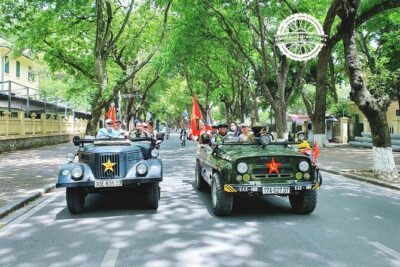
Hanoi Jeep Tour: Food, Culture and Fun by Vietnam Army Jeep
Read our review →
Ho Chi Minh City Street Food Tour & Sightseeing By Motorbike
Read our review →
Small Group Hanoi Street Food Tour with a Real Foodie
Read our review →
My Son Sanctuary Early Morning w. Champa Food Brunch
Read our review →
Day-Night Sights & Local Food Tour l Female Option
Read our review →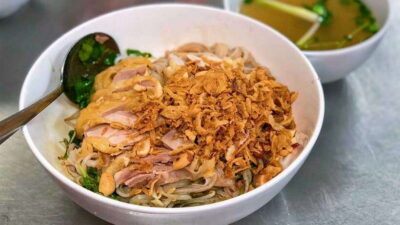
Ha Noi Walking Food Tour, Non Vegetarian,Vegan, vegetarian Option
Read our review →Browse the lists this tour appears in