
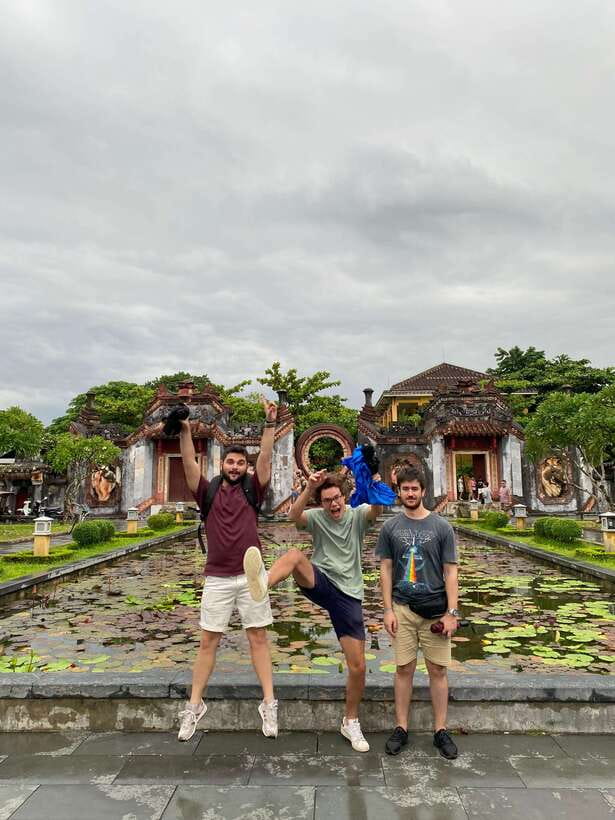
Reviewed · WALKING TOURS
Hoi An Ancient Town – Walking Tour with Local Guide
Hoi An reveals itself best on foot, and this tour gives you a fast, well-organized introduction to its old streets, old houses, temples, and trading past. You follow a local English-speaking guide through key sights, with enough indoor stops to make the walk manageable in hot, wet, or crowded weather.
I like the small group of up to 10 people, which makes it easier to hear the guide and ask questions. I also like the useful local advice at the end, from places to eat and drink to tailor shops and other things to do. The main consideration is the extra 120,000 VND entrance fee, payable in cash, on top of the $14 tour price.
Key points
- A strong first-day introduction: See major old-town sights before exploring Hoi An on your own.
- Small groups: The maximum of 10 people helps the guide keep the group together in busy lanes.
- Good local guides: Trung, Duy, Tom, Tin, and other guides are praised for clear English, humor, and local insight.
- Indoor breaks included: Assembly halls, houses, museums, and performance spaces provide shelter from sun or rain.
- A practical finish: End with local tea or dessert and advice on restaurants, cafés, tailoring, and sightseeing.
- Know the real cost: The tour is $14 per person, plus 120,000 VND in cash for the old-town heritage ticket.
Why this walking tour works in Hoi An
Hoi An is easy to wander, but it is not always easy to understand. A yellow-painted house may look charming, yet without context you can miss why the town has Chinese assembly halls, Japanese design, Vietnamese family homes, and traces of its old trading life all within a short walk.
That is where this tour earns its keep. It links the sights into one story instead of leaving you to read scattered signs or guess which buildings are worth entering. You get a broad look at the old town in about 150 minutes, then you can return later to spend more time at the places that interest you most.
The group limit matters. Ten people is small enough for a guide to answer questions and watch the group at crossings and crowded corners. Several guides, including Trung and Duy, are praised for speaking clear English and keeping explanations lively without making the walk feel like a lecture.
You should expect a pleasant walking pace rather than a strenuous march. The route includes several indoor heritage sites, which helps on a rainy afternoon or under central Vietnam’s strong sun. Still, wear comfortable clothes and shoes. This remains a walking tour over old streets, and baby strollers are not allowed.
More Walking Tours in Hoi An
- Evening Walking Food Tour, folk game and lantern boat
★ 5.0 · 665 reviews - Hoi An Ancient Town Walking Tour with a Local
★ 5.0 · 517 reviews - Hoi An Street Food Walking Tour with Tastings
★ 5.0 · 317 reviews
Starting at 95 Phan Chu Trinh Street

The meeting point is 95 Phan Chu Trinh Street, in front of a tailor shop at the corner of an intersection. That is a useful location because you are not expected to find your guide somewhere deep inside the old town’s narrow lanes.
You do not receive hotel pickup or drop-off, so plan your own way to the meeting point. Arrive with enough time to locate the shop and join the group without a rushed start.
The tour then heads into Hoi An Ancient Town. The route is designed to cover many of the central sights in one continuous outing. It is a good choice if you have only one day in Hoi An, or if you want to get your bearings before returning alone for shopping, food, photographs, or an evening walk.
One practical point comes first: the old town requires an entrance ticket costing 120,000 VND per person. This fee is not included in the tour price and must be paid in cash. The activity provides access through a separate entrance, which may save some waiting, but you should still have the ticket money ready.
Ba Mu Temple gate and the first look at old Hoi An
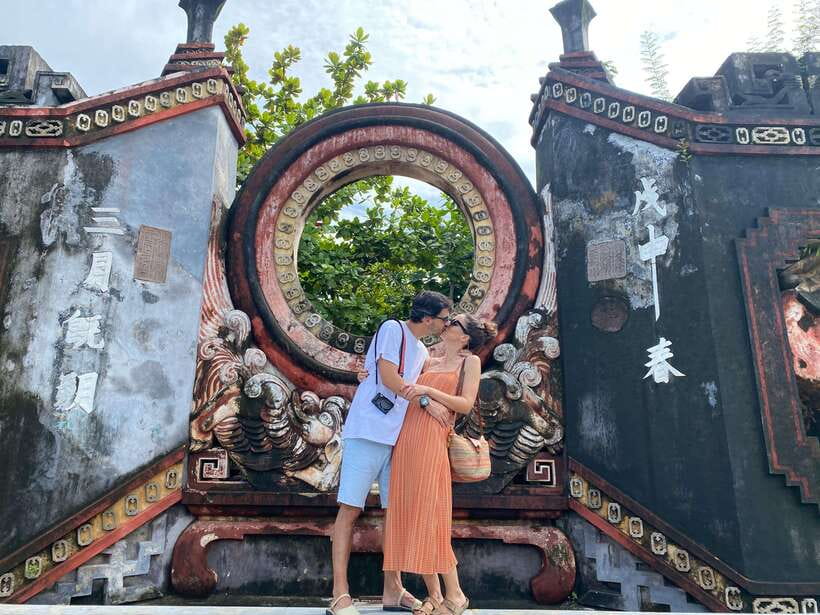
Ba Mu Temple gate is an attractive opening stop. Its detailed gateway gives you an immediate sense of the visual character of Hoi An, where public religious spaces and carefully preserved façades sit close to ordinary streets and shops.
This is a good place to hear the first layer of local context from the guide. The tour is not only about photographing a pretty entrance. Your guide helps place it within Hoi An’s religious and architectural traditions, then points out details you might otherwise walk past.
Expect time for photographs, though the precise time at each stop can vary with the group and the conditions. The old town can become crowded, especially during busy holiday periods such as Tet. One useful quality of the guides is their attention to keeping the group close when the streets fill up.
Assembly halls and the town’s trading connections

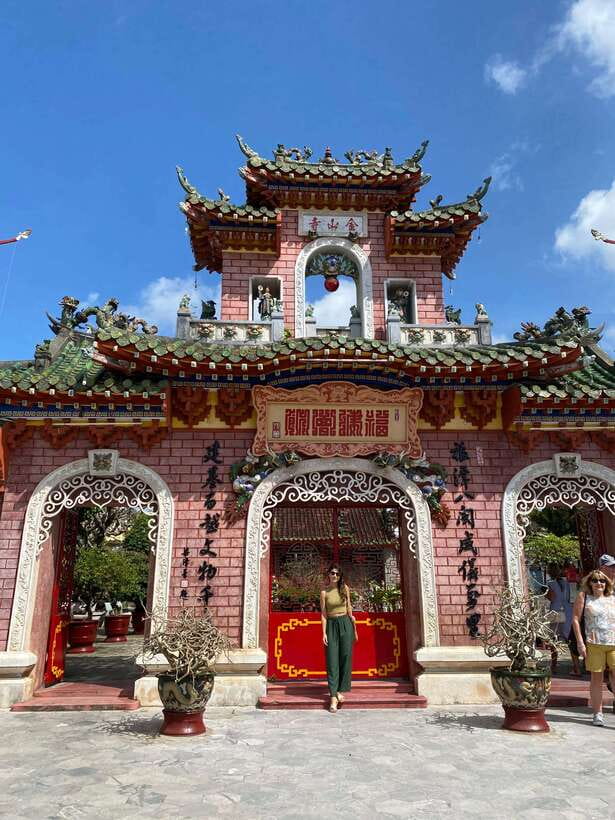
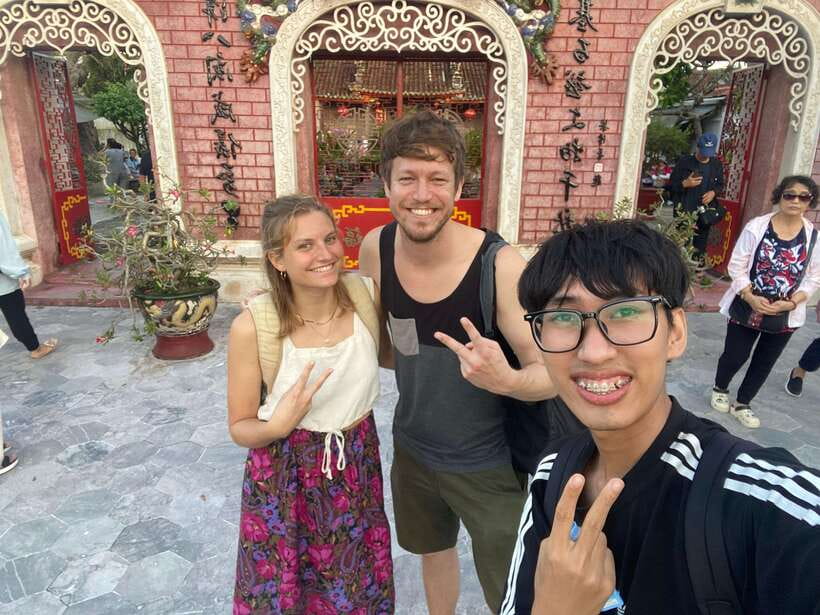
The Fujian or Cantonese Assembly Hall is one of the tour’s more valuable stops. These halls reflect the Chinese communities that lived and traded in Hoi An, and their decorative entrances, courtyards, and religious features offer a different view of the town from the family houses.
Your guide explains the cultural background rather than leaving you to admire the colors without context. That matters because Hoi An’s appeal comes from several cultures meeting in one compact place. You can see how the old port connected local Vietnamese life with merchants from elsewhere in Asia.
The indoor format also gives you a break from the street. If the weather turns wet, you will appreciate having real places to step inside rather than spending the entire tour under an umbrella. One visitor specifically found the walk manageable on a rainy day, which is a useful reminder that the route is not just for perfect weather.
Same trip, a completely different kind of day:
- Hoi An: Basket Boat Ride in the Coconut Forest
★ 4.9 · 4,956 reviews - Hoi An: Vietnamese Coffee Culture and Coffee Making Class
★ 4.9 · 4,006 reviews - Hoi An: Vietnamese Foldable Lantern Making Class
★ 4.9 · 3,742 reviews - Cooking Class Hoi An:Local Market, Basket Boat, Fishing & Cooking
★ 5.0 · 3,660 reviews
The Japanese Covered Bridge and Kazik Park
The Japanese Covered Bridge is Hoi An’s best-known landmark, and naturally it appears on the route. It is worth seeing with a guide because the structure is more than a simple photo stop. Its form reflects the town’s international past and its importance as a meeting point between different communities.
The bridge area can be crowded, so do not expect a quiet, private look. Your guide’s job here is partly practical: keep the group together, explain what you are seeing, and help you find a reasonable angle for photographs.
Kazik Park adds another layer to the walk. It gives the route a little breathing room between the denser heritage buildings and helps connect the old town’s preserved past with its public spaces today. The combination of landmark, park, and narrow streets keeps the route from feeling like a series of identical indoor visits.
Several guides are also happy to take group photographs at notable sights. That is a small but useful benefit when you are traveling alone or when everyone in your party wants to appear in the picture.
Tan Ky Heritage House and Hoi An’s old homes
Tan Ky Heritage House is one of the stops that best explains how Hoi An’s old merchant families lived and worked. The building allows you to look at the domestic side of the town, not just temples and public monuments.
The value here is in the details. A guide can explain how the house’s layout, materials, and decoration relate to family life and trade. You will likely get more from the visit if you listen for the connection between architecture and daily life, rather than treating it as another attractive old building.
This is also where a guide makes a clear difference. On your own, you may take photographs and move on. With someone explaining the house, you begin to see how Hoi An’s historic center functioned as a living town, not merely a preserved collection of façades.
The building may feel compact, and the route moves through several sites in limited time. If Tan Ky interests you most, make a note to return later for a slower look.
Traditional arts and the Museum of Folk Culture
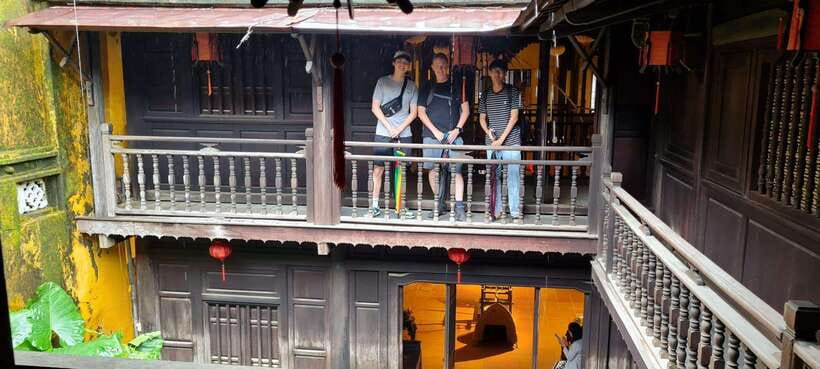
The Hoi An Traditional Art Performance House introduces local performance traditions in a more formal setting. The stop is useful if you want to understand that Hoi An’s culture is not only visible in its architecture. Music, performance, craft, and community traditions are part of the town’s identity as well.
The Museum of Folk Culture continues that theme. It gives the tour a broader social frame, showing aspects of local life beyond the famous bridge and lantern-lit streets. The museum is especially helpful for first-time visitors who want more than a photo checklist.
A guide can help you connect objects and displays with the town you are walking through. That context is the reason I would take this tour early in a Hoi An stay. Afterward, you are better prepared to notice cultural details during your own visits, meals, and evening walks.
Some people will find the number of stops ideal, while others may wish for more time inside each one. The route aims for coverage, not a specialist museum study. Think of it as a well-chosen introduction.
Hoi An Market and the final tea stop
Hoi An Market brings the walk back into everyday town life. After temples, historic houses, and museums, the market shows a more practical side of the city, with local commerce and the food culture that makes Hoi An such a rewarding place to eat.
The tour includes a stop for traditional dessert or local tea. Many groups finish with a refreshing herbal drink at Mot, giving everyone a chance to sit or pause after the walk. This is a smart ending: you can ask final questions while your guide shares suggestions for restaurants, cafés, tailor shops, and other activities.
These recommendations may be one of the best parts of the tour for a short visit. You do not just leave with a list of monuments. You also get help deciding where to eat local dishes, where to have coffee, and how to use the rest of your time in town. Some guides follow up with additional suggestions after the walk, though you should treat that as a helpful extra rather than a guaranteed part of every booking.
What $14 buys you, and what it does not

At $14 per person, the tour is good value if you want a structured introduction to Hoi An. The price covers an English-speaking local guide, the small-group walk, visits to key heritage sites, access to hidden alleys and photo spots, and a local tea or dessert.
The value comes from the connections between those stops. You could walk through the same streets for free, but you might miss the significance of a house, assembly hall, or museum. A guide also saves you from spending your limited time figuring out which buildings to enter.
The additional 120,000 VND entrance ticket changes the final calculation slightly. Bring the fee in cash and think of the tour as $14 plus the heritage admission. You do not pay for hotel transportation, so this suits people staying near Hoi An who can reach the meeting point independently.
The tour is not designed for people who want a private guide, a slow architectural study, or transport between sights. It is a compact shared walk that covers a lot.
Who should book this Hoi An walk
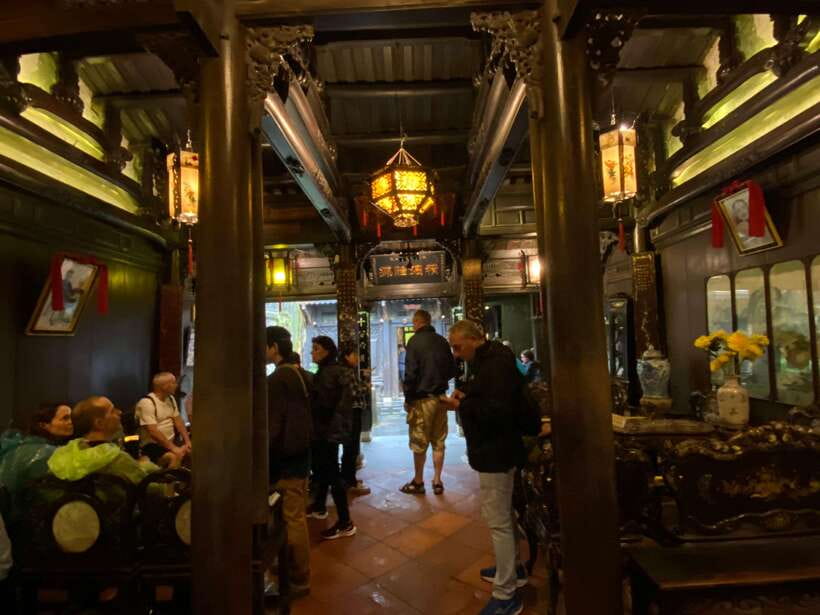
I would choose this tour for a first visit, especially if you have one or two days in Hoi An. It gives you the basic map of the old town and helps you understand what you are seeing before you explore on your own.
It also suits solo visitors and couples who want company without joining a large coach group. The group limit of 10 keeps the experience personal enough for questions, while the price stays modest.
Families with babies should note the restrictions. The tour is not suitable for babies under one year, and baby strollers are not allowed. Anyone joining should wear comfortable clothes and be ready for a sustained walk.
You should also consider the weather and the calendar. The indoor stops help with rain and heat, but crowded periods can slow the route. Guides such as Trung have shown good judgment in busy conditions, keeping people together and adjusting the pace, but the old town may still feel packed at popular landmarks.
Free cancellation is available up to 24 hours before the start, and you can reserve now and pay later. Those policies are useful if your central Vietnam plans are still shifting.
Should you book it?
Book this tour if you want a well-priced first look at Hoi An with a local English-speaking guide, a manageable group, and practical advice for the rest of your stay. The strongest features are the route’s coverage, the indoor breaks, and guides such as Trung, Duy, Tom, and Tin, who bring humor and clear explanations to the walk.
Skip it if you prefer to wander alone, dislike scheduled stops, or want to spend a long time at one heritage building. For most first-time visitors, though, this is a sensible way to begin. Take the tour early, note the food and coffee suggestions, then return later to explore the places that caught your interest.
FAQ
How long does the walking tour last?
The stated duration is 150 minutes, or two and a half hours. The old-town visit is also described as lasting about three hours, so allow roughly two and a half to three hours.
Where does the tour start?
The meeting point is 95 Phan Chu Trinh Street in Hoi An, in front of a tailor shop at the corner of an intersection.
What is included in the tour price?
The price includes an English-speaking local guide, a small-group walking tour, visits to key heritage sites, hidden alleys and photo spots, and a traditional dessert or local tea.
Is the old-town entrance ticket included?
No. You must pay 120,000 VND per person separately. The ticket must be paid in cash.
How large is the group?
The group is limited to 10 participants.
Which landmarks are visited?
The route includes Ba Mu Temple gate, the Fujian or Cantonese Assembly Hall, the Japanese Covered Bridge, Kazik Park, Tan Ky Heritage House, the Hoi An Traditional Art Performance House, the Museum of Folk Culture, and Hoi An Market.
Is hotel pickup provided?
No. Pickup and drop-off are not included, so you must make your own way to the meeting point.
What language is the tour conducted in?
The tour is conducted in English with a live English-speaking guide.
Can I cancel or pay later?
You can cancel up to 24 hours in advance for a full refund. Reserve now and pay later is also available.
Just added around Hoi An
- Private car from Danang to Hoi An★ 5.0 · 20 reviews
- Da Nang to Hoi An ancient town by private transfer★ 5.0 · 36 reviews
- Cu Lao Cham Island Tour from Da Nang/ Hoi An★ 4.0 · 24 reviews
- Da Nang Airport Arrival Private transfer to Hoi An★ 5.0 · 46 reviews
- Hoi An Night Market with Hoi an walking Tour , Colourful Lanterns, Boat Ride★ 5.0 · 142 reviews
- Marble Mountain-AM Phu Cave & Hoi AN -Colourful Lantern Boat Ride★ 5.0 · 27 reviews
- Private Transfer from Danang to Hoi An by Private Car★ 5.0 · 37 reviews
- Guided Tour to Marble Mountain &HoiAn City-BoatRide-Night Market★ 5.0 · 23 reviews
Walking Tours, compared.

Private Street Food Evening Walking Tour in Ho Chi Minh City
Read our review →
[Hot] Hanoi Old Quarter Walking Street Food – Small Group Tour
Read our review →
Ha Noi Walking Food Tour, Non Vegetarian,Vegan, vegetarian Option
Read our review →
Tasting 8 Different Street Foods + Local Drink at Evening Time by Walking
Read our review →
Imperial City Walk, Motorbike Tour & Private Car Options
Read our review →
Evening Walking Food Tour, folk game and lantern boat
Read our review →

Half-Day Guided Street Food Walking Tour at Hue
Read our review →Browse the lists this tour appears in