

Reviewed · WALKING TOURS
Hue Imperial city walking tour and optional royal tombs
Hue’s Imperial City is more than a grand gate and a few weathered halls. This 2.5-hour walking tour helps you read the site as a royal compound, from Nguyen Dynasty politics to the way buildings were placed to manage wind, weather, floods, and ceremony. Guides such as Matthew, Dang, and Tom are praised for making palace intrigues and construction details easy to follow.
I like two things right away. First, the tour keeps its focus on the Nguyen Dynasty, Vietnam’s last imperial family, instead of rushing through a long list of buildings. Second, the small-group format should give you room to ask questions, and Matthew in particular is noted for adapting explanations to his group’s interests. The main trade-off is that the 200,000 VND entrance ticket is not included in the $26 tour price.
Key points to know before you book
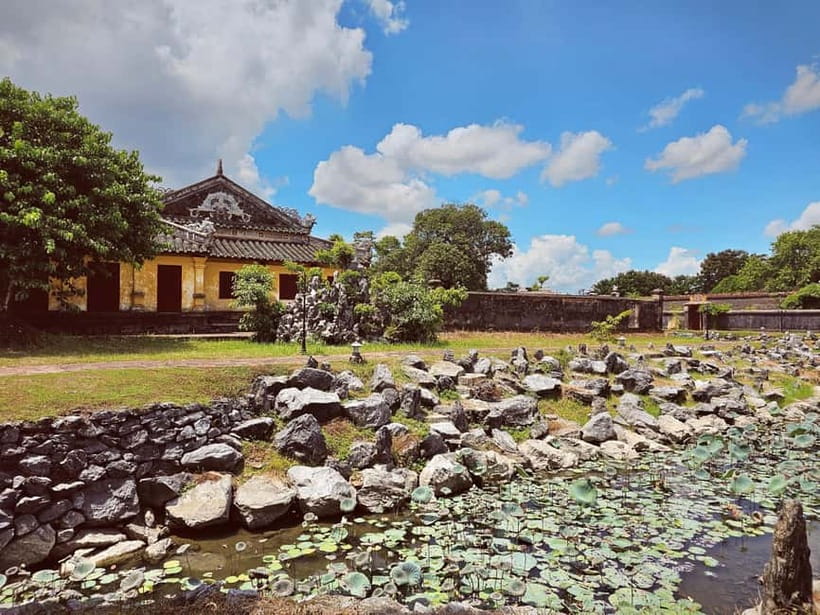
- See the Imperial and Forbidden Cities together: The route covers major royal courtyards, temples, residences, and palace remains rather than only the famous Ngo Mon Gate.
- Expect history with the architecture: You learn why Hue became the capital, how royal buildings were planned, and how feng shui and local weather shaped construction.
- Morning tours include a possible bonus: At 8 am, you can watch the Changing Guard Ceremony in front of Ngo Mon Gate.
- Guides vary, but English is the listed language: Matthew, Dang, and Tom have each led tours, while Tom also speaks French.
- Budget for the separate admission: The tour costs $26 per person, but the Imperial City ticket costs 200,000 VND per person.
- Consider adding royal tombs: Optional choices let you see more of Hue beyond the citadel, though the supplied details do not specify which tombs or how the add-on is arranged.
Why Hue’s Imperial City deserves a guided walk
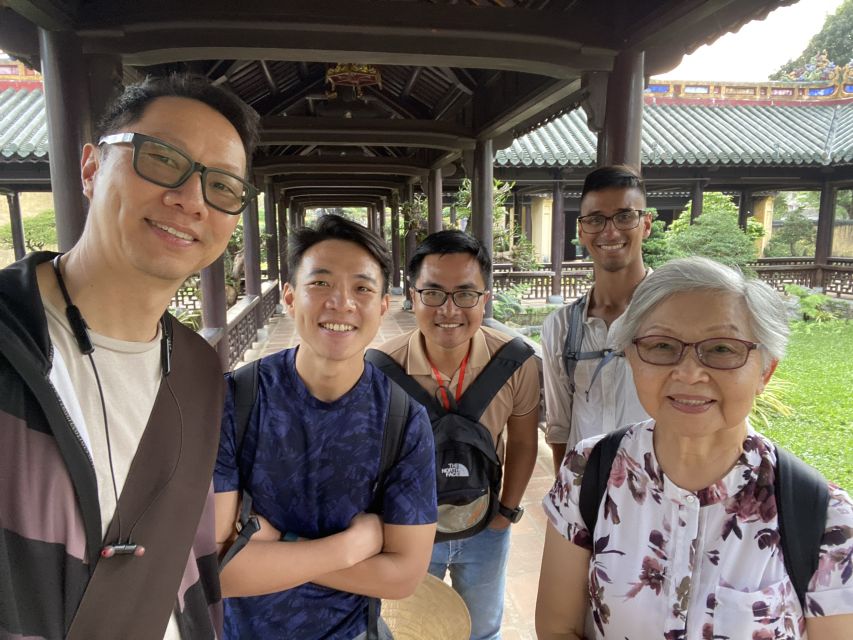
Hue served as the capital of the Nguyen Dynasty from 1802 to 1945. That span covers the final imperial period in Vietnam, and the citadel is where royal government, ceremony, family life, religion, and court politics came together.
You can walk through the complex without a guide, but the buildings do not always explain themselves. A gate may look impressive while offering little clue about who passed through it, why it faces a certain direction, or how it fitted into royal life. This tour gives you the background needed to connect those pieces.
I especially like the emphasis on why Hue. The guide explains why the Nguyen rulers selected this location as their capital and how the city’s setting affected the design of the royal compound. The discussion includes the influence of feng shui and practical responses to weather conditions, along with the engineering used to deal with floodwater and air movement.
That is useful because the Imperial City is not simply a collection of old structures. Its layout reflects power and ritual, but also the demands of a difficult climate. You get more from the courtyards and walls when you understand those pressures.
More Walking Tours in Hue
- Hue Imperial Ancient City Walking Tour
★ 4.8 · 308 reviews - Hue Imperial City Walking Tour: Citadel & Forbidden City
★ 4.8 · 245 reviews - Eat like a local with a local – Walking Tour
★ 4.9 · 57 reviews
Starting beside the Nine Holy Cannons
The meeting point is at the four-cannon side of the Nine Holy Cannons. This detail matters because the opposite side has five cannons, and arriving at the wrong side could waste time at the start of a compact tour.
Your guide sends a WhatsApp message before the meeting, which should make it easier to confirm the exact spot. The tour ends back at the same meeting point, so you do not need to arrange a separate pickup at the end.
The cannons themselves offer a fitting introduction to the citadel. They point to the military and symbolic power of the Nguyen court, while the nearby entrance leads you toward the ceremonial heart of imperial Hue. The tour is on foot, so wear shoes you can comfortably use for 2.5 hours and bring water.
Hue can be hot and humid from May through August. Do not treat the walking time as a minor detail. Carry more water than you think you need, especially if you book the morning tour and plan to continue sightseeing afterward.
Entering the Imperial City and Forbidden City
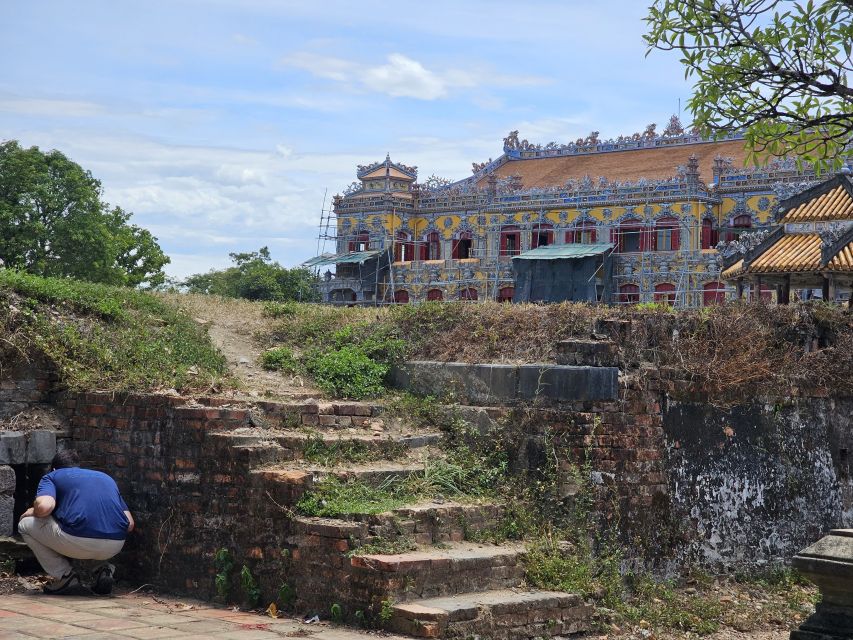
The central portion of the walk takes you through the Imperial City and into the Forbidden City. This is where the guide’s historical storytelling matters most.
The Imperial City served as the wider royal enclosure, while the Forbidden City was the more restricted inner area connected with the emperor and court life. The route helps you understand the difference between public ceremony, administration, worship, and private royal space.
You can expect the guide to place the surviving buildings and damaged areas within the story of the Nguyen Dynasty. The dynasty’s rise, its court culture, and its eventual downfall all form part of the explanation. If you enjoy political history, ask about the palace intrigues and the final years of the dynasty. If architecture interests you more, ask how the court managed weather, floods, and air currents.
This flexibility is one of the tour’s best features. Matthew is described as tailoring the walk to his group’s interests, offering both political stories and practical engineering details. That makes the tour more useful than a fixed speech delivered at every stop.
The site has suffered damage and rebuilding over time, so you should not expect every palace to survive in perfect condition. The benefit of a guide is that you can understand the importance of spaces even when the original structure is incomplete.
Hien Lam Cac Pavilion and The Mieu Temple
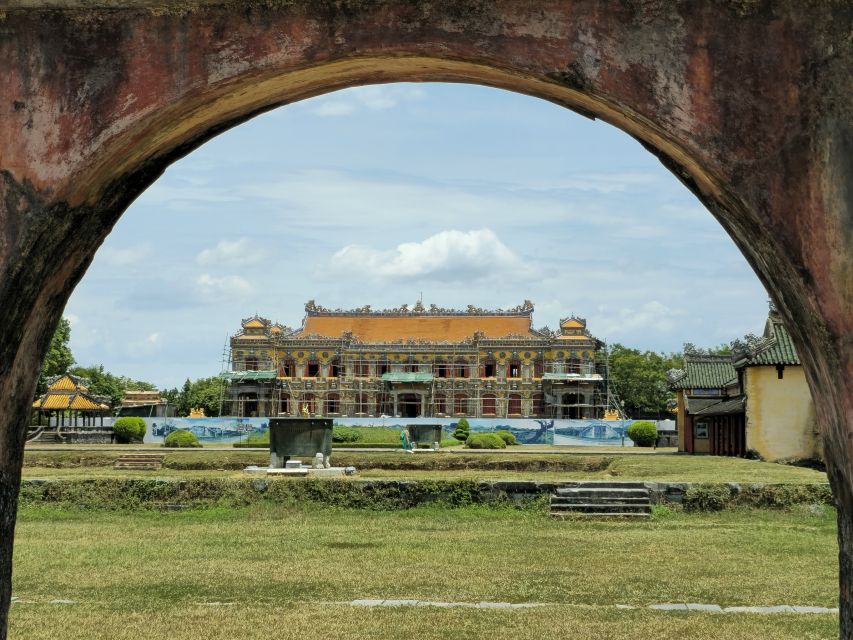
Hien Lam Cac Pavilion is one of the named stops. Its position and ceremonial role help show how the Nguyen court presented its authority. Look beyond the roofline and decorative details, and listen for how the guide explains the pavilion’s place within the larger royal plan.
The tour also visits The Mieu Temple, an important religious and dynastic site within the Imperial City. Here, the focus shifts from government and palace ritual toward ancestor worship and the Nguyen royal family.
These stops make the route feel broader than a simple palace tour. You are not only seeing where emperors lived and ruled. You are also learning how the dynasty remembered its founders and presented its legitimacy.
I like this mix of buildings because it gives you different ways to understand imperial power. A pavilion can communicate authority through ceremony and design. A temple can show how family lineage and religious practice supported the court.
The guide’s explanations are particularly valuable at places where the visual experience is not self-explanatory. Without context, you might admire the form and move on. With context, you can see how each building supported the structure of Nguyen rule.
More Walking Tours in Hue Vietnam:
- Hue Imperial City and Forbidden City Walking Private Tour
★ 4.9 · 42 reviews - Private Street Food Evening Walking Tour in Ho Chi Minh City
★ 5.0 · 3,175 reviews - [Hot] Hanoi Old Quarter Walking Street Food – Small Group Tour
★ 5.0 · 2,163 reviews - Super Niche Walking Street Food Tour in Ho Chi Minh City
★ 5.0 · 1,636 reviews
The Queen Mother’s residence
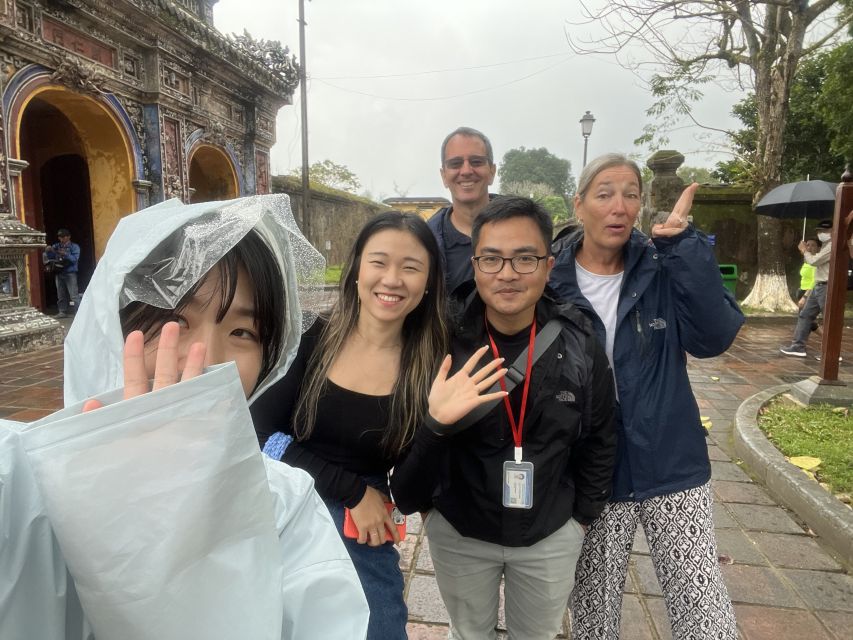
The Queen Mother’s residence adds a personal and domestic side to the visit. Royal compounds were not only offices and ceremonial stages. They were also places where members of the imperial family lived within a strict hierarchy.
The residence gives the guide an opportunity to explain court life, family relationships, and the position of senior women in the royal household. The supplied details do not promise a separate lecture on any one queen mother, so you should think of this as a stop within the wider story rather than a specialist women’s-history tour.
Still, it helps break up the grand political narrative. You see that the imperial compound had different zones for different people, and those divisions mattered. A guide can point out how space reflected rank, access, and the formal nature of palace life.
Kien Trung Palace and the Royal Garden
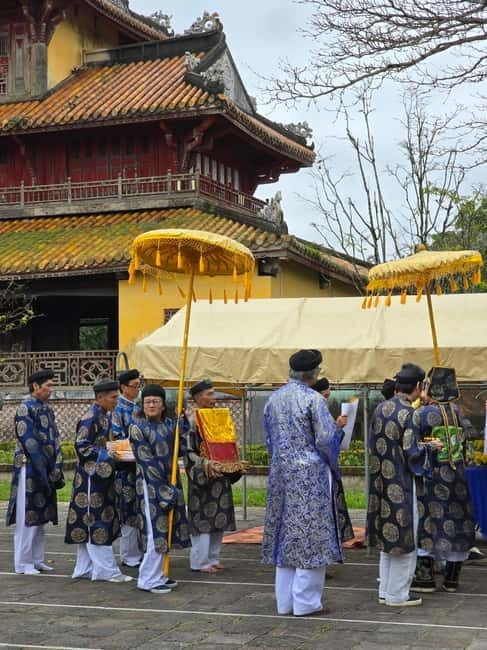
The route includes the Purple Forbidden City, with Kien Trung Palace and the Royal Garden specifically named. These sites bring you closer to the inner world of the Nguyen court.
Kien Trung Palace is useful for understanding the scale and design of the royal center. The Royal Garden offers a change from formal courtyards and temple spaces, showing that the court also created areas for retreat and controlled beauty.
The name Purple Forbidden City can sound mysterious, but the important point is its restricted nature. This was not simply another public part of Hue. It belonged to the private and protected core of imperial life.
Expect the guide to connect the inner compound with palace intrigues and royal routines. Matthew is praised for painting a picture of court politics while also explaining the clever engineering behind the buildings. That combination is a strong reason to choose a guided visit rather than walking through the site alone.
You should also keep your expectations realistic. The tour cannot turn every damaged section into a complete palace. Its value lies in helping you understand what the spaces meant and how they fitted together.
The Nguyen Dynasty, from royal capital to downfall
The tour spends time on the rise and fall of the Nguyen Dynasty. That historical frame gives the buildings a clear beginning and end.
You learn why Hue became the capital in 1802, how the Nguyen rulers organized their court, and what influences shaped the construction of the complex. The explanation includes both symbolic choices, such as feng shui, and practical ones, such as adapting to weather and flood conditions.
The final part of the story deals with the dynasty’s downfall. The supplied information does not list every cause, so the exact emphasis depends on your guide. You can expect the tour to address the broad reasons the Nguyen imperial system came to an end in 1945.
This is where the experience earns its price for history-minded visitors. A basic entrance ticket lets you enter the citadel. The guiding fee gives you a framework for understanding how the site functioned and why its story changed over time.
The strongest guide reports focus on clear English, patience, and enthusiasm. Matthew is described as having an impressive command of English and a strong grasp of Hue and Vietnamese history. Dang is praised for leading visitors through the citadel in an engaging way, while Tom is noted for speaking French very well. The assigned guide can vary, so do not book on the assumption that one particular person is guaranteed unless the provider confirms it.
A small group makes the 2.5 hours more useful
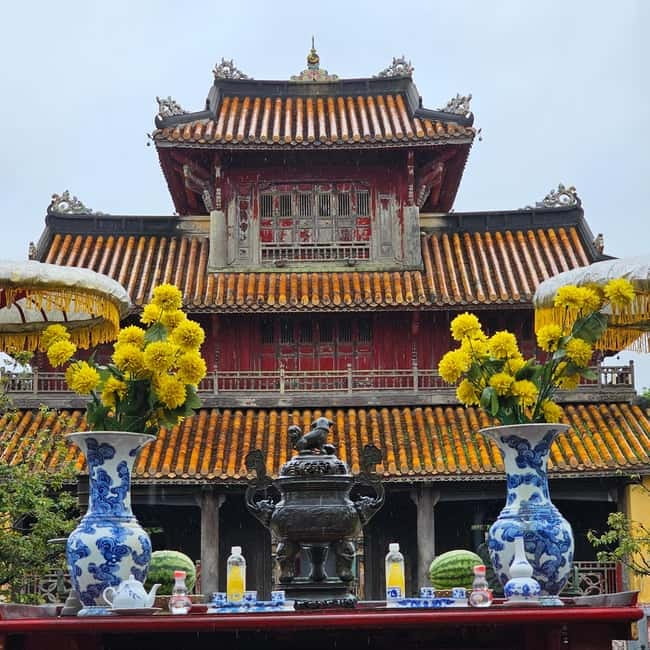
The tour is designed as a small-group experience. The exact group size is not stated, so you should not assume it will be private. Still, a smaller format usually makes it easier to hear the guide, ask questions, and adjust the conversation to your interests.
That flexibility matters in Hue. One person may want palace politics, another may care about royal architecture, and someone else may be curious about flood control or the court’s daily routines. Matthew’s tour style, as described, accommodates that mix rather than treating every group exactly alike.
At 2.5 hours, the walk is long enough to provide real context but short enough to fit around other plans. You can use it as your main visit to the citadel, then spend extra time afterward at the places that caught your attention.
The pace will involve steady walking through an extensive historic complex. If you prefer to stop for photographs at every building, you may need to balance picture time with the guide’s explanations. If you want a detailed history lesson, ask questions early so the guide can shape the rest of the walk around you.
Should you add the royal tombs?
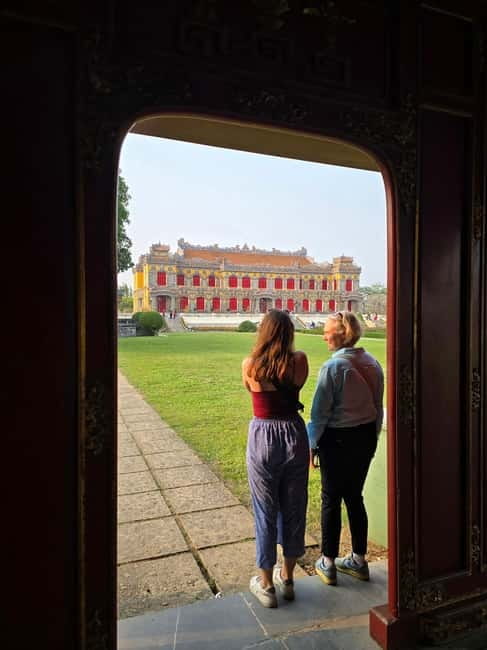
The experience offers optional choices for seeing more of Hue’s notable sights, including royal tombs. The provided details do not state which tombs are included, how long the add-on takes, or whether transportation and entrance fees are part of the optional price.
For that reason, ask for the exact tombs, duration, transport arrangements, and additional admission costs before paying for an upgrade. Do not assume the optional tomb visit follows directly from the 2.5-hour walk or uses the same meeting and ending arrangements.
A tomb add-on could make sense if Hue is your main destination and you want more of the Nguyen story. The citadel shows the dynasty’s official center. Royal tombs can add another side of imperial identity, but the value depends on the specific sites and price.
One useful clue comes from a longer arrangement in which Matthew guided a couple around two royal tombs and Dong Ba Market on a separate day. That suggests the provider may be able to arrange broader customized sightseeing, but you should confirm the details directly. The listed experience itself is the Imperial City walk, not a guaranteed full-day tour.
Price, ticket cost, and overall value
The advertised price is $26 per person, covering the guiding fee. The Imperial City entrance ticket costs 200,000 VND per person and is paid separately.
At first glance, the extra ticket may seem like an annoying detail, but the total cost remains reasonable if you want historical context rather than simple admission. You are paying for a 2.5-hour English-language walk led by a guide who can explain architecture, dynastic politics, court life, and the reasons behind Hue’s design.
I would choose this tour if you care about understanding what you see. I would skip it if you prefer to wander alone, read at your own pace, and spend most of your time taking photographs.
The value is strongest for first-time visitors to Hue, people with limited time, and anyone who finds imperial history easier to remember when it is tied to specific buildings. The separate entrance fee also makes the total cost clear enough to budget for, as long as you notice it before booking.
You can reserve now and pay later, which keeps your plans flexible. Cancellation is allowed up to 24 hours in advance for a full refund, according to the supplied booking terms.
Practical advice for a smoother visit
Bring water, especially between May and August. Hue’s heat and humidity can make a 2.5-hour walk feel longer than the clock suggests.
Confirm the meeting point carefully. Look for the four-cannon side of the Nine Holy Cannons, not the opposite five-cannon side. Keep WhatsApp available so you receive the guide’s message before the tour.
If you want the Changing Guard Ceremony, choose the morning option and confirm the timing. The ceremony takes place at 8 am in front of Ngo Mon Gate, but the supplied details do not state precisely how the tour schedule is coordinated around it.
Wear comfortable walking shoes and leave room in your schedule for questions. The tour ends back at the starting point, making it easier to continue with your own Hue plans afterward.
The listed language is English. Tom has also guided in French, but you should confirm language availability when booking rather than assume a French-speaking guide will be assigned.
Who should book this Hue walking tour?
I recommend it most strongly to first-time visitors who want the Imperial City to make sense, not just look impressive. It also suits history fans, architecture enthusiasts, and people who enjoy asking questions in a small group.
Families and mixed-interest groups may benefit from the guide’s ability to shift between palace stories, construction methods, and royal life. The walk is less suitable if you want a very short visit, dislike walking in warm weather, or expect entrance fees to be included.
The 4.7 rating from 19 ratings supports the idea that the guiding is the main strength. The most consistent praise centers on clear explanations, strong English, enthusiasm, patience, and the ability to connect palace buildings with the wider story of Vietnam.
Final verdict: book it for context, not just entry
Book this tour if you want Hue’s citadel explained by a guide who can link Nguyen Dynasty politics, royal architecture, court life, and flood-conscious design. The named stops cover the main ceremonial and inner areas, and the small-group format should give you a more personal experience than simply following a crowded route.
The main cautions are straightforward: pay the 200,000 VND admission separately, prepare for heat, and confirm the details of any royal tomb add-on before booking it. If those points suit your plans, $26 is a fair price for turning a large, sometimes confusing historic complex into a story you can follow.
FAQ
How long is the Hue Imperial City walking tour?
The walking tour lasts 2.5 hours.
What places are included in the Imperial City walk?
The route includes Hien Lam Cac Pavilion, The Mieu Temple, the Queen Mother’s residence, the Purple Forbidden City, Kien Trung Palace, and the Royal Garden.
Is the entrance ticket included in the tour price?
No. The Imperial City entrance ticket costs 200,000 VND per person and is not included.
What does the $26 price cover?
The $26 price covers the guiding fee. Additional options may have different prices.
Where does the tour begin?
The guide waits at the four-cannon side of the Nine Holy Cannons. The opposite side has five cannons.
Where does the tour end?
The activity ends back at the meeting point.
What language is the tour offered in?
English is the listed tour language. Tom is also noted as speaking French well, but guide and language availability should be confirmed when booking.
Can I see the Changing Guard Ceremony?
If you book the morning tour, you can watch the Changing Guard Ceremony at 8 am in front of Ngo Mon Gate.
Is there an optional royal tomb visit?
Optional choices are available for exploring more of Hue, including royal tombs. The exact tombs, timing, transport, and extra costs are not specified, so confirm those details before booking.
Just added around Hue Vietnam
- Phong Nha National Park: Paradise Cave Half-Day Tour★ 5.0 · 23 reviews
- Official Hue: Dragon Boat, Imperial Citadel, & Market tour★ 4.7 · 32 reviews
- Hue to Hoi An/Da Nang: Private Scenic Motorbike Tour★ 4.9 · 63 reviews
- Hue Royal Tombs Tour: Visit Best Pagodas & Mausoleums★ 4.9 · 19 reviews
- Hue to Hoi An by bus: Hai Van Pass, Lang Co, Marble mountain★ 4.6 · 27 reviews
- Hue: Private Transfer to/from Hoi An via Sightseeing Stops★ 4.9 · 111 reviews
- Hue Private Tour with Local Guide – Customize Your Itinerary★ 4.8 · 28 reviews
- Hue Imperial City Walking Tour: Citadel & Forbidden City★ 4.8 · 245 reviews
Walking Tours, compared.

Private Street Food Evening Walking Tour in Ho Chi Minh City
Read our review →
[Hot] Hanoi Old Quarter Walking Street Food – Small Group Tour
Read our review →
Ha Noi Walking Food Tour, Non Vegetarian,Vegan, vegetarian Option
Read our review →
Tasting 8 Different Street Foods + Local Drink at Evening Time by Walking
Read our review →
Imperial City Walk, Motorbike Tour & Private Car Options
Read our review →
Evening Walking Food Tour, folk game and lantern boat
Read our review →

Half-Day Guided Street Food Walking Tour at Hue
Read our review →Browse the lists this tour appears in