
Reviewed · HISTORICAL TOURS
Hoi An: Half-Day Heritage Walking Tour
Hoi An reveals itself best at walking pace, when painted façades, wooden beams, flower trellises, and shopfronts pass close enough to study. This tour links the town’s key sights with the Japanese Covered Bridge, Chinese assembly halls, old houses, and a local herb drink stop.
I like the mix of architecture and daily life, especially the Hoi An Market and the Tan Ky house. I also like that hotel pickup, entrance fees, water, and a guide are included. The main concern is timing: although the planned visit lasts four hours, some guests received only about two and a half hours, with one tour feeling more like a shopping stop than a history walk.
Key points at a glance
- The Japanese Covered Bridge anchors the walk: This is Hoi An’s essential landmark and a clear highlight of the route.
- Chinese, Japanese, Vietnamese, and French influences meet: Assembly halls, merchant homes, and public buildings show how outside cultures shaped the town.
- The market adds local flavor: You get time among food stalls and local products rather than seeing only preserved buildings.
- The art theater changes the pace: A 40-minute traditional performance is included, though it leaves less time for street exploration.
- Guides can make a real difference: Emily was praised for caring for an elderly guest, while Phan earned strong marks for clear explanations and prompt service.
- The four-hour promise needs checking: Confirm the day’s schedule if you want a full heritage walk rather than a shorter outing.
Why Hoi An works so well on foot
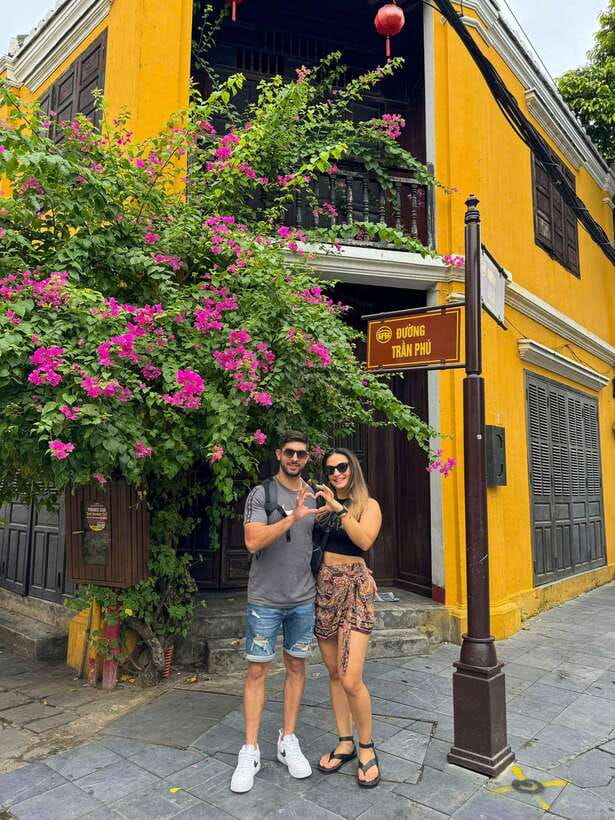
Hoi An Ancient Town is compact, and its most appealing details are easy to miss from a vehicle. You can look up at tiled roofs, notice timber shutters, and see narrow fronts opening into deep merchant houses. The town’s appeal comes from this close view of ordinary architecture, not from one grand monument alone.
The streets also show several cultural threads at once. Chinese influence appears in the assembly halls and decorative details. Japanese design is most closely linked with the covered bridge. Vietnamese traditions shape the homes, food, and street life, while French influence is part of the town’s broader architectural story.
The tour begins with pickup in Hoi An City Center and includes a short 15-minute bus ride. Pickup and return are not offered for the South Hoi An area, so your hotel location matters. Once you reach the old town, most of the experience is on foot.
More Walking Tours in Hoi An
- Evening Walking Food Tour, folk game and lantern boat
★ 5.0 · 665 reviews - Hoi An Ancient Town Walking Tour with a Local
★ 5.0 · 517 reviews - Hoi An Ancient Town – Walking Tour with Local Guide
★ 4.9 · 385 reviews
Hoi An Market, a useful first stop
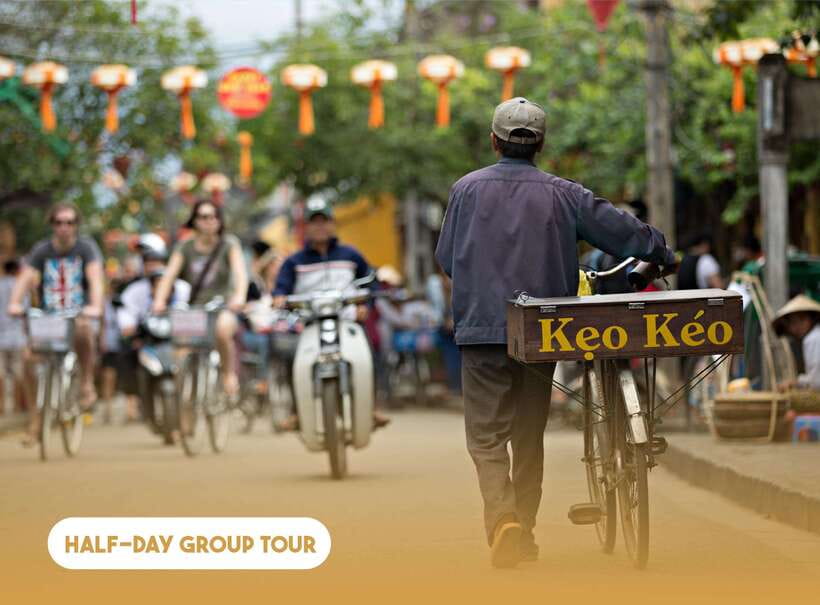
The market is a smart place to begin because it gives you a quick sense of present-day Hoi An before you move into older buildings. The 35-minute visit includes a guided walk and time among food stalls and local products.
You might find herbs, fresh ingredients, snacks, and prepared food arranged in the practical way of a working market. The value here is not just seeing what is sold. Your guide can connect local flavors with the streets and homes you see later, giving the old town a more human scale.
This is also one of the stops where pace matters. Markets can be crowded, warm, and full of competing smells. Keep your belongings close and wear shoes that are comfortable on uneven streets. The tour includes bottled water, but you may want extra water if the weather is hot.
Fujian Assembly Hall and the Chinese connection
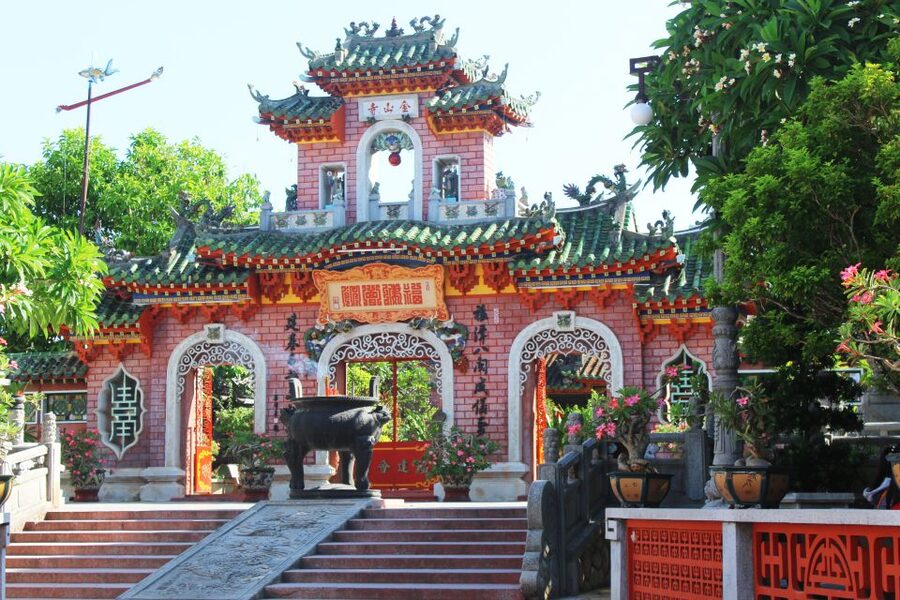
The 20-minute stop at Fujian Assembly Hall introduces one of Hoi An’s strongest Chinese influences. Assembly halls served Chinese communities living and trading in the port, and their design often places much more emphasis on decoration and ceremony than the narrow merchant homes nearby.
You can expect a guided visit rather than a quick photo stop. Look at the entrance, ornamental details, interior layout, and the way the building frames movement from street to courtyard. A guide is useful here because the visual details alone do not explain why these halls mattered to the town.
Twenty minutes is enough for a focused look, but not a long architectural study. If you have special interest in Chinese communities in Vietnam, ask questions early and make clear that you want historical detail rather than a fast pass through the building.
Traditional performance in the middle of the walk
The Hoi An Traditional Art Performance Theatre receives about 40 minutes, including a traditional dance show. This is one of the longer scheduled stops, and it gives your feet a break from walking.
I see this as both a strength and a tradeoff. The show adds a cultural element that old buildings cannot provide, and one guest who expected a different program still enjoyed it. At the same time, 40 minutes is a significant part of a four-hour tour. If your priority is street photography, architecture, or extended time in old houses, this performance may feel like too much of the schedule.
The best approach is to decide what kind of afternoon you want. If you like a clear program with a seated cultural presentation, this stop adds variety. If you want a slow walk with long pauses, ask how much time remains for the old town after the performance.
More Historical Tours in Hoi An:
- Hanoi Heritage Premium Daily Tour
★ 5.0 · 914 reviews - From Ho Chi Minh: Cu Chi Tunnels Half-Day History Tour with Guide
★ 5.0 · 480 reviews - Heritage Binh Chuan 2 Days 1 Night discovery in Lan Ha Bay
★ 5.0 · 470 reviews - Saigon Afternoon City Historical Scooter Tour |Opt: Ao Dai Riders
★ 5.0 · 466 reviews
The folk museum and Hoi An’s material past
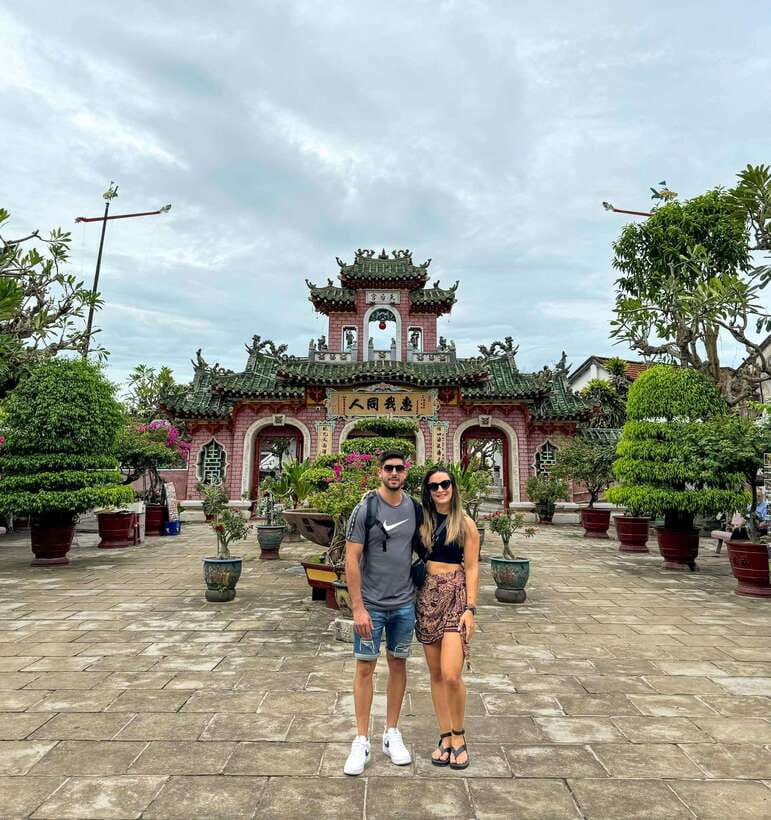
The Hoi An folk museum receives 15 minutes. That is brief, but it can help you place the town’s homes, clothing, tools, and customs in a wider setting.
Museums are often most useful when your guide points out a few details rather than trying to explain everything. Here, listen for links between the objects on display and the houses you have already seen. The stop is unlikely to satisfy someone seeking a long museum visit, but it provides context before the tour moves into a preserved home.
Tan Ky House, where trade shaped the home
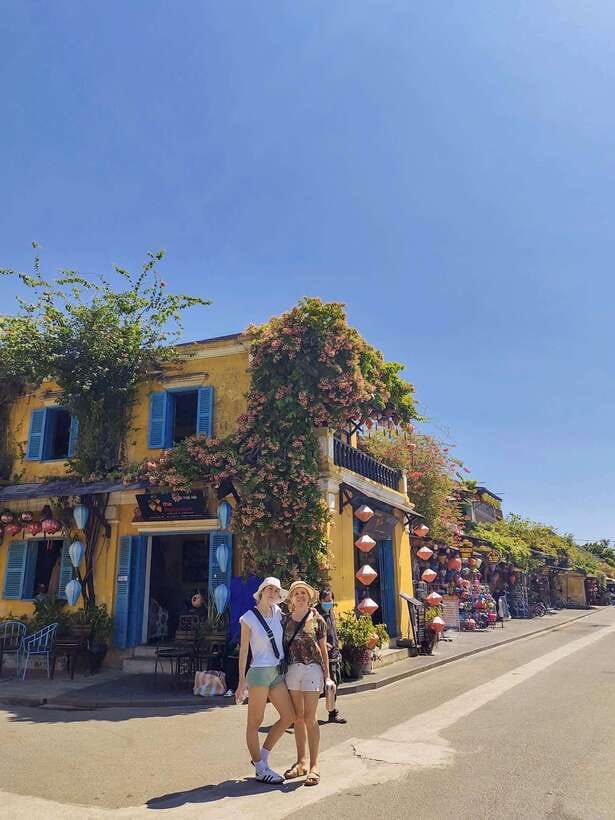
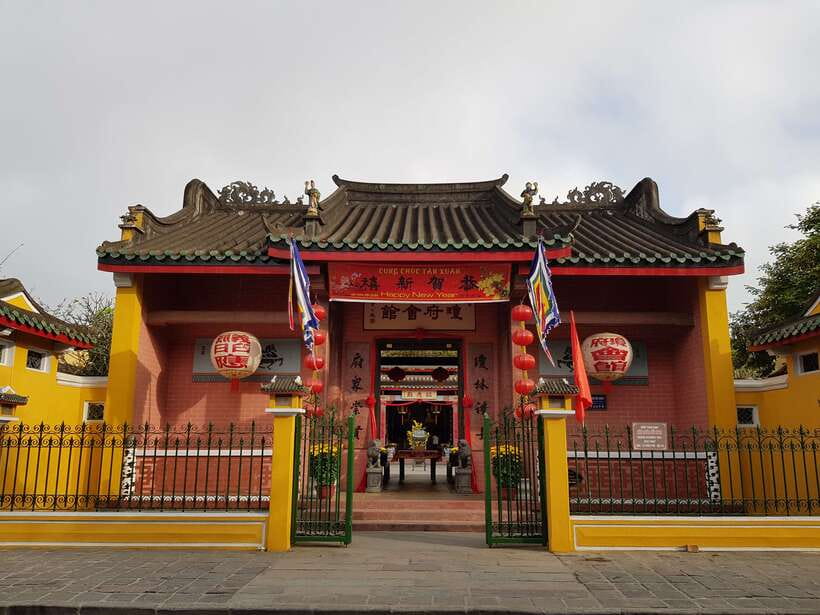
Old House of Tan Ky is one of the route’s most valuable stops. You spend about 20 minutes inside a traditional merchant house, where Chinese, Japanese, and Vietnamese elements meet in one building.
The house helps explain how Hoi An’s architecture responded to trade and local conditions. Narrow street fronts could open into deeper interiors, and design details could reflect more than one culture. Rather than seeing separate national styles in isolation, you get a practical example of how they worked together.
Look closely at the woodwork, beams, layout, and relationship between the front and rear parts of the house. The building is important, but it is also a real reminder that old Hoi An was a place of business and family life, not simply a museum district.
Twenty minutes passes quickly. If the guide spends too much time on shopping or rushing between stops, Tan Ky House may not receive the attention it deserves. This is one point where guide quality matters most.
A short taste of local Hoi An
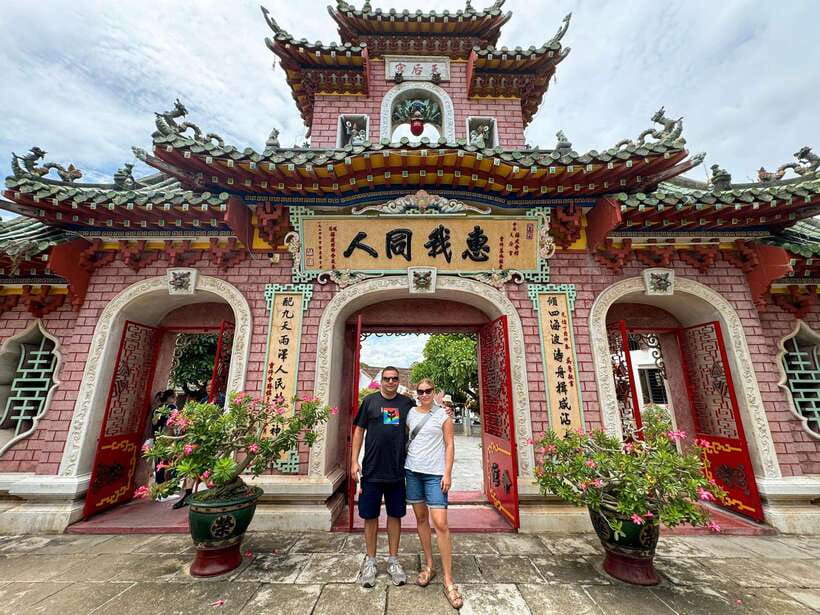
The 10-minute stop for Mot Hoi An lemongrass and lemon herbal water adds a small local food experience. It is not a full meal, and the time is short, but it gives you a chance to try a simple regional drink or snack while walking through the old town.
I like this kind of brief stop because it breaks up the monuments. Hoi An is not only roofs, bridges, and assembly halls. It is also food, herbs, drinks, and the small purchases people make during an ordinary day.
Ten minutes means you should not expect a detailed food lesson. If you have allergies or dietary concerns, ask your guide what is being served before accepting it. Personal expenses are not included, so bring money if you want to buy anything beyond what the tour provides.
The Japanese Covered Bridge, Hoi An’s familiar symbol
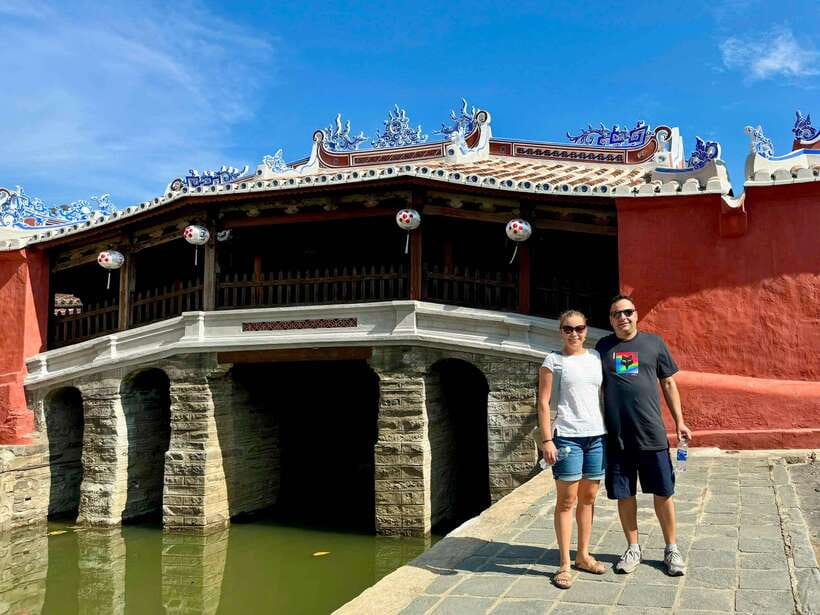
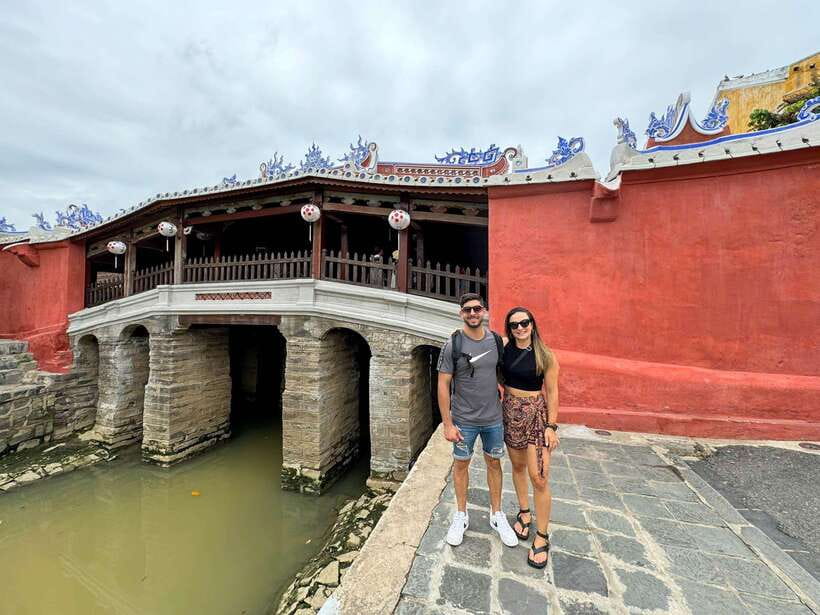
The Japanese Covered Bridge is the must-see stop, with about 15 minutes set aside for a guided visit. Its covered form and compact scale make it easy to recognize, but the setting is more meaningful after you have seen the market, assembly hall, museum, and old house.
The bridge reflects Hoi An’s Japanese connection and has become one of the town’s best-known landmarks. Your guide can help explain its place in the old trading quarter and point out details that are easy to miss in a quick photograph.
Fifteen minutes is enough to see the bridge and hear an explanation, but it is not a long photography session. If the area is busy, you may need to share the space with other people. This stop works best when you focus on the structure and its role in the town rather than expecting a quiet private moment.
The final walk and the value of a good guide
The route passes by the Vietnamese Evangelical Church for about 15 minutes before the return transfer. It is not listed as a full interior visit, so treat it as part of the street walk rather than a major attraction.
That final stretch is a useful reminder that Hoi An is still a living town. Religious buildings, homes, shops, and tourist sights sit close together. The most rewarding guides help you notice that mix without turning every stop into a sales pitch.
Guide service has varied. Emily received especially strong praise for looking after an elderly mother during rainy weather. Phan was described as punctual, friendly, clear, and willing to answer questions in detail. Those examples show what you should hope for: someone who manages the route, watches the group, and explains why each place matters.
There have also been weaker experiences. One guide was reported to spend too much time on a phone, and another tour placed too much emphasis on visiting merchants. If you want a history-focused walk, say so at the start. Ask for explanation of the buildings, not only directions from one shop to the next.
Does $33 offer good value?
At $33 per person, the tour can be good value if you want several entry tickets, transport, and a guide bundled into one short outing. Entrance fees, bottled water, travel insurance, and hotel pickup and drop-off in central Hoi An are included. That reduces small costs and removes some planning work.
The value depends heavily on the actual amount of guided time. Four hours is enough for a useful introduction, but the schedule is full: 35 minutes at the market, 20 at the assembly hall, 40 at the theater, 15 at the museum, 20 at Tan Ky House, 10 for the drink, 15 at the bridge, and 15 passing the church. Add the two 15-minute bus rides, and the day has little room for delays.
Some recorded experiences lasted only about two and a half hours. Another felt overpriced because shopping took attention away from the town. I would confirm the start time, expected finish, and whether merchant visits are part of the plan before paying. Free cancellation up to 24 hours ahead and reserve-now, pay-later terms make that check easier, but you should still clarify the schedule.
Who should book this Hoi An walk?
This tour suits you if you have a first visit to Hoi An, want the main sights in one organized route, and prefer a guide to explain the cultural mix. It is also useful for families or older adults who benefit from hotel pickup, a planned route, and a seated performance.
It may suit you especially well if you want a private group. That gives you a better chance to ask questions and adjust the pace, though the supplied information does not state the private-group price.
You may prefer exploring independently if you want to linger inside old houses, spend a long time at the market, or stop often for photographs. You also may be disappointed if you expect four solid hours of historical discussion. The art show takes a sizeable block of time, and the duration has not been consistent for every booking.
Rain is not an automatic reason to cancel. One successful outing took place in wet weather, with the guide paying close attention to an elderly guest. Still, comfortable walking shoes and a light rain layer are sensible choices for any old-town walk.
My verdict: book it with one important check
I would book this tour for a structured first look at Hoi An, especially when you want the market, assembly hall, old house, museum, performance, and Japanese Covered Bridge handled in one morning or afternoon. The mix of preserved buildings and ordinary street life is the right way to meet the town.
Before booking, confirm that your hotel is inside the pickup area and ask how the four hours will be divided. Also state clearly that you want historical explanation rather than shopping stops. With a guide like Emily or Phan, the experience can be thoughtful, caring, and good value. If the operator cannot confirm the full duration, an independent walk may give you more control for the same day.
FAQ
How long is the Hoi An heritage walking tour?
The advertised duration is four hours, including transport at the beginning and end.
What language does the guide speak?
The live guide language is English. Other languages may be available on request for an additional charge, but the listed language is English.
Is hotel pickup included?
Yes. Pickup and drop-off are included for hotels in Hoi An City Center. The South Hoi An area is excluded.
Is transportation included?
Yes. Transportation is included as described, with a 15-minute bus ride at the start and another 15-minute ride at the end.
Is the Japanese Covered Bridge included?
Yes. The tour includes a guided visit to the Japanese Covered Bridge, with about 15 minutes scheduled there.
Does the tour visit Hoi An Market?
Yes. You spend about 35 minutes at Hoi An Market with a guided walk, sightseeing, and a food market visit.
Are entrance fees included?
Yes. Entrance fees are included in the tour price.
Is food included?
A short stop for Mot Hoi An lemongrass and lemon herbal water, along with local snacks, is included. Personal expenses are not included.
Can children join the tour?
Yes. One child can be accompanied by one adult at the child price. The second child pays the adult price.
Can I cancel for a refund?
You can cancel up to 24 hours in advance for a full refund. The reserve-now, pay-later option lets you book without paying immediately.
More Half-Day Tours in Hoi An
- Hoi An: Half-day Electric Scooter Countryside Adventure
★ 4.8 · 37 reviews - Hoi An Half Day Private Tour from Da Nang/ Hoi an
★ 5.0 · 26 reviews - Cu Chi Luxury Group Tour – Tapioca and Cake Half Day
★ 5.0 · 3,375 reviews - Cu Chi Tunnels Half-Day Tour: Vietnam War Underground Network
★ 5.0 · 2,587 reviews
Just added around Hoi An
- Private car from Danang to Hoi An★ 5.0 · 20 reviews
- Da Nang to Hoi An ancient town by private transfer★ 5.0 · 36 reviews
- Cu Lao Cham Island Tour from Da Nang/ Hoi An★ 4.0 · 24 reviews
- Da Nang Airport Arrival Private transfer to Hoi An★ 5.0 · 46 reviews
- Hoi An Night Market with Hoi an walking Tour , Colourful Lanterns, Boat Ride★ 5.0 · 142 reviews
- Marble Mountain-AM Phu Cave & Hoi AN -Colourful Lantern Boat Ride★ 5.0 · 27 reviews
- Private Transfer from Danang to Hoi An by Private Car★ 5.0 · 37 reviews
- Guided Tour to Marble Mountain &HoiAn City-BoatRide-Night Market★ 5.0 · 23 reviews
Historical Tours, compared.


Cu Chi Tunnels Half-Day History Tour with Guide
Read our review →
Heritage Binh Chuan 2 Days 1 Night discovery in Lan Ha Bay
Read our review →
Saigon Afternoon City Historical Scooter Tour |Opt: Ao Dai Riders
Read our review →
Vung Tau Essential: Beach, Christ Statue & Colonial Heritage
Read our review →
DMZ & Vinh Moc Tunnels – Private Historical Tour from Hue
Read our review →
Discover Trang An Natural World Heritage, Bich Dong Pagoda, Cycling Day Tour
Read our review →
Hue Culture & History Day Tour – Departing Hoi An or Da Nang
Read our review →Browse the lists this tour appears in