

Reviewed · HOI AN TOURS
Hidden Gems of Old Hoi An
Hoi An’s best food stories begin away from the lantern-lined streets. This small-group walk takes you through narrow lanes to family businesses still making Cao Lau noodles and bean sprouts by hand, then turns those ingredients into a generous round of local tastings. Kiwi, Quynh, Kim, and Lien Lien are among the guides who lead this experience, though your guide may vary.
I like two things here: you see how food is made before you eat it, and the group size is capped at 10, which leaves room for questions and personal help. The early morning option is especially smart in hot weather, when the streets belong mostly to local residents. The main consideration is simple: this is a walking tour through backstreets, markets, and traffic crossings, so you need moderate fitness and comfortable shoes.
Key points at a glance
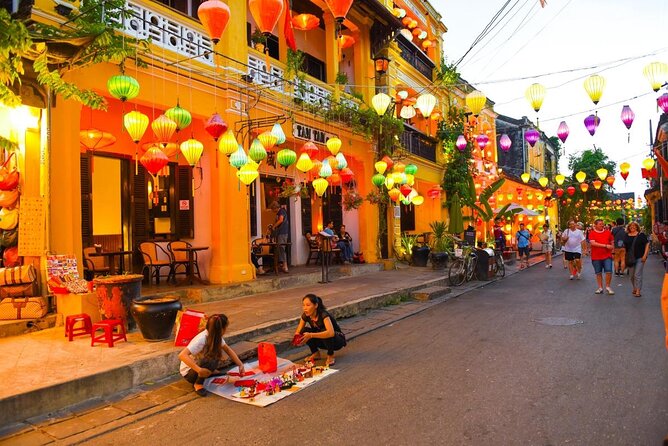
- See Cao Lau noodles made by hand: Visit one of Hoi An’s oldest remaining noodle producers and learn why this dish is tied so closely to the city.
- Visit family food businesses: Watch bean sprouts and other local foods being prepared in small, working neighborhood settings.
- Taste five to seven local dishes: The food stops follow the production visits, so you understand more of what is on your plate.
- Choose your timing: Morning tours offer cooler air and a quieter look at daily life, while afternoon tours suit a later start.
- Walk beyond the main streets: Alleys, local markets, a family temple, and older buildings give you a side of Hoi An that is easy to miss alone.
- Travel in a small group: The maximum is 10 people, with bottled water and coffee or tea included.
Why this Hoi An walk feels different
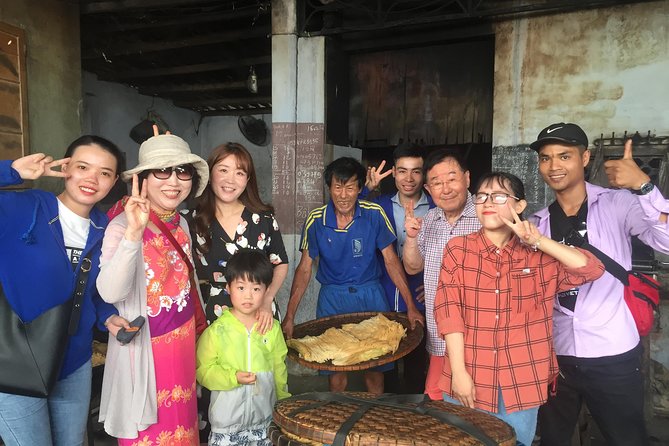
Many walks through Hoi An focus on the famous yellow buildings, bridges, shops, and lanterns. This one uses food as the doorway into local life. You are not only handed a bowl of Cao Lau. You first see the work behind it, meet the people who keep the process going, and then taste the result.
That order matters. A noodle shop can be interesting for five minutes. Watching a family producer prepare a food that has been made in Hoi An for generations gives the dish a setting and a human face.
The tour also spends time on ordinary details: how people use their homes and work spaces, how markets operate, how family temples fit into neighborhood life, and how local buildings reflect outside influence. You learn about Japanese, Chinese, and Western effects on Hoi An’s food and daily customs without turning the walk into a long lecture.
I especially like the balance. You get food, but you also get architecture, local stories, and a look at working neighborhoods. This makes it a good first activity in Hoi An, since it helps you understand the town before you spend more time exploring on your own.
A few more Hoi An trips worth comparing
- Hoi An: Basket Boat Ride in the Coconut Forest
★ 4.9 · 4,956 reviews - Hoi An: Vietnamese Coffee Culture and Coffee Making Class
★ 4.9 · 4,006 reviews - Hoi An: Vietnamese Foldable Lantern Making Class
★ 4.9 · 3,742 reviews
Start early for a cooler, quieter Hoi An
You can select a morning or afternoon departure. If you are comfortable getting up early, I would choose the morning. Several people who took the early option began around 6 a.m., when the heat was lower and the streets were filled with local activity rather than sightseeing crowds.
That timing can change the whole feel of Hoi An. You may see shops opening, food preparation already underway, and market life at its most useful and practical. The old town is easier to appreciate when you are not squeezing through the same few popular lanes with everyone else.
The afternoon option is useful if your hotel schedule makes an early start difficult. Keep in mind that Hoi An can be hot, and walking in the afternoon may feel more demanding. The tour includes bottled water, but bring sun protection and wear shoes suited to uneven lanes.
The stated duration is about three to four hours. That is long enough for several food stops and a proper walk, but short enough to fit comfortably into a day that also includes the Japanese Covered Bridge area, riverside streets, or a cooking class.
Local noodle making and bean sprouts
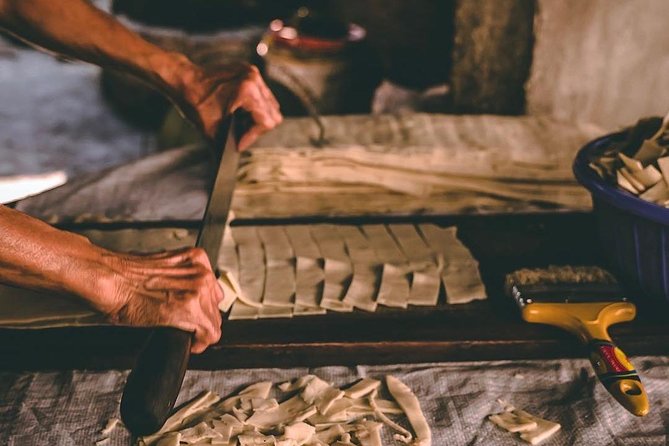
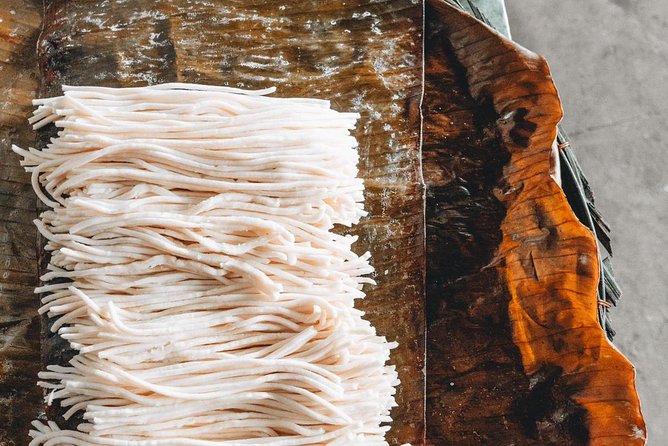
The first major highlight is a visit to local family producers. The walk includes a stop at the oldest remaining Cao Lau noodle factory, where you can see how the noodles are made rather than simply hearing a polished explanation in a restaurant.
Cao Lau is one of Hoi An’s signature dishes, and this stop gives you a practical reason to care about it. You see the manual work, the setting, and the people behind a food that many visitors otherwise encounter only as a finished bowl.
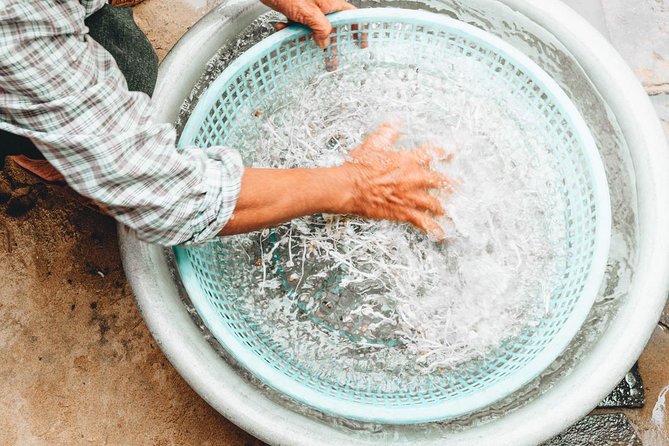
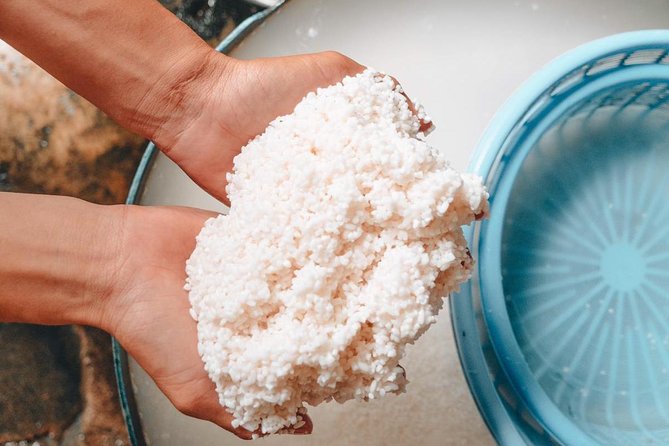
The tour also visits a bean sprout producer. This is a small but telling stop. Bean sprouts look ordinary on a plate, yet seeing how they are grown and prepared shows how much of Hoi An’s food culture depends on careful daily labor in family-run operations.
These are working places, not theatrical displays built for a tour. That can mean the surroundings are modest and the process may be less polished than a formal museum presentation. It is also the point. You are seeing food production as part of neighborhood life.
The guides help bridge the language and cultural gap. Kiwi, also referred to as Quyen or Quinni in some tour details, is frequently associated with this walk, along with guides such as Kim, Van, Swan, Emily, and Lien Lien. The exact pairing varies, but the guide’s role is important: explaining what you are seeing, helping you ask questions, and making introductions feel comfortable.
Alleys, markets, temples, and old buildings
Between food stops, you follow smaller lanes and local routes through Old Hoi An. These passages give you a look at the town that the main tourist streets cannot provide. You may pass homes, small businesses, neighborhood shrines, and older architecture while your guide explains how people live and work around them.
The walk includes a local market, described in some tour details as Tiger Market. This is where the food focus becomes especially useful. You can see ingredients in their everyday setting, learn how locals shop, and try street foods that might be difficult to identify or order by yourself.
A family temple is also part of the route. The visit connects the built environment with family tradition, rather than treating Hoi An’s architecture as a row of attractive facades. Your guide explains local customs and the way different cultural influences shaped the town.
Do not expect a formal, chronological history tour with long stops at every monument. The history is woven into the walk. You learn how Japanese, Chinese, and Western visitors and settlers affected Hoi An’s buildings, food, and way of life as you move through the streets.
That informal approach suits the setting. Hoi An is best understood at street level, where a doorway, market stall, or temple can tell you as much as a plaque. Still, if your main goal is a detailed examination of every major historic building, you may want to add a separate Ancient Town tour.
Same trip, a completely different kind of day:
- Cooking Class Hoi An:Local Market, Basket Boat, Fishing & Cooking
★ 5.0 · 3,660 reviews - Hoi An Cooking Class(Market,BasketBoat Crabfishing&Cooking Class)
★ 5.0 · 3,386 reviews - From Hoi An: Market Tour, Basket Boat Ride and Cooking Class
★ 4.8 · 2,208 reviews - Hoi An Full Lantern Making Class- A special Foldable lantern
★ 5.0 · 2,007 reviews
Five to seven tastings, not just one meal
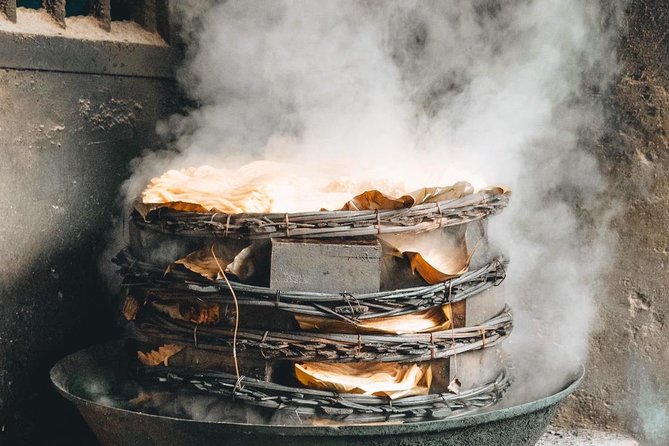
The tour includes five to seven tastings, plus coffee or tea. That should be enough to make this a substantial food outing, especially if you arrive hungry. The food is spread across several stops, rather than presented as one fixed restaurant meal.
The exact dishes can vary, but the experience centers on Hoi An specialties and foods connected to the producers you visit. You may taste noodles, bean sprout dishes, market foods, and local snacks. The value is in the range: several small portions let you try more than you would sensibly order at one restaurant.
I like that the tastings come after the production visits. Once you have watched noodles being made, a bowl featuring those noodles feels more meaningful. You begin to notice texture, preparation, and the relationship between a simple ingredient and the finished dish.
You should tell the organizers about dietary needs before the tour. One group with two vegans was accommodated, which suggests the food stops can be adjusted when the team has advance notice. Do not assume every dish will suit every diet without asking.
The coffee or tea stop adds a pleasant pause. One version of the morning tour begins with coffee at a local place, while the listed endpoint is Bill Coffee & Tea at 22 Tran Hung Dao. The finish gives you a place to sit, drink something, and let the meal settle before heading back into town.
Small groups and strong local guiding
The maximum group size is 10. That is a useful limit for this particular route. Narrow lanes and small family work spaces would feel awkward with a large crowd, while a smaller group can gather around a producer and still hear the explanation.
A small group also makes the food side more flexible. You can ask what an unfamiliar dish contains, how to eat it, and why it matters locally. The guides are also able to watch the pace and help people cross busy roads, something Lien Lien was specifically praised for doing carefully.
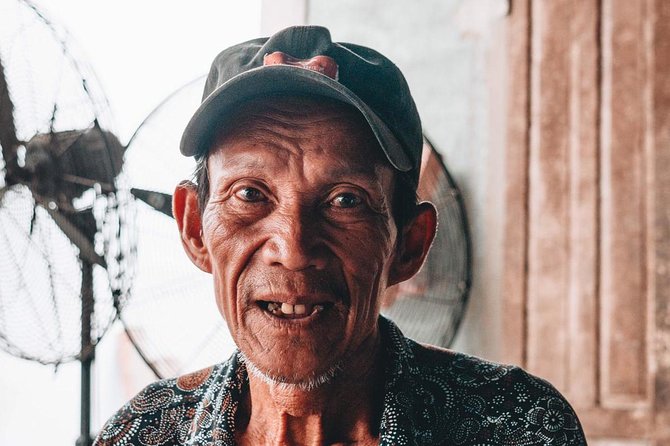
The strongest feature of the guiding is the personal connection with local families. The guides do not simply point at a noodle workshop and move on. They introduce the people who run these businesses and explain how the work fits into the neighborhood.
Kiwi is often named for her warmth, clear communication, and ability to make families feel welcome. Kim is praised for her stories and gentle manner. Emily, Quynh, Van, Swan, Harry, and Lien Lien also appear among the guide team or hosts connected with the experience. Since assignments can change, book this for the route and local approach rather than expecting one specific person.
Families with children can also consider it. A family with children aged four and six completed the tour, and the pace was described as manageable for different ages and abilities. Still, this is a real city walk, not a ride between attractions. Young children need to stay close in traffic and may tire before the final tasting.
What the $41 price gets you
At $41 per person, this is not the cheapest way to eat in Hoi An. You can buy individual street foods for very little money. The price makes more sense when you count the guide, introductions to family producers, market visit, historical context, five to seven tastings, bottled water, and coffee or tea.
You are also paying for access. You could walk through the old town alone, but you would be unlikely to find the remaining Cao Lau noodle factory, know which family businesses welcome visitors, or understand what you are seeing. The guide turns a series of ordinary-looking lanes into a connected experience.
For me, the tour offers good value if you want food plus local context. It is less useful if you only want a cheap meal, a fast photo walk, or a standard list of major monuments. The experience is strongest for curious eaters who value conversation and access over a polished sightseeing script.
Pickup is offered from select Hoi An hotels, so check your accommodation when booking. The listed start point is 03 Phan Dinh Phung in Cam Son, and the walk ends at Bill Coffee & Tea, 22 Tran Hung Dao, in Minh An. Because the start and end are not necessarily the same place, plan the rest of your day around the finish rather than assuming you will return to your hotel.
Practical advice before you book
Wear light clothes and supportive shoes. The route includes backstreets, market areas, and city crossings, and a moderate fitness level is recommended.
Bring a little patience. Family food businesses are working places, and the pace may depend on what is happening when you arrive. That is part of the appeal, but it also means this is not a tightly timed attraction where every minute is controlled.
Arrive hungry, but not so hungry that you feel unwell in the heat. Five to seven tastings can add up, especially alongside coffee or tea. Bottled water is included, but carrying extra water is sensible on a hot day.
The experience requires good weather. You can cancel up to 24 hours before the start for a full refund. If poor weather causes the operator to cancel, you are offered another date or a full refund. Changes made within 24 hours are not accepted, so check the forecast before the final cancellation window closes.
Is this Hoi An food walk worth booking?
Book it if you want to see how local food is made, meet family producers, and walk through parts of Hoi An you would probably miss alone. The early morning departure is my pick, especially during hot weather or if you want the town before the main sightseeing crowds arrive.
It is also a strong choice for first-time visitors, food-focused travelers, families who can manage a few hours on foot, and anyone who prefers small groups to large guided outings. Guides such as Kiwi, Quynh, Kim, and Lien Lien add a human touch that makes the visits feel personal.
Skip it if you dislike walking, need a fully accessible route, want a single sit-down meal, or prefer only major monuments. For everyone else, $41 buys more than tastings. It buys the local knowledge needed to understand why Hoi An’s food and neighborhoods still feel distinct.
FAQ
How long does the Hidden Gems of Old Hoi An tour last?
The tour lasts approximately three to four hours.
Is there a morning or afternoon departure?
Yes. You can choose between morning and afternoon tours.
How many food tastings are included?
The tour includes five to seven tastings, along with bottled water and coffee or tea.
What food production sites are visited?
The route includes local family producers of Cao Lau noodles and bean sprouts. It also visits the oldest remaining factory making Cao Lau noodles.
What other places are included on the walk?
The route includes Old Hoi An backstreets, a local market, a family temple, older architecture, and areas that show everyday local life.
How large is the tour group?
The maximum group size is 10 people.
Is hotel pickup available?
Complimentary pickup is offered from select Hoi An hotels. Check whether your hotel is included when booking.
What happens if the weather is poor?
The experience requires good weather. If it is canceled because of poor weather, you can choose another date or receive a full refund.
Just added around Hoi An
- Private car from Danang to Hoi An★ 5.0 · 20 reviews
- Da Nang to Hoi An ancient town by private transfer★ 5.0 · 36 reviews
- Cu Lao Cham Island Tour from Da Nang/ Hoi An★ 4.0 · 24 reviews
- Da Nang Airport Arrival Private transfer to Hoi An★ 5.0 · 46 reviews
- Hoi An Night Market with Hoi an walking Tour , Colourful Lanterns, Boat Ride★ 5.0 · 142 reviews
- Marble Mountain-AM Phu Cave & Hoi AN -Colourful Lantern Boat Ride★ 5.0 · 27 reviews
- Private Transfer from Danang to Hoi An by Private Car★ 5.0 · 37 reviews
- Guided Tour to Marble Mountain &HoiAn City-BoatRide-Night Market★ 5.0 · 23 reviews
Hoi An Tours, compared.
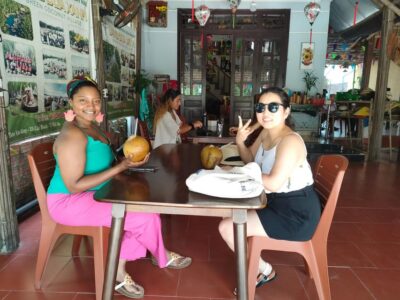

Vietnamese Coffee Culture and Coffee Making Class
Read our review →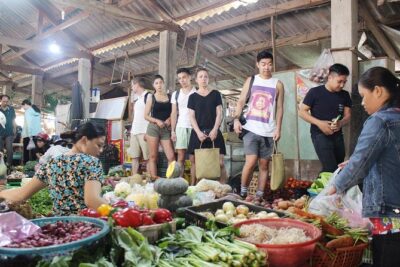
Cooking Class Hoi An:Local Market, Basket Boat, Fishing & Cooking
Read our review →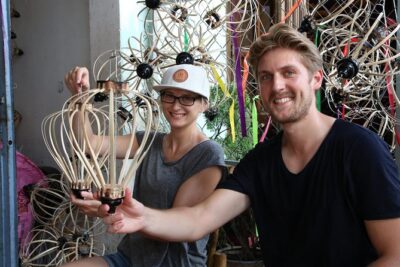
Hoi An Full Lantern Making Class- A special Foldable lantern
Read our review →
Hoai River Boat Trip by Night and Floating Lantern
Read our review →
Hoi An Memories Show & Hoi An Impression Theme Park Ticket
Read our review →
Da Nang & Hoi An: Food, Sightseeing, Culture & Hidden Gems
Read our review →
Hai Van Pass Motorbike Private Tour with Mister T Easy Rider
Read our review →Browse the lists this tour appears in