
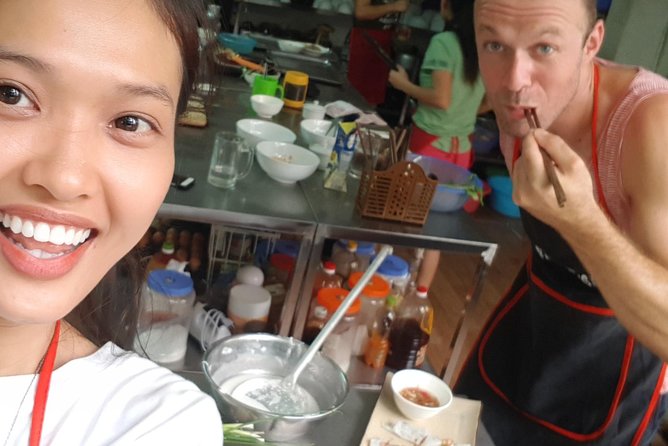
Reviewed · COOKING CLASSES
5 Traditional Dishes Hanoi Cooking Class with Market Trip
Hanoi’s best food lesson may begin before you touch a knife. This three-hour cooking class takes you through a local market first, where you learn to recognize the herbs, spices, and produce behind familiar Vietnamese dishes. Then you return to the cooking studio and prepare five classics before sitting down to eat them.
I like the market stop because it gives context to the meal, and I like the small group of no more than 10 people, which leaves room to chop, roll, stir, and ask questions. The main consideration is pace: five dishes in about three hours means some prep and cooking are handled for you, especially parts of the barbecue pork.
At a glance
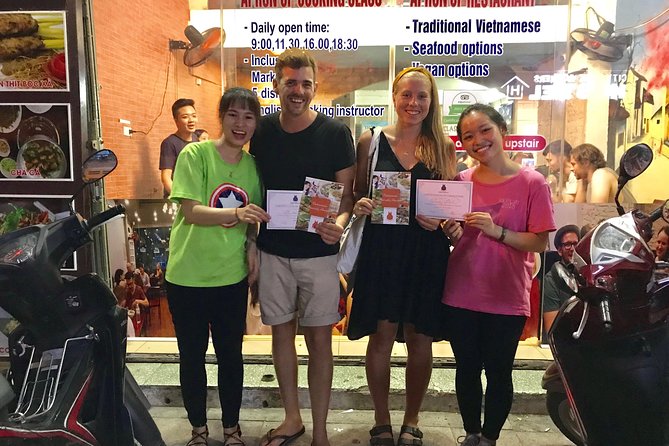
- Five Vietnamese dishes: Prepare pho bo, bun cha, fried spring rolls, papaya salad, and egg coffee or chocolate.
- Market visit first: Shop with your chef and learn about the ingredients before cooking.
- Small class size: The group is limited to 10, with many sessions using around six people.
- Friendly named instructors: Past sessions have been led by Perla, Vy, Emmy, Lynn, Bella, Coco, Sunny, Kim, and Winnie.
- A meal at the end: Eat the food you prepare, with complimentary Vietnamese rice vodka.
- Take-home extras: You receive a cookbook and certificate, useful for trying the recipes at home.
Starting at 8 P. Gia Ngư in Hanoi’s Old Quarter
The class begins at 8 P. Gia Ngư, Hàng Bạc, in Hoàn Kiếm’s Old Quarter. You return to the same meeting point when the session ends, so you do not need to arrange a separate ride between the market, kitchen, and meal.
There is no hotel pickup or drop-off. Plan to reach the meeting point on your own, and allow a little extra time if you are unfamiliar with the Old Quarter’s narrow streets. A mobile ticket is accepted, and booking confirmation is provided at the time of purchase.
The class lasts about three hours and 15 minutes. That is a useful length for a food activity: long enough to cover shopping, preparation, cooking, and eating, but short enough to fit into a busy Hanoi day.
More Cooking Classes in Hanoi
- Hanoi Cooking Class: Culture, Local Market & Meaning CSR Impact
★ 5.0 · 5,147 reviews - Vietnamese Food Cooking Class in Hanoi with Market Experience
★ 5.0 · 778 reviews - Hanoi: 5 Local Dishes Cooking Class with Meal & Market Visit
★ 5.0 · 420 reviews
Shopping for ingredients in a local market
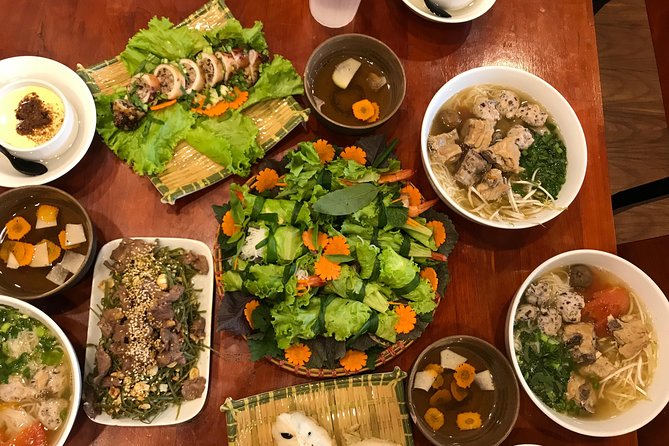
The market visit is more than a quick stop for supplies. Your English-speaking chef helps you choose the ingredients needed for the cooking session and explains the foods sold around you. You get a practical introduction to the building blocks of Vietnamese cooking, including fresh herbs, spices, vegetables, noodles, and meat.
This part matters because Vietnamese recipes often depend on balance rather than a long list of complicated steps. A bowl of pho is not just noodles and beef. Its character comes from the broth, herbs, seasoning, and the way the ingredients work together. Seeing those ingredients in a market gives you a better sense of what to look for when you try the recipes at home.
The market also adds a local side to the class. You are not simply handed premeasured ingredients in a private kitchen. You see where the food comes from and learn how a local cook thinks about selecting it.
The drawback is that the market visit is compact. With five dishes waiting, the chef must keep the group moving. If you want a long food tour with detailed explanations of every stall, this is not that. Here, the market supports the cooking class rather than replacing it.
Cooking five Hanoi staples
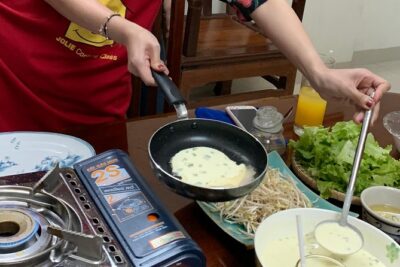
Back at the studio, everyone takes part in preparing the meal. The class is hands-on, but it is organized around several dishes at once. You may work with a partner, and specific instructions are given to each person or small group.
The official menu includes:
- Pho bo: Vietnamese beef noodle soup.
- Bun cha: Hanoi-style grilled pork with noodles.
- Nem ran: Fried spring rolls.
- Papaya salad: A fresh, crunchy salad with Vietnamese flavors.
- Egg coffee or chocolate: A sweet finish to the meal.
This is an ambitious menu for one short session. You get a broad taste of Vietnamese cooking instead of spending the whole class on one recipe. You also see different methods in action: building a soup, seasoning meat, rolling spring rolls, assembling a salad, and making a drink or dessert.
The recipes are meant to be approachable. You are not expected to master professional kitchen skills before arriving. The instructors demonstrate each stage and keep the work moving. The cooking is active without being presented as a serious technical course.
One useful detail is that the meal is made in stages. Several preparations happen at the same time, so the chef may demonstrate one task while you or your partner work on another. That makes good use of the clock, but it can feel fast if you want every step repeated slowly.
What you will actually cook yourself
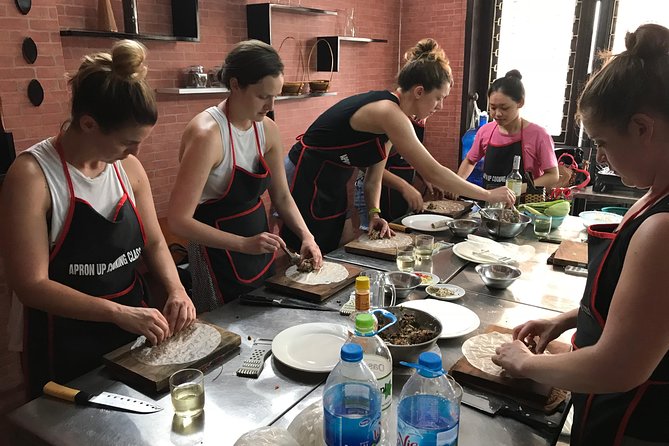
This is a participatory class, not a demonstration where you sit and watch. You should expect to chop, mix, roll, assemble, and help prepare the dishes. The class format gives each person a role, so a small group can produce a full meal without wasting time.
Still, not every part is handled entirely by you. One detailed account noted that the barbecue pork was cooked by the staff, although the group remained involved in the preparation. Some advance work and cleanup are also done behind the scenes.
That is worth knowing before you book. If you want to control every flame and cook every item from start to finish, you may find the format a little assisted. If you want a relaxed introduction that lets you make the key preparations and then enjoy a well-timed meal, the balance works well.
The benefit is that the class can cover all five dishes without turning into a long, tiring kitchen shift. The food arrives at the table in a manageable way, and you can focus on learning the main techniques rather than worrying about timing every pot.
More Market Tours in Hanoi
- Hanoi Cooking Class and Market Tour in Ancient House
★ 5.0 · 379 reviews - Rose Kitchen Hanoi: Market, Cooking & Culture Tour + Free PickUp
★ 5.0 · 342 reviews - Hanoi Maya Kitchen: Traditional Cooking Class & Market Tour
★ 5.0 · 287 reviews - Hanoi: Old Quarter Market Tour and Cooking Class with Meal
★ 4.8 · 192 reviews
Pho, bun cha, spring rolls, and egg coffee
The menu gives you a useful cross-section of Hanoi food.
Pho bo teaches the logic of Vietnamese noodle soup. You learn how the broth and seasonings support the noodles, beef, and herbs. It is one of the country’s best-known dishes, but making it yourself helps separate the individual elements from the finished bowl.
Bun cha is especially relevant in Hanoi, where grilled pork and noodles form one of the city’s signature meals. It gives the class a different profile from pho, with smoky meat, fresh vegetables, noodles, and dipping flavors.
Nem ran adds a hands-on task. Rolling spring rolls is the kind of skill that improves quickly once someone shows you the correct shape and amount of filling. It is also a good group dish because each person can make several rolls.
Papaya salad brings freshness and crunch to the table. It prevents the meal from becoming a collection of heavy dishes and shows how Vietnamese food uses raw vegetables and sharp, balanced flavors.
The final item is egg coffee or chocolate. Egg coffee is one of Hanoi’s most distinctive drinks, and learning to make it gives the class a memorable finish. If coffee is not suitable for you, the chocolate option offers an alternative.
Friendly instruction from Perla, Vy, Emmy, and the team
The instructors are a major part of the experience. Names associated with sessions include Perla, Vy, Emmy, Lynn, Bella, Coco, Sunny, Kim, and Winnie. The teaching style is warm, humorous, and practical, with clear English used throughout.
Perla is noted for keeping the class moving while explaining each cooking step. Vy is described as especially engaging and good at making everyone feel comfortable. Emmy has been praised for being helpful with cooking questions and accommodating food allergies. Coco is known for encouraging every member of a family, including children, to take part.
That variety matters because a cooking class can change greatly depending on the person leading it. Here, the repeated pattern is an instructor who demonstrates, explains, jokes with the group, and makes sure people have something useful to do.
The class has also worked well for families and mixed groups from different countries. You do not need to arrive as an experienced cook. The teaching is aimed at beginners who want to understand the food and enjoy making it.
Eating what you prepared
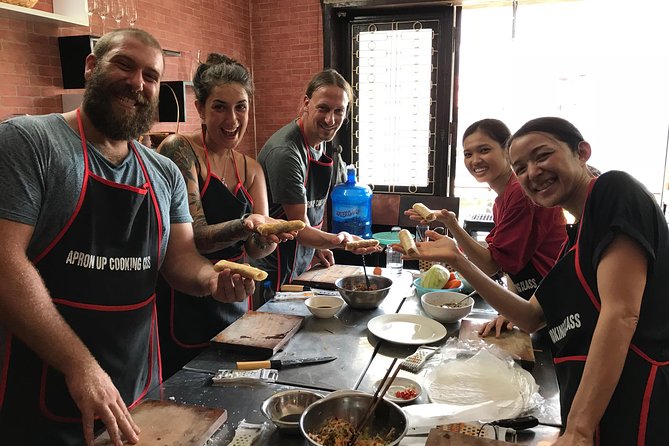
After the cooking, you sit down and eat the results. This is not a token tasting. The menu produces a substantial meal, so arrive hungry and expect plenty of food.
Eating immediately after cooking helps connect the lesson to the final dish. You can taste how the broth turned out, compare the spring rolls’ texture, and see how the separate ingredients in bun cha and papaya salad come together.
Complimentary Vietnamese rice vodka is included. It is offered as part of the meal, but you do not need to drink it to take part in the class. Coffee or tea is also included.
The shared meal is one of the social pleasures of the session. You cook alongside people from different places, then sit together with the food. For solo visitors, this can be an easy way to meet others without needing to force conversation during a formal tour.
Dietary needs and family participation
Vegetarians and people who do not eat red meat can learn vegetarian versions of the dishes. Food allergies should be mentioned in advance, since the class has made adjustments for specific dietary needs.
The available information does not provide a full allergy protocol or a separate menu for every restriction. If your diet is strict, contact the provider before booking and explain exactly what you cannot eat. Do not rely on a last-minute change once the class has started.
The class can also suit families. Children can contribute to suitable tasks, and the instructors make an effort to include younger participants. Because the group may cook in pairs, the format is especially comfortable for two people booking together.
How much value you get for $35.07
At $35.07 per person, this is good value if you want more than a meal. The price covers the market visit, instruction, five dishes, the food you eat afterward, coffee or tea, rice vodka, a cookbook, and a certificate.
A cooking class cannot compete with the price of a single street-food dish, and you should not judge it that way. You are paying for the teaching, the organized shopping trip, the kitchen time, and the chance to recreate the meal later.
The cookbook improves the value. It gives you a way to continue the experience after leaving Vietnam, although you should think of it as a practical reminder of the class rather than a full Vietnamese cooking manual.
The 100 percent recommendation rate and five-star rating indicate very strong satisfaction, but the useful point is why the experience earns that response: the food is described as delicious, the instructors are friendly, and the class gives you real tasks rather than keeping you on the sidelines.
Who should book this Hanoi cooking class
I would choose this class if you:
- Want a first introduction to Vietnamese cooking.
- Prefer doing the work instead of watching a chef demonstrate.
- Enjoy markets but do not need a full market tour.
- Want to eat a complete meal during the activity.
- Are traveling solo, as a couple, or with a small family group.
- Need vegetarian or non-red-meat adaptations.
- Want recipes to take home.
I would look elsewhere if you want a slow, specialist course focused on one dish, a long market walk, or complete control over every stage of cooking. The five-dish menu is broad and fun, but the schedule requires demonstrations, shared tasks, and some preparation by the staff.
The class also makes sense late in your Hanoi stay. By then, you may have sampled pho and bun cha in restaurants and can see how the ingredients are handled. It also works early in a trip if you want a quick introduction to the foods you will encounter during the rest of your visit.
Practical details before you reserve
The class starts and ends at 8 P. Gia Ngư in the Old Quarter. Hotel transport is not included, and the activity uses a mobile ticket.
The group maximum is 10 people. Smaller sessions are possible, and a group of about six has been used, but the exact size can vary. You may cook with a partner, so solo participants should be ready to share tasks.
Free cancellation is available if you cancel at least 24 hours before the local start time. Cancellations or changes made inside that window are not refunded or accepted.
Should you book it?
Yes, if you want a friendly, good-value food experience with real participation. The market visit, five-dish menu, small group, cookbook, and shared meal give you much more than a standard restaurant outing.
Book with realistic expectations: this is a lively introduction, not a professional culinary course. Some cooking and prep are handled for you, and the pace can be brisk. For most visitors, that is a fair trade for tasting five Hanoi staples in one morning or afternoon and leaving with recipes you can try at home.
FAQ
How long does the Hanoi cooking class last?
The experience lasts approximately three hours and 15 minutes.
Where does the class begin?
It begins at 8 P. Gia Ngư, Hàng Bạc, Hoàn Kiếm, Hà Nội 08404, Vietnam, in Hanoi’s Old Quarter.
Where does the activity end?
The class ends back at the same meeting point.
Is hotel pickup included?
No. Hotel pickup and drop-off are not included.
How many people can join the class?
The maximum group size is 10 people.
Which dishes are included?
The menu includes pho bo, bun cha, fried spring rolls, papaya salad, and egg coffee or chocolate.
Can vegetarians join?
Yes. Vegetarian versions are available, and people who do not eat red meat can learn an adapted version.
What is included besides the cooking lesson?
Coffee or tea, Vietnamese rice vodka, an English-speaking chef, a cookbook, and a certificate are included.
Just added around Hanoi
- Private Crowd Free Hanoi: Morning Highlights of the City Experience★ 4.5 · 124 reviews
- Hoa Lo Prison and Little Paris Tour in Hanoi (French Quarter)★ 5.0 · 20 reviews
- Old Quarter Food Tour in Hanoi★ 5.0 · 104 reviews
- Hanoi’s Old Quarter Street Food Experience and Train Street★ 5.0 · 22 reviews
- Retro Hop-on-hop-off Bonbon City Tour: Classic Package★ 4.0 · 32 reviews
- [Hi-end] Private Hanoi Street Food Tour With Real Foodie★ 5.0 · 154 reviews
- Hanoi Street Food Tour★ 5.0 · 27 reviews
- Hanoi Street Food Tour with egg coffee making★ 5.0 · 22 reviews
Cooking Classes, compared.

Hanoi Cooking Class: Culture, Local Market & Meaning CSR Impact
Read our review →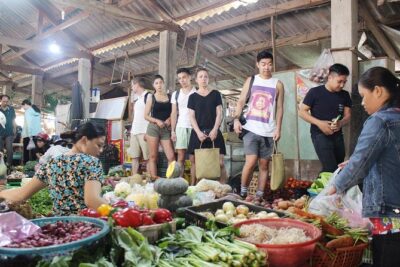
Cooking Class Hoi An:Local Market, Basket Boat, Fishing & Cooking
Read our review →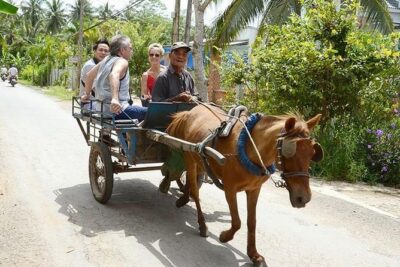
Mekong Delta Boat,Khotcake cooking Coconut Village,SmallGroup
Read our review →
Mekong Delta 4 Islands, TukTuk, Boat, Try Khot Cake Local Cooking
Read our review →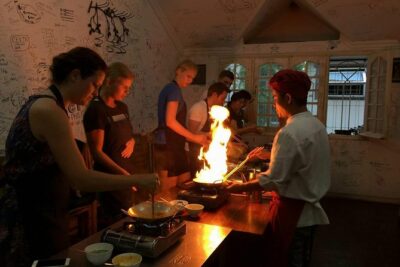
Chef Vu Cooking Class Plus Market Trip in Saigon Center (Pick up by Cyclo)
Read our review →
Hanoi Cooking Class: Pho/Bun Cha/Banh Xeo…+Free Egg/Salt Coffee
Read our review →Browse the lists this tour appears in