
Reviewed · WAR HISTORY TOURS
Vietnam War: Uncovering Hanoi’s Untold Stories
Hanoi’s wartime story is not confined to museums. This three-hour walk takes you through Cho Gioi’s black market area, old communal housing, the Kham Thien B52 memorial, and Train Street, using ordinary places to explain how war and the planned economy shaped daily life. I like the local focus and the chance to hear different views of North and South Vietnam. The main drawback is that the tour is more about people, politics, and memory than a long list of military monuments.
I also like the conversational format. Guides such as Kien, Dung, Cong, and Quang explain the past while answering questions, rather than delivering a fixed speech. You should be ready for warm weather, uneven walking, and serious subjects, including the Christmas bombings and the effects of Agent Orange.
Key points at a glance
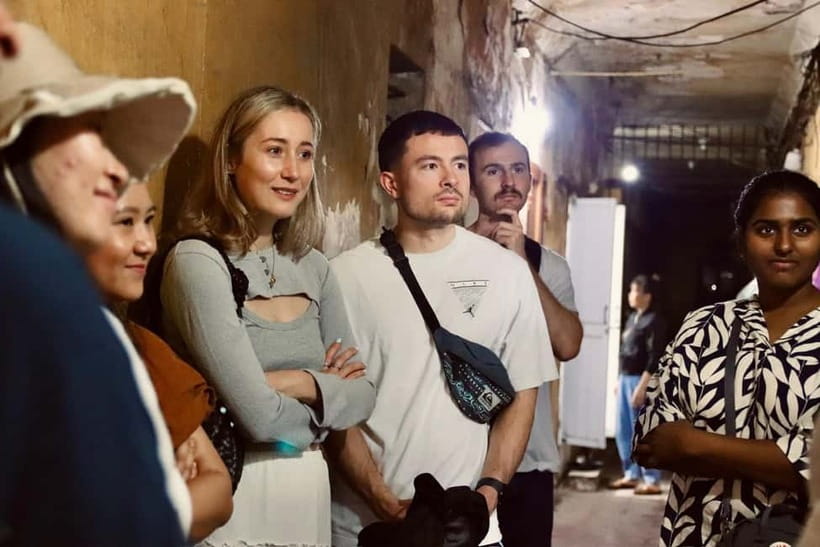
- Cho Gioi and the sky market: Walk through a part of Hanoi that most visitors miss, with local context about trade and life under the planned economy.
- Communal housing: See how shared residential buildings worked and how the war years affected ordinary families.
- Kham Thien B52 memorial: Pause at a site connected with the Christmas bombings and the civilian cost of the war.
- Train Street finish: End with coffee or tea near the railway, in a quieter section than the most crowded tourist spots.
- Conversation over lecture: Guides including Kien and Dung make room for questions, family stories, and discussion.
- Meaningful price: At $28 per person, the cost covers the guide, refreshments, and a short taxi ride, with 20 percent of profit donated to two local charities.
Why this Hanoi walk feels different
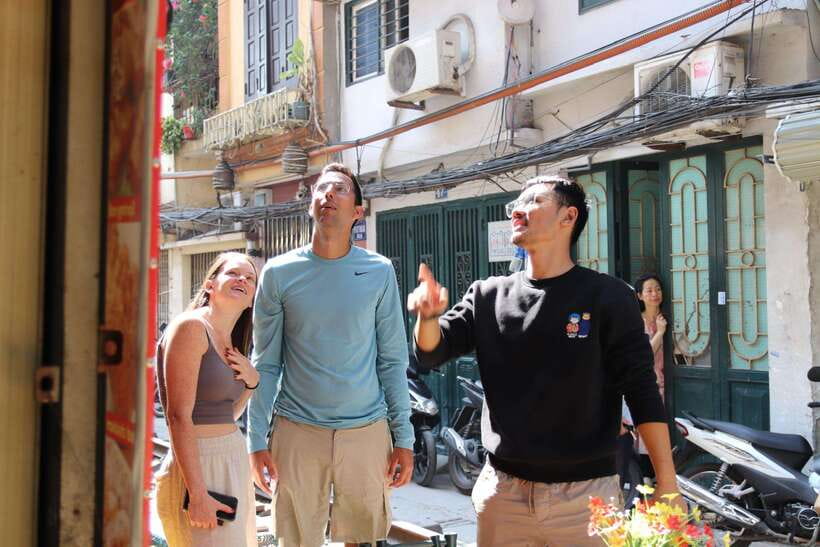
Many Hanoi tours move from one famous building to another. This one asks you to look at the city through the lives of ordinary people. The focus is not only on generals, battle dates, or foreign policy. You hear about rationing, housing, family separation, political division, reunification, and the ways people adapted after the fighting ended.
That approach gives the walk its value. A street market can explain more about a planned economy than a polished display case. A communal housing block can show how families lived with shared facilities and limited private space. A memorial can make the scale of bombing more personal.
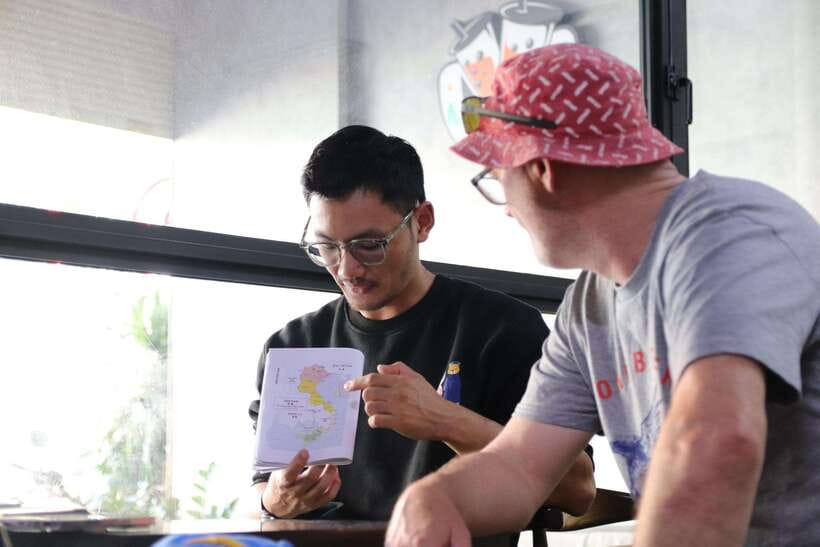
The guides also place the war inside a longer story. You discuss the division between communist North Vietnam and anti-communist South Vietnam, the pressure of the Cold War, and the eventual unification of the country. The aim is not to present only one national viewpoint. Instead, you can ask how people on both sides experienced the conflict and what changed afterward.
I would book this early in a Hanoi stay. The information gives you useful context for later visits to the city’s museums, old buildings, and neighborhoods. You may also find yourself noticing small details in daily life that would otherwise pass without explanation.
More War History Tours in Hanoi
- (Private) Hanoi War Sites Tour
★ 5.0 · 105 reviews - From Hanoi: Full-Day City Tour with Hoa Lo Prison |Optional Lunch
★ 5.0 · 54 reviews - Hanoi: War Site Museums Tour
★ 4.8 · 43 reviews
Starting at Chua Vua Street
The walk begins at 24B Chua Vua Street, about 2.5 kilometers from Hoan Kiem Lake and roughly 3.5 kilometers from Hanoi’s Old Quarter. Look for the secondary school named Trường Tung học cơ sở Đoàn Kết. A coffee shop and several second-hand bicycle shops are nearby.
This is not a grand meeting point with a large sign or a major landmark. Give yourself enough time to find the school and confirm that you are in the right place. If you are staying around the lake, a taxi is the simplest choice, especially in Hanoi’s heat.
The unassuming start suits the tour. You begin in a normal neighborhood, not at a famous monument, and the setting immediately signals that this walk will take you beyond the usual visitor route. Bring comfortable shoes and breathable clothing. The experience operates in rain or shine, so check the forecast the day before and pack an umbrella or raincoat if needed.
Cho Gioi, Hanoi’s black-market district
One of the most unusual parts of the walk is the visit to Cho Gioi, often described as the black market or sky market area. The name and history make it a useful place to discuss how people obtained goods during years of scarcity and state control.
You are not simply passing through a shopping district. Your guide explains how the planned economy affected access to everyday items and how informal trade became part of urban life. This is the kind of subject that can sound abstract in a textbook. Walking through the area helps connect policy with practical questions: what people could buy, how they found what they needed, and how local commerce changed over time.
The area is also a good test of the guide’s skill. A guide needs to explain the background without turning the walk into a political lecture. Kien is especially good at keeping the history clear and personal, while Dung has been praised for her warmth and strong command of the subject. Other guides, including Cong and Quang, bring their own local perspective.
You may see a market that feels busy and practical rather than arranged for sightseeing. That is part of the point. The area can be crowded, and you should pay attention to your footing and belongings. It is not a polished attraction, so the value comes from the explanation and the access to a part of Hanoi you might not visit on your own.
Communal housing and the ordinary city
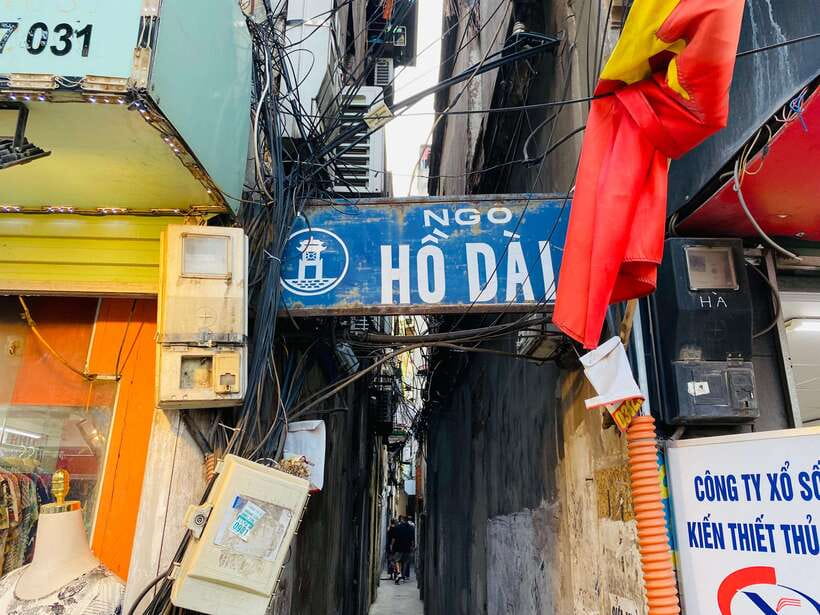
The walk also takes you into or around a communal housing project. This is one of the strongest parts for anyone interested in social history. Instead of discussing the planned economy only in national terms, your guide shows how housing shaped everyday life.
Shared residential buildings tell a story about limited space, community dependence, and the practical side of postwar urban planning. You may see entrances, common areas, and the basic layout of a building that is still part of local life. The experience is not a staged historical display. It is a real neighborhood, so you should enter respectfully and follow your guide’s instructions.
This stop helps explain why the war cannot be separated from its aftermath. Reunification did not instantly make life easy. Families dealt with shortages, changing political conditions, new economic rules, and the challenge of rebuilding. The walk gives you a chance to ask how those changes affected people at home, not just how they appeared on a map.
For me, this is where the tour earns its price. A standard sightseeing walk can show you Hanoi’s age, architecture, and food. This one adds a picture of how people were housed, supplied, and organized during a difficult period.
Same trip, a completely different kind of day:
- Hanoi Jeep Tour: Food, Culture and Fun by Vietnam Army Jeep
★ 5.0 · 15,222 reviews - Hanoi: Water Puppet Show Tickets
★ 4.6 · 7,029 reviews - Hanoi Motorbike Tour: Food, Culture and Fun by Vintage Motorbike
★ 5.0 · 6,699 reviews - Hanoi: Guided Food Tour with Train Street Visit
★ 4.9 · 6,239 reviews
The Kham Thien B52 memorial
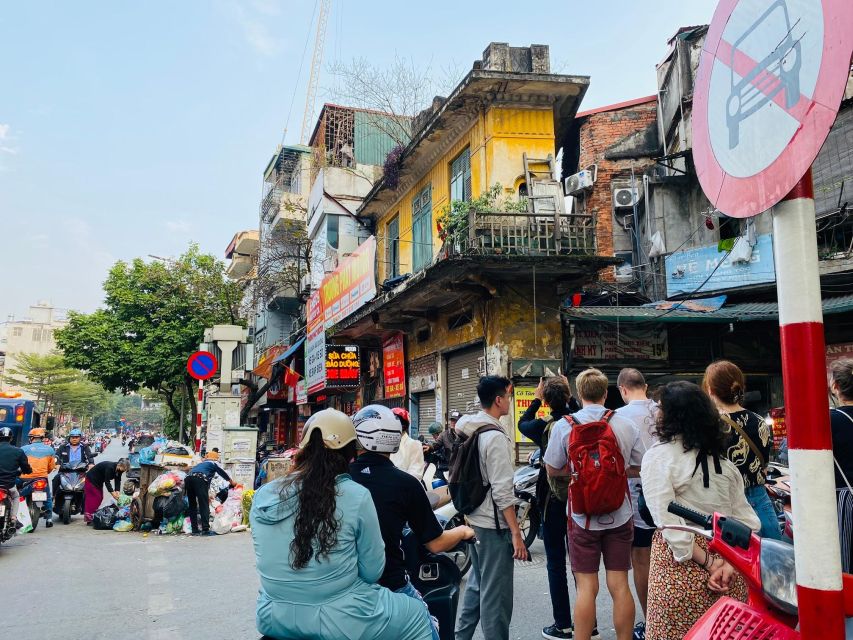
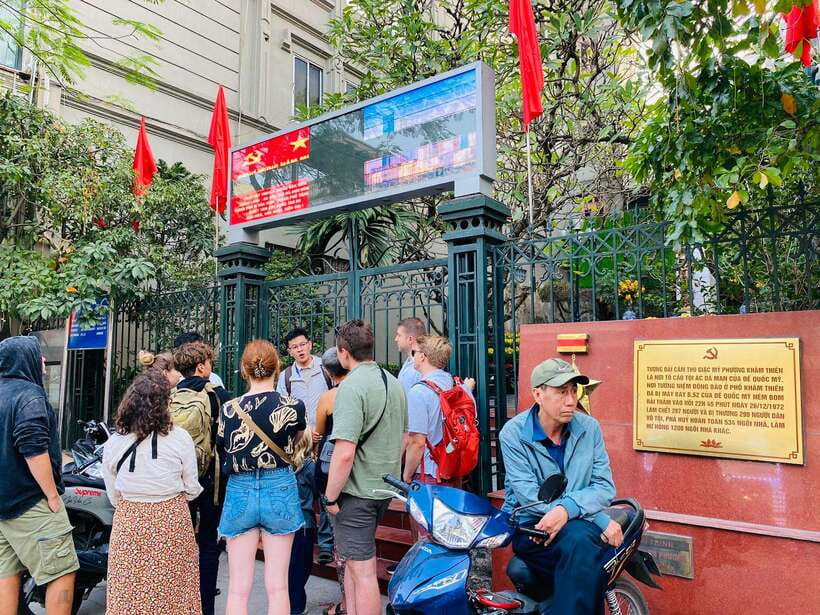
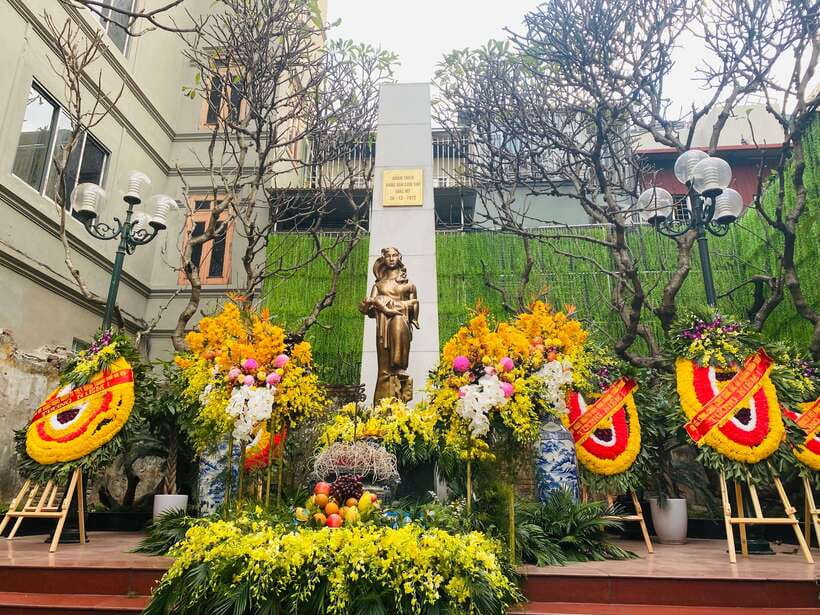
The Kham Thien B52 memorial is the most direct war site on the route. It commemorates the Christmas bombings and the civilian deaths and destruction connected with the attacks. Your guide provides the background and explains why this place matters to Hanoi.
Expect a quiet and serious pause here. The memorial is not designed as a large museum complex, and the visit may be brief. Its power comes from the connection between the site and the surrounding neighborhood. The war is no longer an event happening somewhere far away. It happened on these streets, among homes and families.
This stop also gives the tour a needed physical anchor. Much of the walk explores ideas and lived experience. At Kham Thien, you have a specific place to remember the human cost. If your main goal is to see a large collection of aircraft, weapons, or military equipment, this tour may not satisfy that expectation. It is stronger on memory and local impact than on hardware.
One useful tip is to consider visiting the Maison Centrale prison afterward. The prison is a short walk from the end point, and one participant found it a worthwhile follow-up. That visit is not part of this experience, but it can extend your day of modern Vietnamese history.
The short taxi ride and change of pace
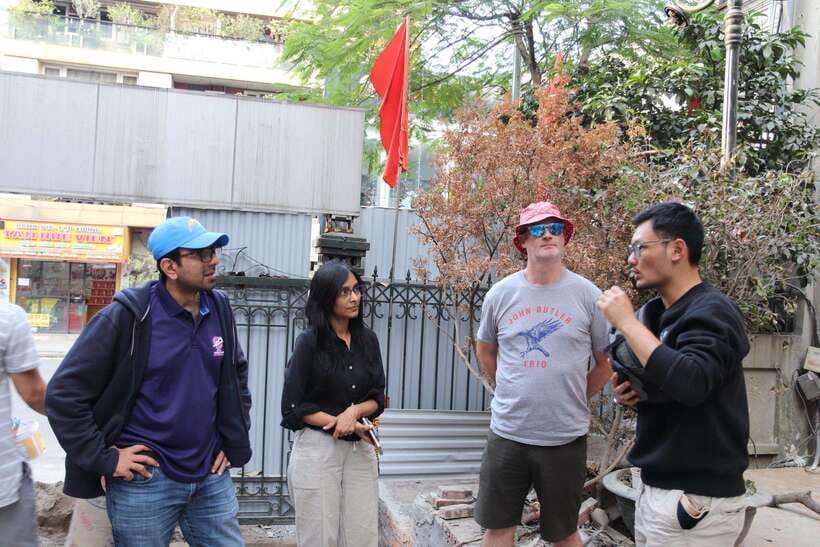
A short taxi ride is included halfway through the walk. That matters in Hanoi, where heat, traffic, and humidity can make three hours on foot tiring. The ride also breaks the experience into manageable sections.
You still need to expect a real walk. This is not a coach tour with long stops at air-conditioned buildings. Wear shoes that can handle pavement and smaller streets, and bring water even though coffee or tea is included. People with vertigo or epilepsy should note that the experience is specifically not considered suitable for them.
The pace is generally conversational. You stop to listen, look, and ask questions rather than rushing from one checkpoint to another. Families can take part, and one account describes a child in a stroller joining the group, but the route may still be easier for older children and adults who can handle city walking.
Finishing beside Hanoi Train Street
The final stop is Hanoi Train Street. This is one of the city’s most famous modern sights, but the tour aims for a quieter section rather than simply sending you to the busiest photo spot.
You finish with coffee or tea near the tracks while the guide continues the conversation. Depending on timing, you may see a train pass. The setting provides a lighter ending after the memorial and political discussion, and it gives you a chance to ask final questions about modern Hanoi.
Train Street is also a useful reminder that Hanoi’s past and present share the same narrow spaces. A railway line that once served practical transport now sits beside cafes and homes that have become a major attraction. The tour does not treat it as an isolated photo opportunity. Instead, it places the street within the city’s changing economy and daily routines.
Follow safety instructions closely. Do not step onto the tracks for a photograph, and do not assume that a quiet section is risk-free. The exact atmosphere may vary by time and local access, so think of the stop as a chance to sit and talk as much as a chance to take pictures.
The guides make or break the experience
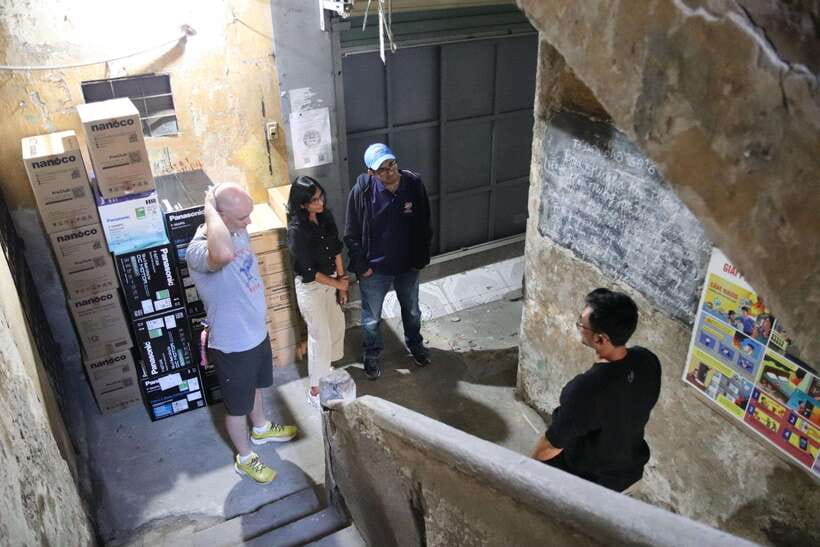
The strongest praise is directed at the guides, especially Kien and Dung. Kien is described as friendly, relaxed, articulate, and able to explain both national politics and local life in excellent English. He has also lived in the United States and Ireland, which may help him explain Vietnamese events to an international audience.
Dung brings a similar mix of care and subject knowledge. Cong and Quang are also praised for making the walk personal and for discussing Vietnam with warmth and curiosity. Guide assignments can vary, so you may not receive a particular person. Still, the format gives the guide room to respond to your questions instead of following a rigid script.
That makes a difference here. The subject includes painful memories and competing political views. A good guide needs to be frank without becoming argumentative, and informative without flattening every family’s experience into one official story. This walk appears designed for conversation, which is exactly what the topic needs.
If you enjoy asking questions, you will get more from the experience. Ask about the planned economy, reunification, family experiences, the South, the North, or how young Vietnamese people view the past today. The three hours can move quickly when the group is engaged.
Is $28 a fair price?
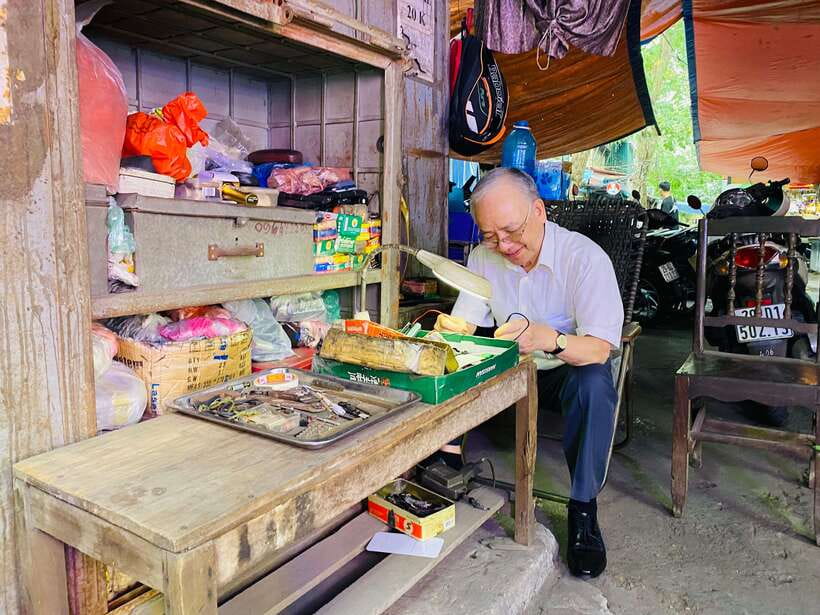
At $28 per person, I consider this good value for a three-hour small-scale cultural walk. The price includes an English-speaking guide, coffee or tea, and the short taxi ride. You are also paying for access to places and conversations that would be difficult to arrange alone.
The charity donation adds another positive point. Twenty percent of profit goes to the Vietnam Association for Victims of Agent Orange/Dioxin and Blue Dragon Children’s Foundation in Hanoi. That does not replace careful judging of the tour itself, but it gives the purchase a useful local connection.
The value depends on what you want. If you want major war museums, military vehicles, or a long list of battle sites, choose a different activity. If you want to understand how ordinary people lived through division, shortages, bombing, and reunification, $28 is a sensible spend.
Who should book this walk?
I would recommend it to history-minded visitors, first-time visitors who want context, solo travelers, couples, and families with teenagers. It is also a good fit if you have already seen Hanoi’s major monuments and want a more local view.
You should be comfortable with three hours of walking, city traffic, outdoor conditions, and serious discussion. The experience is in English, and the tone is friendly rather than academic, but the subject is not light all the way through.
It is less suitable if you want a fast photo tour or a purely military focus. Ken, one participant, expected more war-related sights and found that the tour leaned more toward local life and history. That is a useful warning: the title promises untold stories, not a full battlefield tour.
FAQ
Where does the tour start?
It starts at 24B Chua Vua Street, about 2.5 kilometers from Hoan Kiem Lake and about 3.5 kilometers from Hanoi’s Old Quarter. The meeting point is in front of Trường Tung học cơ sở Đoàn Kết, near a coffee shop and second-hand bicycle shops.
Where does the tour end?
The activity ends back at the meeting point on Chua Vua Street.
How long does the experience last?
The walk lasts about three hours and includes a short taxi ride halfway through.
Which places are included?
The route includes the Cho Gioi area, the Kham Thien B52 memorial, and Hanoi Train Street. It also includes discussion of local housing and daily life under the planned economy.
What language is the tour offered in?
The experience is offered in English.
Is coffee or tea included?
Yes. Coffee or tea is included in the experience.
What should I wear and bring?
Wear comfortable shoes and breathable clothing. The experience operates rain or shine, so bring an umbrella or raincoat if the forecast calls for rain.
Is the experience suitable for everyone?
It is not suitable for people with vertigo or epilepsy. The walk also includes outdoor city walking, so you should be comfortable spending about three hours on foot with a short taxi ride.
Can I cancel for a full refund?
Yes. You can cancel up to 24 hours in advance for a full refund. You can also reserve now and pay later.
Should you book it?
Book this walk if you want Hanoi explained through its neighborhoods, housing, markets, and family stories. The combination of Cho Gioi, communal housing, Kham Thien, and Train Street gives you a useful range: daily survival, wartime loss, political change, and modern city life.
Skip it if you want a conventional military tour or a collection of formal monuments. For everyone else, especially those who like asking questions and seeing how history affects ordinary streets, this $28 experience offers a thoughtful and unusually local three hours.
Just added around Hanoi
- Private Crowd Free Hanoi: Morning Highlights of the City Experience★ 4.5 · 124 reviews
- Hoa Lo Prison and Little Paris Tour in Hanoi (French Quarter)★ 5.0 · 20 reviews
- Hanoi’s Old Quarter Street Food Experience and Train Street★ 5.0 · 22 reviews
- Old Quarter Food Tour in Hanoi★ 5.0 · 104 reviews
- Retro Hop-on-hop-off Bonbon City Tour: Classic Package★ 4.0 · 32 reviews
- [Hi-end] Private Hanoi Street Food Tour With Real Foodie★ 5.0 · 154 reviews
- Hanoi Street Food Tour★ 5.0 · 27 reviews
- Hanoi Street Food Tour with egg coffee making★ 5.0 · 22 reviews
War History Tours, compared.

Cu Chi Tunnels Tour from HCM City – Morning or Afternoon
Read our review →
DMZ Tour with Vinh Moc Tunnels and Khe Sanh Base
Read our review →
Cu Chi Tunnels Half-Day History Tour with Guide
Read our review →

Cu Chi Tunnels and Mekong Delta Signature Tour
Read our review →
Cu Chi Luxury Group Tour – Tapioca and Cake Half Day
Read our review →
Adventure Cu Chi Tunnels: Vietnam War Underground Network AM/PM
Read our review →Browse the lists this tour appears in