
Reviewed · CITY TOURS
Hue City Full-Day Tour
Hue’s old royal center comes together on this full-day trip: first by dragon boat along the Perfume River, then on foot and by minivan through the Nguyen Dynasty’s citadel and tombs. It is a useful way to cover a spread-out city without arranging several separate rides.
I like the mix of major sights and local crafts, especially the Imperial Citadel followed by Khai Dinh’s unusual architecture and Tu Duc’s carefully planned tomb. I also like that lunch, entrance fees, water, and city hotel pickup are included. The main drawback is the boat ride: a sales attendant may press you to buy goods, which can distract from the river views.
Key points to know before booking

- The Perfume River opens the day: Reach Thien Mu Pagoda by dragon boat before continuing overland.
- The Imperial Citadel packs in royal landmarks: See the Flag Tower, Noon Gate, Thai Hoa Palace, dynastic urns, holy cannons, and the Forbidden Purple City.
- Two tombs show different royal tastes: Khai Dinh mixes Eastern and Western design, while Tu Duc’s complex is known for order and symmetry.
- Local crafts add a useful final stop: Visit a conical-hat village and an incense stick-making village.
- Guiding is a major strength: Guides named Hong and Loc are praised for clear explanations, energy, and attention to questions.
- Plan for a full, active day: Wear comfortable shoes, leave large bags behind, and expect plenty of walking in Hue’s heat.
Why this Hue day trip works

Hue is not a city you understand from one monument. Its story is spread along the Perfume River and across the former royal capital, with religious sites, palace grounds, burial complexes, and craft villages all playing different parts. This tour gives you a broad view in one day, using a boat for the river section and an air-conditioned minivan for the longer road connections.
I like that the route does not stop at the Imperial Citadel and call it done. You also see two royal tombs, each with a different mood, then finish with working craft traditions. That range helps you understand Hue as more than a collection of old buildings.
The tour costs $73 per person. That price has real value if you want a guide, transport, a dragon boat trip, lunch, entrance fees, and hotel pickup bundled together. It is less attractive if you prefer to move slowly, skip sites, or arrange your own transport. The day is designed for coverage, not for lingering at every courtyard.
Pickup is available from hotels within Hue city only. Starting times depend on the date you choose, so check availability before booking. The tour lasts one day, with an English-speaking guide and air-conditioned minivan.
More City Tours in Hue
- Hue Customizable Tour with Imperial Citadel & Forbidden City
★ 4.9 · 937 reviews - Hue :Exploring Royal City with Multi Options and Dragon Boat
★ 5.0 · 675 reviews - Hue City Tour Full Day – Group Tour
★ 4.7 · 518 reviews
Cruising the Perfume River to Thien Mu Pagoda
The day begins with hotel pickup and a trip down to the river. From there, you board a dragon boat and cruise along the Perfume River, one of the most recognizable features of Hue.
The boat ride gives the day a pleasant change of pace. Instead of beginning with traffic and stone courtyards, you get water, river views, and a route toward some of Hue’s best-known religious sights. Thien Mu Pagoda is the key stop here, and its setting by the river helps explain why it has become such a strong symbol of the city.
You should keep your expectations practical. This is a sightseeing transfer as well as a boat experience, not a long, quiet cruise built around relaxation. One issue reported from the trip is persistent selling on board. If you want to watch the scenery, sit where you can keep your attention on the river and be ready to decline purchases politely.
I still think the boat is a worthwhile part of the route because it connects the river to the city’s religious and royal story. It also breaks up the walking and road travel that follows. For the best experience, bring water, wear sun protection, and treat the cruise as one part of a busy day rather than the main event.
Entering the Imperial Citadel

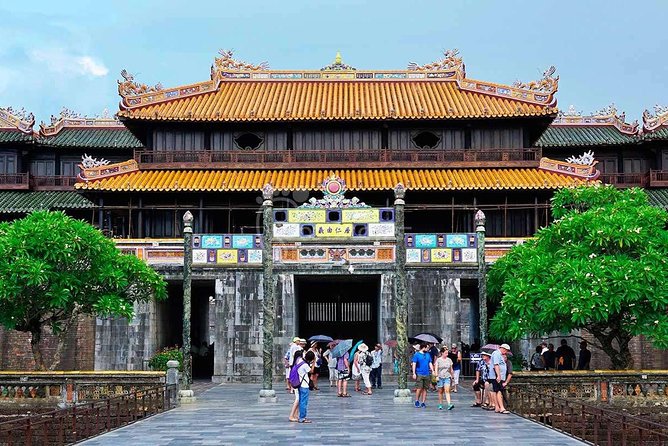
After the river portion, the tour moves to the Imperial Citadel, the political center of the Nguyen Dynasty from 1802 to 1945. This is the part of the day where a guide makes a major difference. The grounds include several named landmarks, and without context they can blur into walls, gates, courtyards, and decorative details.
The route includes the Flag Tower and Noon Gate, two strong points for understanding how the royal center was organized. You also see the 9 Dynastic Urns and 9 Holy Cannons, followed by Thai Hoa Palace and the Forbidden Purple City.
Give yourself time to notice how the spaces change. Grand gates and formal buildings communicate ceremony and authority, while the Forbidden Purple City points to the private world of the royal household. The tour’s focus on royal life makes these places easier to read. You are not simply looking at old structures. You are considering how access, rank, ritual, and royal power shaped daily life.
This section requires walking, and the combination of open courtyards and Hue’s heat can make the morning feel demanding. Comfortable shoes are essential. The experience is not suitable for people with mobility impairments, so you should think carefully about the amount of walking and uneven ground before reserving.
Guides named Hong and Loc have been praised for lively explanations and for handling many questions. Those qualities matter here. The Citadel rewards curiosity, and you will get more from it if your guide can explain why each gate, palace, urn, and cannon mattered.
Lunch and the change from palace to tomb

A lunch break follows the Citadel. Lunch is included, which makes the price easier to judge because you do not need to arrange a separate meal during a packed day.
The break also divides the tour neatly. The morning centers on the river and the royal seat of government. The afternoon turns toward burial sites and the ideas that shaped royal planning. That shift gives the second half its own character rather than making the entire day feel like one long palace visit.
The schedule is built to keep moving. If you like seeing the main sites efficiently, that is a benefit. If you want a slow meal or long periods for photography, you may find the pace brisk. The exact starting time and timing at each stop are not specified, so check the available departure details when booking.
More City Tours in Hue Vietnam:
- Hue Imperial City Walking Tour: Citadel & Forbidden City
★ 4.8 · 245 reviews - Hue City Tour Full day – Small group tour
★ 4.7 · 137 reviews - Hue: City Sightseeing Hop-On Hop-Off Bus Tour
★ 3.7 · 63 reviews - Hue City: Cyclo, Market Tour & Cooking Class at Madam Thu
★ 5.0 · 48 reviews
Khai Dinh’s Tomb and the mix of design traditions

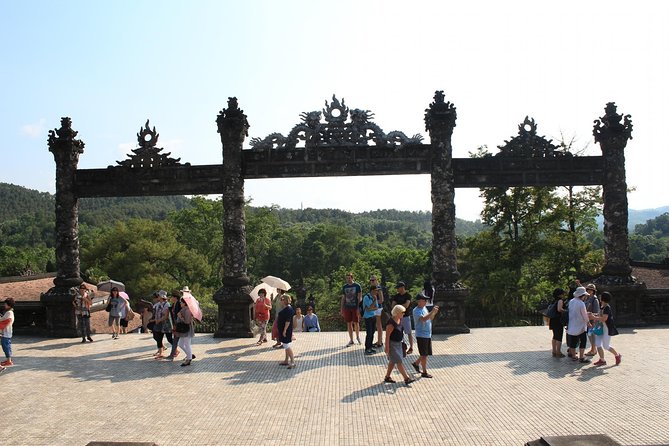
Khai Dinh King’s Tomb offers one of the most distinctive architectural stops of the day. The site is known for blending Western and Eastern architecture, giving it a different feel from the more traditional royal spaces at the Citadel.
This is a good place to compare styles rather than search for one single design language. Your guide can help you notice how outside influences appear alongside Vietnamese royal forms. The result is a tomb that feels visually different from Tu Duc’s complex later in the day.
Khai Dinh’s tomb is valuable because it shows that Hue’s royal architecture was not frozen in one period or one style. The Nguyen court made choices about appearance, symbolism, and presentation, and this site gives you a clear example of those choices.
Expect more walking and steps here. Comfortable shoes are not a minor suggestion. They will make the day easier, particularly after the Citadel and before the later stops. Bring only what you need, since large bags and luggage are not allowed on the activity.
Tu Duc’s Tomb and royal ideas about place

Tu Duc’s Tomb gives the afternoon a calmer, more balanced architectural counterpoint. The complex is known for the majesty and symmetry of its construction, and the layout invites you to look at how buildings, paths, and open spaces relate to one another.
This stop also connects to the tour’s explanation of geomancy. The guide discusses the king’s philosophy of placing royal spaces in relation to the surrounding setting and explains how those ideas affected royal life. That context helps you see the tomb as more than a burial site. It was part of a larger vision of royal identity, order, and the relationship between people and place.
I especially like having both Khai Dinh and Tu Duc on the same day. Khai Dinh gives you a striking blend of Western and Eastern influences. Tu Duc lets you focus on symmetry, planning, and royal philosophy. The comparison is more useful than seeing either tomb alone.
Again, plan for a physically active visit. There is no indication that the route is suitable for people with mobility impairments, and the tour includes several major historical sites in one day. If you need frequent rest or step-free access, this may not be the right format.
Conical hats, incense, and a look beyond the monuments
The final part of the route visits a conical-hat village and an incense stick-making village. These stops add a human and practical side to a day otherwise focused on emperors, palaces, and tombs.
At the hat village, you can see the local craft tradition connected with one of Vietnam’s most recognizable forms of headwear. The incense village shows another small-scale production skill and gives you a chance to see how everyday goods are made.
These visits are useful because they shift your attention from royal history to living work. They also provide a different kind of souvenir stop. You may find the sales element more noticeable here, so think of the villages primarily as cultural visits and only buy something if you genuinely want it.
The craft stops are not a substitute for free time in a market or neighborhood. They are part of the organized route, designed to show local production. If you enjoy seeing how objects are made, they add welcome variety. If your priority is only royal architecture, you may prefer a shorter tour with more time at the tombs.
The guide makes the difference

The quality of this experience rests heavily on the guide. Hue’s sites contain many names, dates, symbols, and layers of royal custom. A guide who simply points at buildings will leave you with photographs but not much understanding.
You are likely to benefit most from a guide who explains the connection between the sites. Hong is praised for engaging, informed commentary, while Loc is described as lively, dynamic, and ready to answer many questions. Guides also bring local perspective, which can make the craft villages and the royal sites feel less separate.
The information provided does not guarantee which guide you will receive. Still, the strong emphasis on clear, energetic guiding is worth noting when you compare this tour with a basic transport-only day trip.
I would ask questions as you go, especially at the Citadel and Tu Duc’s Tomb. The route covers a lot, and your questions can help the guide spend more time on the parts that interest you most.
What $73 includes, and what it does not
For $73, you receive an air-conditioned minivan, the dragon boat trip, an English-speaking guide, a bottle of mineral water, lunch, and entrance fees. Those inclusions cover the costly and practical parts of a full-day visit.
The value is strongest if you are staying in Hue city and want a simple package. You avoid piecing together transport to the river, Citadel, tombs, and villages. You also avoid paying separate entrance fees at each major site and searching for lunch during a tightly planned day.
Insurance is not included. You should arrange your own coverage if that matters to you.
Free cancellation is available up to 24 hours before the activity for a full refund, and you can reserve now and pay later. Those terms give you some flexibility, though you should still check the exact conditions shown for your chosen date.
Who should book this Hue tour?
I would choose this tour if you have one full day in Hue and want to see the city’s main royal and religious sights without managing transport yourself. It suits first-time visitors, history fans, and anyone who wants a guide to explain the meaning behind the architecture.
It also suits you if you like variety. The route includes a river, pagoda, citadel, palace buildings, two tombs, and craft villages. Few stops receive unlimited time, but the range gives you a strong first look at Hue.
I would think twice if you dislike organized schedules or sales-oriented craft and boat stops. The boat ride may include persistent attempts to sell goods, and the full route can feel long in hot weather. The tour is also not suitable for people with mobility impairments.
Bring comfortable shoes and a small day bag. Large bags and luggage are not allowed. Since the tour includes outdoor sites and walking, light clothing, water, and sun protection are sensible choices, though only comfortable shoes are specifically required.
Should you book this full-day Hue tour?
Book it if you want the efficient, well-rounded introduction to Hue. The strongest features are the range of sights, the included transport and entrance fees, and the chance to compare the Imperial Citadel with Khai Dinh’s and Tu Duc’s very different royal tombs.
Skip it if you want a slow, private day with long stretches at one site, or if the boat sales issue would spoil the experience for you. For most visitors with limited time, $73 is a fair price for the coverage and practical inclusions, provided you are ready for a full day of walking and a brisk schedule.
FAQ
Where does the Hue City Full-Day Tour take place?
The tour takes place in Hue, in Central Vietnam, with pickup available from hotels within the city of Hue.
How long does the tour last?
The experience lasts one full day. Starting times vary, so check availability for your chosen date.
Is hotel pickup included?
Yes. Pickup is included from hotels within the city of Hue only.
Is the Perfume River boat trip included?
Yes. A dragon boat trip along the Perfume River is part of the tour.
Which major historical sites does the tour visit?
The route includes Thien Mu Pagoda, the Imperial Citadel, Khai Dinh King’s Tomb, and Tu Duc’s Tomb. It also visits a conical-hat village and an incense stick-making village.
Is lunch included?
Yes. Lunch, a bottle of mineral water, and entrance fees are included.
Is the tour suitable for people with mobility impairments?
No. The tour is not suitable for people with mobility impairments. Comfortable shoes are recommended, and luggage or large bags are not allowed.
More Full-Day Tours in Hue Vietnam
- From Da Nang/Hoian/Hue: Hue Imperial City Full-Day Tour
★ 4.8 · 295 reviews - From Hue : Full-Day City Highlights Tour with Lunch
★ 4.5 · 46 reviews - From Hue: Phong Nha Cave & Paradise Cave Full-Day Trip
★ 4.6 · 25 reviews - Full-Day Ninh Binh Highlights Tour from Hanoi
★ 5.0 · 7,761 reviews
Just added around Hue Vietnam
- Phong Nha National Park: Paradise Cave Half-Day Tour★ 5.0 · 23 reviews
- Official Hue: Dragon Boat, Imperial Citadel, & Market tour★ 4.7 · 32 reviews
- Hue to Hoi An/Da Nang: Private Scenic Motorbike Tour★ 4.9 · 63 reviews
- Hue Royal Tombs Tour: Visit Best Pagodas & Mausoleums★ 4.9 · 19 reviews
- Hue to Hoi An by bus: Hai Van Pass, Lang Co, Marble mountain★ 4.6 · 27 reviews
- Hue: Private Transfer to/from Hoi An via Sightseeing Stops★ 4.9 · 111 reviews
- Hue Private Tour with Local Guide – Customize Your Itinerary★ 4.8 · 28 reviews
- Hue Imperial City Walking Tour: Citadel & Forbidden City★ 4.8 · 245 reviews
City Tours, compared.

Hue Customizable Tour with Imperial Citadel & Forbidden City
Read our review →
Hanoi Motorbike Tours Led By Women: Hanoi City Insight Motorbike Tours
Read our review →
Coconut Jungle Eco & Hoi An City Tour With Boat Ride
Read our review →
Small-group Saigon City Tour: 4-Hour Must-see Iconic Landmarks
Read our review →
Exploring Royal City with Multi Options and Dragon Boat
Read our review →
Hanoi Jeep City Highlight, Backstreet, Train Street, Countryside
Read our review →
Browse the lists this tour appears in