Reviewed · HALF-DAY
Half-Day Mindfulness Meditation Retreat in Hanoi
The most unusual part of this Hanoi experience is the chance to move beyond sightseeing and take part in Buddhist rituals, from chanting sutras to releasing animals. The four-hour visit combines quiet reflection, physical practice, study, conversation with monks, and a vegetarian meal.
I like the clear progression from qigong and mindful breathing into meditation, and I like that the program includes a direct conversation with monks rather than keeping Buddhist life at a distance. The main consideration is simple: this is a spiritual learning session, not a casual pagoda tour, so you should be comfortable with silence, ritual, and a structured schedule.
Key points at a glance
- Chant Buddhist sutras as an opening activity and learn why the words matter.
- Practice qigong and mindful breathing before sitting meditation and walking meditation.
- Discuss Buddhist doctrine with monks and ask about a life shaped by renunciation.
- Take part in an animal-release ritual focused on compassion and gratitude.
- Share a vegetarian lunch, which is included in the $60 price.
- Plan around the four-hour format and remember that an air-conditioned vehicle is not included.
A four-hour pause from ordinary Hanoi
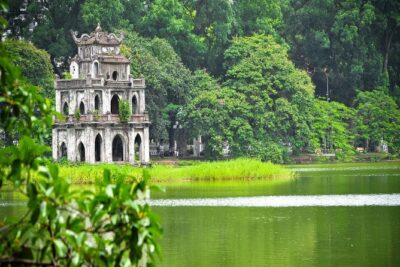
Hanoi can fill your senses quickly. Motorbikes, horns, food stalls, and crowded streets keep your attention moving. This retreat offers a different kind of city experience: you spend about four hours at a pagoda following a carefully ordered Buddhist program.
The schedule is not built around checking off sights. It asks you to listen, repeat, breathe, sit, walk, and reflect. That makes it a good choice if you want to understand how Buddhist practice works in daily life, rather than simply photograph a temple roof.
The experience also has a teaching side. You learn about ethics, gratitude, loving-kindness, compassion, and Buddhist doctrine. Some parts are active, such as qigong and walking meditation. Others are quiet and inward. The change of pace is the point.
More Half-Day Tours in Hanoi:
- Hanoi Half-day with Food + Fun + Culture By Russian Jeep
★ 5.0 · 1,243 reviews - Hanoi Bicycle Tours: Half Day Bicycle Tours Hanoi Countryside
★ 5.0 · 322 reviews - Bicycle Tours Hanoi: Half Day Hanoi City Bicycle Tours
★ 5.0 · 317 reviews
Beginning at the pagoda with basic rules
When you arrive, the guide explains the rules for the first lesson. This opening matters because a pagoda is a place of worship, not just a cultural stop. You receive guidance before the rituals begin, which helps you understand how to behave and how to take part respectfully.
The provided information does not name the guide, the pagoda, or the exact meeting point. You should check those details carefully before booking or setting out. The experience includes a mobile ticket, but an air-conditioned vehicle is not included, so transportation to and from the pagoda is your responsibility unless your booking provides separate arrangements.
The four-hour length is useful. It gives enough time for several activities without turning the day into a full retreat. Still, the schedule is structured, so this is not an outing where you can wander off and return whenever you like.
Chanting sutras and hearing Buddhist teachings
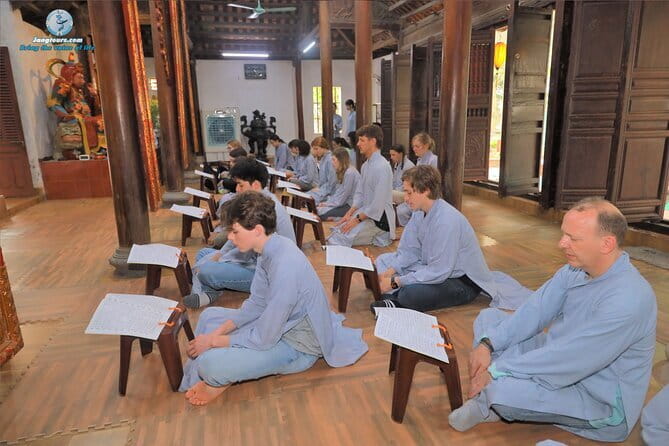
The first main activity is chanting solemn sutras. These texts contain the teachings of Buddha, and the ritual introduces you to Buddhism through sound and repetition rather than through a lecture alone.
You do not need to arrive as a Buddhist or already understand the sutras. The value is in learning how these teachings are used in practice. Chanting also sets the tone for the rest of the visit. It asks you to slow down and give your attention to the words.
After the chanting, the program turns to Buddhist doctrines and lessons that can be applied to daily life. The focus includes ethics, gratitude, loving-kindness, and compassion. This section may appeal to you if you prefer practical questions about how to live over a purely historical explanation of Buddhism.
There is a possible limit here. The description promises study of profound doctrines, but it does not specify which teachings are covered or how much time is given to discussion. Expect an introduction shaped by the retreat schedule, not a full course in Buddhist philosophy.
Qigong and mindful breathing before meditation
The physical portion begins with qigong and mindful breathing. These exercises are presented as practices for good health, but they also prepare you for meditation by bringing attention to the body and breath.
This is a sensible order. Sitting quietly can be harder than it sounds, especially if you are tired, distracted, or unused to formal meditation. Gentle movement first can help you settle in. Mindful breathing then gives you a simple point of focus before the meditation session begins.
You should not mistake this for a fitness class. The supplied details do not describe the intensity, length, or difficulty of the qigong practice. The main purpose appears to be preparation, awareness, and calm.
A few more Hanoi trips worth comparing
- Hanoi Jeep Tour: Food, Culture and Fun by Vietnam Army Jeep
★ 5.0 · 15,222 reviews - Hanoi: Water Puppet Show Tickets
★ 4.6 · 7,029 reviews - Hanoi Motorbike Tour: Food, Culture and Fun by Vintage Motorbike
★ 5.0 · 6,699 reviews - Hanoi: Guided Food Tour with Train Street Visit
★ 4.9 · 6,239 reviews
Learning walking meditation in quiet moments
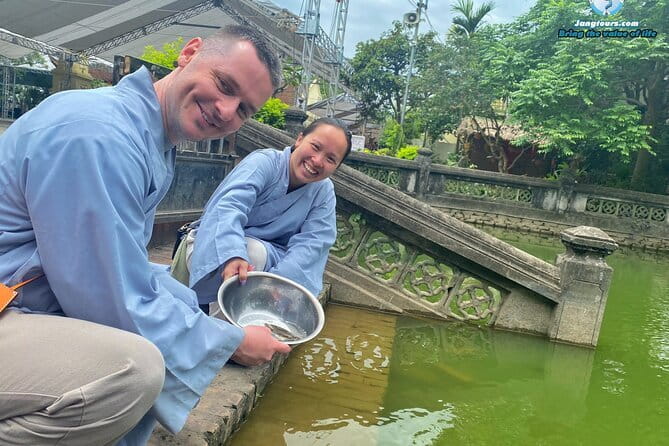
Walking meditation follows the seated or formal meditation period. This is one of the more helpful parts of the program for beginners. Many people find it difficult to remain still for long, while walking gives the mind a physical rhythm to follow.
The activity is described as a tranquil practice, with attention placed on the movement and the present moment. You learn that meditation need not happen only while sitting with closed eyes. It can also shape the way you move through ordinary life.
The program uses several methods rather than presenting one technique as the only correct answer. You study the correct method of meditation, learn how to focus the mind, and consider the connection between attention and happiness. That variety gives you more than a single quiet session to remember after leaving the pagoda.
At the same time, do not book this expecting a sightseeing walk around Hanoi. Walking meditation is a formal activity within the pagoda setting. The goal is mental focus, not seeing more of the city.
The art of touching peace
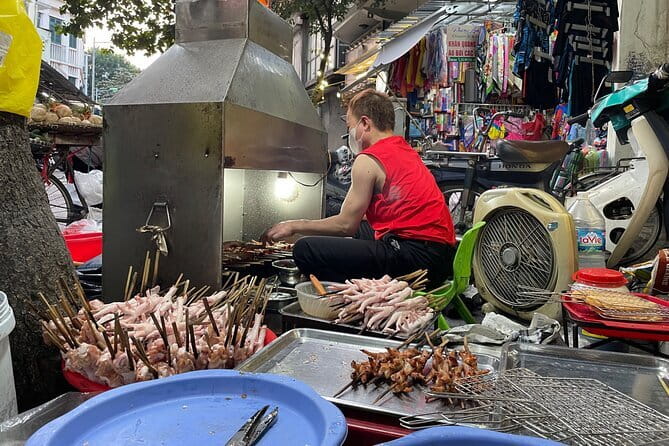
The next stage is described as the art of touching peace. Here, you learn meditation methods and work on focusing the mind for true happiness.
The language may sound lofty, but the practical idea is straightforward. You are shown ways to direct attention instead of letting every thought take over. The retreat connects meditation with emotional qualities such as gratitude, kindness, and compassion, rather than treating it only as a relaxation trick.
I like this broader approach. A short meditation class can leave you with a breathing exercise and little else. This program places meditation inside a larger Buddhist framework, linking the practice to conduct, relationships, and the way you respond to other people.
The trade-off is that four hours goes quickly. You will be introduced to several ideas, but you should not expect mastery in one visit. The best result is a clearer sense of how Buddhist meditation is practiced and which exercises you might continue on your own.
Speaking with monks about the Buddhist life
For many people, the conversation with monks will be the most anticipated part of the retreat. You have the chance to learn more about Buddhist doctrine, the noble life of people who have renounced worldly pleasures, and the ideals that guide that choice.
This adds a human dimension to the teachings. Books and lectures can explain doctrine, but a conversation lets you consider how those ideas shape a person’s daily life. You can listen to an account of discipline, simplicity, and spiritual purpose within the setting where those values are practiced.
The description does not say how long the conversation lasts, how many monks participate, or whether a question-and-answer format is guaranteed. Keep your expectations measured. It is best to see this as a meaningful opportunity within a larger program, not as a private theological consultation.
If you have questions, prepare a few before you arrive. Consider asking about meditation, compassion, ethical living, or the reason monks give up worldly pleasures. The more focused your questions, the more useful the discussion is likely to be.
Releasing animals and sharing a grateful meal

The retreat closes its active spiritual work with an animal-release ritual. This practice is tied to compassion and offers a concrete way to think about the value placed on living creatures.
You should approach this activity with respect. It is not a wildlife excursion, and the details do not say which animals are released or where the release takes place. Its role in the program is religious and ethical, helping connect Buddhist compassion with an action rather than leaving it as an abstract idea.
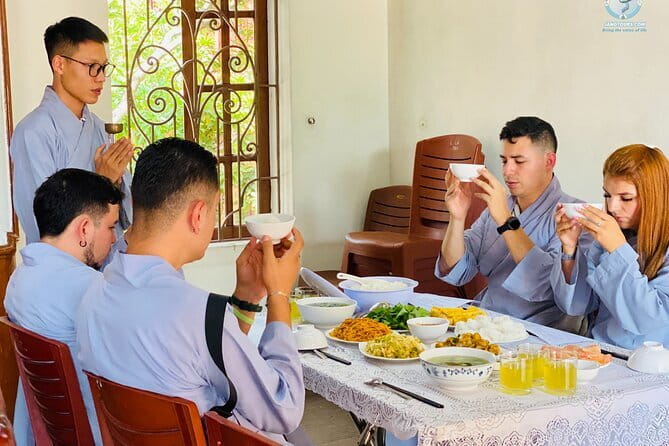
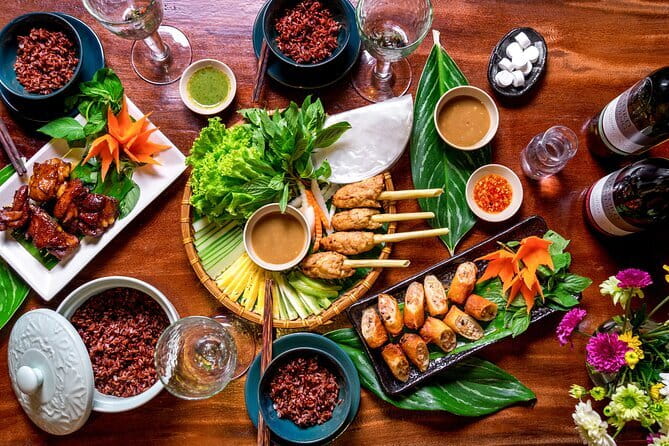
Afterward, you share a vegetarian lunch. The meal is included in the $60 price, and it gives the group a calm ending after the chanting, exercises, meditation, and discussion. Food also forms part of the retreat’s lesson in gratitude. You are not simply taking a break to eat; the meal is presented as a grateful part of the experience.
The menu is not specified, so do not book this expecting a particular Vietnamese dish or a restaurant-style lunch. What is clear is that the included food is vegetarian.
What the $60 price means

At $60 per person, this is priced as a guided spiritual experience rather than a simple pagoda visit. The value comes from the structure: you receive an introduction to ritual, Buddhist teaching, qigong, mindful breathing, meditation, walking meditation, a discussion with monks, an animal-release activity, and a vegetarian lunch.
That is a substantial program for roughly four hours. It may be good value if you would otherwise struggle to understand how to enter a pagoda respectfully or how the practices fit together. The guide’s explanations and the organized sequence save you from trying to piece together the experience alone.
The price is less attractive if you only want to see a religious building or take a few photographs. You are paying for participation and instruction, not just admission. You also need to account for transportation because an air-conditioned vehicle is not included.
The fact that this experience is often booked 47 days in advance suggests that you should not leave it until the last moment if the date matters to you. That figure does not guarantee every date sells out, but it is a useful planning signal.
Who will get the most from this retreat
I would recommend this experience to you if you are curious about Buddhism and want a guided introduction with several forms of practice. It suits people who enjoy learning by doing, especially those willing to chant, breathe mindfully, walk in silence, and listen carefully.
It may also suit you if Hanoi’s usual sightseeing rhythm feels tiring. Four hours in a pagoda gives you a genuine change of pace without requiring a full-day retreat.
You may want to skip it if you dislike organized rituals, do not want to participate in chanting, or are looking only for a quick cultural stop. The program is not designed as entertainment, and its value depends on your willingness to take the activities seriously.
Bring patience and an open mind. The experience asks you to accept a different rhythm, where silence and repetition are useful rather than awkward.
Final verdict: book it for participation, not sightseeing
Book this half-day retreat if you want a structured introduction to Buddhist practice in Hanoi. The strongest parts are the mix of chanting, meditation, qigong, walking practice, monk-led conversation, compassion-focused ritual, and vegetarian food.
Think twice if your main aim is transportation, sightseeing, or a flexible temple visit. The $60 price makes sense when you value instruction and participation, while the missing air-conditioned vehicle means you must arrange your own transport.
For the right person, this is a thoughtful four-hour break from Hanoi’s noise and a practical way to explore Buddhist ethics, meditation, and ritual.
FAQ
How long does the mindfulness meditation retreat last?
The retreat lasts approximately four hours.
Where does the experience take place?
It takes place at a pagoda in Hanoi, Vietnam. The exact pagoda is not specified in the provided information.
What activities are included?
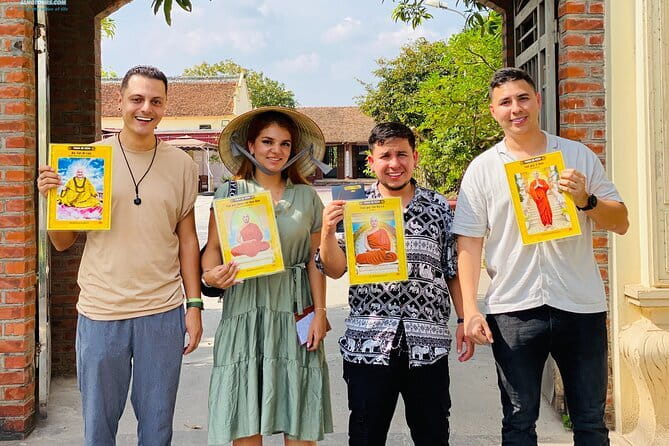
The program includes chanting sutras, learning Buddhist doctrines, qigong, mindful breathing, meditation, walking meditation, discussion with monks, releasing animals, a vegetarian meal, and a gift exchange before farewell.
Is lunch included?
Yes. A vegetarian lunch is included in the experience.
Is transportation included?
No air-conditioned vehicle is included.
Will I meet Buddhist monks?
Yes. The program includes a conversation with monks about Buddhist doctrine, the life of people who have renounced worldly pleasures, and their ideals.
Do I need prior meditation experience?
No prior experience is stated as a requirement. The program includes instruction in meditation methods and the correct method of meditation.
How far in advance is this experience usually booked?
It is booked an average of 47 days in advance.
Just added around Hanoi
- Private Crowd Free Hanoi: Morning Highlights of the City Experience★ 4.5 · 124 reviews
- Hoa Lo Prison and Little Paris Tour in Hanoi (French Quarter)★ 5.0 · 20 reviews
- Old Quarter Food Tour in Hanoi★ 5.0 · 104 reviews
- Hanoi’s Old Quarter Street Food Experience and Train Street★ 5.0 · 22 reviews
- Retro Hop-on-hop-off Bonbon City Tour: Classic Package★ 4.0 · 32 reviews
- [Hi-end] Private Hanoi Street Food Tour With Real Foodie★ 5.0 · 154 reviews
- Hanoi Street Food Tour★ 5.0 · 27 reviews
- Hanoi Street Food Tour with egg coffee making★ 5.0 · 22 reviews
Half-Day, compared.
Cu Chi Luxury Group Tour – Tapioca and Cake Half Day
Read our review →
Hanoi Half-day with Food + Fun + Culture By Russian Jeep
Read our review →
Ho Chi Minh City Private Half-Day Tour by U.S Army Jeep
Read our review →
Cu Chi Tunnels Half-Day History Tour with Guide
Read our review →
Hanoi Bicycle Tours: Half Day Bicycle Tours Hanoi Countryside
Read our review →
Explore Nha Trang Bay: Half-Day Snorkeling Adventure Tour
Read our review →
Half Day Hiking to Cat Ba National Park with a Guide
Read our review →