Reviewed · GUIDED
Full-day Guided Meditation Experience in Ha Noi
The heart of this eight-hour Hanoi experience is not sightseeing. It is a slow day built around Buddhist teachings, guided meditation, qigong movements, rituals, and quiet reflection inside a pagoda. You learn about the Buddha’s life and basic doctrines, then put some of those ideas into practice.
I like the chance to ask detailed questions of a patient guide, and I like the mix of stillness and gentle activity. Past guide assignments have included Naya, Hung, and Hieu, all noted for clear English and a kind, personal approach. The main drawback is value: at $85 per person, this is costly if you want only a short introduction to meditation, and lunch is not included.
Key points at a glance
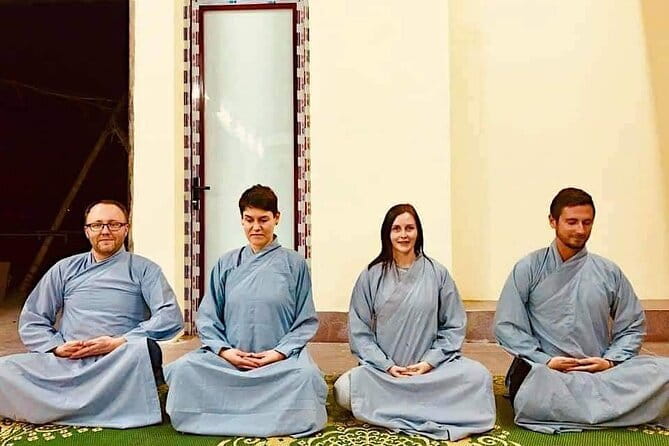
- An eight-hour Buddhist retreat: The day gives you time to move beyond a quick temple visit and practice meditation rather than only observe it.
- Guides who make the teaching personal: Naya, Hung, and Hieu have led thoughtful sessions, answered many questions, and adjusted the conversation to individual interests.
- More than sitting quietly: You may take part in qigong movements, rituals connected with loving-kindness and compassion, and other spiritual practices.
- A peaceful pagoda setting: The architecture, main hall, and religious setting provide context for the teachings.
- A small-group feel is possible: The experience can operate with very few people, although the stated maximum is 100.
- Plan your own meal: Lunch and dinner are not included, so you need to account for food during a full day away from the meeting point.
A full day built around Buddhist practice
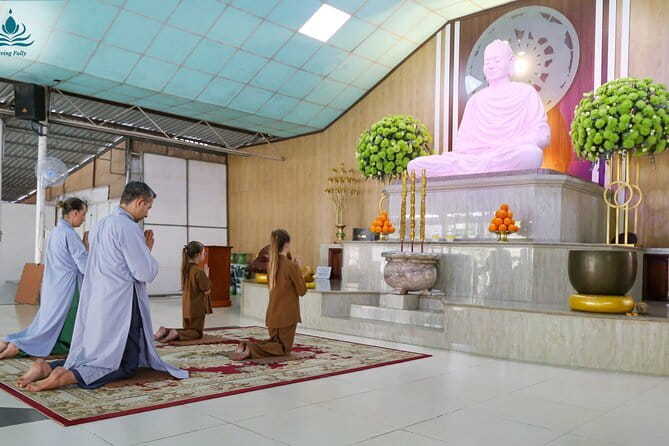
This is best understood as a guided introduction to Buddhist living, not a standard Hanoi tour with a meditation stop added at the end. The experience asks you to slow down and pay attention to ideas such as gratitude, loving-kindness, compassion, and a more moral way of living.
That makes it appealing to several kinds of people. You might be curious about Buddhism, looking for a calm break from sightseeing, facing a major decision, or trying to connect spiritual practice with ordinary life. The program also presents Buddhist teachings as a way to think about family values and a more humane society.
You do not need to arrive as an experienced meditator. The description specifically welcomes people at different stages, including those seeking spiritual understanding and those dealing with personal difficulty. Still, an eight-hour day requires patience. If you want a quick cultural overview, this experience may feel too long and too inward-looking.
More Full-Day Tours in Hanoi:
- Incense Villages & Ha Noi City Full Day guided Tour with Lunch
★ 5.0 · 304 reviews - Hanoi City Tour Full Day All IN One – All Included
★ 5.0 · 276 reviews - Hanoi All in One Full Day Sightseeing Tour
★ 5.0 · 220 reviews
Meeting your guide at Quan Nhân
The day begins at 8:00 am at Ngõ 68 Phố Quan Nhân, in the Trung Hoà area of Cầu Giấy, Hanoi. The activity ends at the same meeting point, which gives the day a clear beginning and finish.
The meeting point is near public transportation, and parking fees are included. You receive confirmation when booking, an important detail in Hanoi, where similar-sounding pagodas and religious sites can make navigation confusing. One participant even went to the wrong pagoda, so check the exact address before setting out and allow time to find Ngõ 68.
Your licensed guide meets you at the pagoda and gives a short outline of the day. This opening matters because the experience includes several different parts. You are not simply attending one long meditation session. The day moves from the pagoda grounds and its architecture to Buddhist teachings, meditation instruction, practice, rituals, and qigong.
Seeing the pagoda before sitting in the hall
The first walk around the pagoda introduces its history and architecture. The available information does not name the pagoda or provide a full architectural description, so you should think of this as a guided orientation rather than a major monument tour.
That is still a useful beginning. A pagoda is not just a pretty setting for photographs. Its spaces, images, and main hall give the religious teachings a physical context. Your guide can explain what you are seeing before you sit down to discuss the Buddha and Buddhist doctrine.
The guide’s role is especially important here. Naya, Hung, and Hieu have each led this experience at different times, and the strongest descriptions of their approach emphasize patience, kindness, and accessible explanations. You can ask questions as they arise instead of trying to absorb a formal lecture all at once.
The group size needs a little explanation. The maximum is listed as 100 people, so a large group is possible. At the same time, the experience can run with only one participant, creating a very personal day. Do not assume you will always receive a private retreat, but understand that the format allows for close discussion when numbers are low.
Learning Buddhist ideas in the main hall

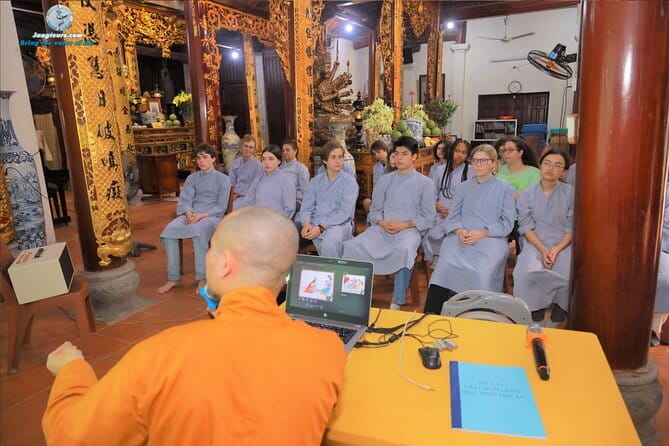
After the pagoda tour, you go to the main hall to learn about the life of the Buddha and central Buddhist teachings. The stated aim is practical: to show how these ideas can guide everyday choices and encourage a more ethical way of living.
This section is likely to be the most valuable part for anyone who wants context rather than a purely relaxing meditation session. Meditation is presented as part of a wider path, connected with gratitude, compassion, and self-cultivation. You are asked to consider how a calmer mind might affect your treatment of other people and your own response to difficulty.
The approach is not described as academic or focused on Buddhist history alone. It is meant to be useful in daily life. That can be a strength if you want something personal and accessible. It may be less satisfying if you are looking for detailed comparisons among Buddhist traditions, advanced philosophy, or a scholarly lecture.
The guide’s ability to answer questions makes a difference. Hieu has been described as an excellent teacher who made Buddhist basics understandable, while Hung was praised for patience and a welcoming manner. Naya’s sessions have also been described as personal, with generous answers to many questions. These details suggest that the quality of your day depends partly on the guide assigned and partly on how actively you take part.
A few more Hanoi trips worth comparing
- Hanoi Jeep Tour: Food, Culture and Fun by Vietnam Army Jeep
★ 5.0 · 15,222 reviews - Hanoi: Water Puppet Show Tickets
★ 4.6 · 7,029 reviews - Hanoi Motorbike Tour: Food, Culture and Fun by Vintage Motorbike
★ 5.0 · 6,699 reviews - Hanoi: Guided Food Tour with Train Street Visit
★ 4.9 · 6,239 reviews
Learning how to meditate, then trying it yourself
The meditation section moves from explanation to practice. Your guide presents a method based on Buddhist teachings, explains how to focus the mind, and gives you time to sit in tranquility.
That practical step is important. You are not only hearing that meditation can bring peace of mind. You are given a chance to notice what happens when you try to settle your attention. For a beginner, this can make the practice less mysterious and more approachable.
Keep your expectations sensible. One day will not turn you into an experienced meditator, and the setting may not make every session easy. Your mind may wander, especially if you are new to sitting quietly. The value is in learning a basic method and understanding why it matters within Buddhism.
The meditation sessions have been a strong part of the experience for people who wanted a calm, meaningful day. You can ask questions about the practice and receive guidance as you go. This personal instruction is one reason the experience costs more than a simple self-guided visit to a pagoda.
The day also frames meditation as support for mental and physical health. That is a broad claim, so treat it as part of the spiritual teaching rather than a medical promise. The experience is not presented as medical care, counseling, or treatment.
Qigong, rituals, and compassion in motion
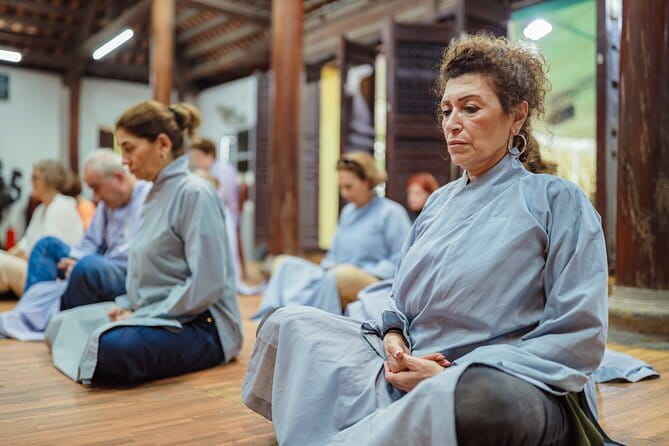
The program does not leave you seated for eight hours. It includes qigong movements intended to support health, along with rituals focused on loving-kindness and compassion.
The qigong element gives the day a physical change of pace. Gentle movement can help break up long periods of sitting and gives you another way to pay attention to your body. The available information does not specify the exact movements or fitness level required, so ask your guide if you need a clearer explanation before taking part.
The rituals are tied to Buddhist values rather than presented as a performance for visitors. They offer a way to express compassion and loving-kindness through action. You may find this more meaningful if you are open to taking part respectfully, even when a practice is unfamiliar.
There may also be a fish-releasing activity. It has been described as enjoyable alongside the exercise meditation and other parts of the day, but the supplied details do not explain how often it takes place or exactly how it is organized. Consider it a possible feature, not a guaranteed centerpiece.
The human side of the experience

The strongest reason to book is the chance to spend a full day with a guide who treats the subject as a conversation rather than a script. Naya has been described as friendly, patient, and thoughtful. Hung has been praised for warmth and careful answers. Hieu has helped make Buddhist concepts easy to approach and has supported beginners during meditation.
These guide names are useful, but they are not a guarantee of your assignment. The provider is The Bodhi Journey, and the guide is described as licensed. You should confirm the assigned guide if that matters to you, especially if you are booking because of a particular language or teaching style.
The one-person format can be a real advantage. With no one else in the group, you can ask questions freely and shape the conversation around your own interests. On another date, you could be part of a much larger group, since the maximum is 100. That range means the social feel is not fixed.
The experience has also created a friendly atmosphere for people who wanted to meet kind-minded companions. Still, do not book it mainly as a social event. The central purpose is Buddhist learning and meditation, and the day may be quiet and reflective.
Is $85 a fair price?

At $85 per person, the price is reasonable only if you want the full package: a licensed guide, pagoda orientation, Buddhist instruction, guided meditation, practice time, qigong, rituals, and a full day of attention.
It is not the cheapest way to see a pagoda or spend a few quiet hours in Hanoi. You are paying for guided interpretation and the chance to ask questions throughout the day. A short temple visit would cost much less, but it would not offer the same structured teaching or meditation practice.
Food affects the calculation. Lunch and dinner are not included, even though the activity lasts about eight hours. Some past accounts refer to an excellent meal, but the official inclusions list does not cover lunch or dinner, so you should not count on food being part of the price. Budget separately and ask the provider what meal arrangements, if any, apply on your date.
The price is easiest to justify if you are genuinely interested in Buddhism, mindfulness, or spiritual practice. It is harder to justify if you simply want a relaxing day with no religious content. The experience is direct about its Buddhist purpose, so read the description carefully before paying.
Who will get the most from this day?
I would recommend this for a beginner who wants a clear introduction to Buddhist ideas and a chance to practice meditation in a religious setting. You do not need prior experience, and the guide-led format gives you someone to ask when a concept feels unfamiliar.
It also suits anyone seeking a quiet break from Hanoi’s usual pace. The focus on gratitude, compassion, and inner calm gives the day a different rhythm from food tours, markets, and city sightseeing.
Families may find the discussion of moral living useful, especially if adults want to think about how spiritual values can shape children’s education. People at a crossroads in life may also appreciate the reflective setting, though you should not expect therapy or personal counseling.
I would hesitate to recommend it to someone who dislikes organized spiritual practice, does not want to take part in rituals, or wants a packed schedule of sights. It may also feel expensive to anyone who only wants to try meditation for an hour.
Practical details before you book
Wear something suitable for a pagoda and be ready for both quiet sitting and gentle movement. The supplied information does not set out a dress code or equipment list, so ask the provider if you need specific guidance.
The start time is 8:00 am, and the activity lasts about eight hours. It ends back at the meeting point. Parking fees and a licensed guide are included, while lunch and dinner are not.
Most people can participate, and the experience is near public transportation. The maximum group size is 100, but the actual number can be much smaller. Free cancellation is available if you cancel at least 24 hours before the local start time. Cancellations or changes made less than 24 hours ahead are not refunded or accepted.
Should you book it?
Book this experience if you want Buddhist teaching, real meditation practice, and a full day of calm conversation rather than a quick pagoda stop. The patient, personal guide style associated with Naya, Hung, and Hieu is a major strength, especially for beginners with lots of questions.
Skip it if you want a low-cost sightseeing tour, a guaranteed private session, or meals included in the price. For the right person, $85 buys a thoughtful day with structure and guidance. For anyone unsure about the spiritual focus, it is a substantial commitment. Read the program as a retreat with cultural context, not as a conventional Hanoi tour.
FAQ
Where does the experience begin?
It begins at Ngõ 68 Phố Quan Nhân, Trung Hoà, Cầu Giấy, Hanoi, Vietnam.
What time does the experience start?
The start time is 8:00 am.
How long does the experience last?
It lasts approximately eight hours.
Where does the experience end?
The activity ends back at the meeting point.
Are lunch and dinner included?
No. Lunch and dinner are not included in the price.
Can I cancel for a full refund?
Yes, if you cancel at least 24 hours before the experience start time. Cancellations made less than 24 hours ahead are not refunded, and changes made within that period are not accepted.
Just added around Hanoi
- Private Crowd Free Hanoi: Morning Highlights of the City Experience★ 4.5 · 124 reviews
- Hoa Lo Prison and Little Paris Tour in Hanoi (French Quarter)★ 5.0 · 20 reviews
- Hanoi’s Old Quarter Street Food Experience and Train Street★ 5.0 · 22 reviews
- Old Quarter Food Tour in Hanoi★ 5.0 · 104 reviews
- Retro Hop-on-hop-off Bonbon City Tour: Classic Package★ 4.0 · 32 reviews
- [Hi-end] Private Hanoi Street Food Tour With Real Foodie★ 5.0 · 154 reviews
- Hanoi Street Food Tour★ 5.0 · 27 reviews
- Hanoi Street Food Tour with egg coffee making★ 5.0 · 22 reviews
Guided, compared.

Mekong Delta Guided Tour from Ho Chi Minh City
Read our review →
Ninh Binh Full-Day Small Group of 9 Guided Tour from Hanoi
Read our review →


Ha Giang Tour 3-Day-2-Night, English Speaking Guide, Small Group
Read our review →
Cu Chi Tunnels Half-Day History Tour with Guide
Read our review →