
Reviewed · TEMPLES & PAGODAS
Hue Royal Tombs Tour: Visit Best Pagodas & Mausoleums
Hue’s imperial tombs are not packed into one easy museum complex. They spread across the countryside south and west of the city, each with a different mood and design. This private-car tour gives you a practical way to link them, from the peaceful grounds of Minh Mang Tomb to the ornate, European-influenced Khai Dinh Mausoleum.
I like the freedom to shape the day around your interests, and I like the chance to learn about royal households, including emperors, wives, concubines, and eunuchs. The main consideration is cost: the $15 tour price covers transport and, depending on your option, a guide, but tomb entry tickets are extra and can add up quickly.
Key points to know
- Choose your own royal route: Visit selected tombs and pagodas instead of following a fixed sightseeing loop.
- Private car and city pickup: Start at a central Hue hotel or Hue Train Station and return to your hotel.
- Five tomb choices: Minh Mang, Tu Duc, Khai Dinh, Gia Long, and Dong Khanh each show a different period and style.
- Two important pagodas: Thien Mu introduces Hue’s Buddhist traditions, while Tu Hieu offers a quieter cultural stop.
- Useful local advice: Guides such as Bi and Ba have helped with money exchange, transfers, local coffee, and sightseeing plans.
- Watch the ticket math: Tomb admission is listed at 150,000 Vietnamese dong per tomb, while combination tickets may offer better value.
Why a private car makes Hue’s tombs easier
The best royal tombs are not all in the center of Hue. You need transport between them, and walking from one to another is not realistic for a short visit. A private car removes the need to arrange separate taxis or negotiate each ride as you go.
Pickup is available from a hotel in Hue City Center or from Hue Train Station. After sightseeing, you return to your hotel in the city center. That simple door-to-door setup matters, especially if you arrive by train or have limited time in Hue.
The tour can last from two to eight hours, depending on the option and the number of places you choose. A short version could focus on two tombs and one pagoda. A longer day could include several mausoleums plus both Buddhist sites, though you should not expect a relaxed visit at every stop if you try to fit them all in.
You can book a private group with an English-speaking guide, or select an option that focuses on private transport. Read the exact option carefully before paying. The number of included tombs changes between options, and the low starting price does not mean every listed site is included.
More Temples & Pagodas in Hue
- Hue: Royal Tombs & Pagoda Private Tour By Dragon Boat & Car
★ 4.9 · 257 reviews - Hue: Royal Tombs Private Tour with 3 Best Tombs & Pagoda
★ 4.9 · 213 reviews - Hue: Dragon Boat, Perfume River, Pagoda & Royal Tomb Tour
★ 4.9 · 194 reviews
Tu Duc Tomb, where royal life met royal anxiety

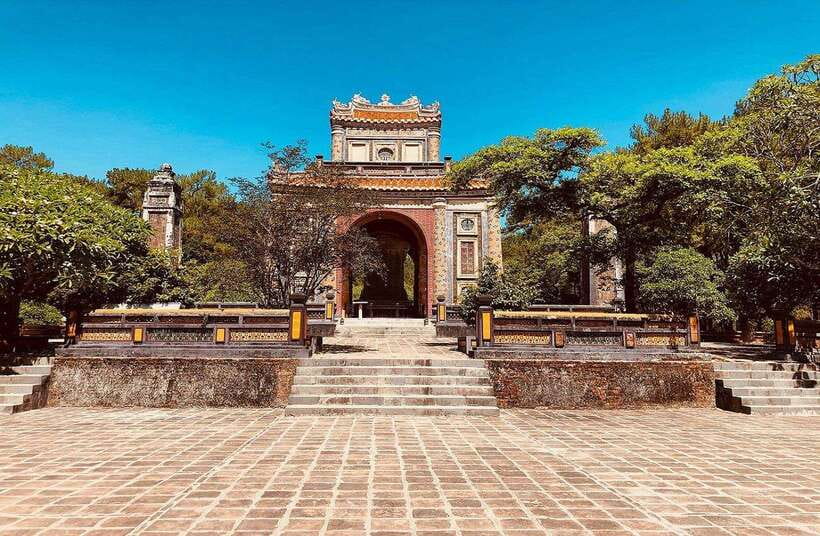
Tu Duc Tomb is one of the most useful places to begin if you want to understand the emperor as a person, not just as a name on a stone plaque. King Tu Duc built the complex for himself between 1864 and 1867, while he was still alive.
The site has two main parts: a temple area and a burial area. The grounds cover about 12 hectares, so this is not a quick roadside photo stop. Your guide can help explain how the tomb also served as a place where Tu Duc sometimes lived and worked.
That detail gives the site a different feel from a simple grave. It was part retreat, part ceremonial center, and part future burial ground. After the emperor’s death in 1883, the complex was also connected with the lives of his minor wives, concubines, and eunuchs.
Allow about 45 minutes in the planned route. That is enough for the principal buildings and a walk through the grounds, but you may want more time if you enjoy architecture and quiet courtyards. The tour allows free time, so tell your guide if you prefer photographs and wandering over a fast explanation.
Minh Mang Tomb, the most balanced imperial setting
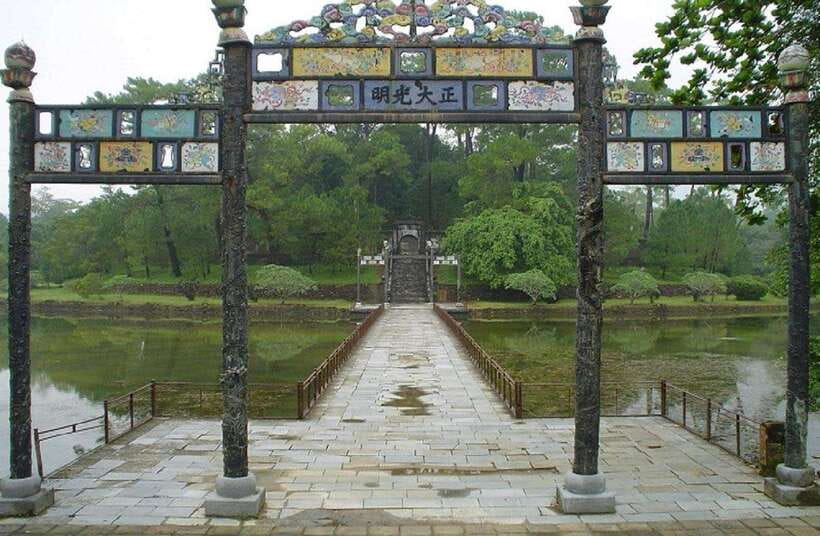
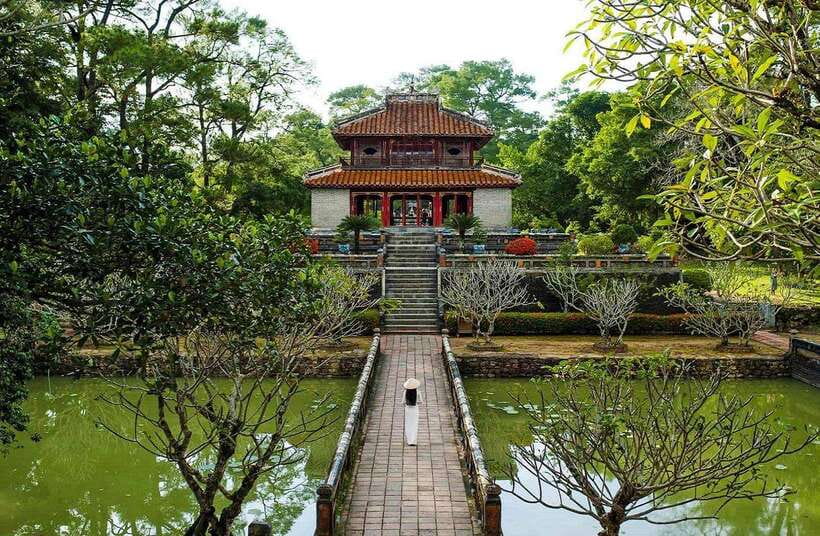
Minh Mang Tomb was begun in 1840 for Emperor Minh Mang and completed by his son, King Thieu Tri, after Minh Mang died during construction. The work finished in 1843, creating a large complex of about 15 hectares with 26 buildings.
The plan is formal and carefully arranged. You can expect a sequence of gates, courtyards, temples, and burial spaces rather than one single monument. This makes Minh Mang a good choice if you want to see how Nguyen royal architecture used symmetry and ceremony.
The complex also tells a less polished story about palace life. It served as a living area for minor wives and concubines who had no children with the emperor, as well as eunuchs after his death. A local guide can put those details into context without reducing the site to pretty photographs.
The route allows about 45 minutes here. I would treat that as a useful minimum, not a promise of a slow visit. Minh Mang is one of the places where your personal pace matters, so ask for time to walk between the buildings and look at the layout.
Khai Dinh Mausoleum and its sharp change of style
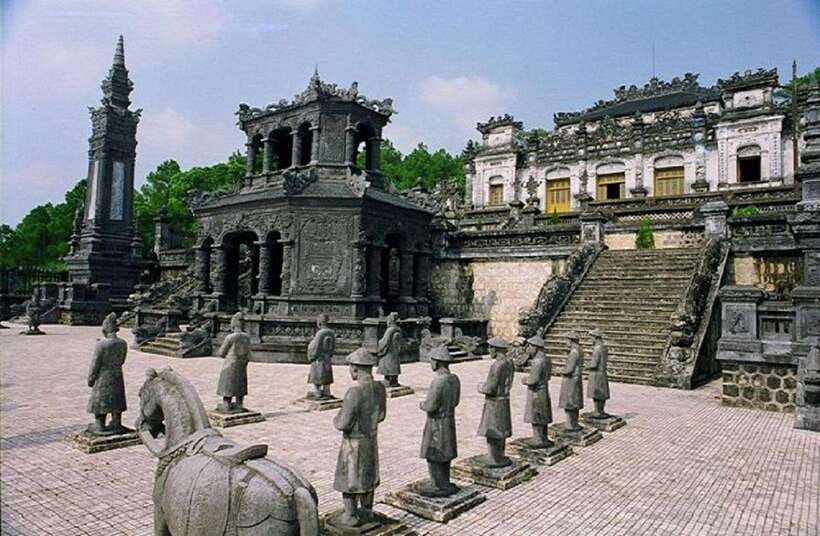
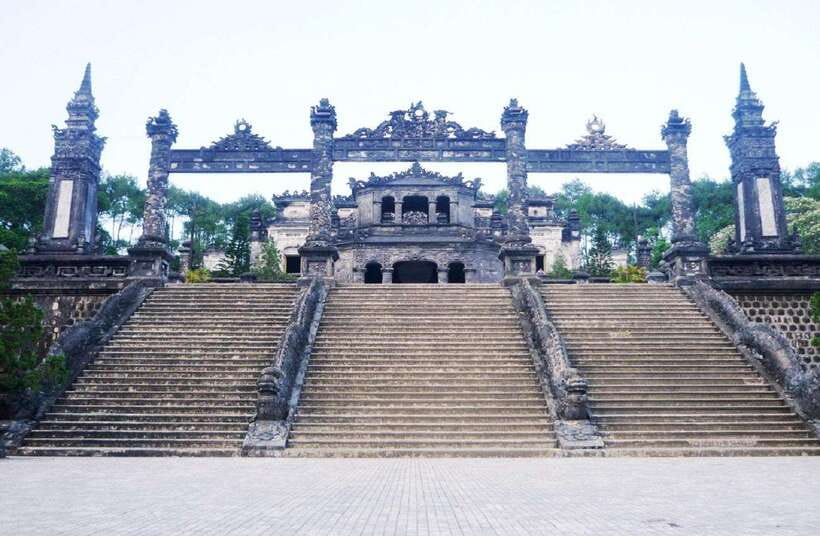
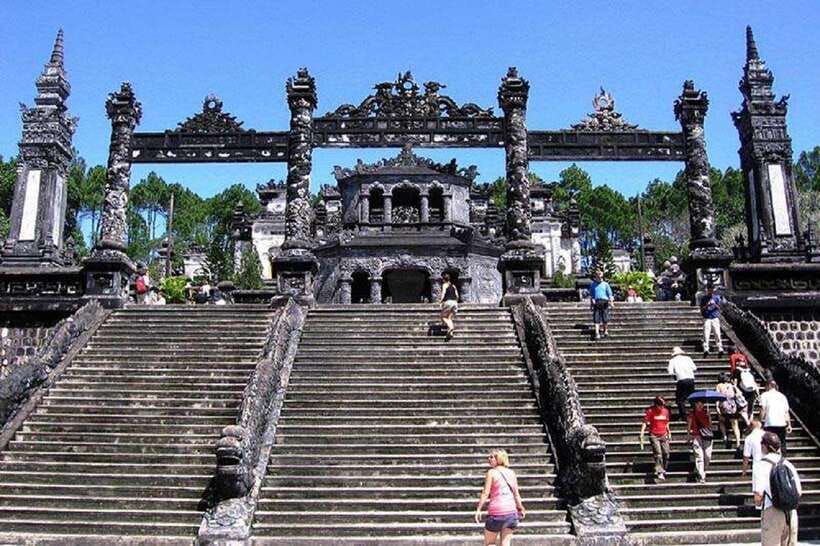
Khai Dinh’s tomb is the visual contrast in this tour. Built between 1920 and 1931, it combines Vietnamese and European influences in a way that makes it unlike the earlier imperial mausoleums.
The emperor began the project in 1920, and construction continued under his child after his death in 1925. The site is compact compared with Minh Mang and Tu Duc, measuring about 48.5 meters by 117 meters, but it rises vertically and feels more enclosed.
This is also the only Nguyen royal tomb in the tour description where you are specifically told that the emperor’s burial place is known beneath the tomb. That gives the site a direct connection with the person it commemorates.
The planned stop is only 30 minutes. That works for a focused visit, but the many decorative details can tempt you to linger. If ornate design is your main interest, confirm that your selected option gives you enough time. Khai Dinh is also likely to feel more strenuous than a flat garden-style site because of its stair-based layout, although the tour is listed as wheelchair accessible overall. Ask the operator about the exact route if accessibility is important for you.
More Temples & Pagodas in Hue Vietnam:
- Hue: Hue Royal Tombs Tour Visit 3 Best Tombs & Pagoda
★ 4.9 · 170 reviews - Hue: Private Dragon Boat, Pagoda, and Royal Tomb Tour
★ 4.8 · 141 reviews - Small-Group Mekong Delta Day Trip: Boat Ride, Cottages & Pagoda
★ 5.0 · 1,327 reviews - Hanoi: Ninh Binh, Trang An, Mua Cave and Bai Dinh Pagoda
★ 4.7 · 345 reviews
Gia Long Tomb, a larger complex with fewer easy shortcuts
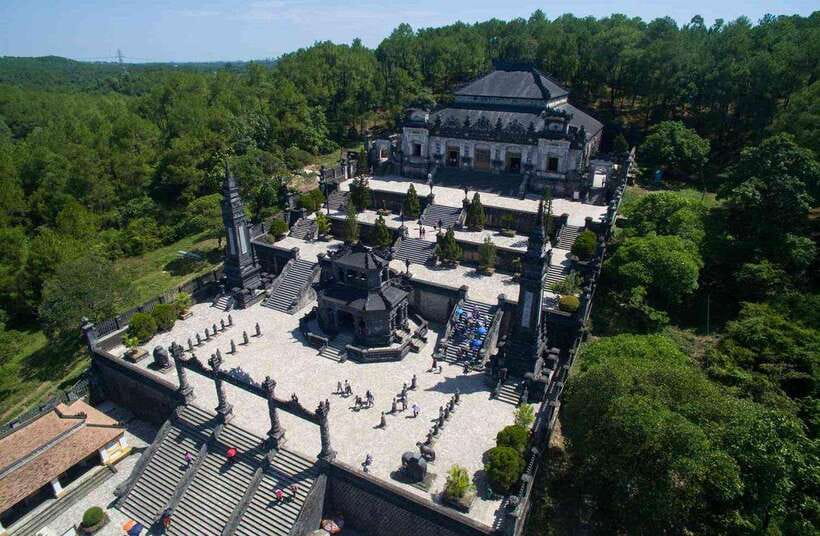
Gia Long was the founder of the Nguyen Dynasty, and construction of his mausoleum began in 1814 and ended in 1820. The name refers to a wider complex of royal mausoleums, now located in Long Ho Ward, Phu Xuan District.
This stop can help you connect the tombs to the broader story of the dynasty. Instead of seeing only the best-known monuments, you get a sense of how royal burial areas developed across the Hue region.
The planned visit lasts about one hour, longer than the stop at Khai Dinh or Dong Khanh. That extra time suggests a place better suited to walking and looking around than to a quick stop for a single photograph.
Because the tour offers several possible routes, Gia Long may not be included in every lower-priced option. Confirm the number of tombs included before booking. If you already have a combination ticket for a set number of tombs, ask the driver or guide to match your route to that ticket.
Dong Khanh Tomb, a compact stop in a rural setting
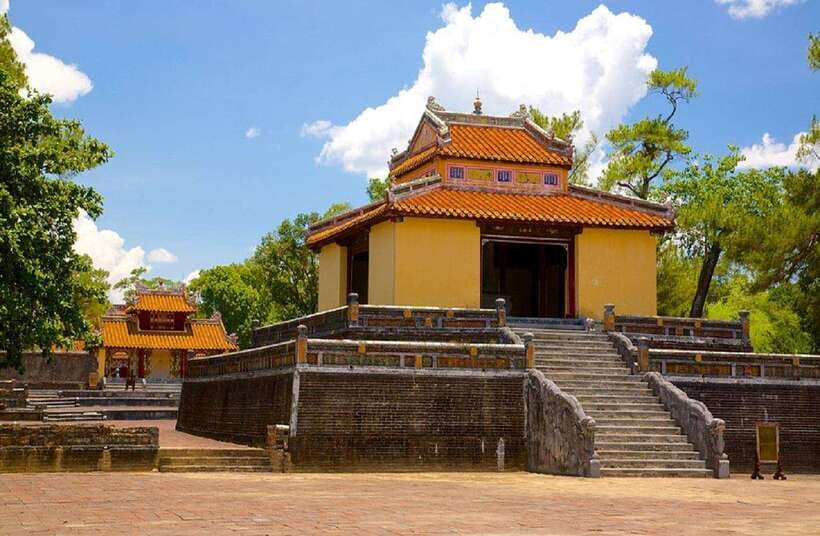
Dong Khanh Tomb, also called Tu Lang, is the burial place of Emperor Dong Khanh. It sits in a rural area of Thuong Hai village in Thuy Xuan Ward, within the larger Hue ancient capital relic area.
The complex contains around 20 large and small structures. It is divided into a palace area and a tomb area, with the buildings set fairly close together. That makes Dong Khanh a practical addition when you want another imperial site without spending as much time walking across a broad complex.
The planned stop is about 30 minutes. I would use it as a shorter architectural visit, especially if you have already spent a full morning at Tu Duc and Minh Mang. Its rural setting also changes the rhythm of the day, giving you a look beyond the grand ceremonial centers.
Thien Mu Pagoda and Hue’s Buddhist identity
Thien Mu Pagoda is one of Hue’s best-known religious sites. It was built in 1601 by the founder of the Nguyen family in central Vietnam, and local tradition connects its location with a dream.
The pagoda is valuable because it shows that Hue’s story is not only about emperors and royal graves. Buddhism remains important to local life, and this stop gives you a place to consider the religious side of the city.
The planned visit is about 30 minutes, with time for a guided explanation, photographs, and a walk. You may find that the stop feels calmer than the tombs, but it is still a working religious place rather than a purely historic display. Dress and behave respectfully, and follow any posted instructions.
Thien Mu is an especially sensible addition if you are visiting Hue for the first time and want more than royal architecture. It also breaks up a day of mausoleums with a different kind of place.
Tu Hieu Pagoda and the story of a root temple
Tu Hieu Pagoda is also known as the Root Temple. It is described as one of Hue’s major temples and an important cultural and historic site.
The pagoda is associated with Zen Master Thich Nhat Hanh, the Vietnamese spiritual teacher, poet, and peace activist. He lived there after returning to Vietnam from the United States. That connection gives the temple a modern spiritual link alongside its older local importance.
The planned visit is about 30 minutes. You can walk around, listen to an explanation, and take in the setting without treating the place like another royal monument. If Buddhism, meditation, or modern Vietnamese spiritual life interests you, this may be one of the most meaningful stops on the route.
You should not assume every tour option includes both pagodas. The route is customizable, and the number of included attractions varies. Confirm your selection if these temples are a priority.
What the guides add to the drive

The driving time between Hue’s sites is part of the experience, not dead time. A good guide can explain the places you pass, connect the tombs to Nguyen royal history, and help you understand customs that are not obvious from a sign.
Several guides have been named for this service. Bi is described as accommodating and helpful on the road, while Duy is praised for arriving on time, sharing information about ancient sites along the way, and allowing plenty of time at each stop. Ba has helped with transfer choices, expected prices, money exchange, and local food and drink.
One particularly useful local touch is the chance to try Hue-style salted coffee. That is the kind of small suggestion that can make a private tour feel more personal, provided your schedule allows for it. It is not listed as a guaranteed stop, so treat it as a possible extra rather than part of the package.
Tra My has also guided visitors through the mausoleums, and Bi has driven guests who already held a ticket for the Citadel and three tombs. The important point is to tell your guide what you want from the day. If you prefer history, ask for context. If you prefer photographs, ask for unhurried stops. If you have a fixed combination ticket, show it at the start.
Price, tickets, and the real value of the tour
The advertised price begins at $15 per person. That is a low transport price for a private car, but it is not the full cost of a tomb-heavy day.
Entry is not included. The stated admission price is 150,000 Vietnamese dong per tomb per person. If you visit five tombs individually, the entrance cost can become much higher than the tour itself, before food and drinks.
Combination tickets may offer better value. The available figures are 420,000 dong per person for the Imperial City with two tombs, or 530,000 dong per person for the Imperial City with three tombs, valid over two days. These tickets make sense if you also plan to visit Hue’s Imperial City and can arrange your tomb stops around the ticket rules.
Do the arithmetic before booking. A low tour price is appealing, but the best value comes from matching the number of tombs to your actual interests and ticket plan. If you only want two tombs and one pagoda, a shorter private route may be wiser than paying for a full schedule you cannot enjoy slowly.
Food and drinks are also separate. Bring enough cash for admission and personal purchases, and confirm current ticket prices before departure since local fees can change.
Who should book this Hue tour
I would choose this tour if you want to see several tombs without arranging transport yourself. It suits first-time visitors, couples, families, and small private groups that prefer control over the pace.
It is also a good match if you arrive at Hue Train Station and want pickup arranged from there. The private format lets you avoid joining a large bus group and gives you a better chance to adjust the order of stops.
This is less suitable if you want one slow, detailed visit to every complex. The full list of tombs and pagodas is ambitious, and the suggested stop times are short at several sites. You will need to choose between breadth and depth.
Wheelchair access is listed, but the individual sites have different layouts. Contact the operator before booking if you need a specific level of access at the tombs, especially for the stair-heavy Khai Dinh site.
Cancellation is free up to 24 hours before the activity, and you can reserve now and pay later. Those terms help if your Hue plans are still shifting, but they do not change the need to check the exact option details.
Should you book it?
Book this tour if easy transport, a private car, and a flexible route matter more to you than a fixed, highly detailed program. The strongest choices are usually two or three tombs plus one pagoda, rather than trying to collect every stop in a single rush.
For a balanced first visit, I would compare a route built around Tu Duc, Minh Mang, and Khai Dinh, then add Thien Mu if time allows. Add Gia Long or Dong Khanh if you have a longer day and want a wider view of Nguyen royal architecture.
The tour offers good value when you use the private transport well, confirm which sites are included, and plan your entrance tickets in advance. It is a practical way to see Hue’s scattered imperial sites while leaving room for local advice from guides such as Bi, Duy, Ba, or Tra My.
FAQ
What is included in the Hue Royal Tombs Tour?
The tour includes pickup and drop-off in Hue City Center, private transportation by car or van, and a tour guide when you choose the guide option.
Are entrance tickets included?
No. Tomb tickets are separate and listed at 150,000 Vietnamese dong per tomb per person. Combination tickets for the Imperial City and tombs may also be available.
Where can pickup take place?
Pickup is available from hotels in Hue City Center or Hue Train Station. You should provide the exact hotel name and address when booking.
How long does the tour last?
The available duration ranges from two to eight hours. The exact length depends on the option you choose and the number of tombs and pagodas included.
Which royal tombs can I visit?
Possible tombs include Minh Mang, Tu Duc, Khai Dinh, Gia Long, and Dong Khanh. The number included depends on the selected option.
Can I visit pagodas on the tour?
Yes. The possible pagoda stops are Thien Mu Pagoda and Tu Hieu Pagoda, also known as the Root Temple. Confirm that your chosen option includes the pagodas you want.
Is the tour wheelchair accessible?
The activity is listed as wheelchair accessible. Since the tombs have different layouts, contact the operator in advance about the exact sites and route you plan to visit.
Just added around Hue Vietnam
- Phong Nha National Park: Paradise Cave Half-Day Tour★ 5.0 · 23 reviews
- Official Hue: Dragon Boat, Imperial Citadel, & Market tour★ 4.7 · 32 reviews
- Hue to Hoi An/Da Nang: Private Scenic Motorbike Tour★ 4.9 · 63 reviews
- Hue to Hoi An by bus: Hai Van Pass, Lang Co, Marble mountain★ 4.6 · 27 reviews
- Hue: Private Transfer to/from Hoi An via Sightseeing Stops★ 4.9 · 111 reviews
- Hue Private Tour with Local Guide – Customize Your Itinerary★ 4.8 · 28 reviews
- Hue : Private Day Trip to DMZ : Vinh Moc tunnel & Khe Sanh★ 5.0 · 26 reviews
- Hue Imperial City Walking Tour: Citadel & Forbidden City★ 4.8 · 245 reviews
Temples & Pagodas, compared.

Small-Group Mekong Delta Day Trip: Boat Ride, Cottages & Pagoda
Read our review →
Ninh Binh, Trang An, Mua Cave and Bai Dinh Pagoda
Read our review →
Linh Ung Pagoda – Marble Mountains – Hoi An Ancient Town Daily Ingroup Tour
Read our review →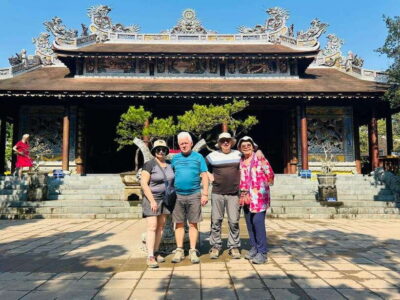
Royal Tombs & Pagoda Private Tour By Dragon Boat & Car
Read our review →

Full-Day Perfume Pagoda Private or Small-Group Tour
Read our review →Dalat Countryside Motorbike Day Tour–Coffee Farms & Pagodas
Read our review →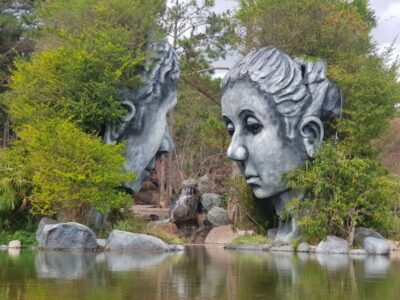
7-hour Datanla waterfall, Clay Tunnel and Holy See temple
Read our review →Browse the lists this tour appears in