
Reviewed · CRAFT VILLAGE TOURS
Hanoi: Incense Village, Conical Hat, & Dough Figurines Tour
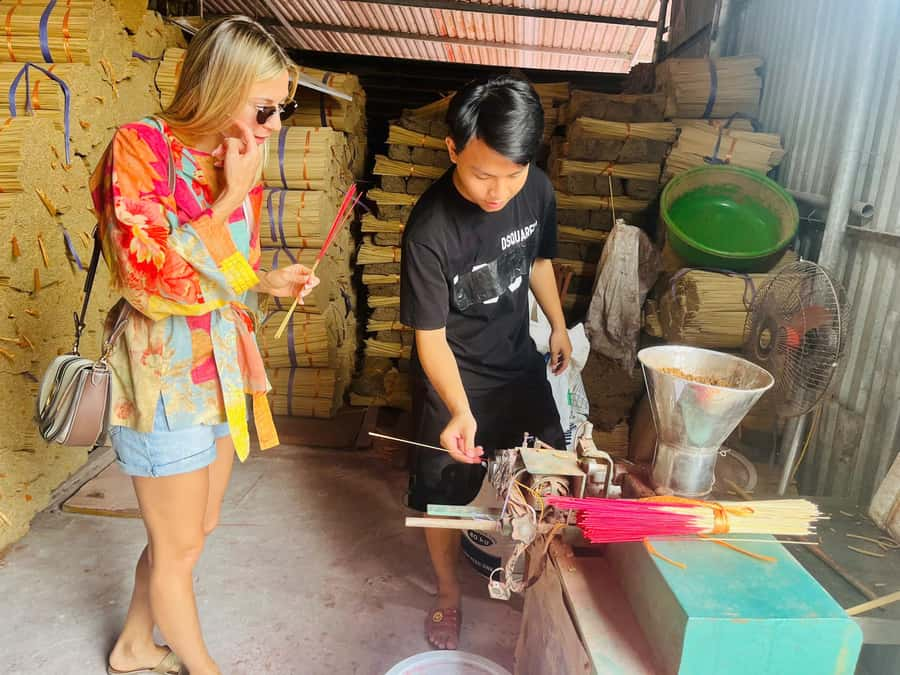
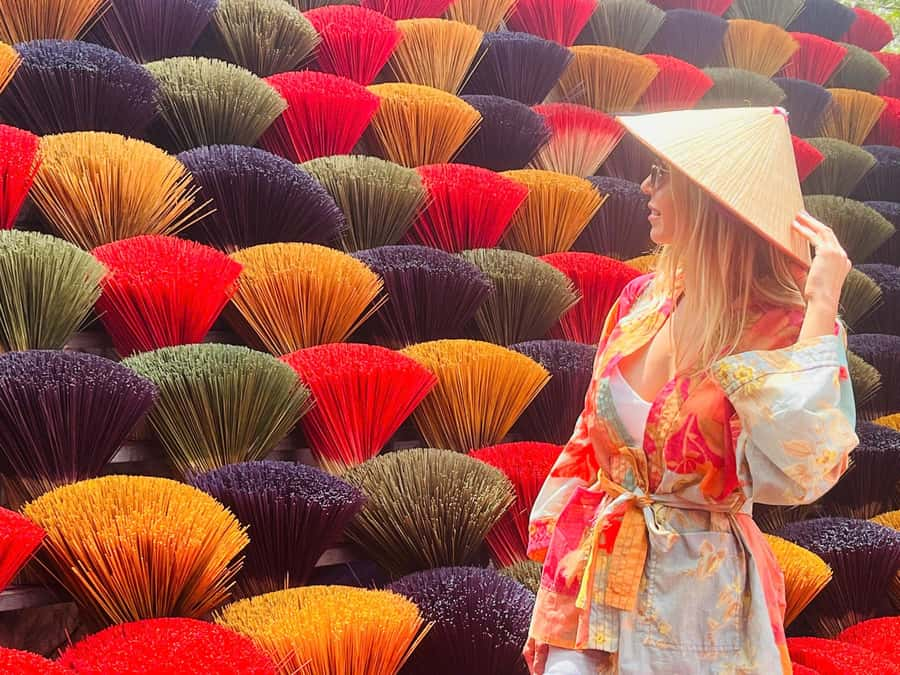
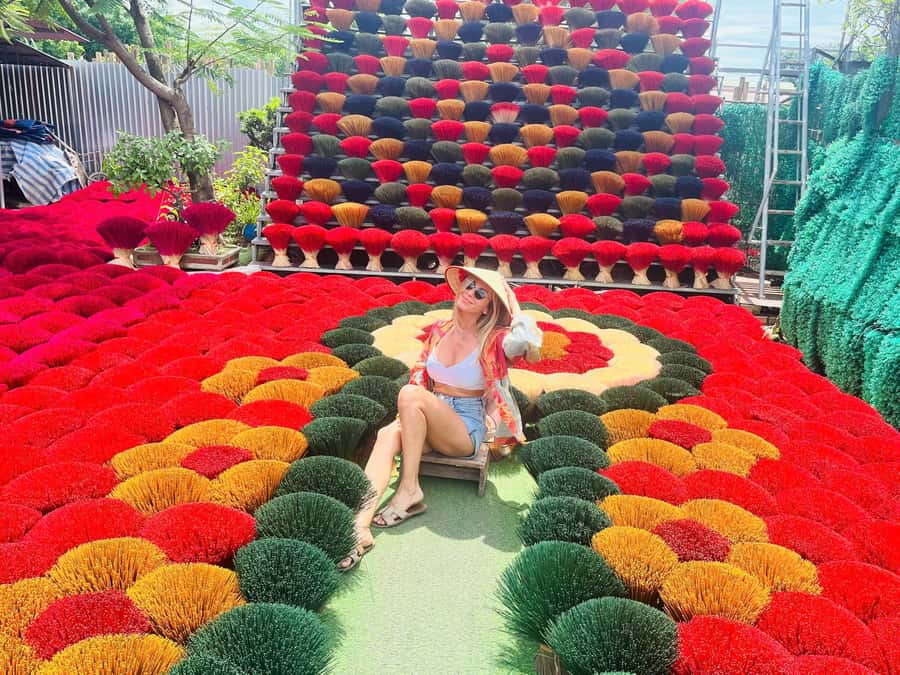
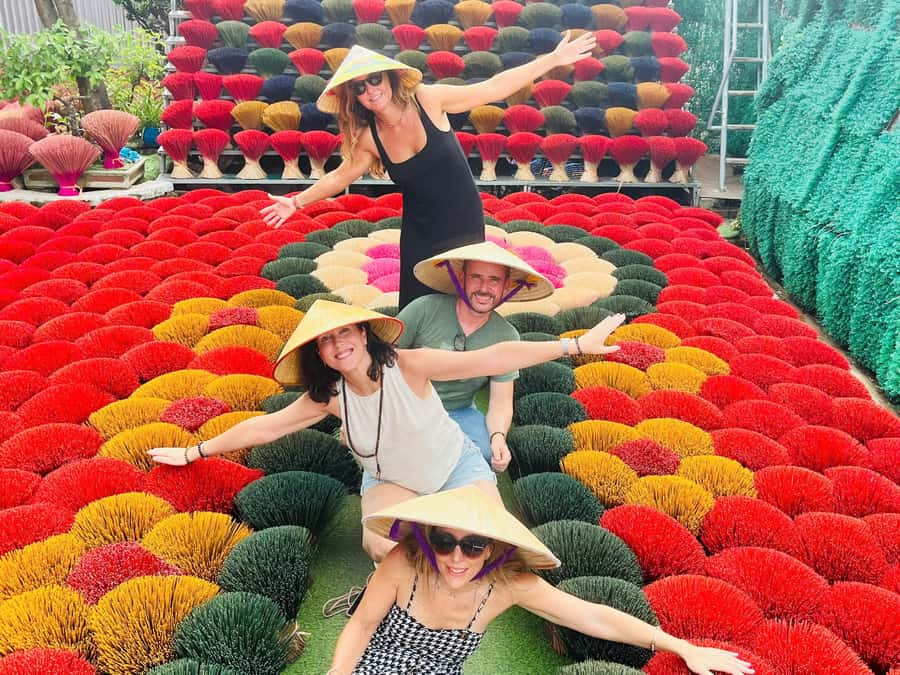
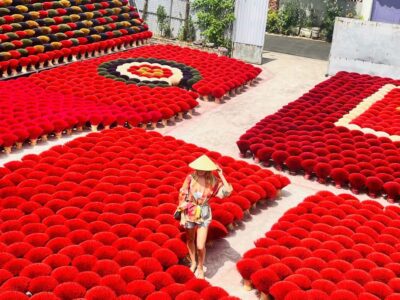
The most eye-catching part of this day is Quang Phu Cau Incense Village, where bundles of red-dyed incense sticks are arranged outside family workshops like great bursts of color. You get more than a photo stop: you see the handwork, meet local makers, and learn how a familiar Vietnamese product is made.
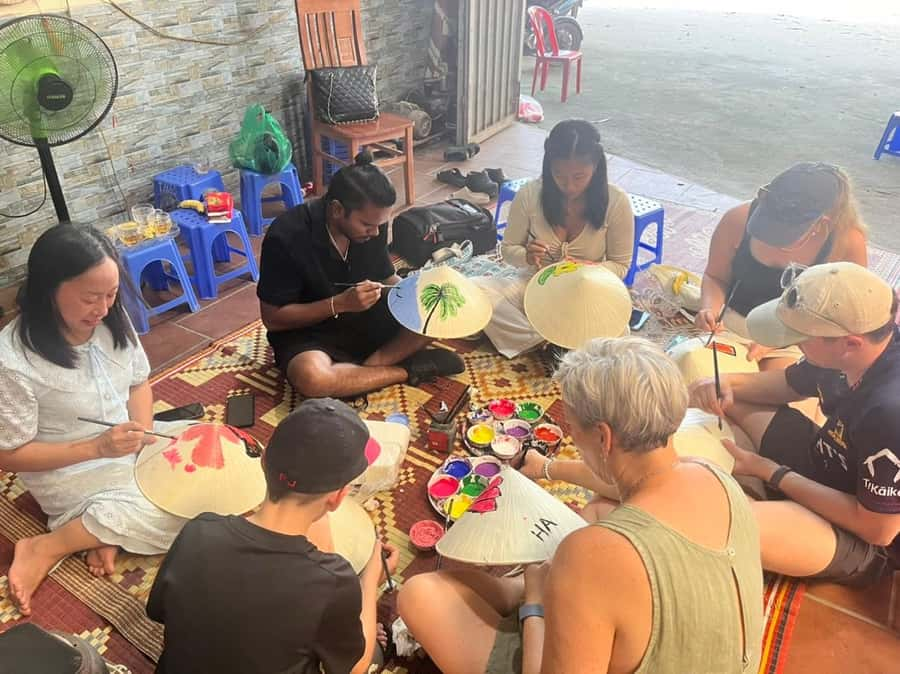
I like the hands-on side, especially painting a conical hat and taking it home. I also like the choice of two trips: a six-hour half-day visit for a quick outing, or a full day with a home-cooked lunch and To He figurines. The main catch is that the incense village may feel smaller and more spread out than you expect, and the half-day trip has no lunch.
Key points to know before booking
- Quang Phu Cau is the main photo stop: See incense sticks being dyed, dried, bundled, and prepared by local families.
- You paint and keep your own conical hat: The craft activity makes the Chuong village visit more personal than a simple factory tour.
- The full-day option adds To He figurines: Learn how sticky rice powder, sugar, and food coloring become small animals, fruits, and heroes.
- You can choose your pace: The half-day trip lasts about six hours, while the full-day version adds a third village and lunch.
- Train Street is optional: You may finish in the city with coffee and a look around, but you arrange your own return from there.
- The $16 starting price is strong value: Transport, a guide, entrance fees, water, and a conical hat are included, with lunch added on the full-day option.
Why these craft villages make a good Hanoi side trip
Hanoi has plenty of temples, museums, and old streets. This excursion gives you a different view of northern Vietnam, one built around working families and small-scale production.
The villages are not presented as polished theme parks. You visit homes, family workshops, and a larger factory, then watch people perform tasks that have supported local communities for generations. That is the real appeal. You see how everyday objects are made instead of simply buying them from a shop.
The trip also suits you if you enjoy taking pictures. Red incense sticks, pale bamboo, white conical hats, and colorful figurines create strong scenes. Just keep your expectations sensible. These are working villages, not a single giant attraction with one clearly marked entrance. The incense-making area can feel smaller than expected, with production spread among different homes and workspaces.
At $16 per person, the tour offers a lot for the money. Hotel pickup in Hanoi’s Old Quarter, bus transport, an English-speaking guide, entrance fees, water, and a conical hat are included. The full-day option adds lunch. Drinks beyond the supplied water and personal spending cost extra.
More Craft Village Tours in Hanoi
- Incense Village, Hat Making & Lacquer Artisan Small Group Hanoi
★ 5.0 · 1,266 reviews - Incense Village, Conical Hat, Lacquer Art, Small Group From Hanoi
★ 5.0 · 1,170 reviews - Hanoi: Incense Village, Hat, and Lacquer Artisanal Tour
★ 4.6 · 1,005 reviews
Quang Phu Cau and the making of incense

The tour usually begins with the incense village, particularly on the full-day option. Quang Phu Cau has produced incense for more than 100 years, and the craft remains tied to family workshops and manual labor.
You first walk toward the center of the village and see how incense is produced on a smaller scale. A family specializing in dyeing incense sticks shows you the colorful stage of the work. The sticks are arranged in bundles, often spread out so they can dry. That is the scene most likely to fill your camera.
The color has a practical purpose as well as visual appeal. Dyed sticks are part of the finished product, and the arrangement helps the work dry before it moves to later stages. Your guide can explain the process as you walk, rather than leaving you to guess what each pile or bundle means.
A nearby factory gives you another view. Here you can learn how incense is made from its basic materials and see the work involved in preparing it by hand. The factory visit also brings attention to the manual workers who do much of this production. It is a useful reminder that the pretty photographs represent real labor, not just decoration arranged for visitors.
I would allow time to walk slowly here. The best pictures may come from small details: rows of sticks, workers preparing materials, or bundles gathered beside a home. You should also be considerate around the work areas. These are active businesses, so listen to your guide and avoid treating every workspace as a photo prop.
One practical point matters: the village is not necessarily one enormous field of incense. The production area may seem more modest than the images suggest. If you want a huge, uninterrupted display, you could be disappointed. If you want to see a local craft in its working setting, the visit makes more sense.
Chuong village and your hand-painted conical hat
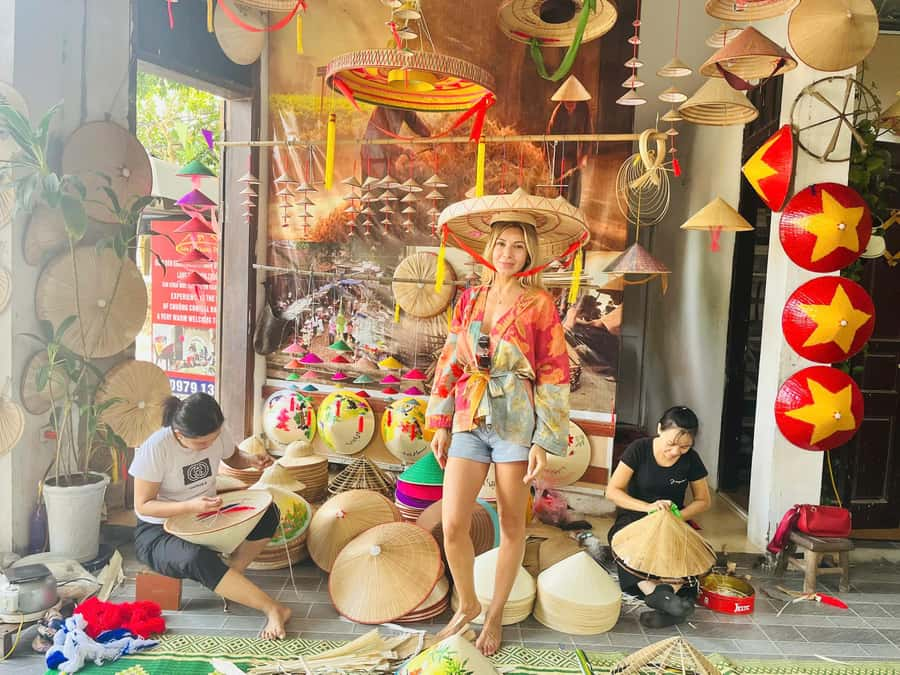
The second major stop is a conical hat-making village known for more than 300 years of craft production. The Vietnamese conical hat, or nón lá, is one of the country’s best-known objects, but this visit shows the work behind the familiar shape.
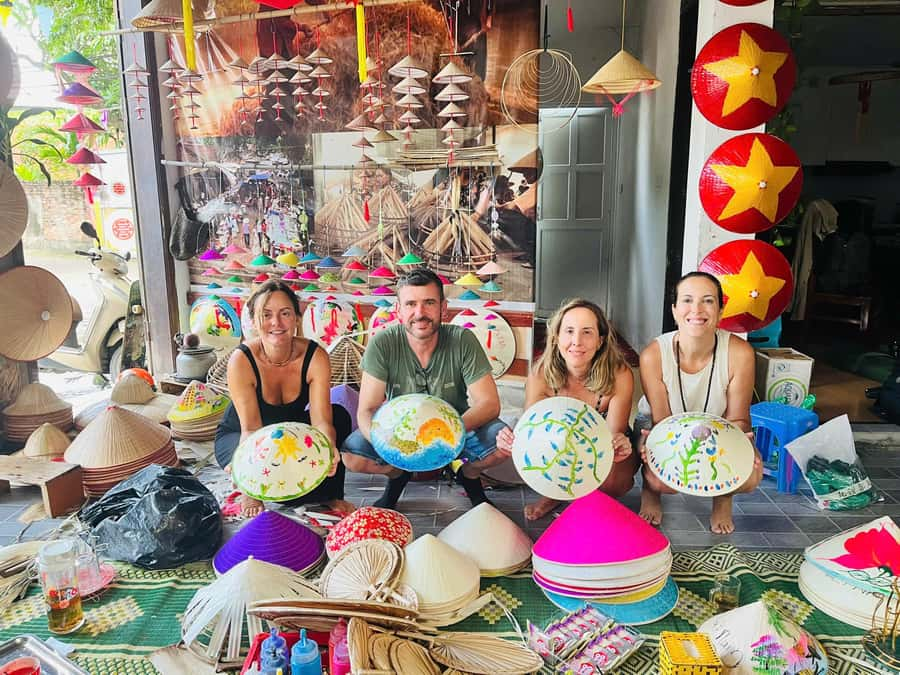
You can observe how the hats are made and then take part by decorating one yourself. Painting your own hat turns the souvenir into something you made during the trip. It is not a long technical apprenticeship, but it adds a useful personal touch and gives you something practical to take home.
The craft also helps you notice the structure of the hat. Its simple appearance hides careful assembly and repeated handwork. The village visit is best understood as a short introduction to the process, followed by a creative activity, rather than a full lesson in hat-making.
This stop should suit families, couples, and anyone who likes arts and crafts. It also works well if you want a souvenir that feels connected to the place you visited. A shop-bought hat is easy to find in Vietnam, but painting one during a village visit gives it a story.
The hat is included, along with the basic entrance costs. You do not need to arrange a separate purchase. Bring comfortable shoes, since the tour includes walking between village areas and workshops.
The full-day To He workshop
The full-day version adds a third craft village and a home-cooked lunch. The third visit is described as a lacquer art-making village, with the focus here on To He, traditional toy figurines made from rice-based dough.
To He has long been shaped into familiar subjects such as animals, fruits, and national heroes. The dough uses sticky rice powder, sugar, and food coloring. Artisans use simple tools, including combs, bamboo sticks, and beeswax, to shape and decorate the figures.
This is the most unusual activity on the longer tour. Incense and conical hats are products you may see in shops across Vietnam, but To He gives you a look at a small folk craft with a playful purpose. You can watch the artisan work and then create your own figurine using the available tools.
The activity is especially good for children and for adults who prefer doing something rather than standing at the edge of a demonstration. The tools are basic, which makes the process easier to understand. You see how a few simple materials can become a recognizable figure through hand shaping and decoration.
The full-day itinerary places lunch between the hat village and the final craft stop. The meal may be served at a local artisan’s home or a riverside restaurant. Since the exact setting can vary, think of it as a local meal break rather than a formal restaurant experience. Lunch is included in the full-day price, but other drinks and personal expenses are not.
Same trip, a completely different kind of day:
- Hanoi Jeep Tour: Food, Culture and Fun by Vietnam Army Jeep
★ 5.0 · 15,222 reviews - Hanoi: Water Puppet Show Tickets
★ 4.6 · 7,029 reviews - Hanoi Motorbike Tour: Food, Culture and Fun by Vintage Motorbike
★ 5.0 · 6,699 reviews - Hanoi: Guided Food Tour with Train Street Visit
★ 4.9 · 6,239 reviews
Half day or full day?
The half-day option lasts about six hours and visits the conical hat and incense villages. Morning departures run roughly from 7:45 a.m. to 1:30 p.m. Afternoon departures run about 11:45 a.m. to 5:30 p.m.
This is the better choice if you have limited time in Hanoi, want a lighter outing, or mainly care about incense and hats. You still receive the hat-painting activity, the incense production visit, transport, a guide, water, and entrance fees.
There is no lunch on the half-day trip. Eat before leaving, or bring snacks, particularly if you choose the afternoon departure. The timing may take up much of your day, even though it is called half-day, so do not assume you will have a full meal stop included.
The full-day option normally begins with pickup between 7:45 and 8:15 a.m. It adds the To He workshop and lunch, giving you three craft villages instead of two. I would choose this version if you want a fuller picture of local making traditions and do not mind spending most of the day outside central Hanoi.
The full-day trip also gives you more variety. The first village is about incense, the second about hats, and the third about small figurines. That change of subject keeps the day from feeling repetitive.
Transport, guides, and the Train Street finish
Pickup and drop-off are included for hotels in Hanoi’s Old Quarter. You travel by comfortable bus with an English-speaking guide. Several guide names connected with this experience include Danny, Louisa, and Jay. The guide can make a real difference here because the value comes from knowing what you are looking at and having the craft explained in clear terms.
The itinerary includes an optional finish at Hanoi Train Street. You can stop for coffee, look around, and spend time in the city after the village visits. Coffee and any purchases are at your own expense.
Pay attention to the return arrangement. You may be dropped at Train Street rather than taken back to your hotel, and you are responsible for arranging your own return from there by taxi or Grab. If you prefer a simple hotel drop-off, select that option when available instead of assuming the Train Street stop is automatically followed by transport back to your hotel.
A small practical warning: one person found the return point opposite the original pickup location. I would check the exact drop-off point with your guide before leaving the bus. That takes a minute and can save confusion later.
How the tour handles group size and pace
The group size is not fixed in the information provided. One outing had only two participants, which allowed plenty of personal attention, but you should not assume every departure will be that small.
The schedule mixes bus rides, walking, demonstrations, photography, and hands-on work. The distances between the villages are manageable by vehicle, with one transfer of about 15 minutes between the incense and hat villages on the full-day itinerary.
You will spend time standing and walking around working areas. Comfortable shoes are specifically recommended. The tour is not suitable for wheelchair users, and it is not recommended for pregnant women. Pets are not allowed.
This is a better fit for people who enjoy local crafts than for anyone looking for major monuments or a dramatic countryside tour. You will see village production and artisan work, but the focus remains on making things.
What the $16 price really gives you
The low price makes this one of the easier Hanoi excursions to justify. You are paying for transport out of the city, a guide, village access, water, and a conical hat that you can decorate and keep.
The full-day option gives you more value because lunch and the To He visit are added. You still need to budget for extra drinks, coffee at Train Street, souvenirs beyond the included hat, and your return from Train Street if you choose that ending.
The price does not mean every part will feel polished. Family workshops can be informal, and the incense village may not match the scale suggested by its most dramatic photographs. For me, that is an acceptable trade if your priority is seeing real production and trying the crafts yourself.
The strongest value comes from participation. A standard village drive-by would be much less useful. Here, you paint a hat and, on the full-day trip, shape a rice figurine. Those activities help you remember the visit long after the bus ride is over.
Who should book this Hanoi craft tour?

Book it if you want to leave Hanoi’s center and see how local goods are made. It is a good match for photographers, families, craft fans, and visitors who prefer small workshops to another museum.
Choose the half-day version if you want the essential stops without committing a full day. Choose the full-day version if To He sounds appealing, you want lunch included, and you would like three different craft traditions in one outing.
I would skip it if you want a large, dramatic incense field, a luxury food experience, or a fully independent village visit. The tour is structured, and some stops are working facilities rather than carefully designed attractions.
The positive side of that structure is clear: Danny, Louisa, or Jay can explain the process, handle the transport, and connect the separate stops. The combination of colorful incense, painted hats, and rice figurines gives you a lively look at local craft life for a modest price.
FAQ
How long is the half-day tour?
The half-day option lasts about six hours. Morning departures run from approximately 7:45 a.m. to 1:30 p.m., while afternoon departures run from about 11:45 a.m. to 5:30 p.m.
What villages are included in the half-day option?
You visit the conical hat-making village and Quang Phu Cau incense village. Train Street may be included as an optional finish, depending on the selected arrangement.
What is added on the full-day tour?
The full-day option visits three craft villages, adds a home-cooked lunch, and includes a To He figurine workshop. You also visit the incense and conical hat villages.
Is lunch included?
Lunch is included only with the full-day option. The half-day tour does not include lunch, so eat beforehand or bring snacks.
Is hotel pickup available?
Pickup and drop-off are included for hotels in Hanoi’s Old Quarter. If you choose the optional Train Street finish, you are responsible for your return to the hotel from there.
What should I bring, and who may not be suited to this tour?
Bring comfortable shoes. The tour is not suitable for pregnant women or wheelchair users, and pets are not allowed.
Just added around Hanoi
- Private Crowd Free Hanoi: Morning Highlights of the City Experience★ 4.5 · 124 reviews
- Hoa Lo Prison and Little Paris Tour in Hanoi (French Quarter)★ 5.0 · 20 reviews
- Hanoi’s Old Quarter Street Food Experience and Train Street★ 5.0 · 22 reviews
- Old Quarter Food Tour in Hanoi★ 5.0 · 104 reviews
- Retro Hop-on-hop-off Bonbon City Tour: Classic Package★ 4.0 · 32 reviews
- [Hi-end] Private Hanoi Street Food Tour With Real Foodie★ 5.0 · 154 reviews
- Hanoi Street Food Tour★ 5.0 · 27 reviews
- Hanoi Street Food Tour with egg coffee making★ 5.0 · 22 reviews
Craft Village Tours, compared.

Cai Be Mekong Delta Tour: Cooking Class, Cycling & Craft Villages
Read our review →
Incense Village, Hat Making & Lacquer Artisan Small Group Hanoi
Read our review →
Countryside Tour with Silk Village & Elephant Falls
Read our review →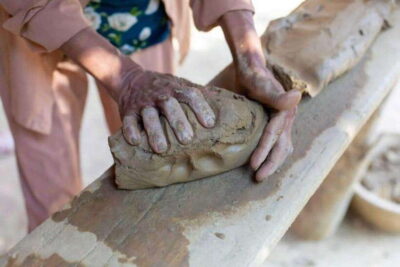

Incense Village Private Tour from Hanoi to Ninh Binh Old Capital
Read our review →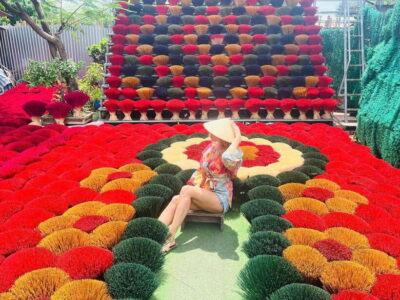
Incense + Hat Villages/ Temple of Literature, Hoa Lo Prison
Read our review →
Incense Village, Hat, Lacquer Tour & City Highlights
Read our review →Browse the lists this tour appears in