

Reviewed · CU CHI TUNNELS TOURS
Afternoon Cu Chi Tunnels – Small Group Half-Day Tour
The most striking part of this afternoon tour is the underground village at Ben Dinh, where kitchens, bedrooms, storage rooms, field hospitals, command posts, and weapons workshops were built beneath the forest floor. The tunnel network once stretched for more than 200 kilometers, turning Cu Chi into what was called an area of steel during the war in Vietnam.
I like the small group size, limited to 12 people, because it gives you a better chance to hear the guide and ask questions. I also like the tidy package: air-conditioned transport, entrance fee, bottled water, and an English-speaking guide are included for $25. The main drawback is the long road journey, plus a stop at a handicapped artists’ shop that can feel unnecessary, especially in the afternoon heat.
- Ben Dinh’s underground village: See how kitchens, sleeping rooms, hospitals, storage areas, and command centers worked below ground.
- Afternoon departure: Leave around 1 p.m. and spend about six and a half hours on the full outing.
- Small group of 2 to 12 people: A better setup than a large coach tour for tunnel explanations and questions.
- Short introductory film: Get basic context before walking through the remaining tunnel area.
- District 1 pickup option: Central hotel pickup and drop-off are available when selected, with possible extra charges outside District 1.
- Good value at $25: Transport, admission, guide, and bottled water are included, though tips and personal spending are not.
Why the Cu Chi Tunnels Still Matter
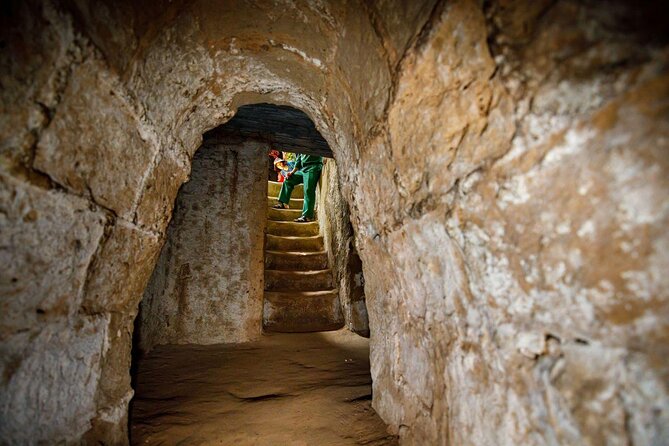
Cu Chi is about 37 miles, or roughly 60 kilometers, from Ho Chi Minh City. Some route information places the site at about 70 kilometers from the city center, so you should expect a substantial drive rather than a quick outing just beyond the city.
The distance is part of the point. Cu Chi was not simply a military site. It functioned as an underground settlement, built to support people through harsh wartime conditions. The tunnel network extended for about 135 miles, or 220 kilometers, and linked living spaces with military facilities.
That scale helps you understand why a half-day visit can feel worthwhile. You are not just looking at one narrow passage. You are seeing the remains of a system designed to support daily life below the surface, with places for cooking, sleeping, storing supplies, treating injuries, issuing commands, and making weapons.
I find the setting useful because it puts the war outside the city’s usual museums and memorials. The tunnels show how ordinary needs shaped military design. A kitchen had to work underground. A hospital had to function with little space. A concealed entrance had to protect the people using it.
The Afternoon Ride from Ho Chi Minh City

The tour departs around 1 p.m. and lasts approximately six hours and 30 minutes. That timing suits you if you want to keep the morning free for central Ho Chi Minh City, or if you prefer to avoid an early start.
You travel in an air-conditioned vehicle with an English-speaking guide. Pickup and drop-off are available at centrally located hotels in District 1 if you choose that option. The stated meeting point is 112 Đ. Trần Hưng Đạo in Phạm Ngũ Lão, District 1.
The afternoon schedule also has a practical advantage: you can combine it with a morning spent seeing the city’s central sights. The tradeoff is daylight and heat. Cu Chi can be hot, and the drive may feel tiring after lunch, particularly if traffic slows the return journey.
The return time is not fixed. Traffic conditions in Ho Chi Minh City can change quickly, so avoid booking a tight evening connection or an appointment soon after the estimated finish. The operator does not control delays caused by traffic.
More War History Tours in Cu Chi Tunnels:
- Cu Chi Tunnels Tour from HCM City – Morning or Afternoon
★ 5.0 · 15,833 reviews - HCM: Cu Chi Tunnels-Tapioca Small Group Tour Morning or Afternoon
★ 5.0 · 7,485 reviews - Cu Chi Tunnels and Mekong Delta Signature Tour
★ 5.0 · 7,328 reviews
A Small Group Makes the Explanation Better
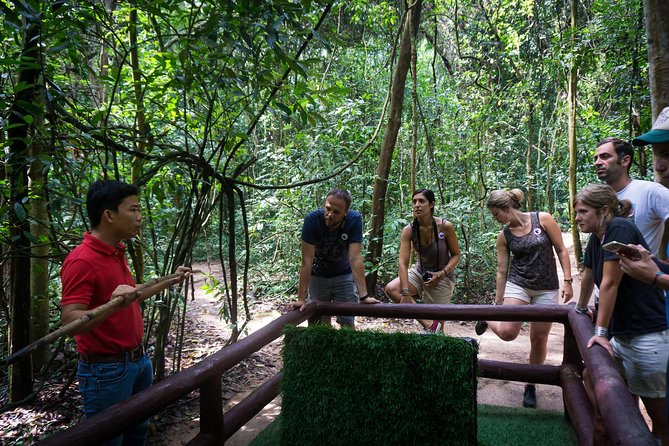
The group can range from two to 12 people. That is small enough for the guide to keep the group together and speak without competing with a large coach crowd.
For a place like Cu Chi, group size matters. The tunnels have many details that are easy to miss: hidden trap doors, defensive traps, underground rooms, and the way different facilities were arranged. With 12 people or fewer, you have a better chance of seeing what the guide points out and asking about details that interest you.
The tour requires an English-speaking guide, but no guide name is provided in the booking information. You should not expect to request a particular guide. The quality of the visit will depend partly on how clearly your guide explains the wartime setting and how well the group moves through the site.
The tour is recommended for most people who can participate in a standard walking visit. It is not available for people with disabilities or anyone with heart problems, and children must be accompanied by an adult.
The Ben Dinh Introduction and Film
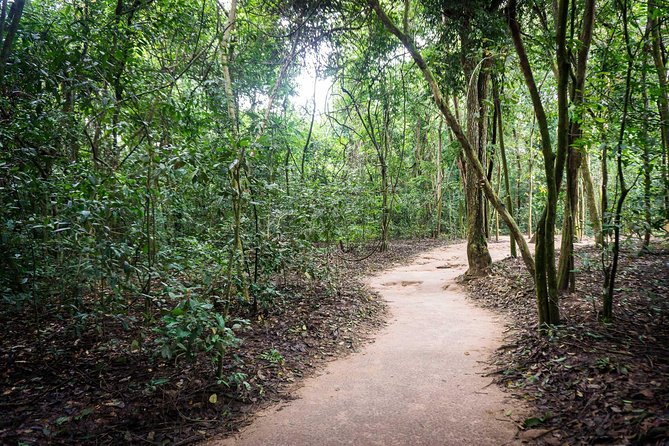
At Ben Dinh, the visit begins with a short introduction and an introductory video. This first step matters because the tunnels can seem confusing if you arrive without context.
The film explains how the tunnels were built and how people survived under severe conditions during the war. It gives you a basic picture of life underground before you start looking at the remaining structures.
Do not expect a long classroom lesson. The presentation is an orientation, not a full history course. I like that approach for a half-day tour because it gives you enough information to understand the site without using up the time needed to explore it.
The film also prepares you for the difference between what you see above ground and what once existed below it. Much of the original tunnel network is gone or altered, so the introduction helps you picture the larger underground system.
Kitchens, Bedrooms, and Underground Work Areas
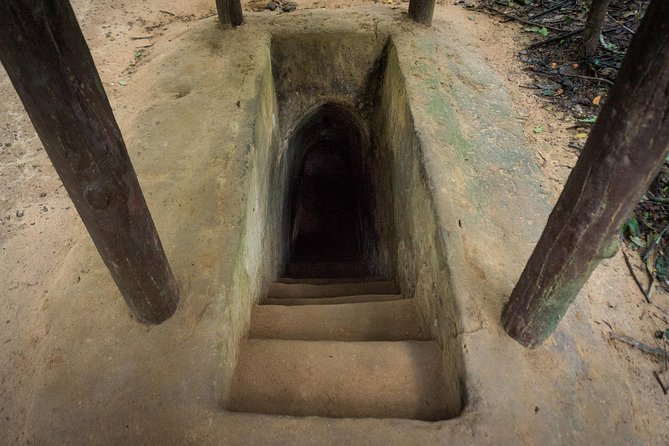
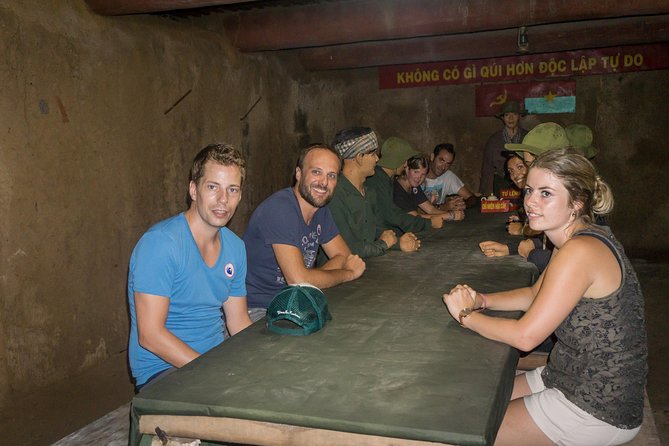
The most useful part of the visit is the chance to inspect the remaining tunnel area and the special living spaces. These included kitchens and bedrooms placed alongside practical military facilities.
You can learn how the underground settlement met basic needs in a very restricted space. Storage areas held supplies. Field hospitals treated the wounded. Command centers helped direct activity. Weapons factories supported the fighting effort.
That combination is what makes Cu Chi more than a narrow crawl through a tunnel. The site shows a complete working system, not just a hiding place. People needed food, medical care, communication, tools, and protection, and the tunnel network was designed around those needs.
The spaces are difficult to imagine as a long-term home. They were dark, confined, and built for survival rather than comfort. The tour does not turn that hardship into a romantic story. Instead, the underground rooms give you a physical sense of the pressure created by war.
Pay attention to how close the different functions were to one another. The compact arrangement tells you why secrecy, organization, and discipline mattered. A command area, a storage space, and a medical facility could all exist within a connected underground system.
More Half-Day Tours in Cu Chi Tunnels:
- Cu Chi Luxury Group Tour – Tapioca and Cake Half Day
★ 5.0 · 3,375 reviews - Cu Chi Tunnels Half-Day Tour: Vietnam War Underground Network
★ 5.0 · 2,587 reviews - Cu Chi Tunnels Half-Day Tour: Big Group Vietnam War Experience
★ 5.0 · 2,386 reviews - Small-Group Cu Chi Tunnel Half-day Tour: Morning or Afternoon
★ 5.0 · 1,521 reviews
Hidden Doors and Defensive Traps
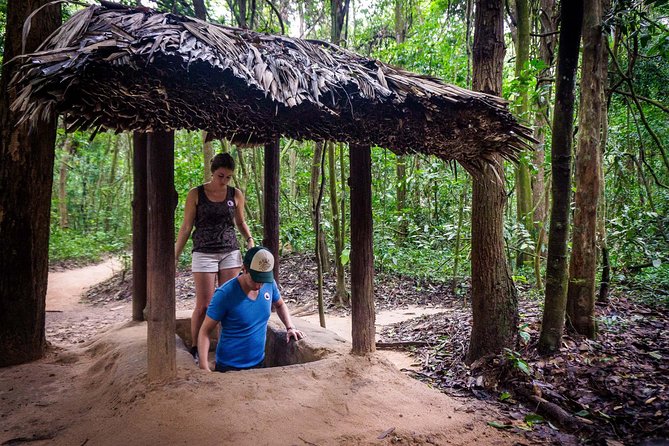
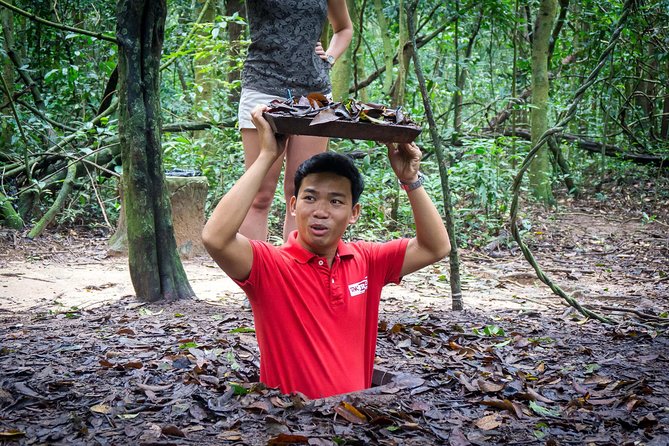
The tunnel area also includes concealed entrances and dangerous traps designed to protect the people below. These features show the defensive side of Cu Chi.
A hidden door could make an entrance difficult to spot. A trap could slow or injure someone entering the wrong place. The details are disturbing, but they help explain how the tunnel network worked as a defensive village rather than a simple shelter.
This is one part of the tour where you should listen closely. The scale of the site can make it hard to understand how people above ground could fail to see what was below them. The concealed doors and traps provide a practical answer: the system depended on camouflage, patience, and knowledge of the terrain.
The site is presented as an important wartime destination for both Vietnamese and international visitors. You will get more from it if you treat it as a place of conflict and survival, not as a theme park attraction. The historical subject is serious, and the physical displays are best understood in that light.
The Optional Feeling of the Art Shop Stop
A stop at a handicapped people’s art shop is part of the wider outing. This may give you a chance to see locally produced artwork, but it can also interrupt the main purpose of the trip.
The practical issue is heat. The art workers may be outside in sweltering conditions while the artwork is displayed in an air-conditioned room. That contrast can make the stop feel uncomfortable and unnecessary, particularly if you want to spend more time at Cu Chi itself.
You do not need to treat this stop as a major highlight. Consider it a short commercial or social visit included along the route. If you are interested in buying art, you may find it worthwhile. If not, use the pause to get water and prepare for the ride back.
What the $25 Price Really Covers
At $25 per person, this is a strong value if you want a guided visit rather than arranging transport and admission on your own. The price includes the air-conditioned vehicle, English-speaking guide, entrance fee, and bottled water.
It also includes pickup and drop-off from centrally located District 1 hotels if that option is selected. That can save you the trouble of finding the meeting point, though traffic rules may prevent a vehicle from stopping at some central hotels. In that case, you may need to contact the local supplier for instructions.
The price does not include travel insurance, tips, taxes, personal expenses, phone calls, snacks, or items not specifically listed. Pickup outside District 1 may bring an extra charge.
The value is strongest for solo visitors, couples, and small groups who want a simple half-day arrangement. You pay for a seat in a small vehicle, a guide, admission, and basic water, without having to plan the route yourself.
The price is less attractive if you want a slow, deeply academic historical tour or more time at the site. This is a practical introduction, not a private specialist visit.
Who Will Get the Most from This Tour
I would choose this tour if you have limited time in Ho Chi Minh City and want to see Cu Chi without giving up an entire day. The afternoon departure leaves the morning open and gives you a clear way to reach a site far outside the center.
It also suits you if you prefer a small group to a large bus. A maximum of 12 people is not the same as a private tour, but it is a reasonable middle ground between independence and cost.
Families can take part, provided children are accompanied by an adult. The child rate applies only when sharing with two paying adults. If two or more children are booked, an extra surcharge may apply.
I would think twice if you have heart problems, limited mobility, or need an accessible facility. The experience is not available for people with disabilities, and the underground setting may not be comfortable for everyone.
You should also allow plenty of time around the tour. The stated duration is about six hours and 30 minutes, but traffic can affect the return. Do not schedule a flight, long-distance bus, or fixed evening booking immediately afterward.
Booking Timing and Cancellation Flexibility
The tour is commonly booked about 18 days in advance. That does not guarantee that you need to reserve it that early, but it suggests that planning ahead is sensible during busy periods.
Confirmation is provided at the time of booking, and a mobile ticket is offered. The tour requires good weather and a minimum number of participants. If poor weather or insufficient bookings cancel the outing, you can choose another date or experience, or receive a full refund.
You can cancel for a full refund if you do so at least 24 hours before the local start time. Cancellations or changes inside that period are not accepted for a refund.
That policy is fairly workable, but pay attention to the local cutoff time. Do not assume that a late-night cancellation the day before will qualify.
Should You Book the Afternoon Cu Chi Tour?
Book it if you want a reasonably priced, organized introduction to the Cu Chi Tunnels with transport from Ho Chi Minh City, an English-speaking guide, and a group no larger than 12. The underground rooms, hidden doors, traps, and wartime facilities give the visit real substance.
The main compromises are the long drive, uncertain return time, afternoon heat, and the art shop stop. You also need to be comfortable with a site that is not suitable for people with disabilities or heart problems.
For most able-bodied visitors with one free afternoon, I think the value is clear. You get the essential Cu Chi experience without paying for a private vehicle. Just leave your evening open, bring practical clothes and water, and approach the tunnels as a serious place of wartime survival rather than a quick photo stop.
FAQ
How long does the Cu Chi Tunnels tour last?
The full experience lasts approximately six hours and 30 minutes, including travel between Ho Chi Minh City and the Cu Chi site.
What time does the tour depart?
The tour departs in the afternoon at about 1 p.m.
Which Cu Chi site does the tour visit?
The itinerary specifies the Ben Dinh Tunnels.
Is transportation included?
Yes. An air-conditioned vehicle is included. Pickup and drop-off at centrally located hotels in District 1 are available when that option is selected.
Is the entrance fee included?
Yes. The admission fee for the Cu Chi Tunnels is included.
How large is the group?
The small group can include between two and 12 people. The maximum is 12 travelers.
Is the tour suitable for children?
Children must be accompanied by an adult. The child rate applies only when a child shares with two paying adults. A surcharge may apply when booking two or more children.
Can I cancel for a refund?
Yes. You can receive a full refund if you cancel at least 24 hours before the local start time. Cancellations or changes made less than 24 hours before departure are not accepted for a refund.
Just added around Cu Chi Tunnels
- Cu Chi Tunnels Luxury Speed Boat Half Day Tour★ 4.7 · 80 reviews
- Cu Chi Tunnels – Tapioca & City Tour (6 Major Attractions) 1 day★ 5.0 · 285 reviews
- Crawl and Paddle Full day Cu Chi Tunnels and MeKong Delta★ 5.0 · 295 reviews
- Cu Chi Tunnels and Mekong Delta 1 Day Full Day tour★ 5.0 · 301 reviews
- 6 Hours Historical Tour in Cu Chi Tunnel with Free Snack★ 5.0 · 312 reviews
- Cu Chi Tunnels – Half Day Luxury Tours★ 4.5 · 368 reviews
- Daily Small Group Tour to Saigon City and Cu Chi Tunnels★ 5.0 · 412 reviews
- Half-Day Cu Chi Tunnels Guided Exclusive Experience with Pick Up★ 5.0 · 439 reviews
Cu Chi Tunnels Tours, compared.
Cu Chi Tunnels Tour from HCM City – Morning or Afternoon
Read our review →
Cu Chi Tunnels and Mekong Delta Signature Tour
Read our review →
Cu Chi Tunnels Half-Day History Tour with Guide
Read our review →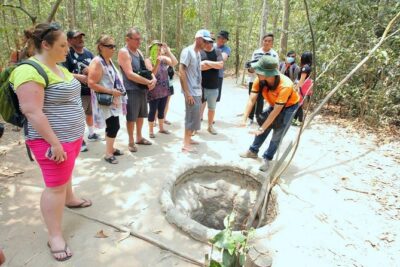
Cu Chi Luxury Group Tour – Tapioca and Cake Half Day
Read our review →
Adventure Cu Chi Tunnels: Vietnam War Underground Network AM/PM
Read our review →
Premium Cu Chi Tunnels Tour with Local Expert by SpeedBoat
Read our review →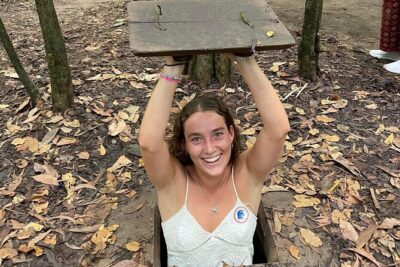
Cu Chi Ben Duoc Tunnels Tour (max 12 people) with Private Option
Read our review →
Private Cu Chi Tunnels Tour By Car | Saigon Adventure
Read our review →Browse the lists this tour appears in