
Reviewed · CU CHI TUNNELS TOURS
Cu Chi Luxury Group Tour – Tapioca and Cake Half Day
The most striking part of this tour is the moment you lower yourself into a tiny tunnel entrance and realize that an entire wartime world once operated below your feet. The Cu Chi network included kitchens, hospitals, weapons rooms, command posts, storage spaces, ventilation shafts, and living quarters spread across three underground levels. You do not just look at a war site here. You test its cramped scale with your own body.
I like the combination of hands-on details and strong guides. Bao, Long, Hien, Tim, Thuy, and Bo are among the guides praised for clear explanations, humor, and personal insight. I also like the simple tapioca and hot tea, a food link to wartime life rather than a standard tourist snack. The main drawback is heat and crowding, with long waits at some tunnel entrances and uneven English from guide to guide.
Key points to know before booking
- The tunnels are a physical experience: You can try a small hiding entrance and crawl through a visitor section of the underground network.
- Guiding makes the difference: Guides such as Hien, Bao, Long, Bo, and Tim have been especially praised for detailed storytelling and helpful care.
- The tour includes wartime food: Tapioca, Vietnamese hot tea, wheat cake, bottled water, and wet tissues are provided.
- Expect a long half day: The schedule is described as roughly six to seven hours, including the road journey from Ho Chi Minh City.
- Crowds and heat are real factors: Some areas involve standing outside in the sun while groups take turns at exhibits and tunnel openings.
- The price is unusually low: At $21.99 per person, the tour covers transport, guide, admission, refreshments, and travel insurance.
Why the Cu Chi Tunnels are worth your time
The Cu Chi Tunnels are more than a series of narrow passageways. They show how a guerrilla force built a working underground system during the wars against France in the 1940s and the American War in the 1960s. Fighters lived and worked below ground from 1961 to 1972, using hidden entrances, trapdoors, kitchens, hospitals, storage rooms, weapons facilities, and command posts.
The visit also gives you a physical sense of the problem faced by anyone moving through the tunnels. A small entrance hidden beneath leaves can be hard to spot even when you know where it is. Once inside, the low ceiling and tight turns make the idea of spending hours underground feel very different from reading about it.
I find this is the tour’s greatest strength. It turns a large and painful part of Vietnamese history into something you can see at close range. At the same time, the site includes displays about weapons and traps, and a shooting range with extra charges. That mix can feel uncomfortable, especially if you are approaching the tunnels as a place of remembrance rather than as an adventure attraction.
More War History Tours in Cu Chi Tunnels:
- Cu Chi Tunnels Tour from HCM City – Morning or Afternoon
★ 5.0 · 15,833 reviews - HCM: Cu Chi Tunnels-Tapioca Small Group Tour Morning or Afternoon
★ 5.0 · 7,485 reviews - Cu Chi Tunnels and Mekong Delta Signature Tour
★ 5.0 · 7,328 reviews
The ride from Ho Chi Minh City
Pickup is offered from hotels in Districts 1, 3, and 4. You can also meet the group at the Kim Travel office at 17 Thu Khoa Huan Street in District 1. The vehicle is an air-conditioned minivan, a welcome feature in southern Vietnam’s heat.
The exact day can run longer than a simple half day. The published timing is about seven hours, while the tunnel visit itself is listed as six hours. Allow enough room in your schedule for the road journey, stops, and the return to central Ho Chi Minh City. One practical note: the inclusions mention drop-off in District 1, while the meeting details say the activity ends back at the meeting point. Confirm the final drop-off arrangement if you need to catch a flight or another timed activity.
The guide usually sets the tone before you arrive. Guides such as Jackie and Tim have been praised for explaining the day ahead during the drive. That early introduction helps you understand what you are looking at once you reach the site, rather than simply following a group from one display to the next.
Some departures include a stop at a lacquer-art workshop where people affected by Agent Orange make paintings and other crafts. This can be an interesting addition, and there is no stated pressure to buy. Still, it adds time to an already warm and fairly long outing, so ask your guide about the day’s exact route if you would rather spend more time at the tunnels.
Watching the film and entering the forest
At the Cu Chi site, you watch a 3D film or documentary about the tunnel system and the largest American ground operation associated with the Vietnam War. The film gives you basic military context before you walk through the forest.
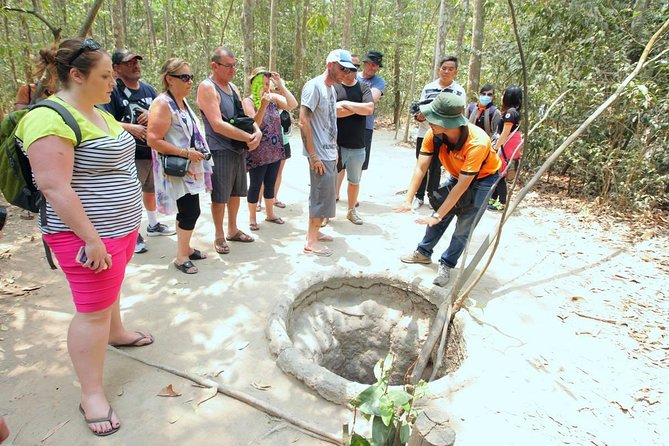
The forest setting matters. The tunnels were not presented as an isolated underground bunker in the middle of a city. They were part of a rural area where villagers worked rice fields, some of which sat above the tunnel network. You can also see overgrown bomb craters left by aerial bombing campaigns.
These craters are easy to overlook, but they help explain the scale of the conflict. The tunnel system existed beneath ordinary fields and woodland, close to local homes and farms. The contrast between peaceful-looking ground and the war machinery beneath it is one of the most effective parts of the visit.
Your guide should point out how the system worked, including ventilation and hidden movement routes. This is where a strong English-speaking guide matters. Hien, Bao, Long, Bo, and Tim have all been singled out for explaining the site with detail and energy. Other departures may be less satisfying if the guide speaks limited English or gives only brief comments, so the quality can vary.
The tiny entrances and hidden movement routes
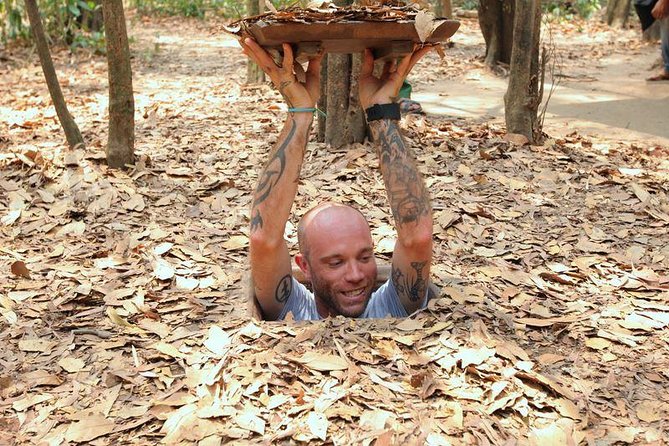
One of the first physical demonstrations is a small hiding entrance. You can try to locate or enter it and see how local fighters used concealed openings to move through the area. The entrance is designed to show how easily a person could disappear beneath leaves and a trapdoor.
This is a good place to slow down. Do not treat it only as a photo stop. Look at how the opening blends into the forest floor, then consider the skill needed to remember routes, keep entrances hidden, and move people and supplies without drawing attention.
The displays also cover traps and defensive methods. They are difficult to view without thinking about the human cost on every side. The most worthwhile guides explain the military logic while keeping sight of the ordinary people who lived, hid, worked, and suffered in the tunnels.
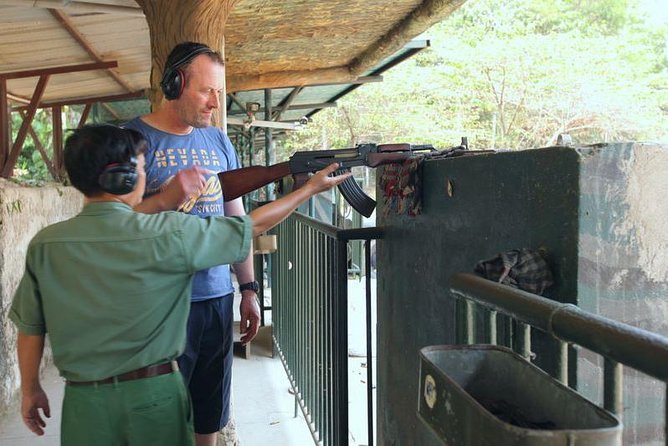
The site is not a quiet memorial in every section. The shooting range operates separately and costs extra. Several people enjoy trying weapons such as an M16, while others find the gunfire jarring beside a place connected to so much loss. You can treat this as optional and decide for yourself.
More Half-Day Tours in Cu Chi Tunnels:
- Cu Chi Tunnels Half-Day Tour: Vietnam War Underground Network
★ 5.0 · 2,587 reviews - Cu Chi Tunnels Half-Day Tour: Big Group Vietnam War Experience
★ 5.0 · 2,386 reviews - Small-Group Cu Chi Tunnel Half-day Tour: Morning or Afternoon
★ 5.0 · 1,521 reviews - Private Cu Chi Tunnels Half Day Adventure Tour
★ 5.0 · 800 reviews
Crawling through a widened tunnel
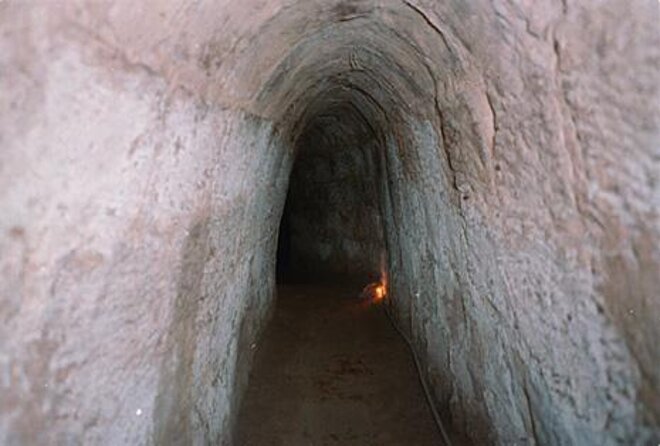
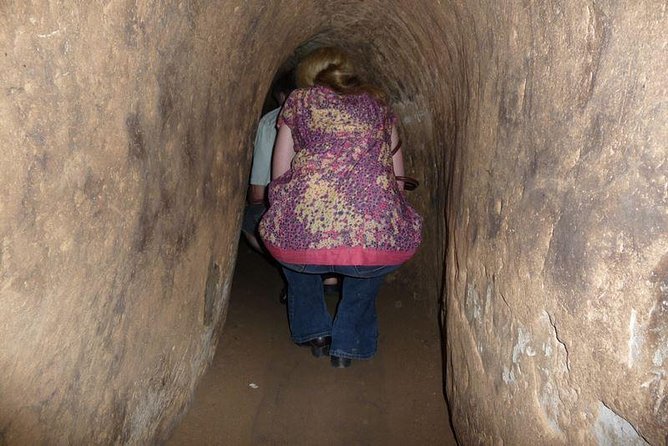
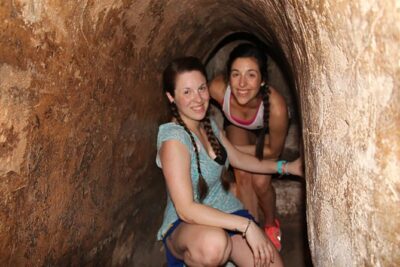
The main physical challenge is entering a tunnel section. The passage open to the public has been widened for visitors, but it remains tight enough to show how restrictive the original tunnels were. You may need to crouch or crawl, and the tour information recommends a strong level of physical fitness.
This is not a comfortable walk through a museum corridor. The tunnel is dark, cramped, and confined. If you dislike tight spaces, have limited mobility, or are unsure about crawling, you should think carefully before booking. You do not need to force yourself into the tunnel to understand the site, but the experience is central to this particular tour.
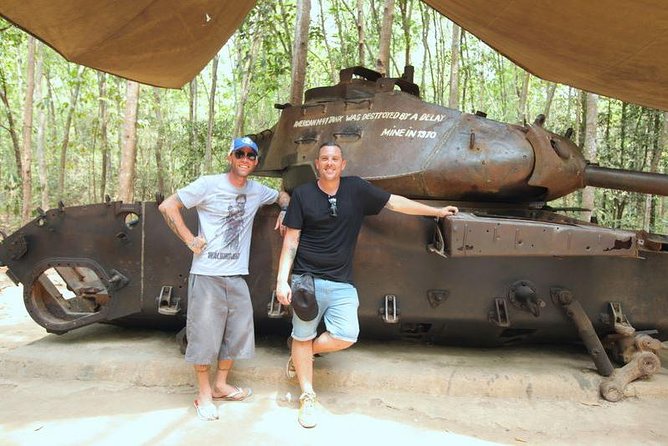
The route also includes views of trapdoors, storage areas, kitchens, field hospitals, command centers, factories, and weapons facilities. Some parts are reconstructed or adapted for public access, so you should not assume every passage looks exactly as it did during wartime. Even so, the layout makes the engineering and organization easier to grasp.
I like that the visit asks you to use more than your eyes. You hear the forest and, at times, the shooting range. You feel the low ceiling and uneven movement. That physical element is why this outing can stay with you longer than a standard display of photographs.
Tapioca, hot tea, and wartime food
The included food is simple: tapioca, Vietnamese hot tea, and wheat cake. Tapioca, often described as cassava, was an important food at the tunnels during wartime. It is not a polished restaurant meal, and that is the point. The snack connects the visit to the basic food people relied on while living under difficult conditions.
Bottled water and wet tissues are also included. The tissues are useful after the tunnel section, particularly if you have been crawling or handling dusty surfaces. Carrying extra water is still sensible, since the site involves outdoor walking and standing in the heat, although the tour includes a bottle.
There has been some inconsistency with the refreshments. One departure did not provide the tapioca, tea, or cake as expected. If this part matters to you, check with the guide before leaving the site rather than assuming it will appear at the end.
Group size, guide quality, and the pace of the visit
The maximum group size is listed as 25 people, but some bookings use smaller groups of nine or twelve. A small group is worth considering if you want to ask questions, hear the guide clearly, and spend less time waiting for others to move through the entrances.
A larger group can still work well when the guide is strong. Guides praised for their presentation include Hien, Long, Bao, Bo, Tim, Thuy, Simon, Lam, Lee, Xam, Phee, Niem, and Jackie. Their strengths include explaining how people lived underground, answering questions, adding personal family insight, and keeping the group together in a busy site.
The gap between an excellent departure and a poor one appears to come mainly from the guide. Some guides offer detailed context and thoughtful comparisons, while others provide little information or limited English. One poor experience also included complaints about rushed pacing and unsafe driving. The tour provider’s overall rating is high, at 4.9 from 3,375 ratings, with 99 percent recommending it, but those individual differences are worth keeping in mind.
Crowds are another issue. The tunnel site can draw several groups at once, creating waits at exhibits and entrances. You may spend periods standing in direct sun. An early or afternoon departure can be quieter according to the practical feedback available, but no departure guarantees an empty site.
What the $21.99 price really covers
At $21.99 per person, this is a strong-value day out if you want the basic Cu Chi experience without paying for a private vehicle. The price includes pickup from selected central districts, an air-conditioned minivan, an English-speaking guide, entrance fees, tapioca, tea, wheat cake, bottled water, wet tissues, and travel insurance.
The value comes from bundling the long transfer with admission and guiding. Booking transport alone can leave you arranging the route and entry separately. Here, the guide also provides the historical explanation that helps connect the tunnel entrances, bomb craters, forest, and underground rooms.
The low price means you should not expect a private schedule. You may wait for other people, follow a shared route, and make a craft stop depending on the day. A private upgrade is available through Kim Travel, and a family of three found the private vehicle useful because it allowed more control and less waiting. That option costs more, but it may suit families or anyone with a tight schedule.
Free cancellation is available if you cancel at least 24 hours before the start time. Changes or cancellations inside that window are not accepted for a refund. The tour also requires a minimum number of participants, so a cancellation by the operator can result in another date, another experience, or a full refund.
Who should book this Cu Chi tour?
I would choose this tour if you want a well-priced introduction to the tunnels, prefer a shared vehicle, and are happy with a full half day outside central Ho Chi Minh City. It suits history-minded visitors, families with older children who can manage the physical demands, and anyone who wants more than a quick photo at a famous site.
You should think twice if you dislike confined spaces, need a relaxed pace, or have a fixed airport departure soon after the return. The road journey, outdoor heat, crowds, and possible craft stop can make the day longer than expected.
If you book, ask about the group size and the day’s planned stops. A smaller group of up to nine or twelve can make a real difference. Also tell the guide early if you do not want to use the shooting range, and confirm the return point if your afternoon schedule is tight.
My final take on the booking decision
Yes, I would book this tour for the price and the chance to enter the tunnels, especially if you can secure a small group and a guide such as Bao, Hien, Long, Bo, or Tim. Their style of clear, thoughtful storytelling can turn a hot outing into a meaningful lesson about war, survival, and the people who built an underground life.
I would not book it expecting a quiet museum visit or a perfectly uniform service. You may face crowds, heat, a sales-oriented craft stop, or a guide who gives less detail than hoped. Still, the combination of the hidden entrance, tunnel crawl, bomb craters, wartime food, and forest setting gives you a direct way to understand why Cu Chi remains one of the most powerful day trips from Ho Chi Minh City.
FAQ
How long does the Cu Chi Tunnels tour take?
The experience lasts approximately seven hours, while the tunnel visit is listed as six hours. The total time includes transportation between Ho Chi Minh City and the site.
What is included in the price?
The price includes selected hotel pickup, an air-conditioned minivan, an English-speaking guide, entrance fees, travel insurance, tapioca, Vietnamese hot tea, wheat cake, wet tissues, and bottled water.
Where can pickup take place?
Pickup is offered from hotels in Districts 1, 3, and 4. You can also meet the group at Kim Travel at 17 Thu Khoa Huan Street in District 1.
Where does the tour finish?
The inclusion details state drop-off in District 1. The meeting information says the activity ends back at the meeting point, so confirm the exact return location when booking.
Do I need to be physically fit?
Yes. The tour recommends a strong level of physical fitness because you may enter a small hiding entrance and crawl through a narrow tunnel section.
Is the shooting range included?
No. The shooting range costs extra and is optional.
Is food included?
Yes. Tapioca, Vietnamese hot tea, and wheat cake are listed as included, along with bottled water and wet tissues.
What is the cancellation policy?
You can cancel at least 24 hours before the start time for a full refund. Cancellations or changes made less than 24 hours before the start time are not accepted for a refund.
Just added around Cu Chi Tunnels
- Cu Chi Tunnels Luxury Speed Boat Half Day Tour★ 4.7 · 80 reviews
- Cu Chi Tunnels – Tapioca & City Tour (6 Major Attractions) 1 day★ 5.0 · 285 reviews
- Cu Chi Tunnels and Mekong Delta 1 Day Full Day tour★ 5.0 · 301 reviews
- Crawl and Paddle Full day Cu Chi Tunnels and MeKong Delta★ 5.0 · 295 reviews
- 6 Hours Historical Tour in Cu Chi Tunnel with Free Snack★ 5.0 · 312 reviews
- Cu Chi Tunnels – Half Day Luxury Tours★ 4.5 · 368 reviews
- Daily Small Group Tour to Saigon City and Cu Chi Tunnels★ 5.0 · 412 reviews
- Half-Day Cu Chi Tunnels Guided Exclusive Experience with Pick Up★ 5.0 · 439 reviews
Cu Chi Tunnels Tours, compared.
Cu Chi Tunnels Tour from HCM City – Morning or Afternoon
Read our review →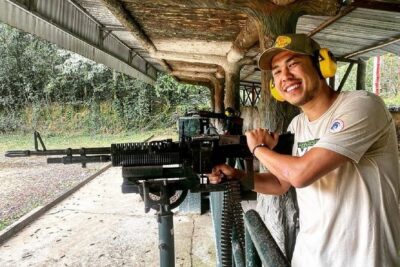
Cu Chi Tunnels and Mekong Delta Signature Tour
Read our review →
Cu Chi Tunnels Half-Day History Tour with Guide
Read our review →
Adventure Cu Chi Tunnels: Vietnam War Underground Network AM/PM
Read our review →
Premium Cu Chi Tunnels Tour with Local Expert by SpeedBoat
Read our review →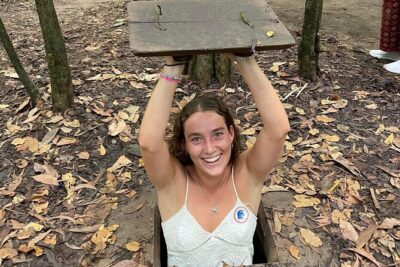
Cu Chi Ben Duoc Tunnels Tour (max 12 people) with Private Option
Read our review →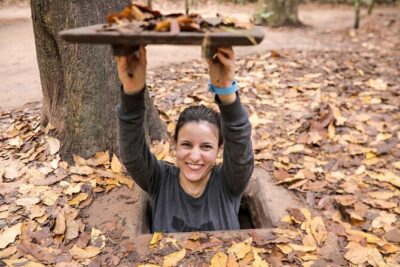
Small-Group Cu Chi Tunnel Half-day Tour: Morning or Afternoon
Read our review →
Private Cu Chi Tunnels Tour By Car | Saigon Adventure
Read our review →Browse the lists this tour appears in