
Reviewed · MOTORBIKE TOURS
Hanoi Motorbike Led By Women: Hanoi Countryside Motorbike Tours
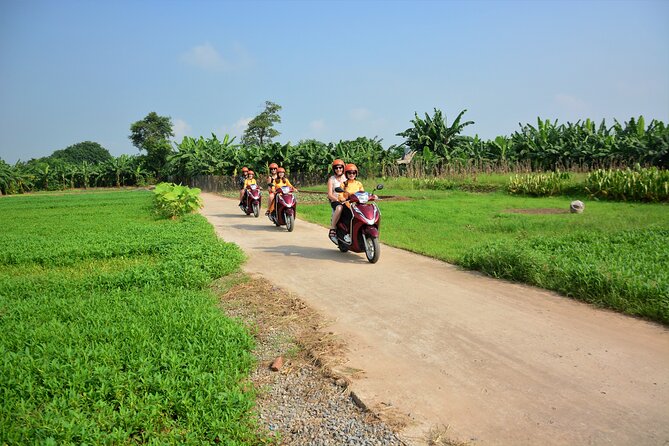
Co Loa Citadel is the star here, but the best part is the ride to get there. You leave Hanoi by motorbike, cross Long Bien Bridge, pass rice paddies and vegetable farms, and reach villages where daily life still moves at a slower pace. You ride pillion, so you get the thrill without having to handle Hanoi traffic yourself.
I like the female-led format and the close contact with local life. A visit to a 200-year-old home, tea with a family, a bonsai garden, and a look at traditional broom making offer more than a quick countryside photo stop. I also like the mix of history, food, and scenery in one half-day trip.
The main consideration is the road time. Hanoi traffic can feel intense, especially at the beginning, and a motorbike seat for four and a half hours may not suit everyone. The drivers are there to handle the traffic, but you should still be comfortable riding pillion.
Key points to know before booking
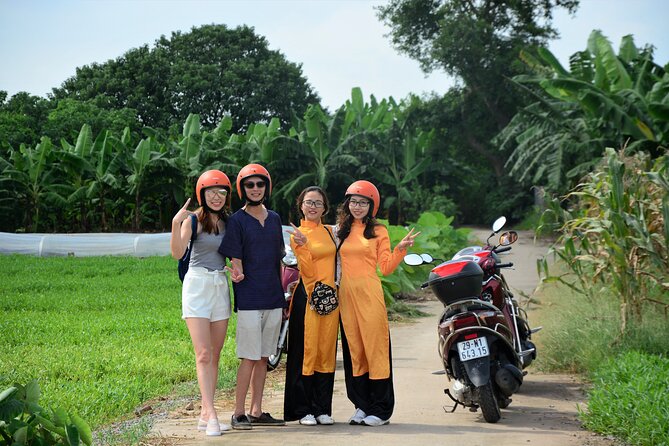
- Ride across Long Bien Bridge and into rural Red River communities, with no need to drive yourself.
- Visit Co Loa Citadel, a site linked to the defense of Vietnam as far back as 300 BC.
- Meet a local family in a 200-year-old house, share tea and candy, and see privately owned bonsai gardens.
- Stop in Hoi Phu village to learn about traditional broomstick making.
- Finish with Vietnamese food and local egg coffee at a restaurant in town.
- Choose a morning or afternoon departure, with groups limited to 15 people and pickup offered.
Why this motorbike tour gets beyond central Hanoi
Hanoi is easy to enjoy on foot, but its crowded streets can also keep you inside the city center. This excursion gives you a look at the fields, villages, temples, and working farms just outside town, all in a single afternoon or morning.
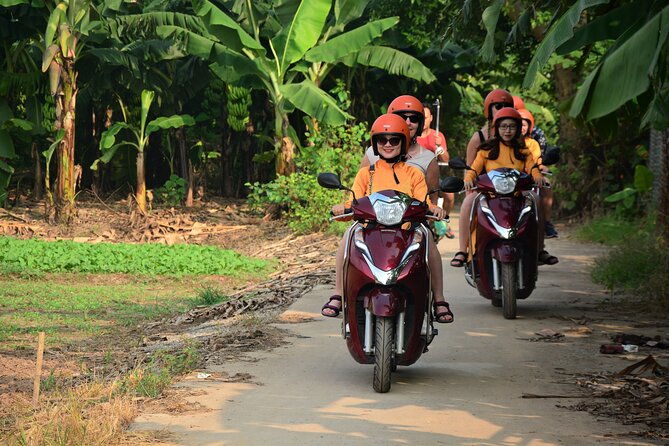
The motorbike is a smart choice for this route. A car would be more enclosed and slower on smaller roads. Riding behind a local driver lets you see the countryside at street level, with open views of rice paddies, banana plants, vegetable plots, and people working their farms.
You are not expected to rent or operate a motorbike. A driver takes care of navigation and traffic, while your guide explains what you are seeing. That matters in Hanoi, where crossing a road can require more nerve than skill.
The experience costs $59 per person and lasts about four and a half hours. That is a fair price if you want transport, drivers, a guide, several village visits, the citadel, and a meal bundled into one outing. It is less appealing if you only want a quick ride outside the city or prefer to spend a full day at one historic site.
The group can include up to 15 people. That is small enough for a personal feel, though not necessarily a private tour. The women-led team is a central part of the experience, and guides named in visitor feedback include Hoa, Mia, Sumi, and Emma. Drivers such as Linh and Money were also singled out for their calm handling of Hanoi traffic.
More Motorbike Tours in Hanoi
- Hanoi Motorbike Tour: Food, Culture and Fun by Vintage Motorbike
★ 5.0 · 6,699 reviews - Hanoi Motorbike Tours Led By Women: Hanoi By Night Foodie Motorbike Tours
★ 5.0 · 1,734 reviews - Hanoi Motorbike Tours Led By Women: Hanoi City Insight Motorbike Tours
★ 5.0 · 816 reviews
Crossing Long Bien Bridge and leaving the city behind
The ride begins at the Hanoi Opera House on Trang Tien Street. Pickup is offered, so check the arrangements when you book if you would rather not make your own way to the start.
Long Bien Bridge gives you an immediate sense of Hanoi’s geography. Once you cross the Red River, the city begins to thin out. The route continues toward an old village with an agricultural setting that feels far removed from the busy streets around Hoan Kiem Lake.
This first section takes about 45 minutes. It is not just a transfer. You begin to see how important farming remains in northern Vietnam, with fields and gardens close to the capital. The contrast is useful: Hanoi’s dense center and the countryside are not separate worlds, but two sides of the same region.
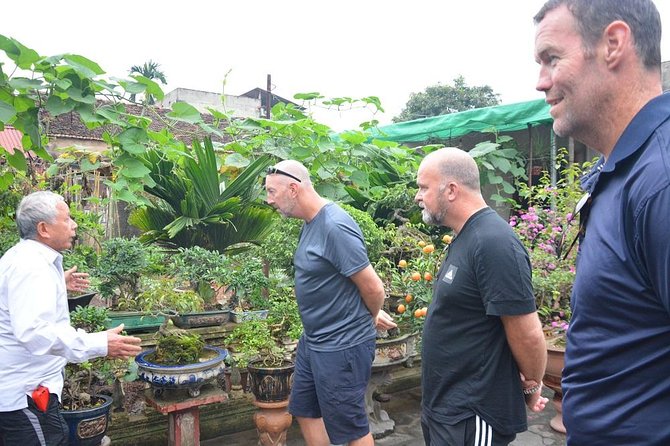
You will also stop at a bonsai garden. This is a chance to see the careful shaping of trees and plants, an art that requires patience and years of attention. The stop is short, but it adds a personal and domestic side to the trip. These are privately owned gardens, not a formal public attraction.
Tea, candy, and a 200-year-old Vietnamese home
One of the most personal parts of the outing is the visit to a local family living in a traditional house said to be around 200 years old. The guide helps translate as you speak with the residents over tea and traditional candy.
I value this sort of stop because it gives context to the buildings and gardens you pass from the road. You can ask about daily life rather than simply taking pictures and moving on. The family’s bonsai collection is also connected with a war veteran, adding another layer to the visit.
The exchange is informal, but you should remember that you are entering someone’s home. Be polite, ask before taking close photographs, and let the guide manage the conversation. The visit lasts about 30 minutes when combined with the temple, pagoda, traditional house, and bonsai garden stop.
The focus here is not luxury or polished staging. You are seeing a family setting, with its own routines and traditions. That makes the visit more revealing than a standard museum display, but it also means the experience may depend on the pace of the conversation and the family’s availability that day.
Co Loa Citadel and the Red River countryside

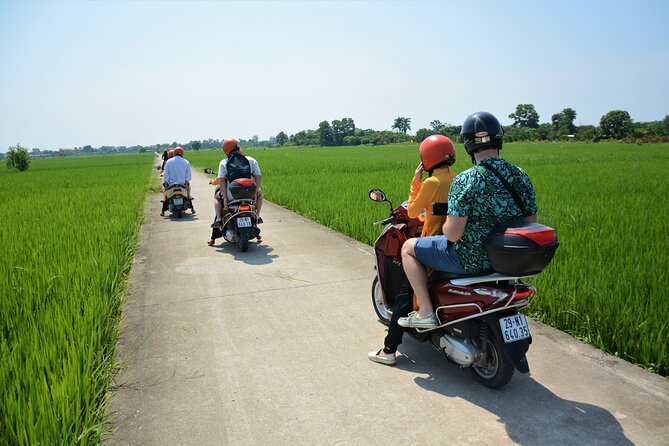
The longest part of the tour is the journey through Red River Island, an area of banana plants, vegetable farms, and rice fields. The motorbikes leave the main roads and use a dirt track toward Co Loa Citadel.
This is where the tour earns its countryside label. You are not simply looking at green fields from a highway. You stop for photographs, watch local people working their farms, and pass through quieter rural areas where agriculture remains part of everyday life.
Co Loa is linked to the third century BC, or around 300 BC, and to legends about the founding and defense of the country against foreign invaders. The citadel is not presented as a grand stone fortress in the European sense. Its importance comes from the ancient settlement, the temples, the surrounding earthworks, and the stories tied to the site.
Plan on about two hours for this portion. That gives you time for explanations, photographs, and the short ride between rural stops. If you enjoy history, this is the section that gives the outing more weight. If you mainly want scenery, the fields and village roads are just as important as the archaeological site.
The site also offers a useful break from the city. You can hear about early Vietnamese history while looking out over farmland rather than standing in a crowded urban museum. The setting helps explain why the location mattered: it was connected to agriculture, waterways, and defense.
Do not expect a full archaeological expedition. The supplied information does not promise extensive excavated ruins or a long museum visit. Think of Co Loa as a historic rural complex with temples, stories, and open surroundings.
Same trip, a completely different kind of day:
- Hanoi Jeep Tour: Food, Culture and Fun by Vietnam Army Jeep
★ 5.0 · 15,222 reviews - Hanoi: Water Puppet Show Tickets
★ 4.6 · 7,029 reviews - Hanoi: Guided Food Tour with Train Street Visit
★ 4.9 · 6,239 reviews - Hanoi Cooking Class: Culture, Local Market & Meaning CSR Impact
★ 5.0 · 5,147 reviews
Hoi Phu and the craft of broom making
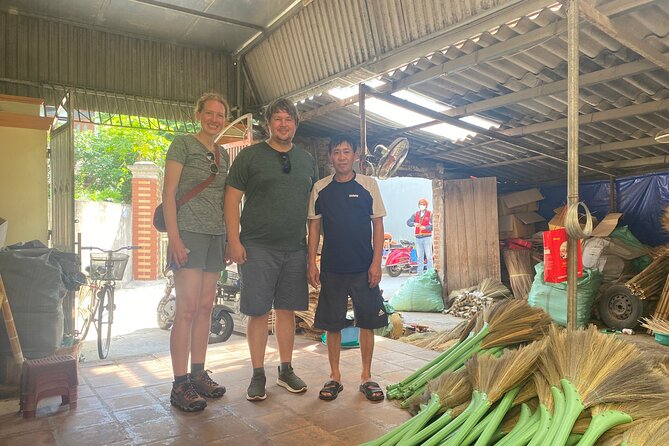
Hoi Phu village adds a brief but worthwhile craft stop. The village is known for traditional broomstick making, a practical trade associated with the Red River Delta.
The visit lasts about 15 minutes, so this is an introduction rather than a workshop. You may see how a basic household object connects to local work and village identity. It is a good reminder that rural culture is not only old houses and temples. It also includes the small trades that support daily life.
Because the stop is short, do not book this tour expecting a detailed hands-on craft class. Its value is in the variety. Within one half-day, you move from farming to bonsai cultivation, historic buildings, ancient defenses, and household production.
Food, egg coffee, and the ride back
After the countryside portion, you go to a local restaurant in town for an authentic Vietnamese meal. The information does not specify a fixed menu, so do not assume a particular dish. The meal is intended to close the tour with local food rather than a snack from a chain restaurant.
You also try Vietnamese egg coffee. This Hanoi specialty usually combines strong coffee with a sweet, creamy egg topping. If you like coffee and desserts, it is one of the more distinctive tastes to try in the capital. If you prefer unsweetened coffee, it may be too rich, but the stop gives you a chance to try something closely associated with Hanoi.
The meal and coffee portion takes around 45 minutes. It is a useful pause after the ride and a chance to ask the guide about anything you saw in the countryside.
The tour information says transportation back to your hotel will be arranged after the meal, while the stated end point is the original meeting point at the Hanoi Opera House. Since those details do not perfectly match, confirm your drop-off plan when booking. Pickup is offered, but the exact hotel service may depend on your location.
What the female-led format adds
This is not simply a motorbike trip with a female driver attached to the title. The guides and drivers are part of the appeal. They handle the demanding traffic, explain local customs, translate during the family visit, and connect the historic stops to modern Vietnamese life.
Names associated with the guiding team include Hoa, Mia, Sumi, and Emma. Mia was praised for clear English, an engaging manner, and a good sense of humor. Hoa was noted for explaining local culture and history, while Sumi and Emma guided visitors through conversations about village life.
Linh and Money were also recognized for navigating Hanoi’s roads with care. That is important because the city traffic is one of the few parts of the outing that may make you tense. You are still exposed to road noise, traffic, dust, and weather, but you are not responsible for steering or finding the route.
The group size is capped at 15. That keeps the outing from becoming a huge convoy, though you may still ride with several pairs of passengers. If you want a fully private experience or long one-on-one conversations, ask about availability before paying.
Is four and a half hours comfortable on a motorbike?
For most people who can sit on a motorbike comfortably, the length should be manageable. The route includes frequent stops, a meal, sightseeing, and time at the family home, so you are not riding continuously for four and a half hours.
Still, this is not the right choice for someone who dislikes two-wheel transport. Roads can be uneven once you reach the countryside, and weather may affect how comfortable the ride feels. Wear practical clothing and shoes, and bring sun protection. The provided information does not list special equipment, so ask the operator if you have concerns about helmets, rain gear, or seating.
Children must be accompanied by an adult. Most people can participate, but the experience is active and involves riding pillion, walking around historic sites, and sitting through a countryside route.
The morning and afternoon departure options make the tour easier to fit around a Hanoi schedule. A morning ride leaves the rest of the day open. An afternoon departure may work well if you want a slower start, though you should confirm the exact start time and meal timing.
Who should book this Hanoi countryside tour?
I would choose this tour if you want to see a side of Hanoi that is hard to reach by walking or public transport. It suits first-time visitors who want history, food, and rural scenery without arranging several separate trips.
It is also a strong match for anyone interested in everyday culture. The traditional home, bonsai garden, farm roads, and broom-making village give you direct contact with local life. The experience feels more personal than a standard city sightseeing loop.
You may want another type of outing if your priority is major monuments, museums, or a long guided visit at Co Loa. You should also think twice if you are uneasy on motorbikes, sensitive to traffic, or looking for a quiet luxury tour.
The five-star rating and 100 percent recommendation shown for the experience point to consistently strong satisfaction, especially with the guides, drivers, countryside setting, and family visit. The practical tradeoff remains simple: you give up some comfort and control for a more direct look at northern Vietnam.
Final verdict: a smart half-day escape from Hanoi
Book this tour if you want the countryside to be the main event, with Co Loa Citadel providing the historical focus. The best moments are likely to be the ride across Long Bien Bridge, the quiet farm roads, tea in the old home, and the chance to meet people outside the usual city route.
At $59, the package offers good value for a guided half-day that includes drivers, local interpretation, admission, food, egg coffee, and several distinct stops. Just confirm pickup and drop-off details, accept that traffic and weather are part of the deal, and choose it for contact with local life rather than polished sightseeing.
Free cancellation is available up to 24 hours before the start time. That gives you some flexibility, but changes or cancellations inside that window are not accepted for a refund.
FAQ
How long does the Hanoi countryside motorbike tour last?
The experience lasts approximately four hours and 30 minutes.
How much does the tour cost?
The listed price is $59 per person.
Do I need to drive a motorbike?
No. You ride as a passenger behind a local driver, so you do not need to navigate Hanoi traffic yourself.
Where does the tour start?
The stated meeting point is the Hanoi Opera House at 1 Trang Tien Street in Hoan Kiem, Hanoi. Pickup is also offered.
What historical site does the tour visit?
The tour visits Co Loa Citadel, an archaeological and temple site associated with the third century BC and stories about defending the country from foreign invaders.
Is food included?
Yes. The experience includes a meal at a local restaurant and local egg coffee.
Can children join the tour?
Yes, but children must be accompanied by an adult. Most people can participate.
How many people can join the group?
The group has a maximum of 15 participants.
Just added around Hanoi
- Private Crowd Free Hanoi: Morning Highlights of the City Experience★ 4.5 · 124 reviews
- Hoa Lo Prison and Little Paris Tour in Hanoi (French Quarter)★ 5.0 · 20 reviews
- Hanoi’s Old Quarter Street Food Experience and Train Street★ 5.0 · 22 reviews
- Old Quarter Food Tour in Hanoi★ 5.0 · 104 reviews
- Retro Hop-on-hop-off Bonbon City Tour: Classic Package★ 4.0 · 32 reviews
- [Hi-end] Private Hanoi Street Food Tour With Real Foodie★ 5.0 · 154 reviews
- Hanoi Street Food Tour★ 5.0 · 27 reviews
- Hanoi Street Food Tour with egg coffee making★ 5.0 · 22 reviews
Motorbike Tours, compared.

Ho Chi Minh City Street Food Tour & Sightseeing By Motorbike
Read our review →
Hanoi Motorbike Tour: Food, Culture and Fun by Vintage Motorbike
Read our review →
Hanoi Motorbike Tours Led By Women: Hanoi By Night Foodie Motorbike Tours
Read our review →
Easy Rider private tour via Hai Van pass from Hue – Da Nang – Hoi An (1Way|Loop)
Read our review →
Afternoon Saigon Unseen Adventure by Scooter |Opt: Ao Dai Riders
Read our review →
Ho Chi Minh Night Tour by Motorbikes with Female Rider | KissTour
Read our review →
High Quality Small Group With Easy Riders 3 Day + Private Room
Read our review →
Imperial City Walk, Motorbike Tour & Private Car Options
Read our review →Browse the lists this tour appears in