

Reviewed · CRAFT VILLAGE TOURS
Incense Village Quang Phu Cau, Hat, Lacquer Hanoi Artisan Tour
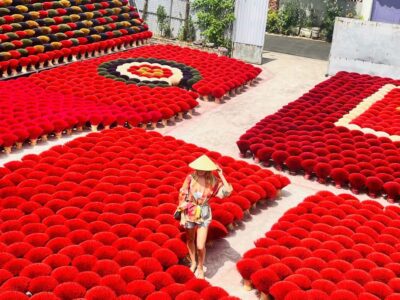
Quang Phu Cau is the star here: bundles of red incense sticks spread across a village yard make an unusually striking photo scene. You also visit Chuong Village, where conical hats are woven by hand. I like the mix of strong visual moments and real village work, not just a quick city sightseeing loop. I also like that guides such as Huy, Louisa, Rachel, and Tung Tran add local explanation and help with photos.
The catch is that the whole outing lasts about five hours, including road time, while the scheduled stops are roughly an hour each. The incense smell can be intense, and the hat village may feel brief if you want a full craft workshop. Still, at $15.83 per person, this is a useful, low-cost way to see rural craft life outside Hanoi.
Key points at a glance
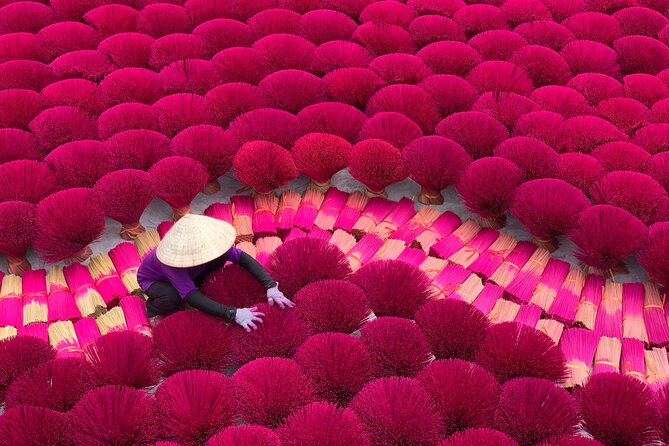
- Quang Phu Cau creates the big photo moment: Incense sticks are blended, rolled, arranged, and dried by hand.
- Chuong Village focuses on the non la: You see Vietnamese conical hats being made and may get the chance to paint one.
- The tour is about five hours: Travel time is included, so expect a half-day outing rather than five full hours in the villages.
- Guides can shape the experience: Named guides in past departures include Jim, Leon, Huy, Louisa, Rachel, Sabrina, and Tung Tran.
- Transport and water are included: You meet at Phe La Coffee near Hoan Kiem Lake and return to Hanoi.
- The scent matters: This is not a good pick if strong incense or aromatic smells bother you.
Why these two villages make a good Hanoi side trip

Hanoi gives you old streets, lakeside walks, museums, and food stalls. This tour shifts the focus to work done by hand in villages outside the city. You see how ordinary materials become objects closely tied to Vietnamese daily life and custom.
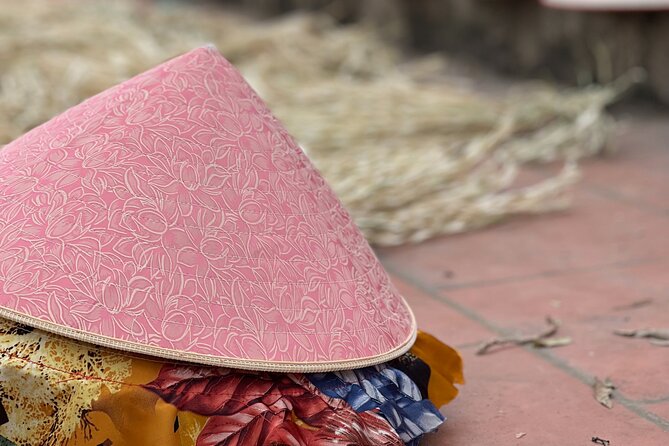
The conical hat is more than a familiar souvenir. The non la is linked with rural life, practical work, and Vietnamese identity. At Chuong Village, you can watch artisans weave and shape these hats rather than simply seeing finished ones in a shop.
Quang Phu Cau offers a different kind of lesson. Incense has been made there for more than a century, and the production process gives you several stages to photograph. The colored sticks arranged in large groups are the main visual draw, but the more useful part is seeing how much handwork comes before the final drying stage.
I like this pairing because the crafts contrast well. One stop is about curved bamboo, leaves, stitching, and careful shaping. The other uses aromatic ingredients, long sticks, rolling, and drying. You get two distinct village industries in one short outing.
More Craft Village Tours in Hanoi
- Incense Village, Hat Making & Lacquer Artisan Small Group Hanoi
★ 5.0 · 1,266 reviews - Incense Village, Conical Hat, Lacquer Art, Small Group From Hanoi
★ 5.0 · 1,170 reviews - Hanoi: Incense Village, Hat, and Lacquer Artisanal Tour
★ 4.6 · 1,005 reviews
Starting at Phe La Coffee near Hoan Kiem Lake
The meeting point is Phe La Coffee at 3B Le Thai To, in Hanoi’s Hoan Kiem district. Pickup is offered, but the stated meeting point gives you a clear place to begin if you are already near the lake.
The vehicle is air-conditioned, which matters once you leave the city and spend part of the day on the road. Bottled water is included, and all listed fees and taxes are covered. Lunch is not included, so plan to eat before or after the tour rather than expecting a meal during the village visits.
The group can have up to 15 people. That is small enough for a guide to explain the craft process and help with basic photos, though it is not a private tour. If you want individual attention, try to stay near the guide when the group reaches each work area.
The guide speaks English and Vietnamese. The exact guide depends on the departure, but named guides connected with this experience include Jim, Leon, Huy, Louisa, Rachel, Sabrina, and Tung Tran. Their roles go beyond pointing out photo spots. Huy, for example, is described as keeping the road journey lively with information and trivia, while Leon helped a solo participant take photos. Louisa worked especially well for a family outing, and Tung Tran received praise for making the incense visit enjoyable.
Chuong Village and the making of the non la
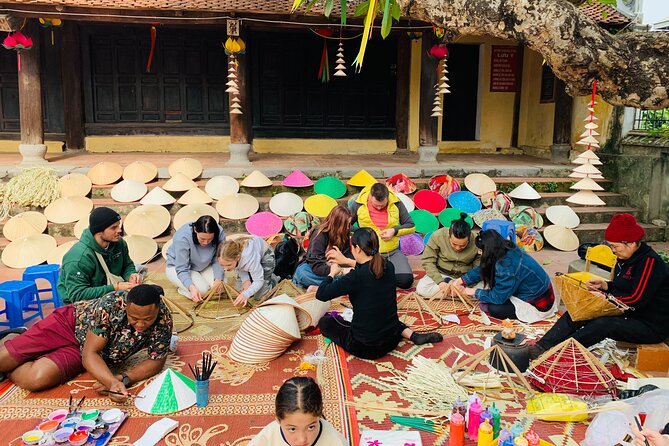
The first village stop lasts about one hour, with admission included. The subject is the Vietnamese conical hat, an object you will see throughout the country but may not have considered as a piece of skilled craftwork.
You can expect to see the careful work behind the familiar shape. The visit is intended to show how artisans weave and assemble the hats, and the guide explains their place in Vietnamese customs and daily life. This is a better way to understand the non la than buying one from a market with no context.
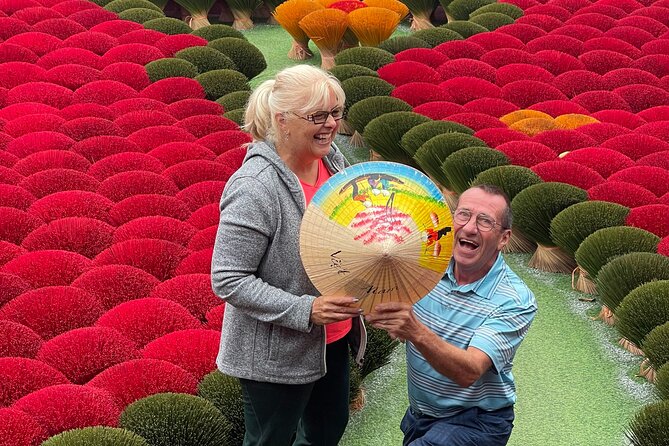
One especially appealing detail is the chance to take part. A past version of the visit included painting a hat at a local home. The supplied details do not promise this activity on every departure, so I would treat it as a possible bonus, not a guaranteed workshop. If you are traveling with children, ask the guide early if painting is available that day.
The stop can feel short. One hour gives you time to watch, take photos, ask questions, and perhaps try a simple activity, but it does not allow for a long lesson in every stage of construction. If your main interest is traditional hat-making, you may want to focus your photos and questions rather than trying to capture everything.
For a solo visitor, this is also a useful point to ask the guide for a portrait. Leon was specifically praised for helping with photos, and other guides may offer similar help when time and group size allow. Bring your own phone or camera, since the tour does not promise professional photography equipment.
Quang Phu Cau and the incense-making process
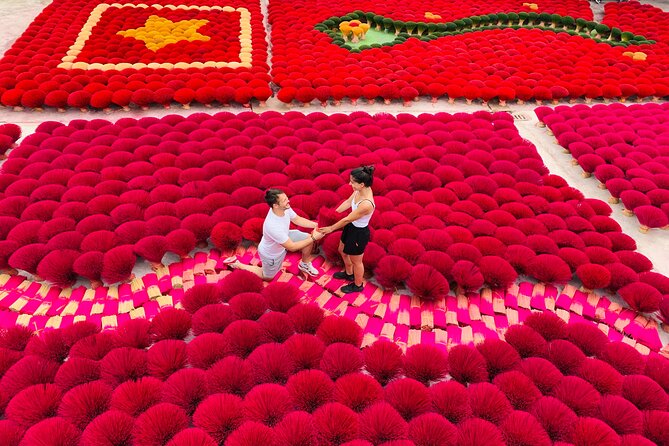
The second main stop is Quang Phu Cau, with about one hour at the village and no separate admission charge. This is the most visually dramatic part of the outing, especially if you enjoy photography.
The village has produced incense for more than a hundred years. You visit a large factory and see the work from the preparation of aromatic ingredients through rolling and drying. The process gives you more than a single photo backdrop. You can photograph the material before it becomes incense, the long sticks being shaped, and the final bundles arranged for drying.
The colors and repeated patterns are the obvious attraction. But I think the more useful approach is to watch how the work is organized. Incense production is a practical livelihood, and the village setting gives you a glimpse of how a traditional craft continues as working business rather than a museum display.
Your guide should explain the process and the customs connected with incense. Ask questions about which ingredients create the scent and which steps are done by hand. The information provided does not specify every ingredient or guarantee a demonstration you can perform yourself, so keep your expectations focused on observation and photography.
The smell is part of the experience, not a minor detail. Incense may be pleasant to you, but the fragrance can become strong near production and drying areas. The tour is specifically not recommended for people sensitive to scents. If you know strong aromas give you headaches or discomfort, choose another Hanoi outing.
The incense stop also has a possible weakness. One account found the visit less satisfying than the hat village, with only a broad explanation of the manufacturing process. That can happen if you want a hands-on class or a long technical demonstration. You will get more from this stop if your priorities are photography, cultural context, and seeing an active village industry.
Same trip, a completely different kind of day:
- Hanoi Jeep Tour: Food, Culture and Fun by Vietnam Army Jeep
★ 5.0 · 15,222 reviews - Hanoi: Water Puppet Show Tickets
★ 4.6 · 7,029 reviews - Hanoi Motorbike Tour: Food, Culture and Fun by Vintage Motorbike
★ 5.0 · 6,699 reviews - Hanoi: Guided Food Tour with Train Street Visit
★ 4.9 · 6,239 reviews
What the guides add to the half-day
A good guide matters here because the craft sites may be visually clear but not self-explanatory. The raw materials, tools, and repeated hand movements do not automatically tell you why the work matters. English and Vietnamese explanation helps connect the objects to local custom.
The named guides have different strengths. Jim is described as friendly and energetic. Huy added facts during the road journey and also helped with photos. Leon was particularly useful for a solo visitor who wanted pictures of the experience. Louisa made the tour work well for a family, while Rachel and Sabrina were praised for their information and involvement.
You should not assume you will receive a particular guide unless the operator confirms it. Still, these examples show what to look for: clear explanations, help at photo stops, and a willingness to answer questions instead of rushing the group onward.
The guide also manages the practical side of a small group. With a maximum of 15 people, you can usually hear the explanation without the crowd size of a major city excursion. Keep your questions specific and stay aware of the time, since both village visits are limited.
Photos, souvenirs, and the hands-on side

This experience is aimed strongly at people who like to take pictures. Quang Phu Cau offers the boldest compositions, while Chuong Village gives you closer details of hands, materials, hat shapes, and workshop activity.
You do not need to be a serious photographer. A phone can handle the basic scenes, and the guides may help take photos of you. If you want portraits, ask before the group moves to the next stage. The guide’s help is a practical advantage for solo visitors and couples who otherwise have to rely on strangers.
The tour also gives you the chance to bring home a physical reminder. Handcrafted hats and incense may be available for purchase, though the supplied details do not state prices or guarantee a particular shop. Ask about the source and how to pack the item before buying.
The possible hat-painting activity adds a creative touch, especially for families. But do not book this solely as a guaranteed craft class. The central promise is seeing the production process, not completing a long workshop.
Is $15.83 good value?
At $15.83, the price is low for a five-hour outing that includes an air-conditioned vehicle, guide, bottled water, and listed fees. You are paying for transport and interpretation as much as for the village visits. Reaching these craft communities independently may cost less in some circumstances, but it would require arranging transport and finding someone to explain the work.
The value is strongest if you want variety. In one half-day, you see two traditional crafts, leave central Hanoi, take photos, and return without organizing several separate trips. The price also makes sense for a first visit when you want a brief introduction before deciding if you would like a longer craft-focused excursion.
The value is weaker if you expect a full workshop, a meal, or extensive time at each site. Lunch and personal expenses are extra. You should also check the price across booking platforms before paying, since one account noted that the cost can sometimes rise.
The overall rating is 4.9 from 183 ratings, with 97 percent recommending the experience. That points to a consistently strong outing, though the lower score connected with the incense visit is worth keeping in mind. This is a budget photo and culture trip, not a private artisan apprenticeship.
Who should book this Hanoi village tour?
I would choose this for a first-time Hanoi visit when you want to see life beyond the city without giving up half a day. It suits photographers, couples, solo visitors, and families who enjoy making and seeing things by hand.
Families should ask about the hat-painting activity, since that can make the first stop more active for children. Solo visitors should take advantage of the guide’s help with photos and use the small group to meet other people.
You may want to skip it if strong smells bother you, if you dislike road time, or if you want a long, detailed workshop. The two one-hour stops are introductions. They show the work and give you context, but they cannot cover every skill or production step.
The return includes the option to be dropped near Hanoi’s famous Train Street or at another chosen location. The listed end point is back at the meeting point, so confirm your preferred drop-off with the guide on the day.
Should you book it?
Book this tour if you want colorful village photography, traditional crafts, and simple logistics at a modest price. Quang Phu Cau is the main reason to go, while Chuong Village gives the outing balance and a closer look at the non la.
I would book it early in a Hanoi stay, especially if you want time to buy a hat or incense later in the trip. Go with realistic expectations: about an hour per village, travel time included, no lunch, and possible variation in the hands-on activities. If that sounds right, Vietnam Village Vibes offers a practical half-day introduction to two working craft communities.
FAQ
How long does the tour last?
The tour lasts approximately five hours, including travel time between Hanoi and the villages.
Where does the tour start?
The stated meeting point is Phe La Coffee, 3B Le Thai To, Hang Trong, Hoan Kiem, Hanoi.
Is pickup available?
Pickup is offered, though the listed meeting point is Phe La Coffee. Confirm the pickup details when booking.
What villages does the tour visit?
You visit Chuong Village, known for conical hat-making, and Quang Phu Cau, known for incense production.
What happens at Chuong Village?
You see artisans making Vietnamese conical hats and learn about the hat’s role in Vietnamese life and customs. A hat-painting activity may also be available.
What happens at Quang Phu Cau?
You visit a large incense factory and see stages that may include blending aromatic ingredients, rolling incense, and drying the finished sticks.
Is lunch included?
No. Lunch is not included, and personal expenses are also excluded.
Is transportation included?
Yes. An air-conditioned vehicle is included, along with bottled water and listed fees and taxes.
Can I be dropped off near Train Street?
The return journey offers the option of being dropped at famous Train Street or another location of your choice. Confirm the arrangement with the guide.
Is the tour suitable for people sensitive to smells?
No. The experience is not recommended for people who are sensitive to scents because incense production can create strong aromas.
How many people can join the tour?
The maximum group size is 15 people.
What is the cancellation policy?
You can cancel at least 24 hours before the start time for a full refund. Cancellations or changes made less than 24 hours before the start time are not refunded or accepted.
Just added around Hanoi
- Private Crowd Free Hanoi: Morning Highlights of the City Experience★ 4.5 · 124 reviews
- Hoa Lo Prison and Little Paris Tour in Hanoi (French Quarter)★ 5.0 · 20 reviews
- Hanoi’s Old Quarter Street Food Experience and Train Street★ 5.0 · 22 reviews
- Old Quarter Food Tour in Hanoi★ 5.0 · 104 reviews
- Retro Hop-on-hop-off Bonbon City Tour: Classic Package★ 4.0 · 32 reviews
- [Hi-end] Private Hanoi Street Food Tour With Real Foodie★ 5.0 · 154 reviews
- Hanoi Street Food Tour★ 5.0 · 27 reviews
- Hanoi Street Food Tour with egg coffee making★ 5.0 · 22 reviews
Craft Village Tours, compared.

Cai Be Mekong Delta Tour: Cooking Class, Cycling & Craft Villages
Read our review →
Incense Village, Hat Making & Lacquer Artisan Small Group Hanoi
Read our review →
Countryside Tour with Silk Village & Elephant Falls
Read our review →

Incense Village Private Tour from Hanoi to Ninh Binh Old Capital
Read our review →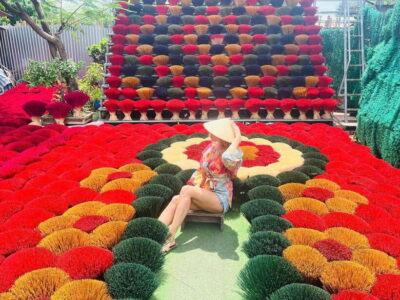
Incense + Hat Villages/ Temple of Literature, Hoa Lo Prison
Read our review →
Incense Village, Hat, Lacquer Tour & City Highlights
Read our review →Browse the lists this tour appears in