Reviewed · HANOI TOURS
12 Days Vietnam Tour Package
Vietnam gives you an unusually full plate in 12 days: old imperial capitals, limestone cliffs, lantern-lit streets, war history, river life, and one famous bridge held up by giant stone hands. This route works best if you want the country’s major sights without spending weeks stitching together trains, cars, boats, and airport transfers yourself.
I like the broad sweep of the route, from Hanoi in the north to Ho Chi Minh City in the south. I also like the private setup, with your own group participating and a dedicated travel agent available to shape the details. The tradeoff is pace. You change regions often, take domestic flights at your own cost, and some days pack several major stops into one long outing.
Key points at a glance
- Two very different boat rides: a two-hour journey through Trang An and an overnight cruise among Halong Bay’s limestone islands.
- Strong history coverage: the Temple of Literature, Hue Imperial City, Khai Dinh’s tomb, the Cu Chi Tunnels, and Reunification Palace.
- A practical private format: airport pickups, air-conditioned vehicles, guides, and entrance fees are arranged for your group.
- Hoi An gets real attention: you have two nights for the Ancient Town, Cam Thanh’s basket boats, the Japanese Covered Bridge, and nearby Marble Mountains.
- A dedicated coordinator matters: names praised in past trip arrangements include Loan Do, Giang Dam, and Sarah, though your assigned coordinator may differ.
- A packed final third: Ba Na Hills, a flight to Ho Chi Minh City, Cu Chi, colonial-era sights, and the Mekong Delta all arrive in just four days.
Hanoi begins with temples, coffee, and a water puppet show
Your trip starts at Noi Bai Airport, where a driver meets you in the arrival hall with a sign showing the main booking name. You then go to the Rex Hanoi Hotel in the Old Quarter area, with time to rest before the sightseeing begins.
Day two is a full introduction to Hanoi. You see the Opera House from outside, walk around Hoan Kiem Lake, and visit Ngoc Son Temple. These stops help you get your bearings in the capital before the day moves into more formal history.
The Temple of Literature is one of the best choices on the route. Founded in 1070, it was Vietnam’s first university, and its courtyards and gardens offer a calmer break from city traffic. The planned egg yolk coffee adds a small but memorable local touch. You may find it sweet and creamy, but it is worth trying once.
The Vietnam Museum of Ethnology broadens the picture beyond royal courts and war history. Exhibits cover Vietnam’s 54 ethnic groups through clothing, tools, and other objects. Give this stop your attention, since it explains how varied the country is outside the main cities.
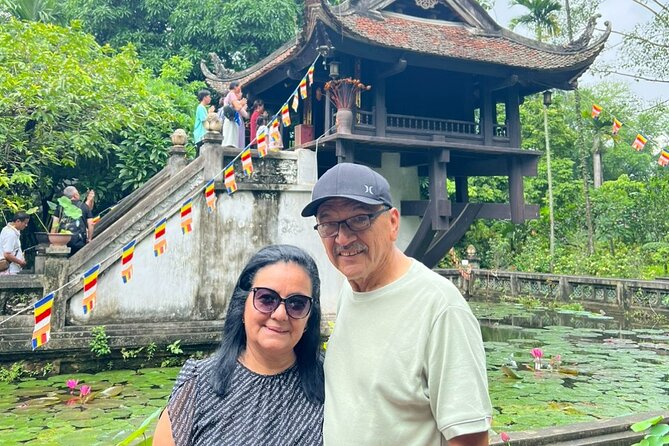
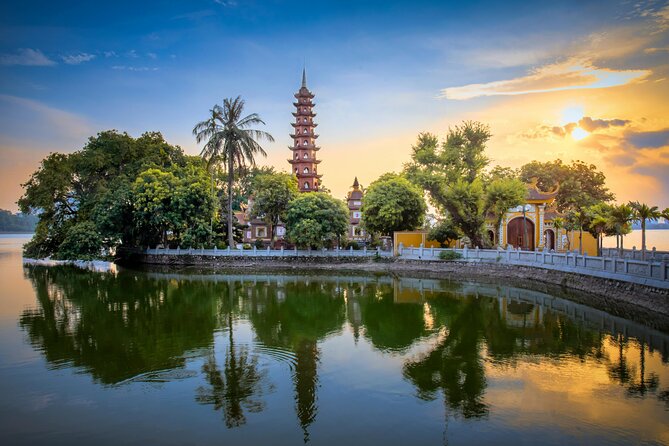
The afternoon includes the Ho Chi Minh Mausoleum complex, the One Pillar Pagoda, and Tran Quoc Pagoda. The mausoleum has a formal atmosphere, and access arrangements can matter, so follow your guide’s instructions. Tran Quoc, with its long religious history beside West Lake, feels quieter and more reflective.
The day ends with a water puppet performance and a cyclo ride through the Old Quarter. This is a lot to fit into one day, but the evening activities keep the schedule from becoming a string of museums. Expect traffic, short walks, and a late finish.
A few more Hanoi trips worth comparing
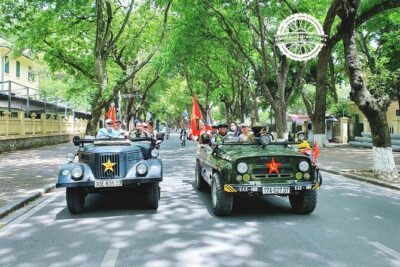
- Hanoi Jeep Tour: Food, Culture and Fun by Vietnam Army Jeep
★ 5.0 · 15,222 reviews - Hanoi: Water Puppet Show Tickets
★ 4.6 · 7,029 reviews - Hanoi Motorbike Tour: Food, Culture and Fun by Vintage Motorbike
★ 5.0 · 6,699 reviews
Ninh Binh trades city streets for river caves and old capitals
On day three, you leave Hanoi around 8 a.m. for Hoa Lu, the former capital of Dai Co Viet. Two temples occupy the site of the old royal palace, giving you a useful glimpse of Vietnam before Hanoi became the political center.
The main event is the boat ride through Trang An. The trip lasts about two hours and passes through limestone formations and water routes that make the region feel far removed from the capital. This is one of the tour’s strongest nature stops, but remember that boat outings depend on weather and water conditions.
Bich Dong Pagoda follows, with three pagodas dating from the 17th century. A local market visit gives the day a more ordinary, lived-in finish. The schedule says three hours at Hoa Lu and Trang An, plus another hour at Bich Dong, so you get a good taste of Ninh Binh rather than a slow rural stay.
Halong Bay is the scenic centerpiece, with a short turnaround
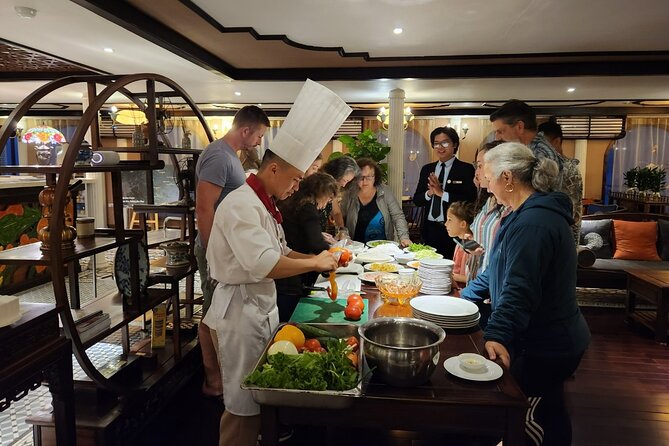
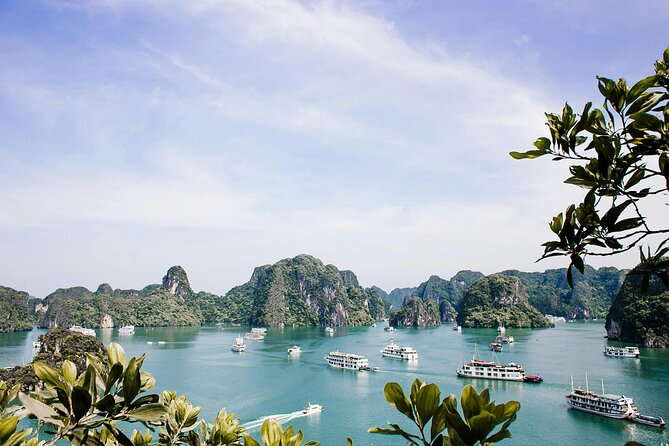
Day four takes you by shared cruise shuttle from Hanoi to Halong Bay. On boarding, you receive a welcome drink and an introduction from the captain before settling into the cruise program.
The overnight boat is a smart use of time. Instead of making a rushed day trip from Hanoi, you get an evening and early morning on the water. The limestone islands and calm surroundings are the reason many people place Halong Bay near the top of their Vietnam list.
Day five begins with Tai Chi on the sundeck, along with complimentary tea and coffee. After a light breakfast, you join the final onboard activities before returning to Hanoi. The main drawback is the tight transition afterward: you have free time in Hanoi, then go to the airport for a flight to Hue.
Pack an overnight bag for the cruise and keep flight-day essentials easy to reach. You will be moving from boat to shuttle, then airport, then hotel. The tour includes the transfers, but the international and domestic airfares are not part of the $2,653 price.
Hue explains Vietnam through walls, tombs, and the Perfume River

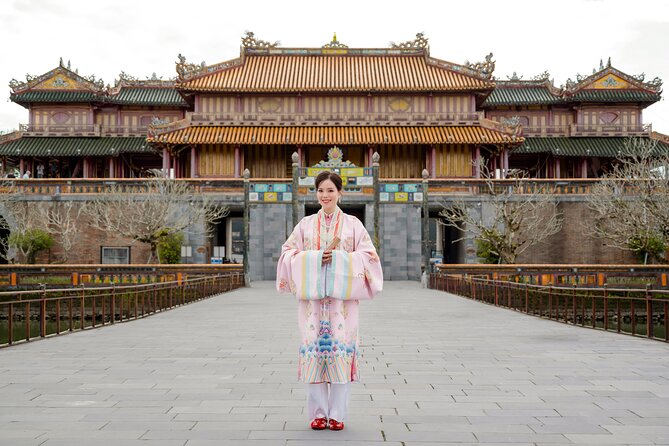
Hue gets one full sightseeing day after your arrival. The Imperial City is the headline stop, a walled complex designed in the style of Beijing’s Forbidden City. Allow time to notice the scale, gates, courtyards, and surviving structures rather than treating it as a quick photo stop.
The schedule then brings you to Thien Mu Pagoda beside the Perfume River and Khai Dinh’s tomb. The pagoda offers a river setting and a change of pace after the citadel. Khai Dinh’s tomb is known for its ornate design, so it provides a sharper contrast with Hue’s broad defensive walls and formal palace spaces.
This day is history-heavy, but it has a good rhythm. You see royal power in the morning, religious architecture near the river, and a lavish royal tomb later. Wear comfortable shoes and expect walking around large outdoor sites.
Same trip, a completely different kind of day:
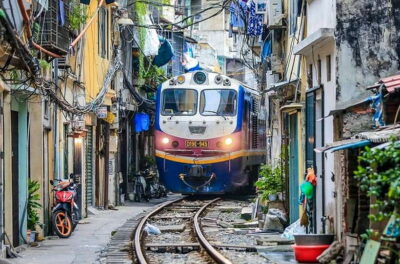
- Hanoi: Guided Food Tour with Train Street Visit
★ 4.9 · 6,239 reviews - Hanoi Cooking Class: Culture, Local Market & Meaning CSR Impact
★ 5.0 · 5,147 reviews - 5 Traditional Dishes Hanoi Cooking Class with Market Trip
★ 5.0 · 4,890 reviews - Small Group Hanoi Street Food Tour with a Real Foodie
★ 5.0 · 4,682 reviews
The road to Hoi An includes Hai Van Pass and Marble Mountains
Rather than flying between Hue and Da Nang, the tour drives over Hai Van Pass. The route is one of the more valuable transfers because the scenery becomes part of the experience. You stop for about two hours, then continue to the Marble Mountains.
The Marble Mountains combine caves, pagodas, and five limestone hills linked to the elements of Metal, Wood, Water, Fire, and Earth. This is not a flat sightseeing stop, so take care on steps and uneven ground. The visit lasts about two hours before the drive continues to Hoi An.
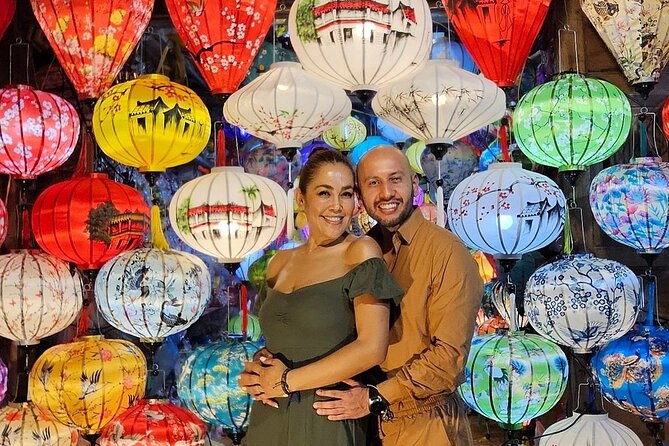
You reach the Ancient Town later in the day, when its quiet streets are especially appealing. Hoi An receives more time than a quick evening stop, which is important. Its charm comes from walking slowly, not racing from one monument to the next.
Hoi An adds village life to the old merchant quarter
Day eight begins at Cam Thanh, a fishing village outside Hoi An. You meet local fishermen and ride a traditional Vietnamese bamboo basket boat. The outing lasts about three hours and gives you a look at river-based work and village life, not just the polished center of town.
In the afternoon, your walking tour covers the Japanese Covered Bridge, Phung Hung Ancient House, and the Phuc Kien Assembly Hall. The bridge dates to 1590 and reflects Hoi An’s links with Japanese and Chinese merchants. The assembly hall adds colorful architectural detail, while the ancient house helps explain how old homes were built and used.
Hoi An is one of the best places on this route to leave the schedule behind for an hour. Ask your coordinator, such as Loan Do, Giang Dam, or Sarah if one of them is assigned to you, about adjusting free time or adding a personal interest. Past trip arrangements connected with these coordinators were praised for quick replies, visa guidance, and tailoring plans to family needs.
Ba Na Hills delivers spectacle, not an old-world town
Day nine takes you to Sun World Ba Na Hills near Da Nang. The cable car provides wide views as you rise toward the resort area, which includes old French-style villas, a suspension bridge, Linh Ung Pagoda, a large Buddha statue, and the Golden Bridge.
The Golden Bridge is the visual star, with giant stone-colored hands appearing to support the walkway. It is a dramatic place for photographs, but Ba Na Hills is a modern attraction rather than an untouched mountain setting. Go with the right expectation and you will appreciate the contrast.
The schedule gives about three hours at Ba Na Hills, two hours around the Golden Bridge and mountain sights, and another hour at Linh Ung Pagoda. After a brief Da Nang city tour, you fly to Ho Chi Minh City. It is an ambitious day, and the second flight in two days makes it one of the tour’s more tiring stretches.
Ho Chi Minh City connects war history with city landmarks
Day ten begins with the Cu Chi Tunnels, a network of narrow underground passages dug by guerrilla fighters for shelter and defense. The visit gives physical context to the conflict. Be aware that the tunnels are narrow, and the experience is more demanding than a standard museum visit.
Back in the city, you visit Reunification Palace, formerly the Independence Palace. Tanks breaking through its gates on April 30, 1975 marked the official end of the Vietnam War. The palace gives you a clearer sense of the political events than a short roadside explanation can provide.
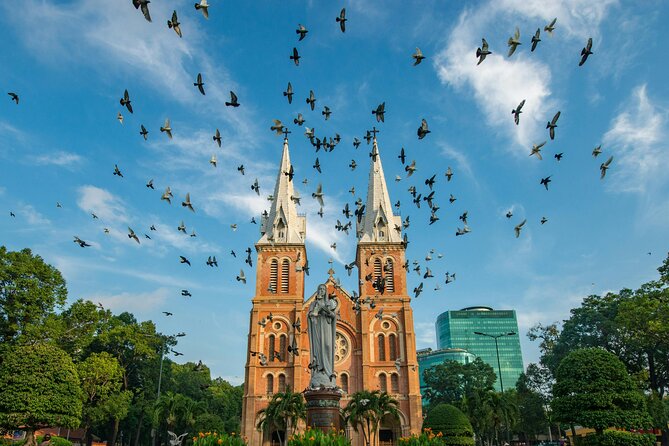
The afternoon continues to Notre Dame Cathedral and the Central Post Office. The cathedral dates from the French colonial period, while the post office was designed by French architect Gustave Eiffel. Together, they show how sharply Ho Chi Minh City shifts between colonial architecture, modern traffic, and wartime memory.
The Mekong Delta finishes with boats and coconut sweets
Day eleven heads to Ben Tre, about 115 kilometers from Ho Chi Minh City and roughly two hours by road. You board a boat and visit a handcrafted coconut workshop and a local candy-making site.
This is a gentle final full day after the Cu Chi Tunnels and city sightseeing. The stops are arranged around local production rather than grand monuments, which gives the journey a practical, human scale. Still, expect a long round trip by road. The delta visit is more about seeing how people work and move along the waterways than checking off one huge attraction.
Day twelve is an airport transfer from the Eden Star Saigon Hotel in District 1. There is no scheduled sightseeing, so choose your departure time carefully and allow enough room for the hotel pickup and airport process.
What $2,653 covers, and what it does not
At $2,653 per person, the price is easiest to judge as a package of coordination rather than a simple sightseeing pass. It includes air-conditioned vehicles, airport transfers, guides, entrance fees and permits, mineral water at two bottles per day, 11 breakfasts, two lunches, and dinner as specified.
The tour also includes a private format, meaning only your group participates. That gives you more control than a large coach trip, especially if you want help adjusting the rhythm or handling special requests. Group discounts are offered, though the exact savings are not stated.
International and domestic flights are excluded, along with the Vietnam visa, unspecified meals, travel insurance, tips, drinks, phone calls, and laundry. Ask for a written breakdown of the included dinner and lunches before paying. The tour requires good weather and a minimum number of participants, and cancellation is free up to 24 hours before the start time. Poor weather or an unmet minimum leads to another date, another experience, or a full refund.
Who should book this Vietnam route?
I would choose this tour if you have 12 days, want to see both north and south, and prefer one company to coordinate vehicles, hotels, guides, boats, and airport pickups. It suits first-time visitors, families, and anyone who values a dedicated contact. The strongest praise attached to Viet Prestige Travel centers on organization, quick communication, custom planning, and 24-hour assistance.
I would hesitate if you want long, unplanned stays in each place. Hanoi, Hue, Hoi An, and Ho Chi Minh City each deserve more time than this route allows, and the domestic flights plus packed sightseeing days can wear you down.
FAQ
How long is the Vietnam tour?
The tour lasts approximately 12 days, beginning with arrival in Hanoi and ending with departure from Ho Chi Minh City.
Where does the tour begin?
The listed hotel meeting point is Rex Hanoi Hotel at 42-44 Gia Ngu Street in Hanoi. Airport pickup takes place in the Noi Bai Airport arrival hall.
Where does the tour end?
The listed final hotel is Eden Star Saigon Hotel at 38 Bui Thi Xuan Street in District 1, Ho Chi Minh City. A driver then takes you to the airport at the scheduled time.
Are flights included in the price?
No. International and domestic flight tickets are not included, including the flights between Hanoi and Hue, Da Nang and Ho Chi Minh City.
Is this a private tour?
Yes. Only your group participates in the activity. Group discounts are also available, although the discount amount is not stated.
What meals are included?
The package includes 11 breakfasts, two lunches, and dinner as specified. Meals not listed in the itinerary are not included.
Is bottled water provided?
Yes. The package includes two bottles of mineral water per day.
Which major places are included?
The route includes Hanoi, Ninh Binh, Halong Bay, Hue, Hai Van Pass, Marble Mountains, Hoi An, Ba Na Hills, the Golden Bridge, Ho Chi Minh City, the Cu Chi Tunnels, and the Mekong Delta.
Can most people participate?
The tour is described as suitable for everyone, with no stated restrictions, and most people can participate. The Marble Mountains and Cu Chi Tunnels may still involve physical movement, so consider your own comfort.
What is the cancellation policy?
You receive a full refund if you cancel at least 24 hours before the experience start time. Cancellations or changes within 24 hours are not refunded or accepted. Weather problems or an unmet minimum may lead to another date, another experience, or a full refund.
Just added around Hanoi
- Private Crowd Free Hanoi: Morning Highlights of the City Experience★ 4.5 · 124 reviews
- Hoa Lo Prison and Little Paris Tour in Hanoi (French Quarter)★ 5.0 · 20 reviews
- Hanoi’s Old Quarter Street Food Experience and Train Street★ 5.0 · 22 reviews
- Old Quarter Food Tour in Hanoi★ 5.0 · 104 reviews
- Retro Hop-on-hop-off Bonbon City Tour: Classic Package★ 4.0 · 32 reviews
- [Hi-end] Private Hanoi Street Food Tour With Real Foodie★ 5.0 · 154 reviews
- Hanoi Street Food Tour★ 5.0 · 27 reviews
- Hanoi Street Food Tour with egg coffee making★ 5.0 · 22 reviews
Hanoi Tours, compared.
Hanoi Jeep Tour: Food, Culture and Fun by Vietnam Army Jeep
Read our review →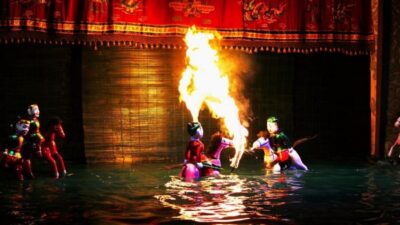

Hanoi Cooking Class: Culture, Local Market & Meaning CSR Impact
Read our review →
Small Group Hanoi Street Food Tour with a Real Foodie
Read our review →
Hanoi Coffee Experience: 6 Brews, 9 Recipes & 3 Liquor Tastings
Read our review →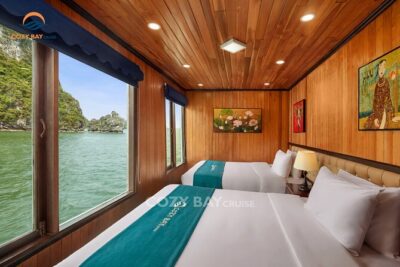
CozyBay Cruise-The Best Small Group 2D/1N inHalong-All inclusive
Read our review →